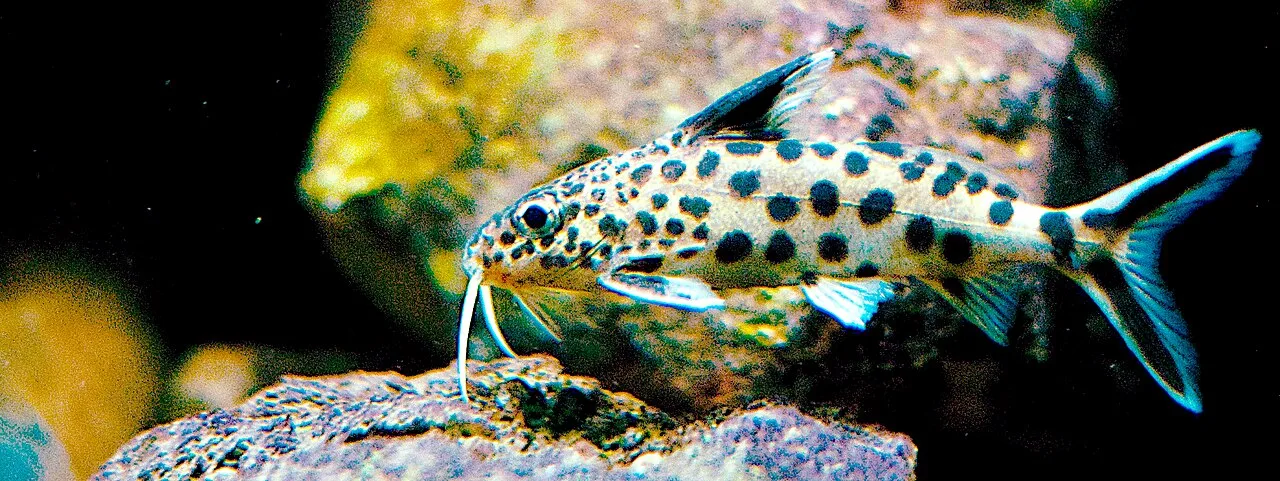
Variable platyfish
Xiphophorus variatus
21 views
A livebearing toothcarp from Atlantic Mexico. Many colourful platies in the trade are this species or mixes that include it.
- Temperature
- 20 – 26 °C
- pH
- 7 – 8.2 pH
- General hardness
- 9 – 19 °dH
- Maximum size
- 7 cm
- Minimum tank size
- 80 L
4 min read · 580 words
Fresh water
Quick facts
Further published values
- Lifespan
- 3 a
Place in the aquarium
Highlighted are the water layer and the spots where the species usually stays in the tank.
- Upper water Usually stays in the top third of the tank.
- Middle water Usually stays in the middle of the tank, between bottom and surface.
- Dense plants Looks for dense planting as cover, retreat or grazing ground.
Shrimp in the tank
Shrimplets at risk
- Not shrimp safe
- Dwarf shrimp at risk
- Shrimplets at risk
- Shrimp safe
- Adult dwarf shrimp
- Safe
- Shrimplets
- Get eaten
- Safe from shrimp size
- about 2 cm
Adult dwarf shrimp are usually safe with the variable platy. It grows to about 7 cm and as an omnivore eats algae, plants and small crustaceans, insects and worms. Shrimp from about 2 cm are too large for it.
Baby shrimp, however, are picked off deliberately, much as it also eats its own fry. In densely planted tanks with moss and leaf litter some young still make it. Anyone who wants to breed shrimp on purpose sets up a species tank. The more fine structure lies on the bottom, the more young grow up, and food given in the evening distracts the fish as well.
Home & range
Hatched countries are where the species occurs. It lives in particular waters there, not across the whole country. The points name known waters for orientation, not collection sites.
- Country of origin
- Water for orientation
Native
Overview
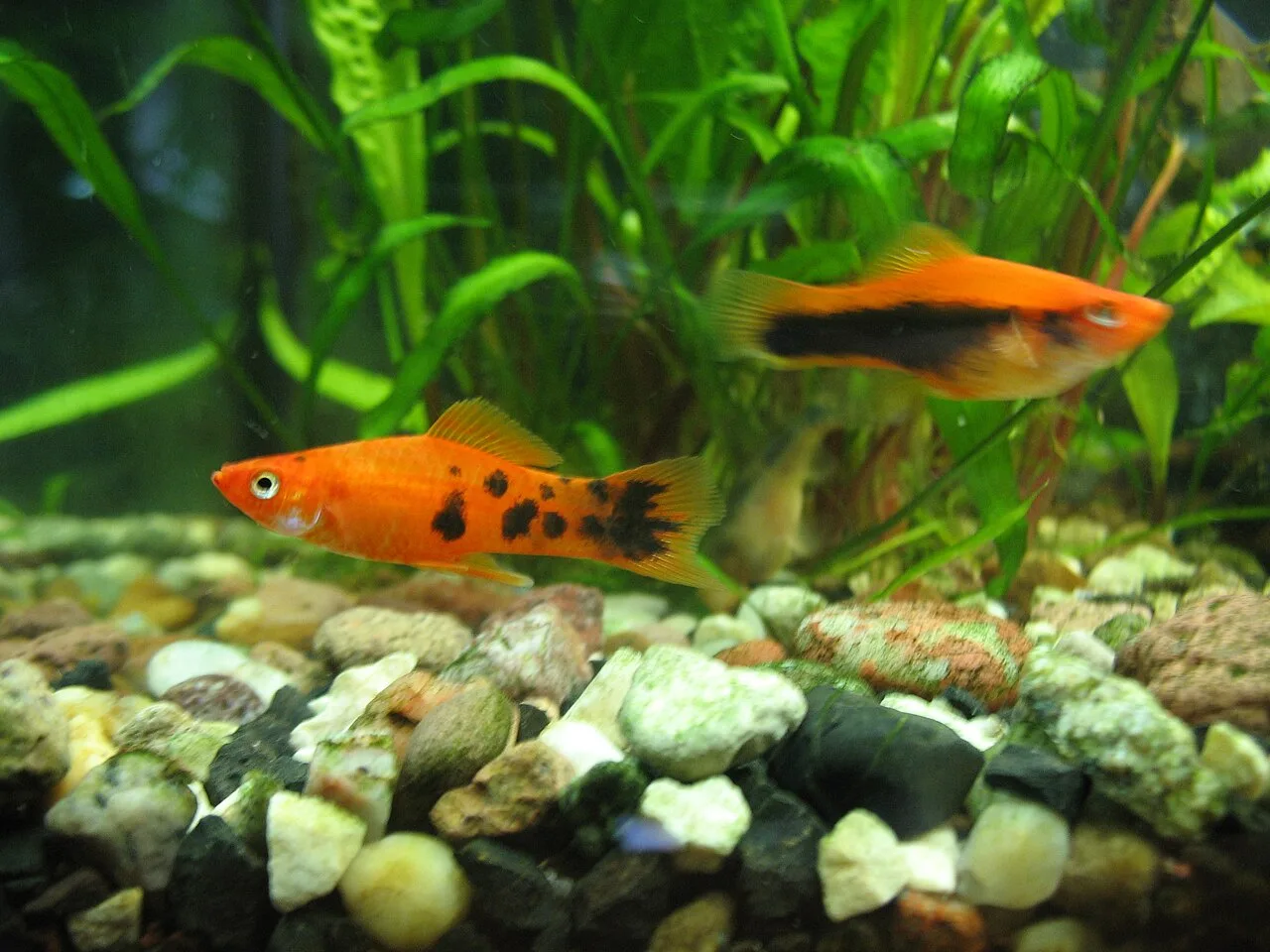
Xiphophorus variatus reaches about 6 to 7 cm. Males have a gonopodium. Females have a fan-shaped anal fin and often grow larger. Wild fish are plain, with spots and a shoulder mark. Orange, yellow, red and tuxedo are cultivated forms. A sword on the tail points to the swordtail or to a hybrid, not to a pure variable platy.
The species is more closely related to the southern platy, Xiphophorus maculatus, than the trade separates them. Crosses are fertile. Anyone who wants a line kept pure does not put it with other Xiphophorus.
Telling it from the platy
The variable platy is slimmer than the platy (Xiphophorus maculatus). Unlike some relatives it has no claw at the tip of the fifth anal-fin ray. Wild fish are olive with black marbling or spots on the caudal peduncle, and large males carry blackish blotches on the dorsal fin. Many captive strains colour up late. In community tanks it hybridises easily with platies, usually giving yellow, slender hybrids. The name refers to the many colour variants. Meek described the species in 1904 as Platypoecilus variatus. An age of about three years is reached.
Origin & habitat
This describes the origin, not how to furnish the aquarium.
Rivers, ditches and coastal waters on the Atlantic side of Mexico, from Tamaulipas southward. The water there is rather hard and not acidic. Mexico stays a coarse origin. Introduced stocks elsewhere are not an extra native area.
The fish stand in plants and at the surface, not in blackwater.
The species is endemic to the Atlantic slope of Mexico, from southern Tamaulipas to northern Veracruz, and is not common there. It lives in slow, vegetated canals, ditches and warm springs. Introduced populations exist in Florida, Montana, Colombia, Singapore and Hong Kong. The species tolerates cooler water than many fish and lives well at 16 to 24 °C.
Care
Water
20 to 26 °C, pH 7 to 8.2, rather hard. From about 80 litres for a group, more females than males. Plants as a visual screen and as extra food. Strong filtration, because the fish eat a lot and produce young. Soft, peaty water is the common mistake: the fish scratch, clamp their fins and stop producing broods.
Company
Other peaceful fish that take hard water. Tetras from very soft water are the wrong mix if the water is set for the platies. Long fins suffer under barbs. Shrimp survive as long as the young have cover and the platies are well fed.
Diet
Omnivore with a clear plant share. Flakes, granules, blanched vegetables and frozen food. The fish graze on algae and leaves. A diet of mosquito larvae alone makes them fat and leaves out the plant food.
Several females have to get to the food. A male that takes everything at the front is a sign of too few feeding spots, not of an especially healthy fish.
Behavior
A peaceful group. Males display with spread fins and short chases. In a group that is too small this becomes permanent stress for a single female. The fish stand in the upper and middle water and are visible through the day.
The stock grows as soon as both sexes are present. That is the normal keeping and needs a plan for the young.
Reproduction
Livebearer. Gestation is several weeks. A brood often includes a few dozen young that swim and feed at once. Dense plants raise the survival rate, because the parents eat part of the brood. Females store sperm and can still drop young after the males are removed.
The fish mature in a few months. Without intervention the tank becomes tight.
Gallery
More species in this group

Similar water needs
Species with a similar temperature, a similar pH and a comparable adult size. Whether their behaviour fits as well is what the compatibility check is for.