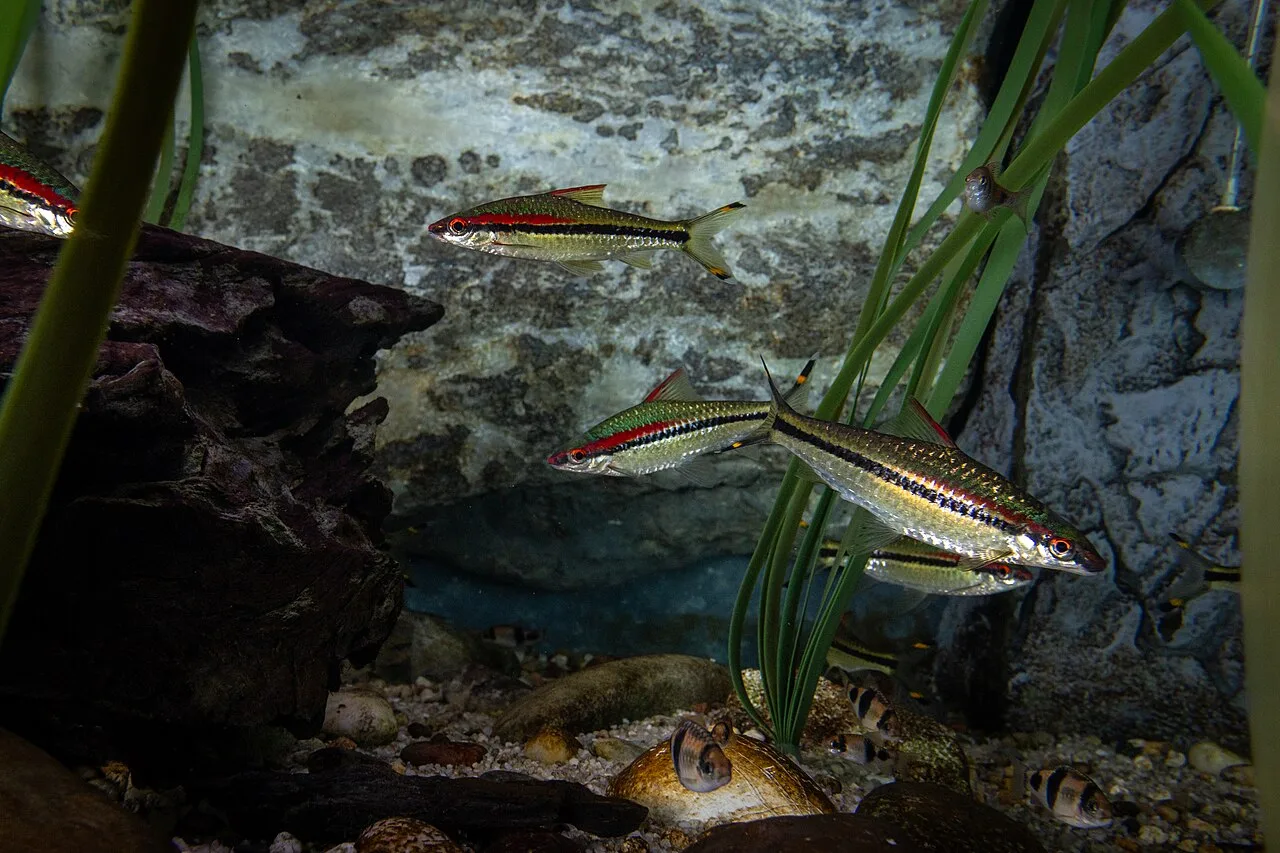
Red-tailed silverside
Bedotia geayi
20 views
A Madagascar endemic. Fish long sold as Bedotia geayi were often Bedotia madagascariensis.
- Temperature
- 21 – 24 °C
- pH
- 7 – 7.5 pH
- General hardness
- 8 – 15 °dH
- Maximum size
- 7 cm
- Minimum group size
- 6
- Minimum tank size
- 150 L
3 min read · 389 words
Fresh water
Quick facts
Place in the aquarium
Highlighted are the water layer and the spots where the species usually stays in the tank.
- Upper water Usually stays in the top third of the tank.
- Middle water Usually stays in the middle of the tank, between bottom and surface.
- Open swimming space Needs an open area without plants or decor to swim at length. Tank length matters more than height.
Shrimp in the tank
Shrimplets at risk
- Not shrimp safe
- Dwarf shrimp at risk
- Shrimplets at risk
- Shrimp safe
- Adult dwarf shrimp
- Safe
- Shrimplets
- Get eaten
- Safe from shrimp size
- about 2 cm
Adult dwarf shrimp are usually safe with the red-tailed silverside. It grows to just over 7 cm but eats mainly insects that fall onto the surface and does not stay on the bottom. Shrimp from about 2 cm are hardly at risk.
Baby shrimp drifting in open water can be eaten. On the bottom among moss and plants they are largely left alone. Because the species needs plenty of swimming room as a school, a large tank densely planted at the edges suits it.
Home & range
Hatched countries are where the species occurs. It lives in particular waters there, not across the whole country. The points name known waters for orientation, not collection sites.
- Country of origin
- Water for orientation
Native
- Mananjary
- Only the Mananjary catchment.
Overview
The largest field fish are a little over 7 cm standard length. Slender. The trade name is red-tailed silverside.
Features
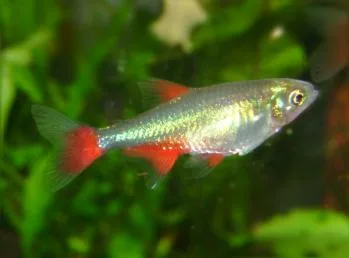
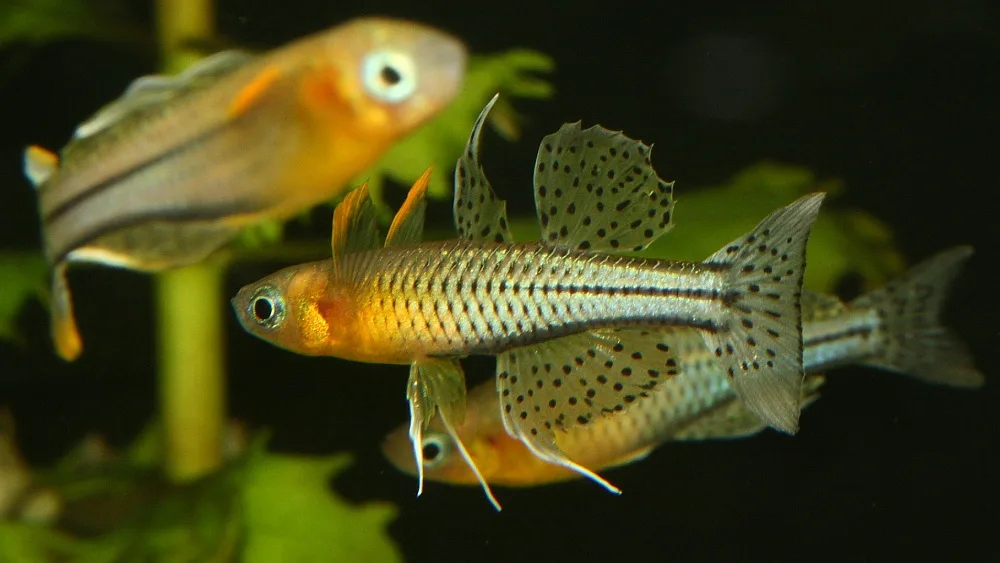
The largest wild fish measure just over 7 cm standard length. The body is slender and elongated, and both sexes carry a dark longitudinal band on the flank and transparent pectoral fins. The first dorsal fin has five weak spines, the second 11 to 14 soft rays, and the anal fin 17 to 19. The scales are large. Males have red edges on the dorsal, anal and caudal fins and a distinct red spot on the chin, while females are much paler.
Confusion
A dark spot at the tail base separates the species from the striped Bedotia madagascariensis, which also lacks the red chin spot of breeding males. Because B. madagascariensis imported to France in 1953 was identified as B. geayi, the two were confused for a long time. Loiselle and Rodriguez redescribed B. geayi in 2007.
Name
Pellegrin described the species in 1907. The name honours Martin François Geay, a pharmacist and natural history collector. The species belongs to the silversides in the family Bedotiidae.
Origin & habitat
This describes the origin, not how to furnish the aquarium.
Only small streams in the Mananjary catchment, 300 to 650 m, quiet shaded places. Not in the neighbouring Namorona. Madagascar stays coarse and is not filled as the whole island.
The red-tailed silverside is endemic to Madagascar and lives only in fresh water, in small streams and rivers of the Mananjary basin at 300 to 650 m. The syntypes come from a northern tributary near Morafeno. In the Namorona basin to the south the species is absent, and an undescribed relative lives there. Some waters flow fast, but the fish prefer calm, shaded areas with bank vegetation.
The IUCN lists the species as endangered. It is threatened by habitat destruction in the lower catchments and by introduced livebearers, especially Gambusia holbrooki. The introduced snakehead Channa maculata already lives in the neighbouring Namorona basin.
Diet
Stomach contents show that the species eats mainly insects that fall onto the water surface.
Behavior
The fish live in schools graded by size, as in Bedotia madagascariensis. Behaviour and predators of both species appear to be similar.
Reproduction
The fish imported to France in 1953 and identified as this species belonged to Bedotia madagascariensis.
There are records from some southern tributaries of the Mananjary, and the northern range limit is unknown. In English the species is called the red-tailed silverside or zona.
Gallery
More species in this group
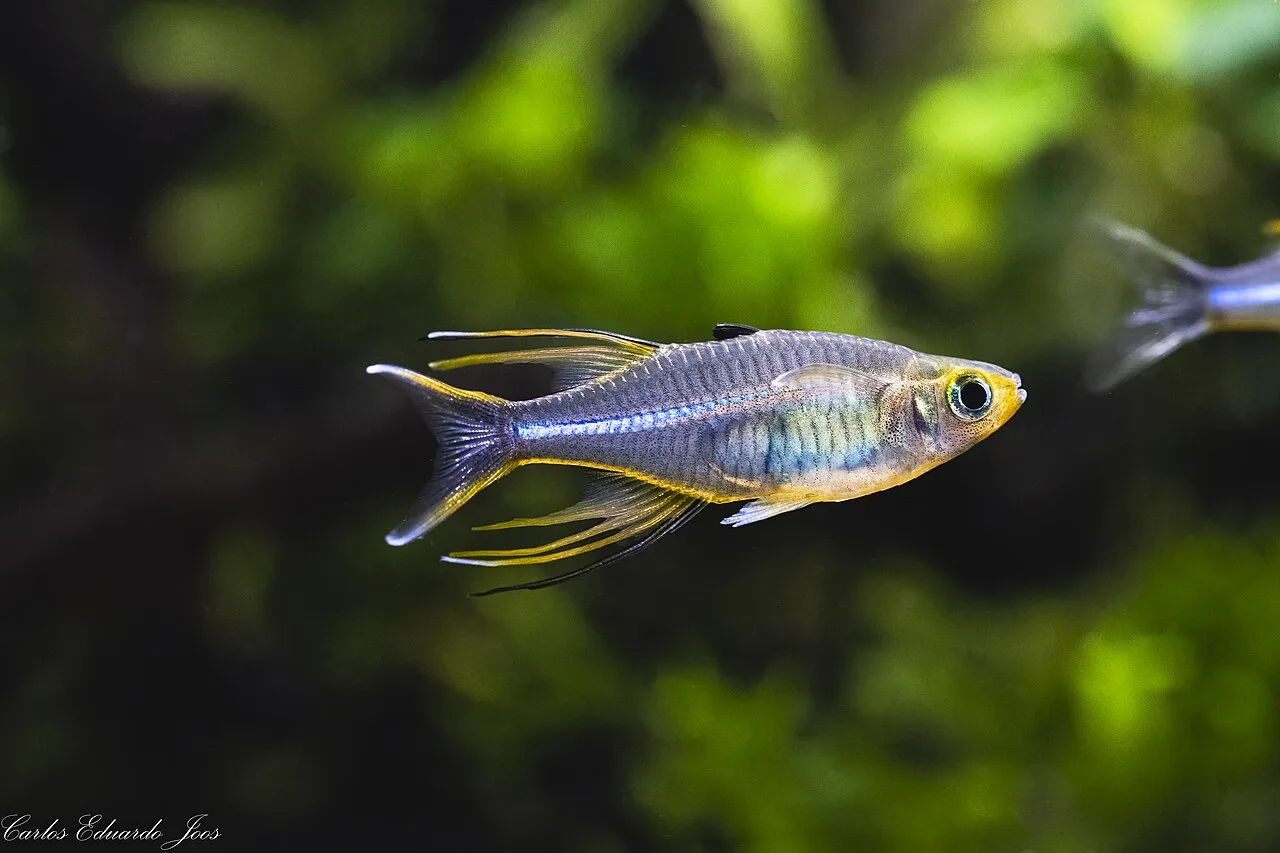
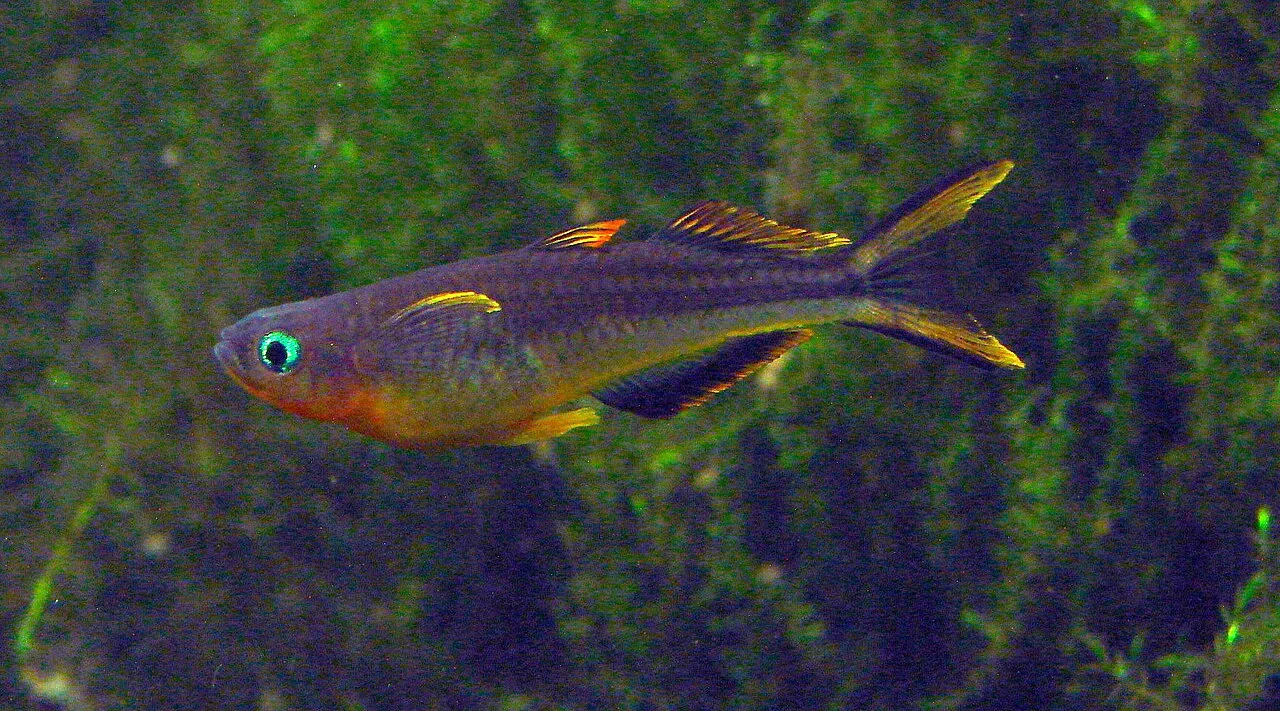
Similar water needs
Species with a similar temperature, a similar pH and a comparable adult size. Whether their behaviour fits as well is what the compatibility check is for.