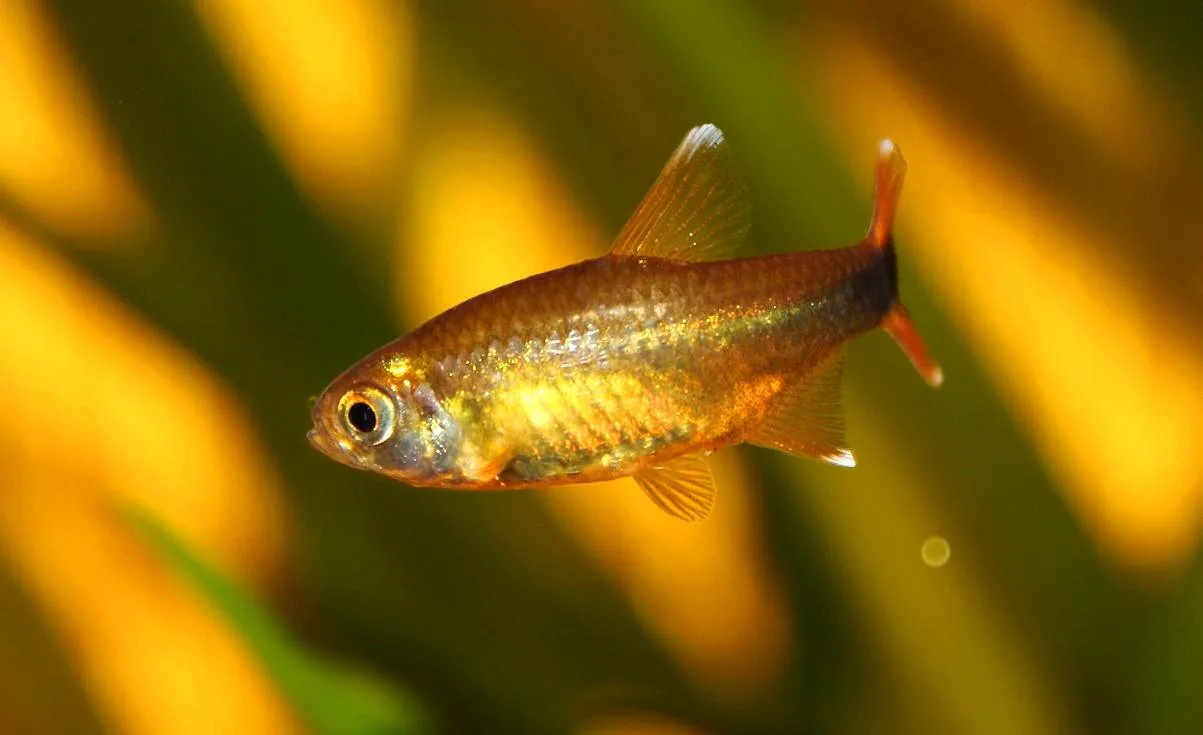
Forktail blue-eye
Pseudomugil furcatus
18 views
A blue-eye from Papua New Guinea, 5 to 6 cm. Not Pseudomugil gertrudae and not Pseudomugil connieae. Popondichthys furcatus is the synonym.
- Temperature
- 24 – 28 °C
- pH
- 7 – 8 pH
- General hardness
- 8 – 15 °dH
- Maximum size
- 6 cm
- Minimum group size
- 8
- Minimum tank size
- 54 L
1 min read · 124 words
Quick facts
Place in the aquarium
Highlighted are the water layer and the spots where the species usually stays in the tank.
- Upper water Usually stays in the top third of the tank.
- Dense plants Looks for dense planting as cover, retreat or grazing ground.
Shrimp in the tank
Shrimplets at risk
- Not shrimp safe
- Dwarf shrimp at risk
- Shrimplets at risk
- Shrimp safe
- Adult dwarf shrimp
- Safe
- Shrimplets
- Get eaten
- Safe from shrimp size
- about 1.5 cm
Adult dwarf shrimp are safe with the forktail blue-eye. It grows 4.5 to 6 cm long, lives in groups in the middle and upper water and is fed frozen and live food. Shrimp from about 1.5 cm are too large for it. Juvenile shrimp are eaten, however, just as the parents eat their own young.
The species needs medium-hard water with pH 7 to 8, which Neocaridina tolerate well. Dense plants and moss on the bottom give the young shrimp cover.
Home & range
Hatched countries are where the species occurs. It lives in particular waters there, not across the whole country. The points name known waters for orientation, not collection sites.
- Country of origin
- Water for orientation
Native
- Popondetta
- Only the coastal plains around Popondetta.
Overview
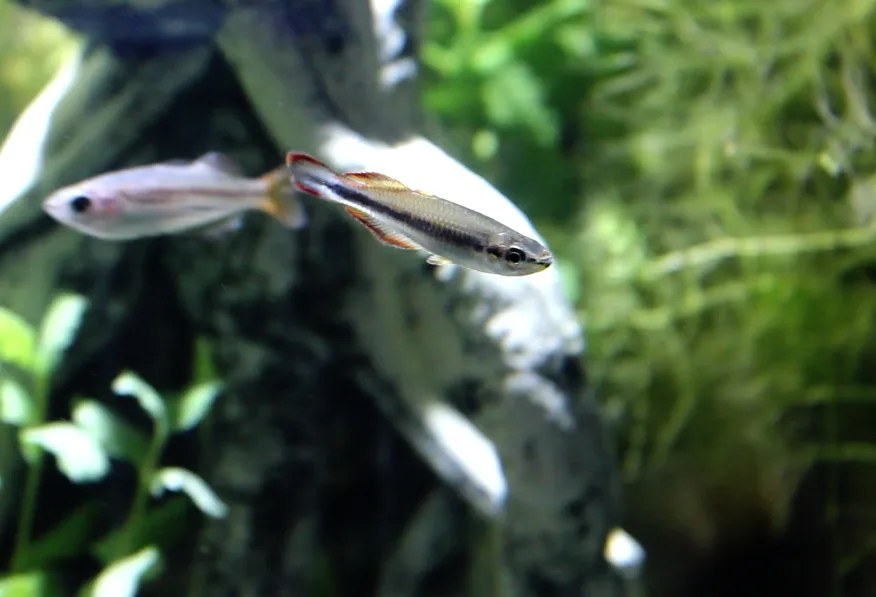
Yellowish transparent, blue eyes, yellow fins, a yellow-orange chest. The tail is yellowish with black outer edges and, for a blue-eye, strongly forked. Males from half a year more intense and with a longer dorsal. Females a little smaller. An average of 4.5 to 6 cm is also given. The length given is the body length of 5 to 6 cm.
Origin & habitat
This describes the origin, not how to furnish the aquarium.
Southeast of Popondetta, coastal plains between Dyke Ackland Bay and Collingwood Bay, a tributary of the Kwagira and at Safia in the Musa valley. Papua New Guinea stays coarse and is not filled as a country shape. Moderate current, 24 to 28.5 °C and pH 7.0 to 8.0 are the streams, not a care optimum.
Care
The stream figures stay in the origin text.
Reproduction
Lush underwater vegetation at the sites.
Gallery
More species in this group
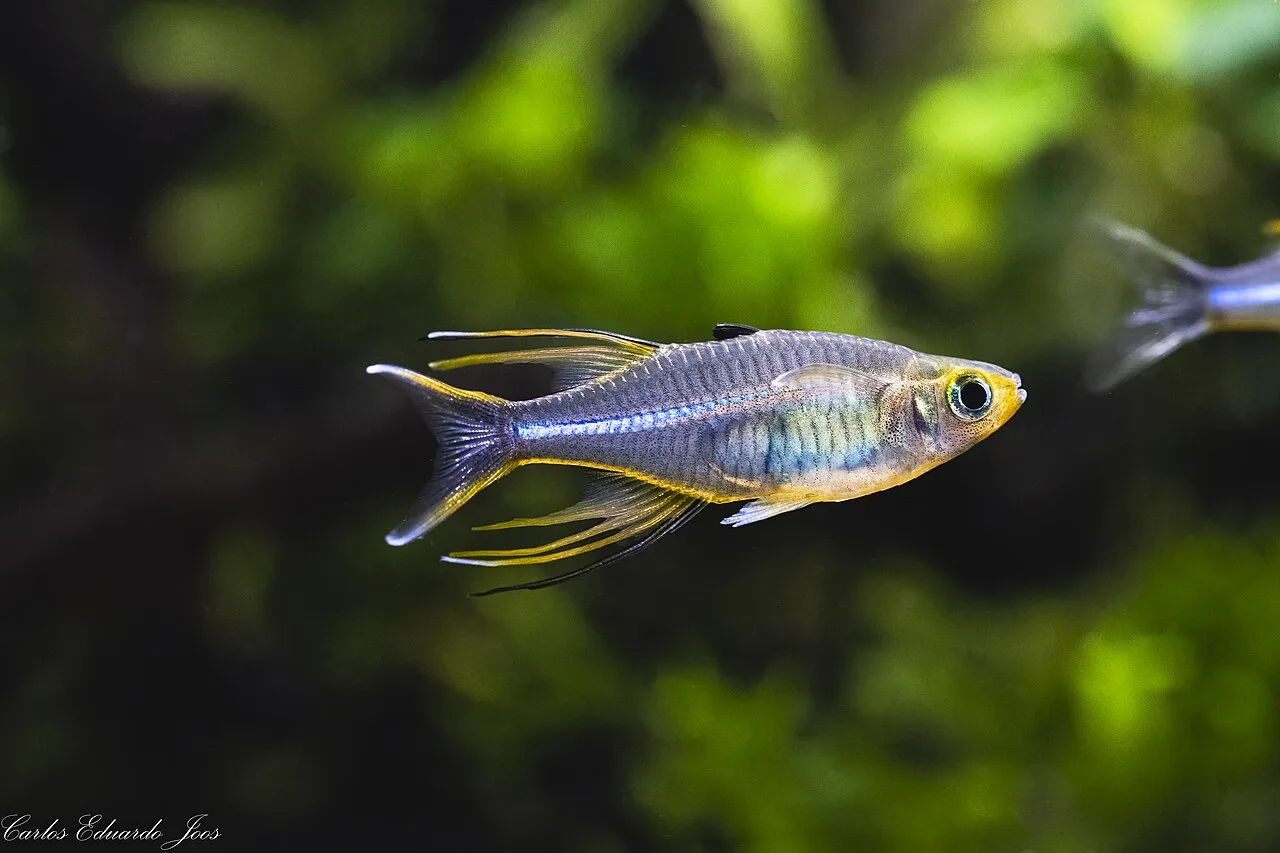
Similar water needs
Species with a similar temperature, a similar pH and a comparable adult size. Whether their behaviour fits as well is what the compatibility check is for.