Pacific blue-eye
Pseudomugil signifer
3 views
A small blue-eye from eastern Australia with a blue eye and yellow, sail-like fins. It tolerates fresh and brackish water.
- Temperature
- 20 – 28 °C
- pH
- 7 – 8 pH
- General hardness
- 8 – 20 °dH
- Maximum size
- 5 cm
- Minimum group size
- 8
- Minimum tank size
- 60 L
1 min read · 149 words
Quick facts
Place in the aquarium
Highlighted are the water layer and the spots where the species usually stays in the tank.
- Upper water Usually stays in the top third of the tank.
- Dense plants Looks for dense planting as cover, retreat or grazing ground.
Shrimp in the tank
Shrimplets at risk
- Not shrimp safe
- Dwarf shrimp at risk
- Shrimplets at risk
- Shrimp safe
- Adult dwarf shrimp
- Safe
- Shrimplets
- Get eaten
- Safe from shrimp size
- about 1.5 cm
Adult dwarf shrimp are safe with the Pacific blue-eye. It reaches about 5 cm, the mouth is small, and it feeds near the surface. Shrimp from about 1.5 cm are too large. Juvenile shrimp are eaten when they swim up.
Since both like hard water, the blue-eye suits Neocaridina well. Moss and plants on the bottom secure enough young.
Home & range
Hatched countries are where the species occurs. It lives in particular waters there, not across the whole country. The points name known waters for orientation, not collection sites.
- Country of origin
- Water for orientation
Native
Overview
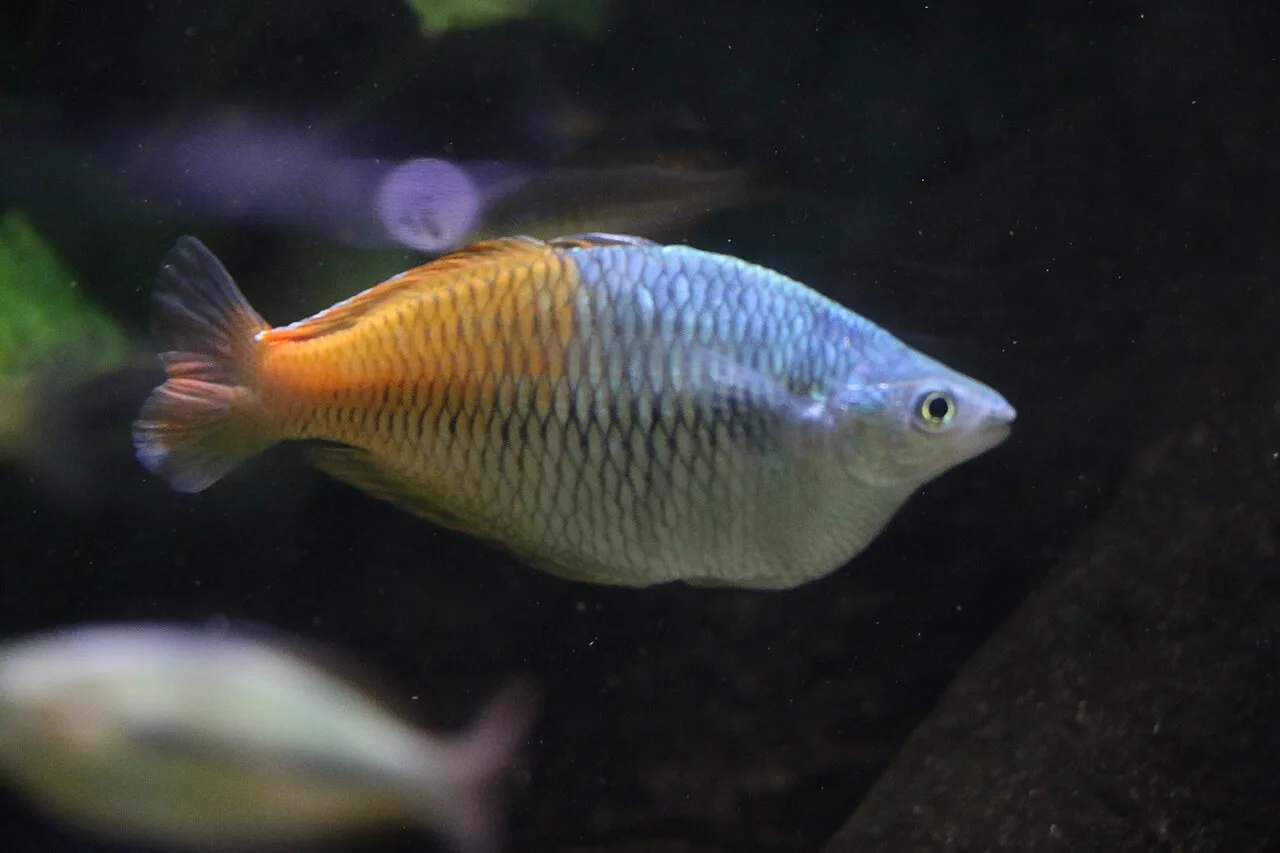
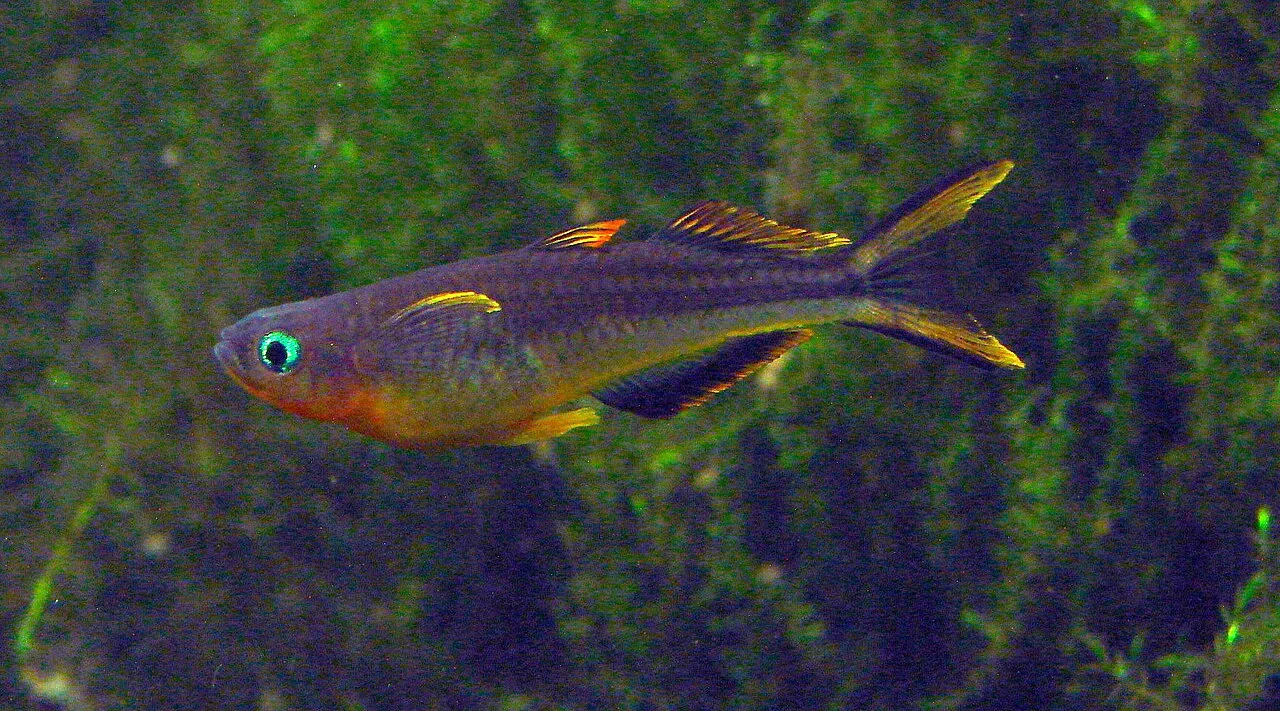
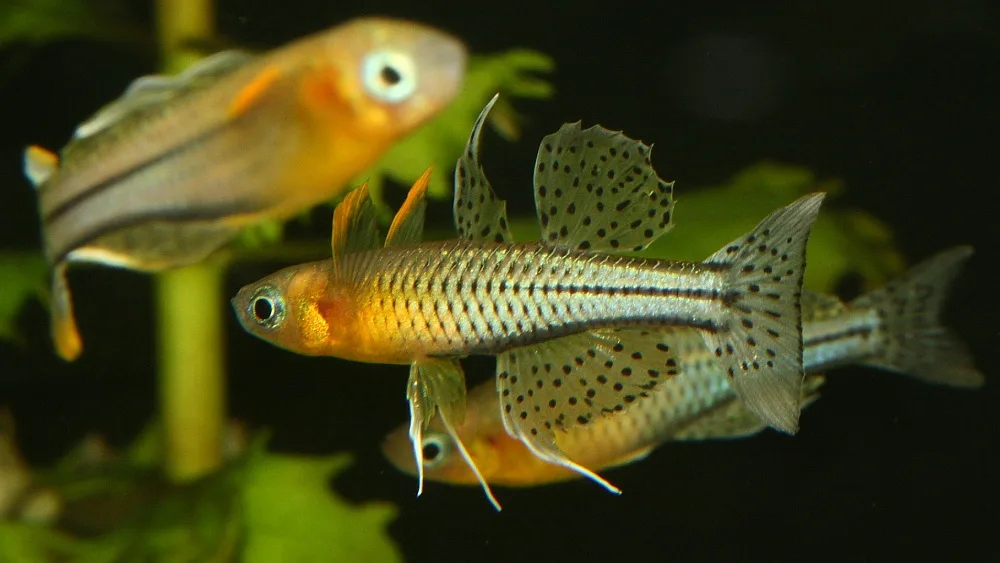
Pseudomugil signifer reaches about 5 cm. The body is slim, yellowish to olive, and the eye shimmers blue. Males carry large dorsal and anal fins edged in yellow, black and white. The colours differ by origin.
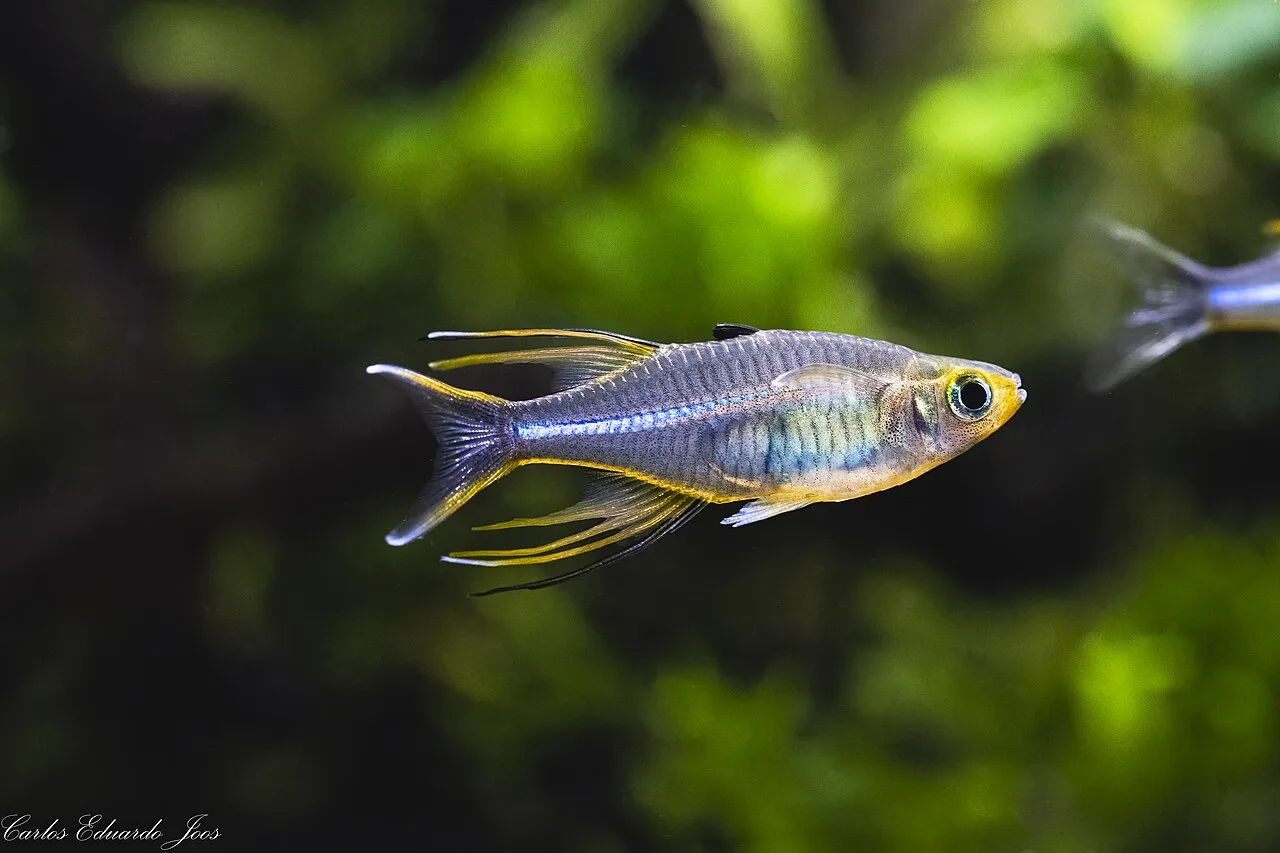
It is not the forktail blue-eye, which carries yellow fins on a blue body. Both stay small and live in groups.
Origin & habitat
This describes the origin, not how to furnish the aquarium.
Coastal streams, estuaries and lagoons in eastern Australia. The country stays the coarse origin. Clear, hard, sometimes slightly salty water matches that.
Care
Group
20 to 28 °C, pH 7 to 8. A group from eight, tanks from about 60 litres. Plants, open space, a cover.
Company
Other small, calm fish that tolerate hard water. Shrimp fit well.
Diet
Omnivore. Fine flakes, brine shrimp, cyclops, mosquito larvae.
Behavior
A peaceful group. Males court with spread fins. More females spread that.
Reproduction
Continuous spawner in fine plants or moss. The eggs hang on threads. The parents eat only part of the eggs.
Gallery
More species in this group
Similar water needs
Species with a similar temperature, a similar pH and a comparable adult size. Whether their behaviour fits as well is what the compatibility check is for.