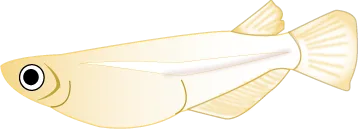
Southern platyfish
Xiphophorus maculatus
19 views
Livebearing toothcarp from the Atlantic side of Central America. Many fish in the trade are not pure wild strains.
- Temperature
- 18 – 25 °C
- pH
- 7 – 8 pH
- General hardness
- 9 – 19 °dH
- Maximum size
- 6 cm
- Minimum tank size
- 80 L
3 min read · 441 words
Fresh water
Quick facts
Further published values
- Lifespan
- 3 – 5 a
Place in the aquarium
Highlighted are the water layer and the spots where the species usually stays in the tank.
- Upper water Usually stays in the top third of the tank.
- Middle water Usually stays in the middle of the tank, between bottom and surface.
- Dense plants Looks for dense planting as cover, retreat or grazing ground.
Shrimp in the tank
Shrimplets at risk
- Not shrimp safe
- Dwarf shrimp at risk
- Shrimplets at risk
- Shrimp safe
- Adult dwarf shrimp
- Safe
- Shrimplets
- Get eaten
- Safe from shrimp size
- about 2 cm
Adult dwarf shrimp usually get on well with the platy. It grows to about 6 cm and as an omnivore eats algae, plant parts, insects and small crustaceans. Shrimp from about 2 cm are too big for it.
Baby shrimp are eaten, though, just as it eats its own fry. In densely planted tanks with moss some young still survive. For reliable breeding a species tank is better. The more fine structure lies on the bottom, the more young grow up, and food given in the evening distracts the fish as well.
Home & range
Hatched countries are where the species occurs. It lives in particular waters there, not across the whole country. The points name known waters for orientation, not collection sites.
- Country of origin
- Water for orientation
Native
- Mexico
- Range: Veracruz, Mexico, to northern Belize. Honduras was only in the older wording and has been removed.
- Belize
- Range: northern Belize, not the whole country. Honduras is not named.
Overview
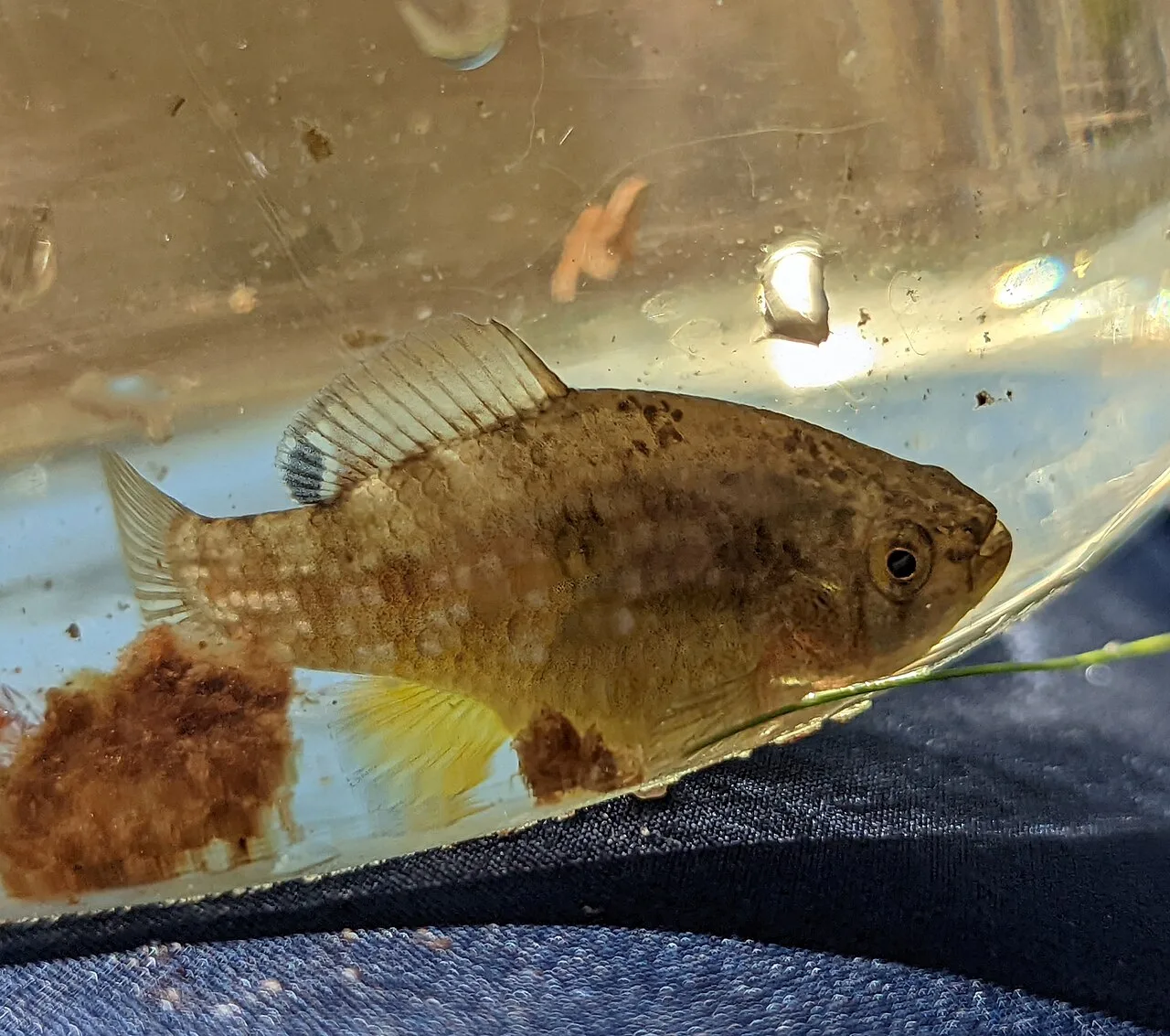
The species reaches 6 cm. Males have a gonopodium and a more pointed tail, females a fan-shaped anal fin. Wild fish are plain. Orange, red, yellow and black patterns are cultivated. A large share of shop platies are hybrids with the green swordtail, Xiphophorus hellerii. A sword on the tail points to the swordtail. Body shape alone does not separate the trade strains.
Wild form and the name
Males grow to 2 to 4 cm and females to 3 to 5 cm. The body is deep and laterally compressed, yellowish grey with a blue or green sheen. Some populations have black flanks, and some from Belize are orange or red. Usually a dark spot sits at the base of the tail. The name platy comes from the old genus Platypoecilus, and maculatus means spotted. Günther described the species in 1866. Many cultivated forms go back to crosses with the swordtail and the variable platy. The species is a model organism in cancer research, and its genome was sequenced in 2013.
Origin & habitat
This describes the origin, not how to furnish the aquarium.
The species lives from Veracruz, Mexico, to northern Belize, in slow canals, ditches and warm springs. Honduras is not part of its range. Belize is added as a coarse origin. Neither Mexico nor Belize is filled. Introduced records in the United States and Hawaii are not mapped.
The native range runs from Veracruz in Mexico to Belize, Guatemala and Honduras, centred on the Rio Papaloapan and Rio Coatzacoalcos systems. Still, shallow, swampy pools and ponds at pH 7 to 8 and 18 to 25 °C are preferred, as well as slow rivers, ditches and warm springs with aquatic or marsh plants. The species has been introduced to at least 18 further countries, in Europe for instance the warm Warmbach in Villach.
Care
18–25 °C, pH 7.0–8.0 and 9–19 °dGH. Tanks from about 80 litres are an editorial size. Plants and gravel give the young cover.
Diet
Omnivore. It eats plants plus small crustaceans, insects and annelid worms.
Behavior
A peaceful group for a community tank. The stock grows when the young find cover.
Platies are not schooling fish but live in loose groups with fairly stable hierarchies. Females fight as hard as males. When alarmed the fish hide among plants. A ratio of one male to three females and a weekly water change of about a quarter are recommended.
Reproduction
Livebearer. Mature at three to four months. A brood is about 20 to 40 young. The adults eat some of them. The young start at about 7 mm.
Platies mature at three to four months. Stored sperm suffices for several broods. Gestation takes about 24 days, and the dark gravid spot shows a week before birth. Each brood brings 20 to 80 large young that feed at once and are often eaten in a community tank.
Gallery
More species in this group
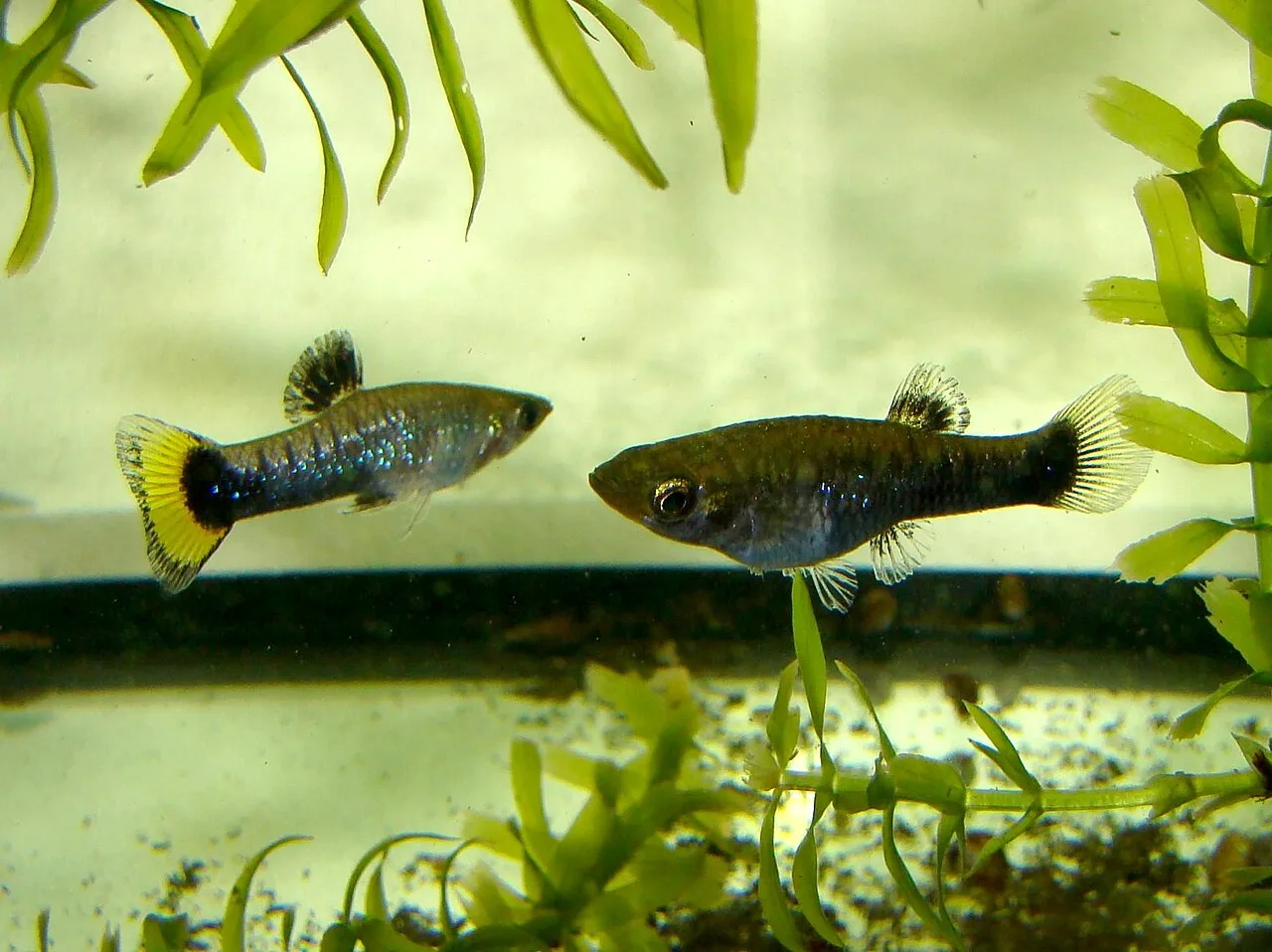
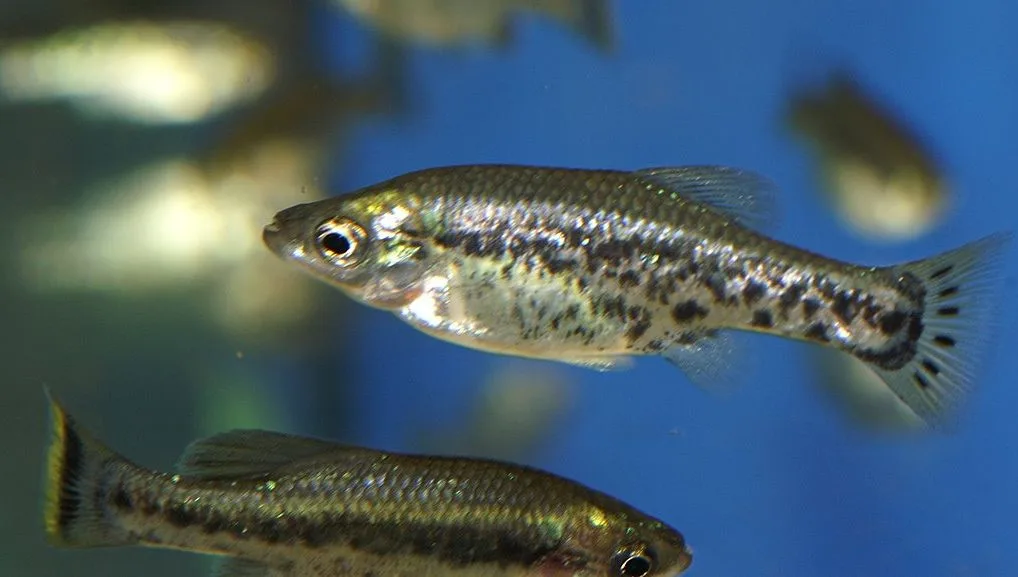

Similar water needs
Species with a similar temperature, a similar pH and a comparable adult size. Whether their behaviour fits as well is what the compatibility check is for.