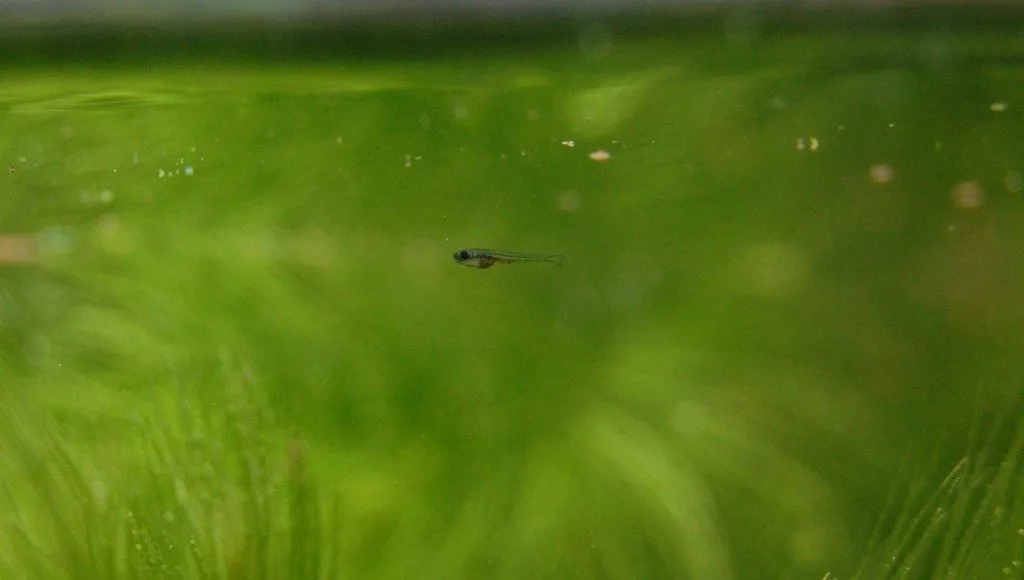
Least killifish
Heterandria formosa
19 views
A very small livebearer. Females around 3.6 cm, males about 2 cm. The normal range is 13 to 22 °C.
- Temperature
- 13 – 22 °C
- pH
- 7.2 – 7.6 pH
- General hardness
- 8 – 20 °dH
- Maximum size
- 4 cm
- Minimum tank size
- 50 L
3 min read · 497 words
Quick facts
Place in the aquarium
Highlighted are the water layer and the spots where the species usually stays in the tank.
- Upper water Usually stays in the top third of the tank.
- Dense plants Looks for dense planting as cover, retreat or grazing ground.
Shrimp in the tank
Shrimplets at risk
- Not shrimp safe
- Dwarf shrimp at risk
- Shrimplets at risk
- Shrimp safe
- Adult dwarf shrimp
- Safe
- Shrimplets
- Get eaten
- Safe from shrimp size
- about 1 cm
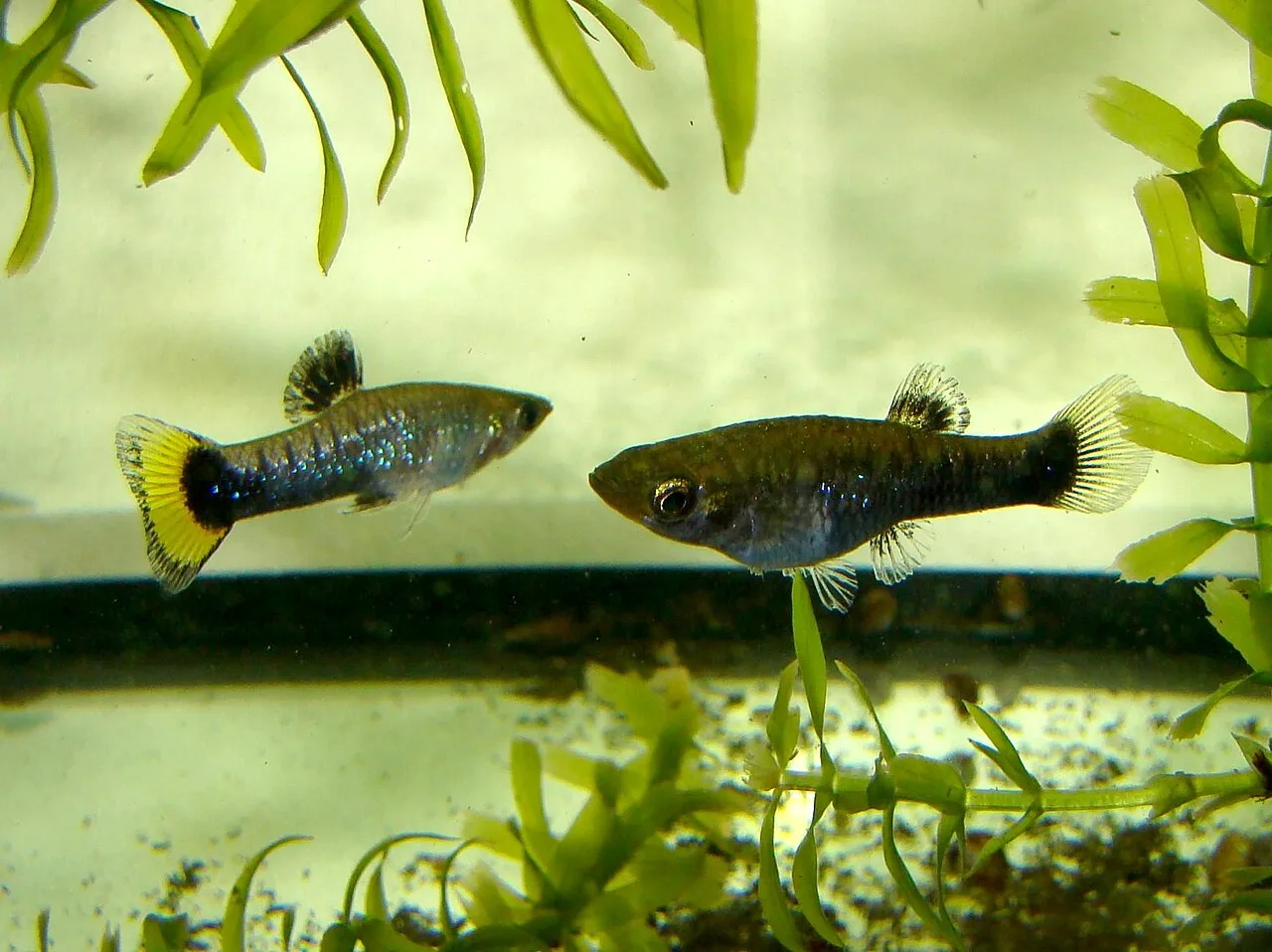
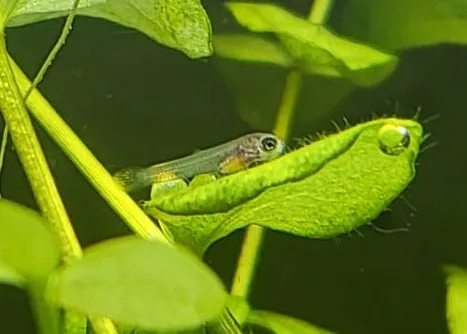
The least killifish is harmless to adult shrimp. Females reach about 3.6 cm, males only about 2 cm. Males eat only very small food such as water fleas and copepods, females also mosquito larvae. Shrimp from about 1 cm are safe. Newly hatched shrimp can be eaten.
The species loves dense plant tangles, where young shrimp also find cover. A species tank with moss and fine plants suits keeping it together with Neocaridina, which also tolerate cooler temperatures.
Home & range
Hatched countries are where the species occurs. It lives in particular waters there, not across the whole country. The points name known waters for orientation, not collection sites.
- Country of origin
- Water for orientation
Native
Overview
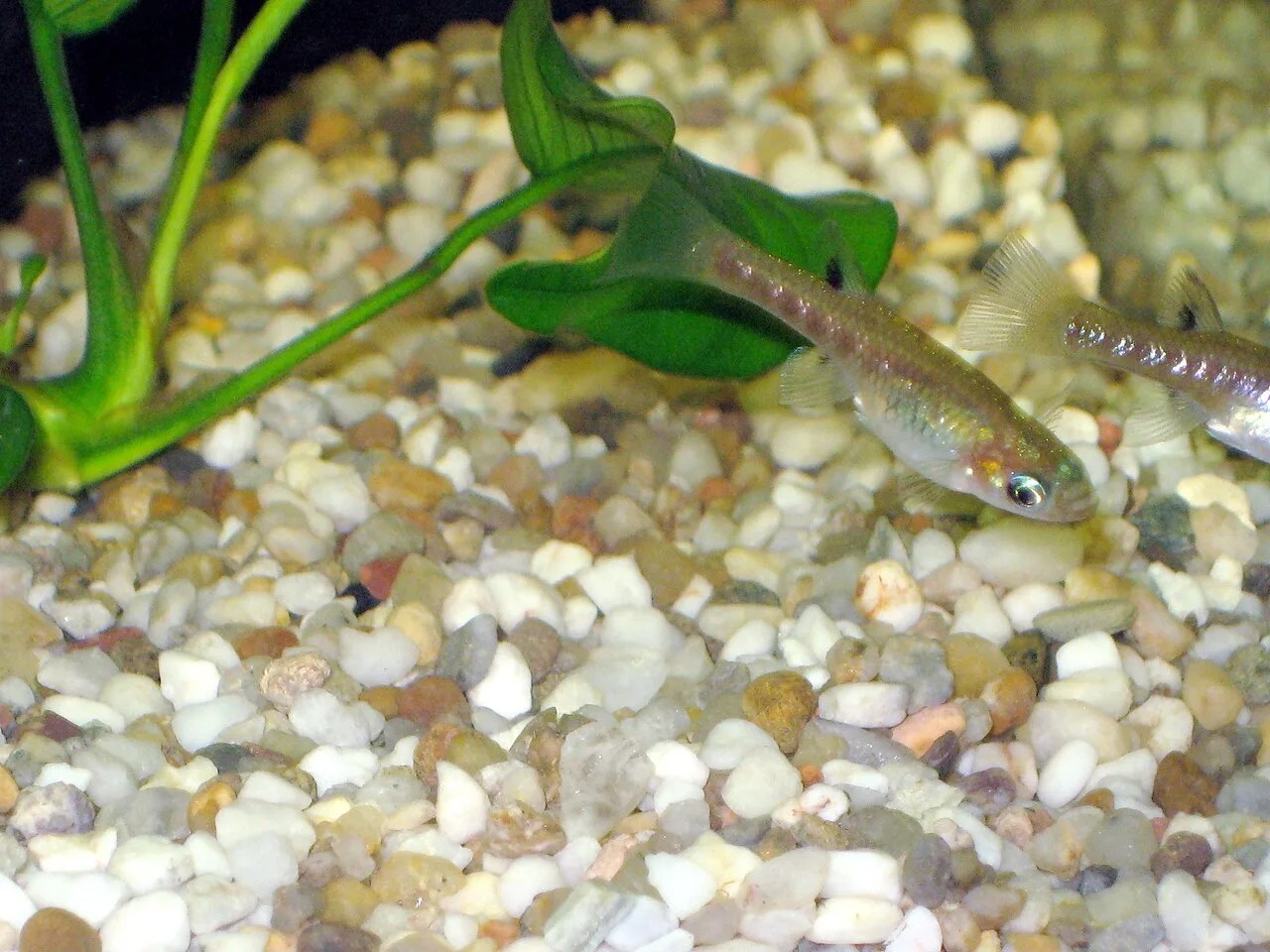
Females are around 3.6 cm, and some domesticated fish exceed 4 cm. Males stay near 2 cm and grow a long gonopodium around weeks four or five. Sexual maturity is roughly between weeks ten and twelve.
Systematics
Charles Frédéric Girard described the species in 1859. It is the only species of the genus Heterandria, set up by Louis Agassiz in 1853, and among the smallest livebearers. Females can manage larger food animals such as mosquito larvae up to about 2 cm, males only much smaller ones such as water fleas and copepods.
Origin & habitat
This describes the origin, not how to furnish the aquarium.
Across the range, water temperatures swing from brief frosts near 4 °C to 39 °C in summer. That is the span of the habitats, not the aquarium recommendation.
The range extends from the Cape Fear River in North Carolina to Texas. The species inhabits densely vegetated standing ponds and slow-flowing waters such as ditches, reaching into brackish water. The fish usually stay at the edges and prefer tight structures, dense plant tangles more than gaps between stones.
Care
It tolerates 10 to 30 °C, and the normal range is about 13 to 22 °C, with day-night or seasonal change. Permanently hot water is not helpful. In winter, shorter light and lower temperature fit. A coldwater tank with tankmates that are not too large is suitable.
Tiny and livebearing
The least killifish stays at about 2 to 3 cm, the males smaller than the females. 22 to 26 °C, pH 6.5 to 7.5, tanks from about 30 litres, densely planted. The species is peaceful and must not be put with large fish that treat it as food.
Several females per male spread the courtship. Fine plants and moss give the young cover. Without that cover the stock eats its own offspring.
Diet
From live food to flakes. Live food is preferred. Females can take larger items such as mosquito larvae. Males manage only small prey such as daphnia and copepods.
Behavior
Tankmates should not be large.
Territories and escape
Females move singly or in small groups along the edges of dense structures and bump each other only occasionally. At normal density males form small territories a few centimetres in radius and wait there for passing females. To threaten, they arch their back into a hollow and turn yellowish. Juveniles stay in the densest growth. When fleeing, adults and young dive head first into the nearest plant clump or soft mulm.
Superfetation
Females carry young at different stages at the same time and nourish them through a follicular placenta. One to four births a day are typical, up to nine on single days. A female produces about 30 young over roughly four weeks. Young females can be mated without courtship and store the sperm.
Reproduction
Breeding is described as not difficult and follows a season that peaks from May to July. The adults usually do not hunt the young. Fry find food in a planted tank and can be given Artemia nauplii.
Livebearer, with small broods. The young are tiny and need dust-fine food. In a species tank the group grows slowly and steadily. That is the keeping.
Gallery
More species in this group
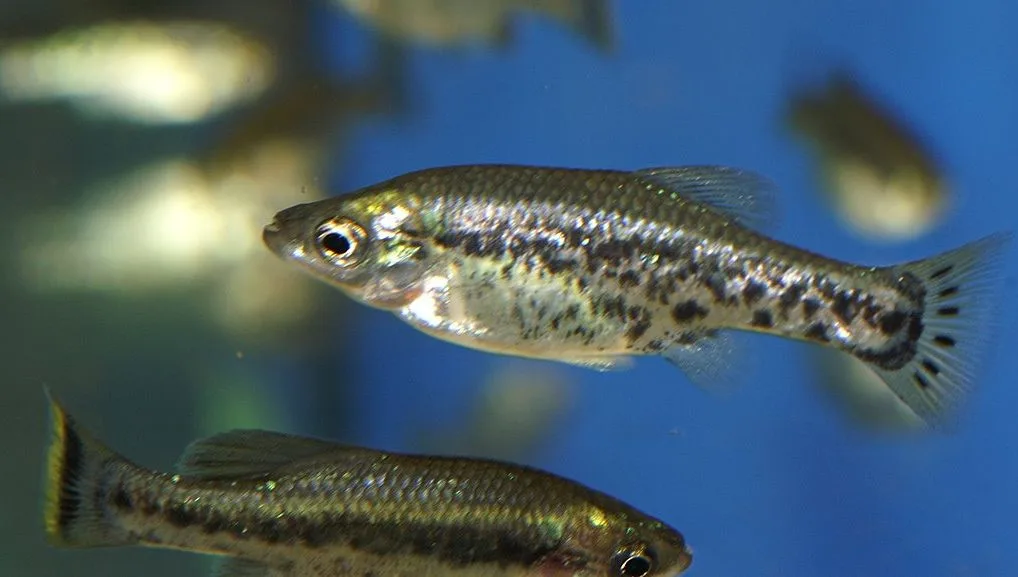

Similar water needs
Species with a similar temperature, a similar pH and a comparable adult size. Whether their behaviour fits as well is what the compatibility check is for.