Metallic livebearer
Girardinus metallicus
2 views
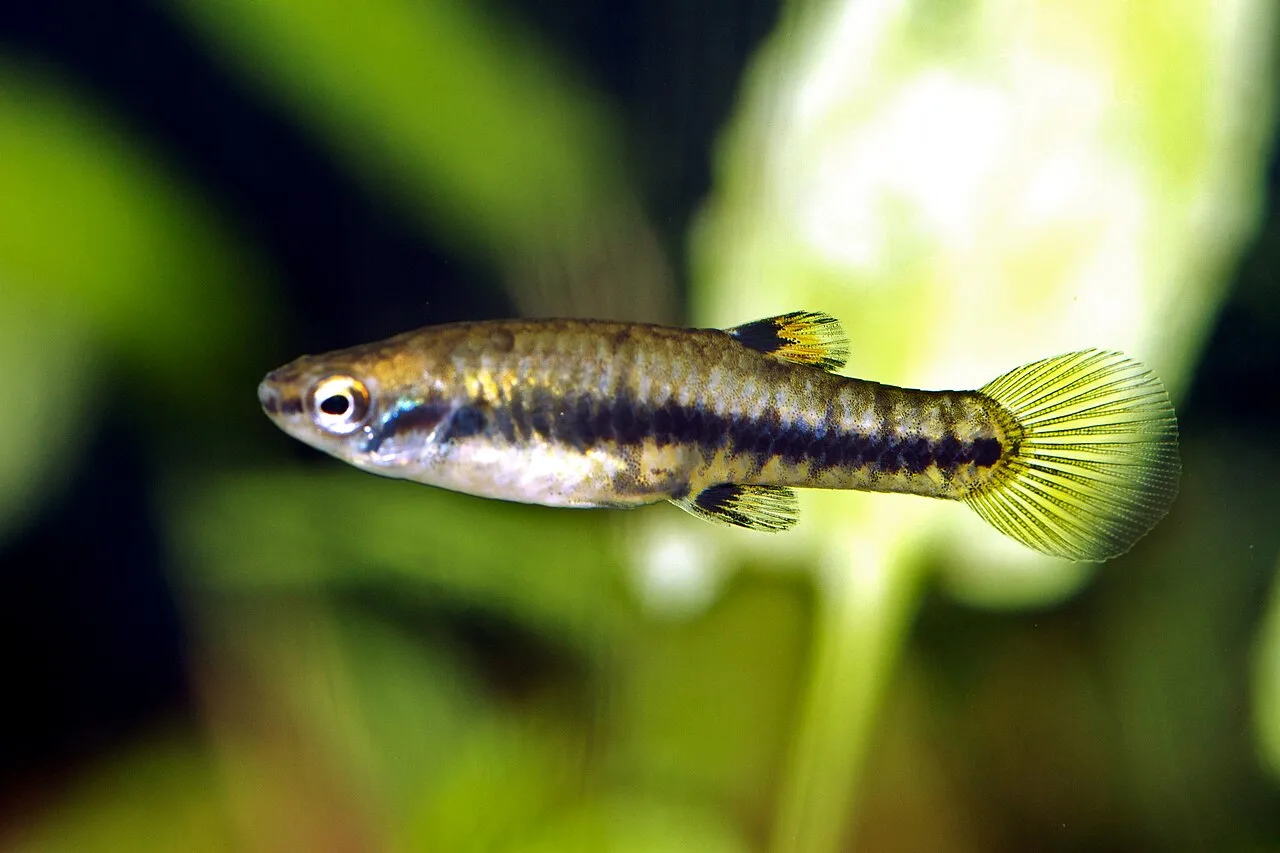
A small livebearer from Cuba with metallic, gleaming scales. It is peaceful and undemanding.
- Temperature
- 22 – 26 °C
- pH
- 7 – 8 pH
- General hardness
- 10 – 20 °dH
- Maximum size
- 7 cm
- Minimum tank size
- 60 L
1 min read · 150 words
Quick facts
Place in the aquarium
Highlighted are the water layer and the spots where the species usually stays in the tank.
- Upper water Usually stays in the top third of the tank.
- Middle water Usually stays in the middle of the tank, between bottom and surface.
- Dense plants Looks for dense planting as cover, retreat or grazing ground.
Shrimp in the tank
Shrimplets at risk
- Not shrimp safe
- Dwarf shrimp at risk
- Shrimplets at risk
- Shrimp safe
- Adult dwarf shrimp
- Safe
- Shrimplets
- Get eaten
- Safe from shrimp size
- about 2 cm
Adult dwarf shrimp are usually safe with the metallic livebearer. Females reach about 7 cm, and the mouth is small. Shrimp from about 2 cm are rarely approached. Juvenile shrimp and freshly moulted adults are eaten, however.
In a densely planted tank with moss a group of Neocaridina holds its own next to the livebearers. Both like hard water.
Home & range
Hatched countries are where the species occurs. It lives in particular waters there, not across the whole country. The points name known waters for orientation, not collection sites.
- Country of origin
- Water for orientation
Native
Overview
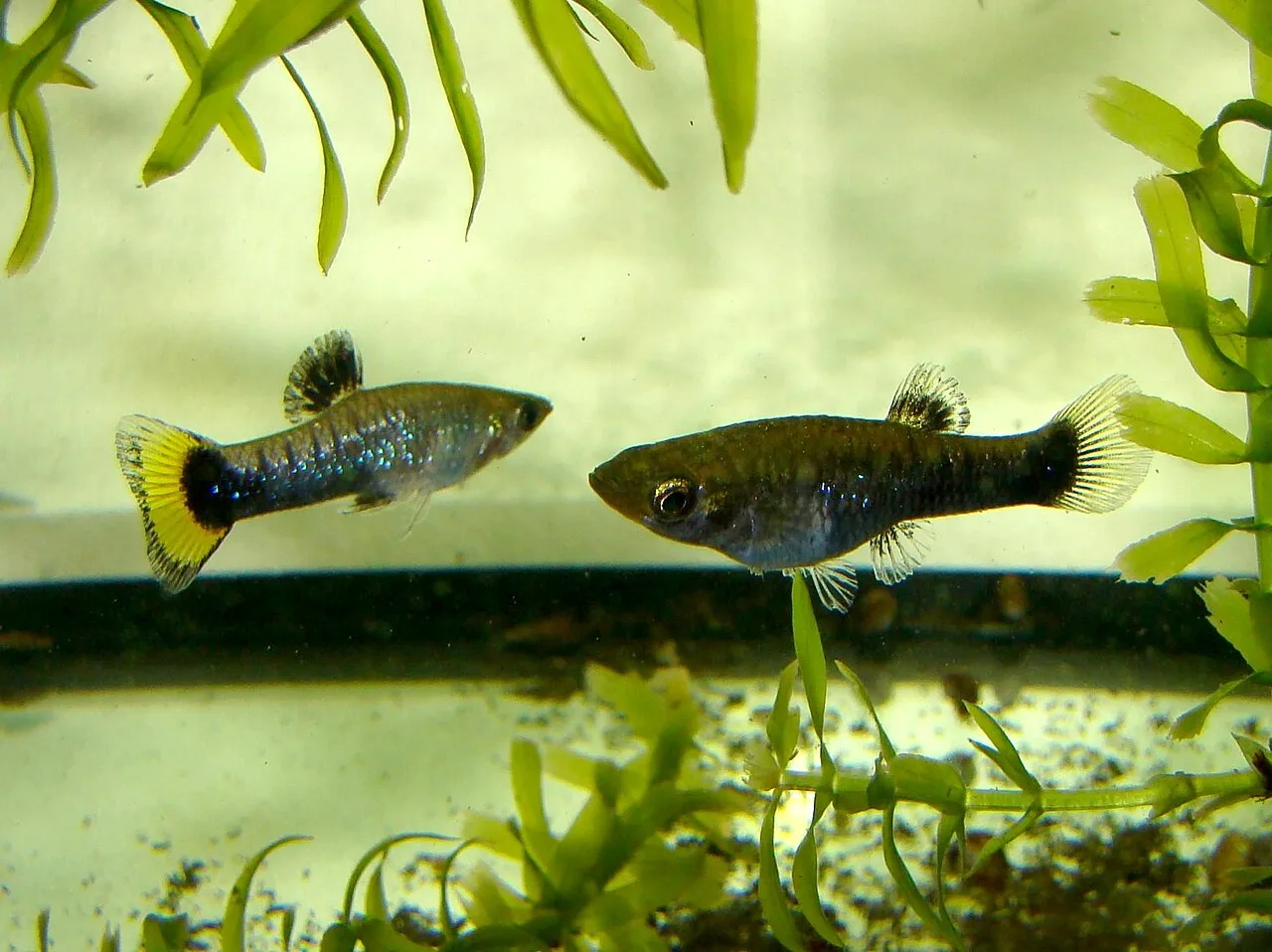
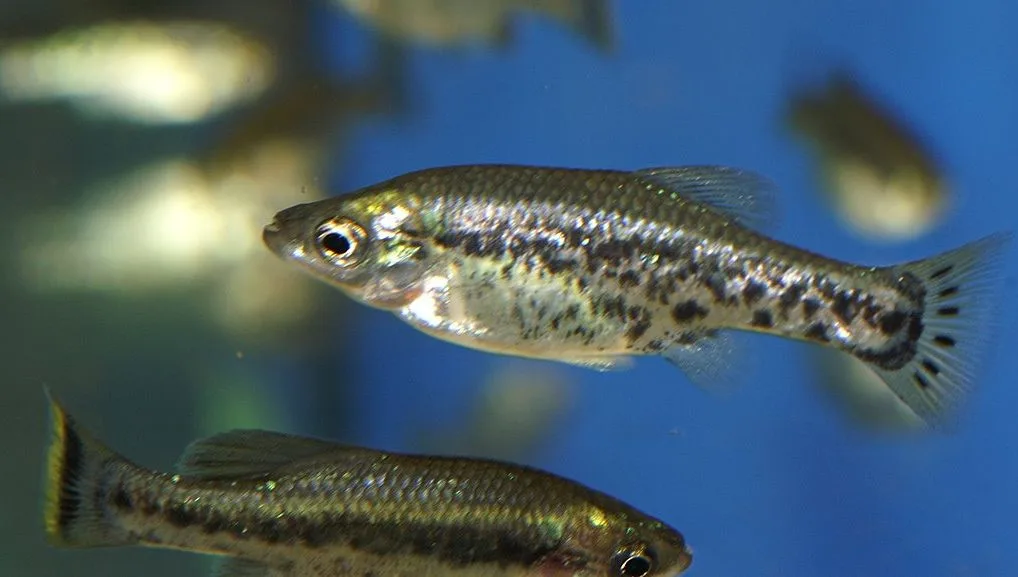
Girardinus metallicus reaches about 7 cm as a female, while males stay at about 5 cm. The scales gleam silver to brass, and many males carry black areas on the throat and belly. The gonopodium is strikingly long.
It is not a guppy and not an Endler. The colours are more restrained and the behaviour calmer. It suits a planted tank with hard water well.
Origin & habitat
This describes the origin, not how to furnish the aquarium.
Waters on Cuba. The island stays the coarse origin. Calm, plant-rich water matches that.
Care
Group
22 to 26 °C, pH 7 to 8. A group with more females than males, tanks from about 60 litres. Plants, floating plants, calm.
Company
Other calm, small fish that tolerate hard water. Hectic fish intimidate it.
Diet
Omnivore. Flakes, brine shrimp, mosquito larvae, spirulina. Several small feeds.
Behavior
A peaceful group. Males court without pressing the females hard, as long as there are enough plants.
Reproduction
Livebearer. The young are born fully formed and find cover among plants.
Gallery
More species in this group

Similar water needs
Species with a similar temperature, a similar pH and a comparable adult size. Whether their behaviour fits as well is what the compatibility check is for.