Endler livebearer
Poecilia wingei
23 views
A livebearing relative of the guppy from two small areas in the Venezuelan state of Sucre. The species is listed as endangered.
- Temperature
- 23 – 28 °C
- pH
- 6.5 – 8 pH
- General hardness
- 4 – 12 °dH
- Maximum size
- 2.9 cm
- Minimum tank size
- 30 L
5 min read · 730 words
Fresh water
Quick facts
Further published values
- Lifespan
- 2 a
Place in the aquarium
Highlighted are the water layer and the spots where the species usually stays in the tank.
- Upper water Usually stays in the top third of the tank.
- Dense plants Looks for dense planting as cover, retreat or grazing ground.
Shrimp in the tank
Shrimplets at risk
- Not shrimp safe
- Dwarf shrimp at risk
- Shrimplets at risk
- Shrimp safe
- Adult dwarf shrimp
- Safe
- Shrimplets
- Get eaten
- Safe from shrimp size
- about 1 cm
Endler's livebearer is a good partner for dwarf shrimp. Males stay under 2 cm and females at about 2 to 3 cm, and the small mouth cannot handle adult shrimp. Freshly hatched young are eaten, though, when they move about in the open. Shrimp from about 1 cm are usually safe.
With dense moss and fine plants many young grow up in a shared tank. Neocaridina suit well because both tolerate similar, moderately hard water.
Home & range
Hatched countries are where the species occurs. It lives in particular waters there, not across the whole country. The points name known waters for orientation, not collection sites.
- Country of origin
- Water for orientation
Native
Overview
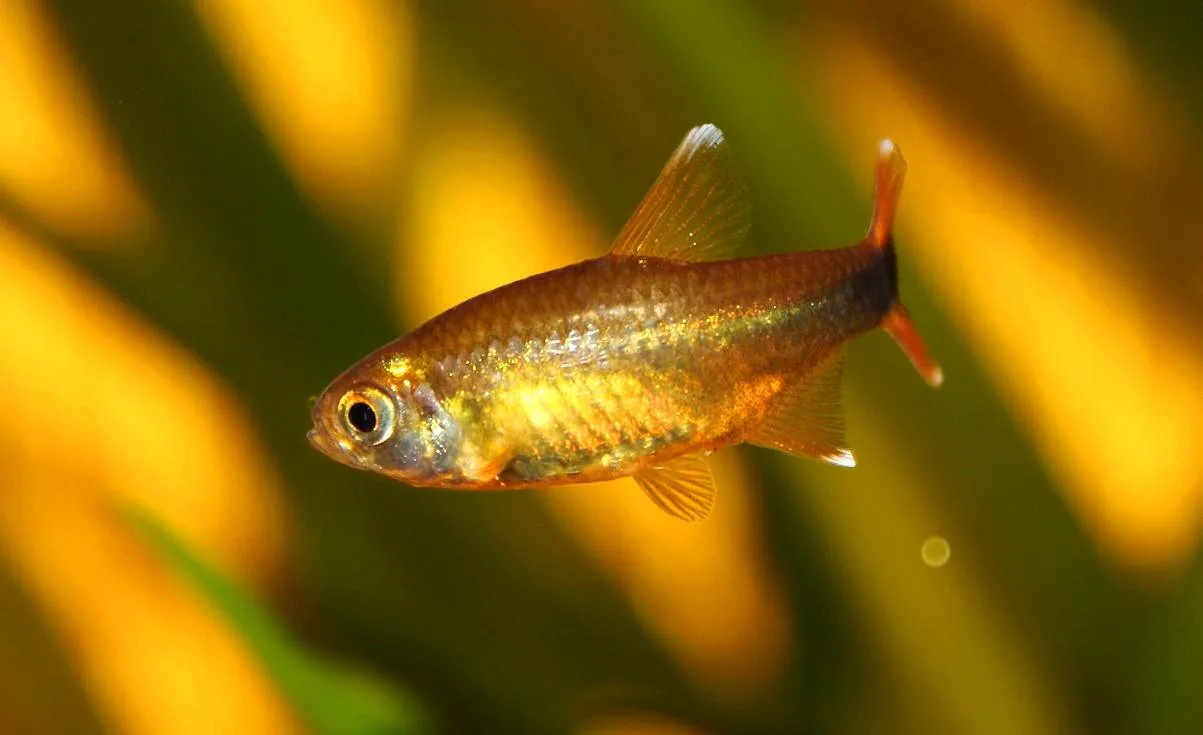
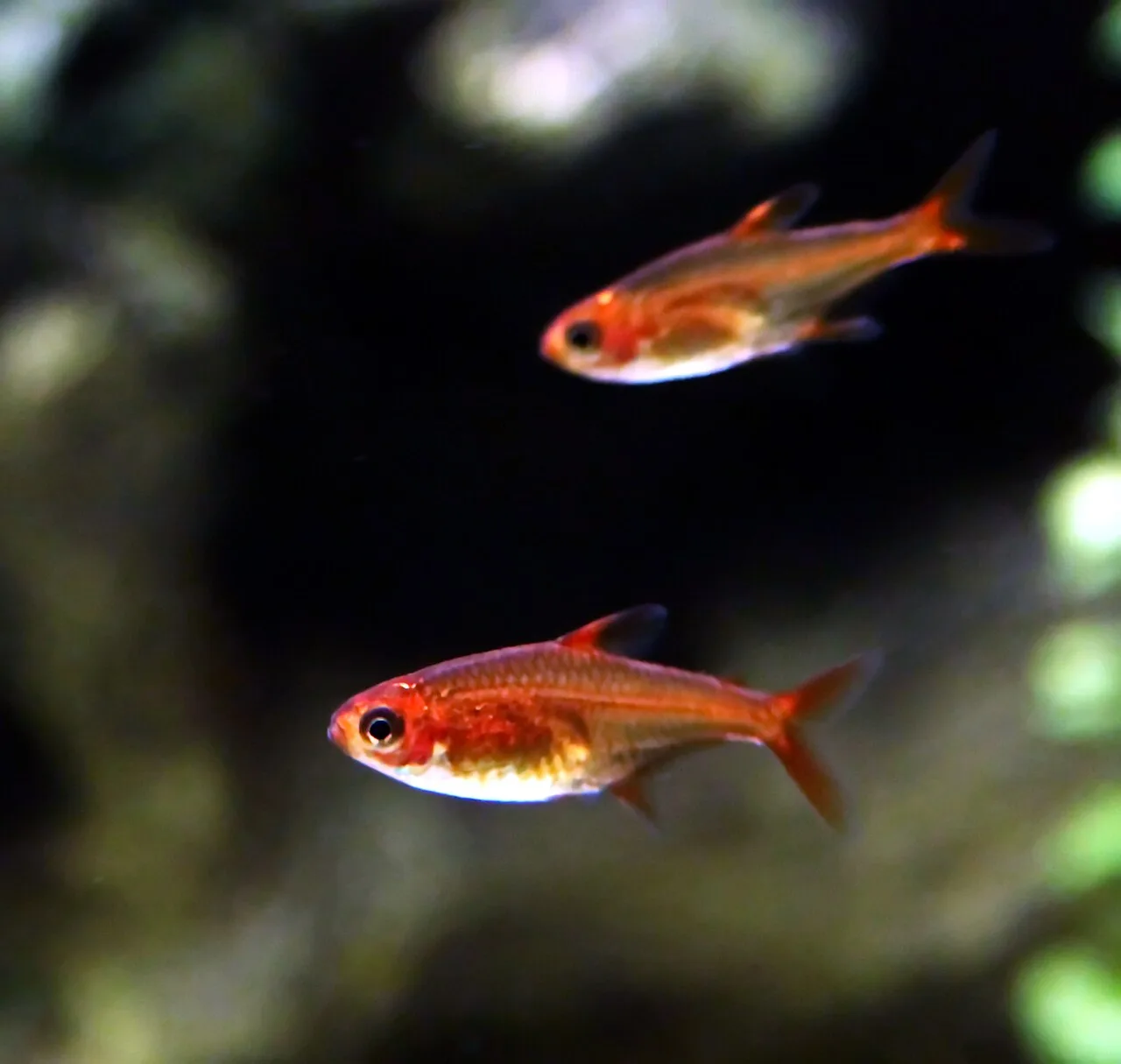
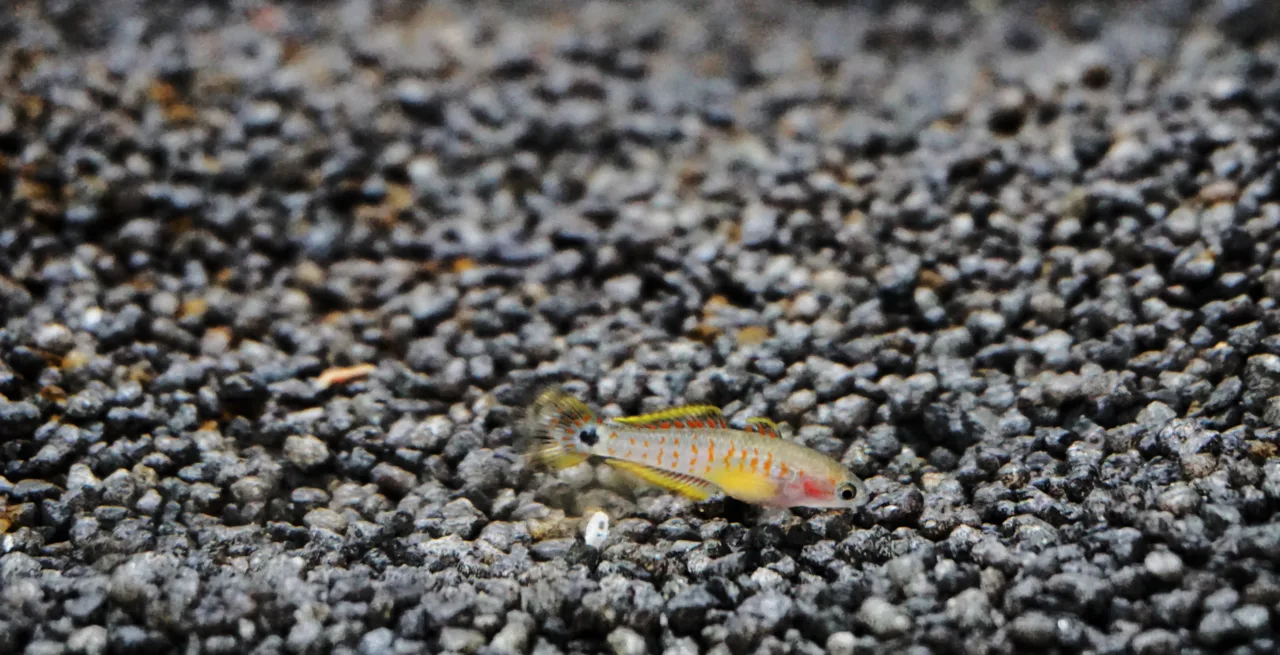
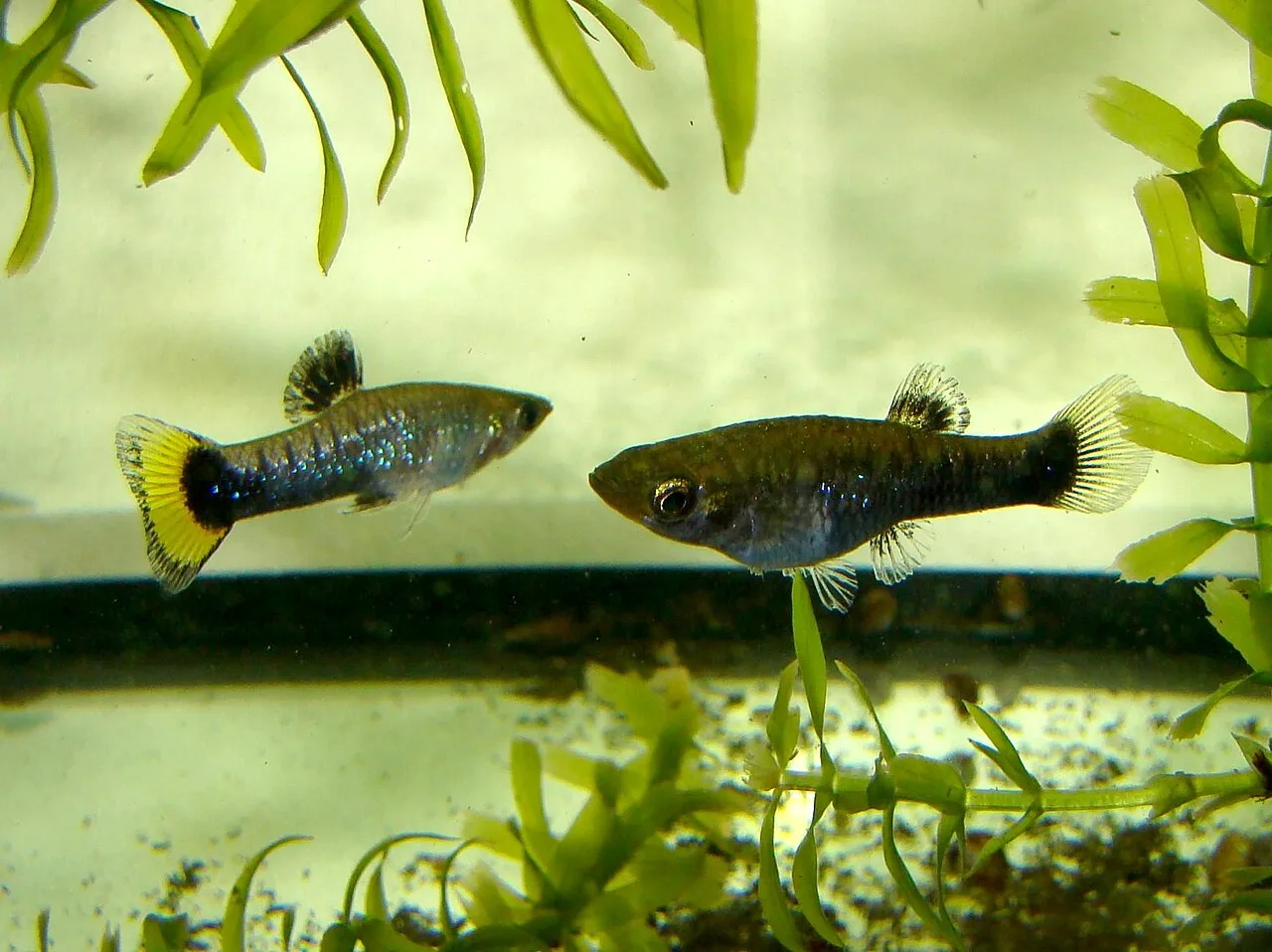
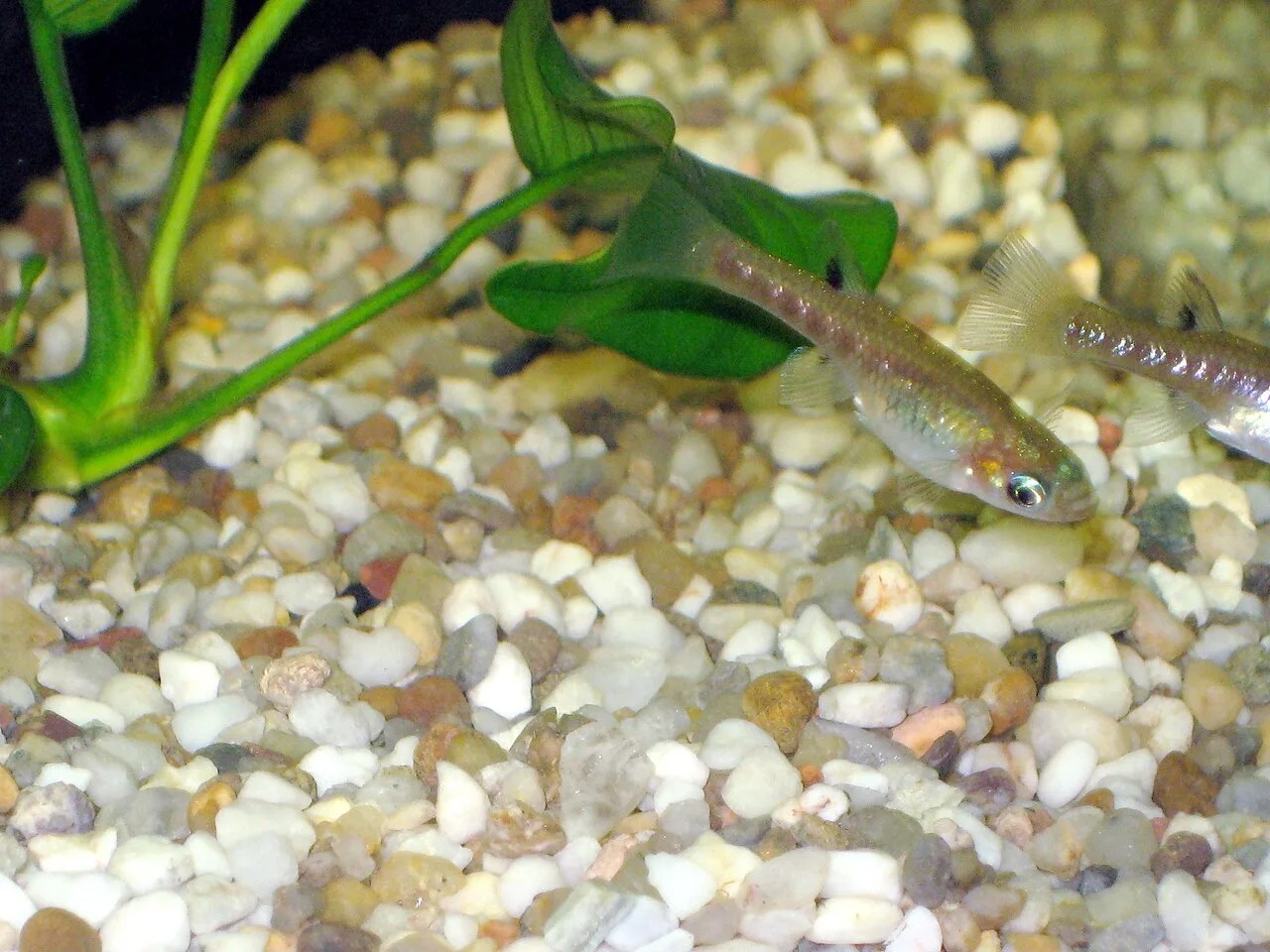
Poecilia wingei was described in 2005 by Poeser, Kempkes and Isbrücker from the Campoma lagoon. Franklyn F. Bond had already sent fish from the Paria Peninsula to the United States in 1937. They were ignored because they were taken for ordinary guppies. In 1975 John A. Endler caught unusual fish in the freshened Laguna de los Patos near Cumaná. Through Donn Rosen and Klaus Kallmann, live fish reached breeders. Molecular data from 2009 placed the Cumaná and Campoma fish in the same species. Differences from the guppy lie in the colour of the males, the structure of the gonopodium and a slight metallic sheen of the females. Females reach about 2 to 2.9 cm standard length, are greyish beige and show a gravid spot. Males stay at 1.5 to 1.96 cm and carry spots and bands. A vertical black band at mid-body is characteristic of Campoma fish. The males court females more intensely and for longer than Poecilia reticulata.
Identification and name
The species differs from the guppy by the colour of the males, the structure of the gonopodium and a slight metallic sheen in females. Males court more intensively and for longer than guppies. Many show a double sword, and the black, orange and metallic green colours are very strong. The name honours the Danish biologist Øjvind Winge, who worked on guppy genetics. Whether the species is distinct remains disputed: molecular data from 2009 support it, a 2014 paper doubts it. Endlers can produce fertile hybrids with guppies, and many fish in the trade are such crosses.
Origin & habitat
This describes the origin, not how to furnish the aquarium.
The species occurs only in two separate areas in Sucre: around the Campoma lagoon near Cariaco, about 100 by 50 km, and near Cumaná in the Laguna de Patos, polluted by rubbish and oil, plus two further waters. Spurs of the Andes separate the region from the rest of Venezuela, where only the ordinary guppy occurs. Near Cumaná there is contact with brackish water. The fish stay mainly near the banks. Predators include piranha-like tetras, cichlasomine cichlids and Crenicichla. On 8 March 2021 the species was assessed as endangered on the Red List, published in 2024. Settlement, agriculture, aquaculture, logging, fishing, invasive species, hybridisation with the guppy, wastewater and effects of climate change are named.
Habitat and threats
The species occurs only in two separate areas in Sucre state: in the Campoma lagoon near Cariaco with the waterways of the surrounding marshland, together about 100 by 50 km, and in the Laguna de Patos, heavily polluted by rubbish and oil, plus two other waters near Cumaná. Foothills of the Andes separate them from the rest of Venezuela, and beyond them only common guppies live. The Cumaná population has contact with brackish water. The fish stay mainly near the shore, together with piranha-like characins and pike cichlids that eat them. The IUCN names development, agriculture, introduced species, wastewater, climate change and mixing with released guppies as threats.
Care
The sizes are standard lengths, not total lengths including fins.
Small and fertile
The Endler stays smaller than a cultivated male guppy, the males often under 3 cm, the females a little larger. It wants hard to medium-hard water, 22 to 28 °C, a group with several females, and dense plants for the young. From about 40 litres if the tank is not shared with large fish.
Crosses with the guppy are widespread in the trade. Anyone who means the species keeps it apart from guppies. A fish with guppy fins and Endler colour is usually a mix and does not belong in a breeding setup of this species.
Behavior
Male courtship is longer and more intense than in the ordinary guppy. The closer the two species live, the larger the external differences become. That is described as a barrier to cross-breeding.
The species is hardy and undemanding. Aquascaping, food, water values, tankmates and the sex ratio determine how strongly coloured a line is. The young spend their first hours on the bottom using up the yolk sac, when they are most at risk, including from their own mother. Males start to colour at about three to four weeks, and full colour takes several months.
Reproduction
The species is livebearing. Females drop at most 40 young at intervals of 28 to 43 days. Hybridisation with Poecilia reticulata is a threat, not a keeping recommendation.
Livebearer, and very productive. The young are tiny and survive in moss and floating plants. Without intervention the tank consists of Endlers after half a year. That is the keeping, not an accident.
Gallery
More species in this group

Similar water needs
Species with a similar temperature, a similar pH and a comparable adult size. Whether their behaviour fits as well is what the compatibility check is for.