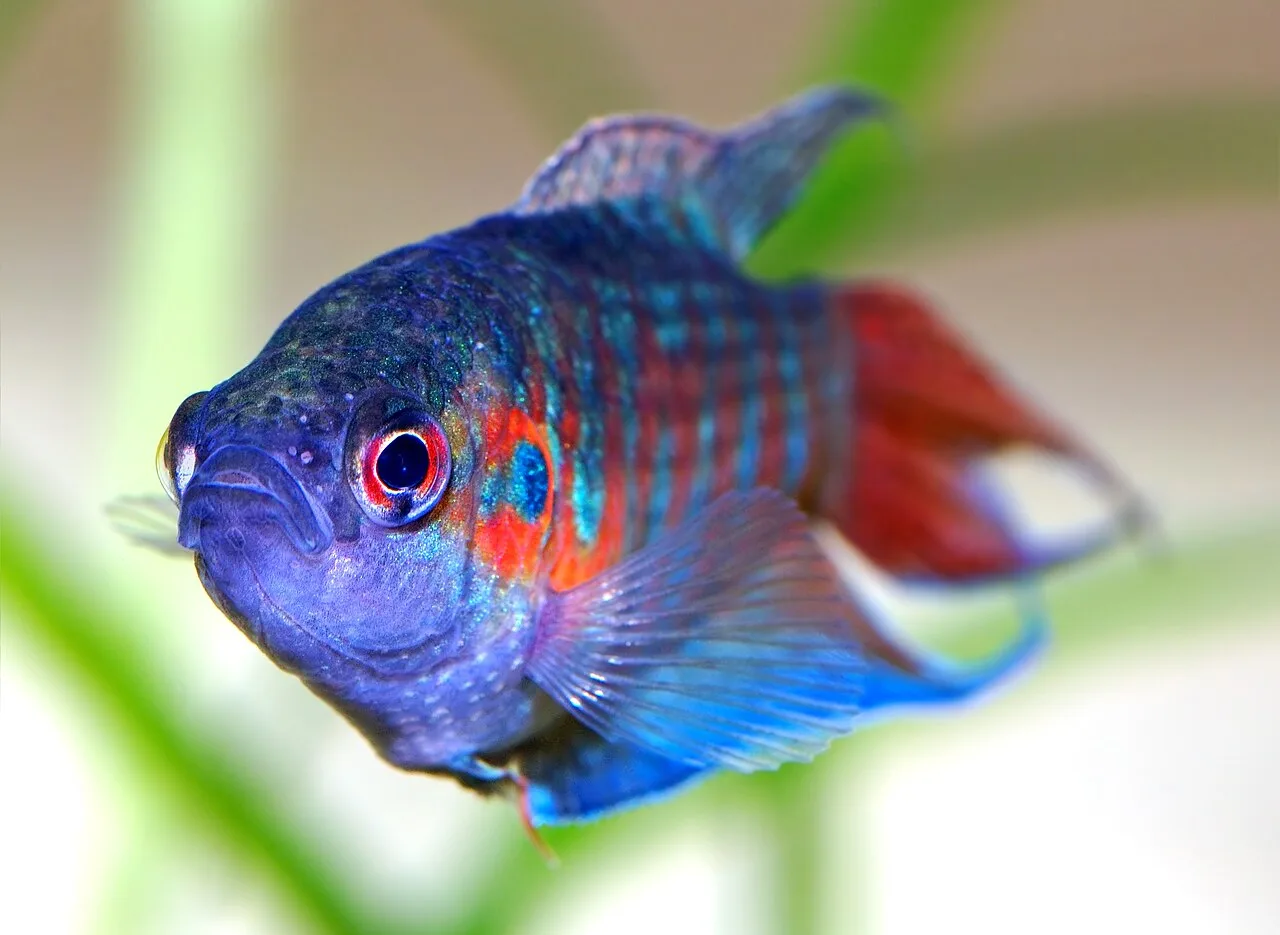
Rosy barb
Pethia conchonius
19 views
A barb of ponds and streams at 18 to 22 °C. The species tolerates pH 6 to 8 and a hardness of 5 to 19 °dH.
- Temperature
- 18 – 22 °C
- pH
- 6 – 8 pH
- General hardness
- 5 – 19 °dH
- Maximum size
- 15
- Minimum group size
- 8
- Minimum tank size
- 150 L
3 min read · 372 words
Fresh water
Quick facts
Further published values
- Lifespan
- 3 a
Place in the aquarium
Highlighted are the water layer and the spots where the species usually stays in the tank.
- Middle water Usually stays in the middle of the tank, between bottom and surface.
- Open swimming space Needs an open area without plants or decor to swim at length. Tank length matters more than height.
Shrimp in the tank
Dwarf shrimp at risk
- Not shrimp safe
- Dwarf shrimp at risk
- Shrimplets at risk
- Shrimp safe
- Adult dwarf shrimp
- At risk
- Shrimplets
- Get eaten
- Safe from shrimp size
- about 4 cm
The rosy barb is a risk even for adult dwarf shrimp. In aquaria it grows to about 10 cm, always seems hungry and eats worms, insects and crustaceans besides plant matter.
Neocaridina and Caridina are hunted, and their young anyway. Larger shrimp such as Amano shrimp from about 4 cm are usually safe. Anyone who wants dwarf shrimp keeps them apart from rosy barbs. Anyone who wants to add shrimp should choose robust, larger species and introduce them only once the tank is well run in and densely planted. A small separate tank with moss and leaf litter is the most reliable solution for a stable shrimp colony and needs little effort to run.
Home & range
Hatched countries are where the species occurs. It lives in particular waters there, not across the whole country. The points name known waters for orientation, not collection sites.
- Country of origin
- Water for orientation
Native
Overview
The rosy barb lives in ponds, pools and flowing water. It prefers soft, slightly acidic water and tolerates pH 6 to 8 and hardness of 5 to 19 °dH.
Size and colour
In its home waters the rosy barb grows to 15 cm, in aquaria at most about 8 to 10 cm. The back is glossy olive green, the sides and belly silvery red, deep ink red in the spawning season. A black spot sits on the caudal peduncle above the end of the anal fin. Males are slimmer and have pink fins with a black dorsal tip, while females have colourless fins and only a faintly dark dorsal fin. The differences are clear only in adults.
Francis Hamilton described the species in 1822 as Cyprinus conchonius. It reached Europe in 1903. The genus Pethia was formed in 2012 from the conchonius group of over 20 species, but its type species is the black ruby barb. The IUCN lists the rosy barb as least concern.
Origin & habitat
This describes the origin, not how to furnish the aquarium.
Afghanistan, Pakistan, India, Nepal and Bangladesh, in waters of 18 to 22 °C. The temperature is that of the home waters.
The species lives in ponds, pools, lakes and streams, including fast ones, in Afghanistan, Pakistan, India, Nepal and Bangladesh. It prefers soft, slightly acidic water but tolerates pH 6 to 8 and 5 to 19 °dGH at 18 to 22 °C.
Care
18 to 22 °C, pH 6 to 8, hardness 5 to 19 °dH. No tank volume is given.
The rosy barb is among the hardiest barbs. Groups from five fish and tanks from about 76 cm in length are given, and dark gravel shows the colours well. It is active and mostly peaceful but can nip fins and become rough with some tankmates. It always seems hungry, but should still not be overfed. It can live about five years.
Diet
Omnivore with a plant share. Flakes, granules, blanched vegetables and frozen food. The fish feed in every layer and grow fat quickly if they are given only mosquito larvae.
Reproduction
After vigorous courtship with several false matings the species spawns for hours in the early morning and attaches several hundred eggs to plants. The parents eat part of them. After 24 to 36 hours the larvae hatch and swim free after about six days, and are then fed newly hatched brine shrimp. Crosses of female tiger barbs with male rosy barbs gave only sterile males.
Gallery
More species in this group
Similar water needs
Species with a similar temperature, a similar pH and a comparable adult size. Whether their behaviour fits as well is what the compatibility check is for.