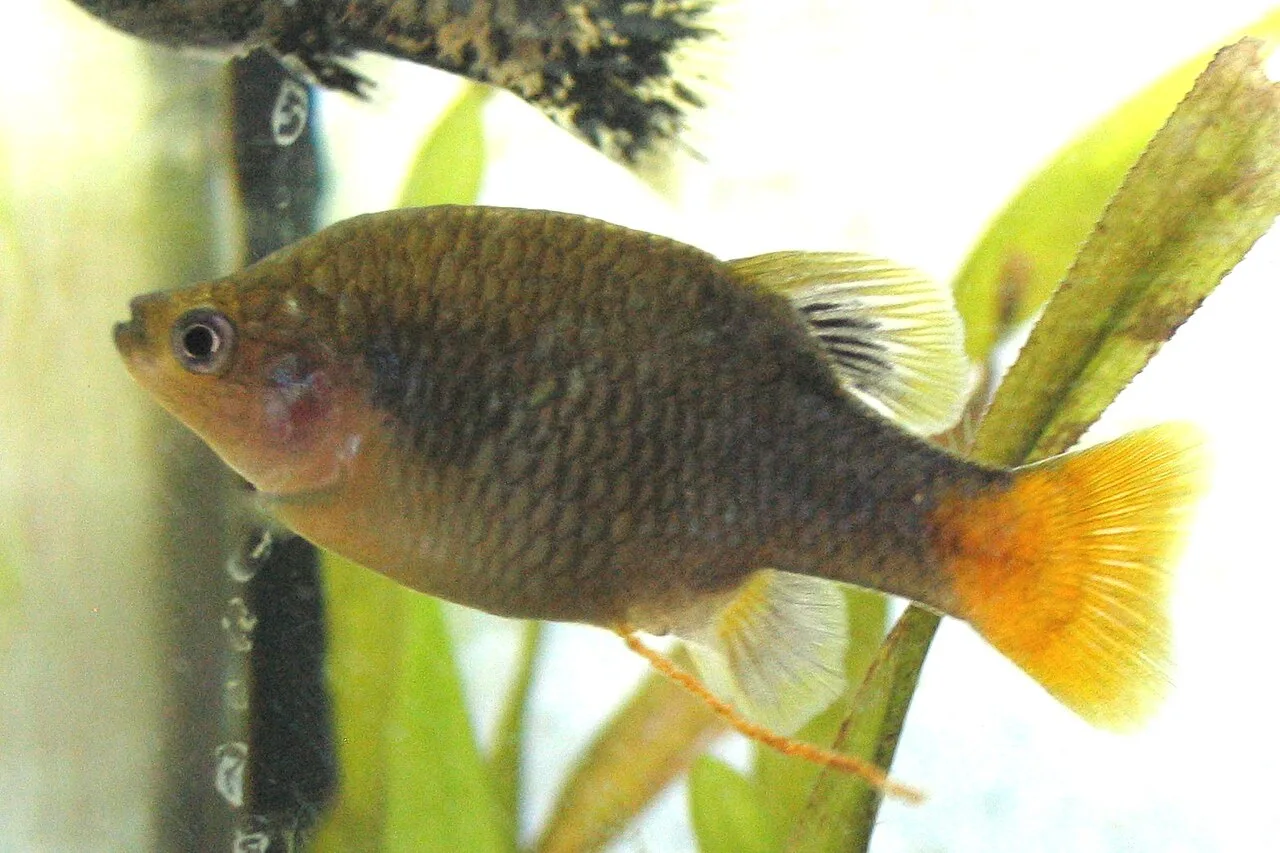
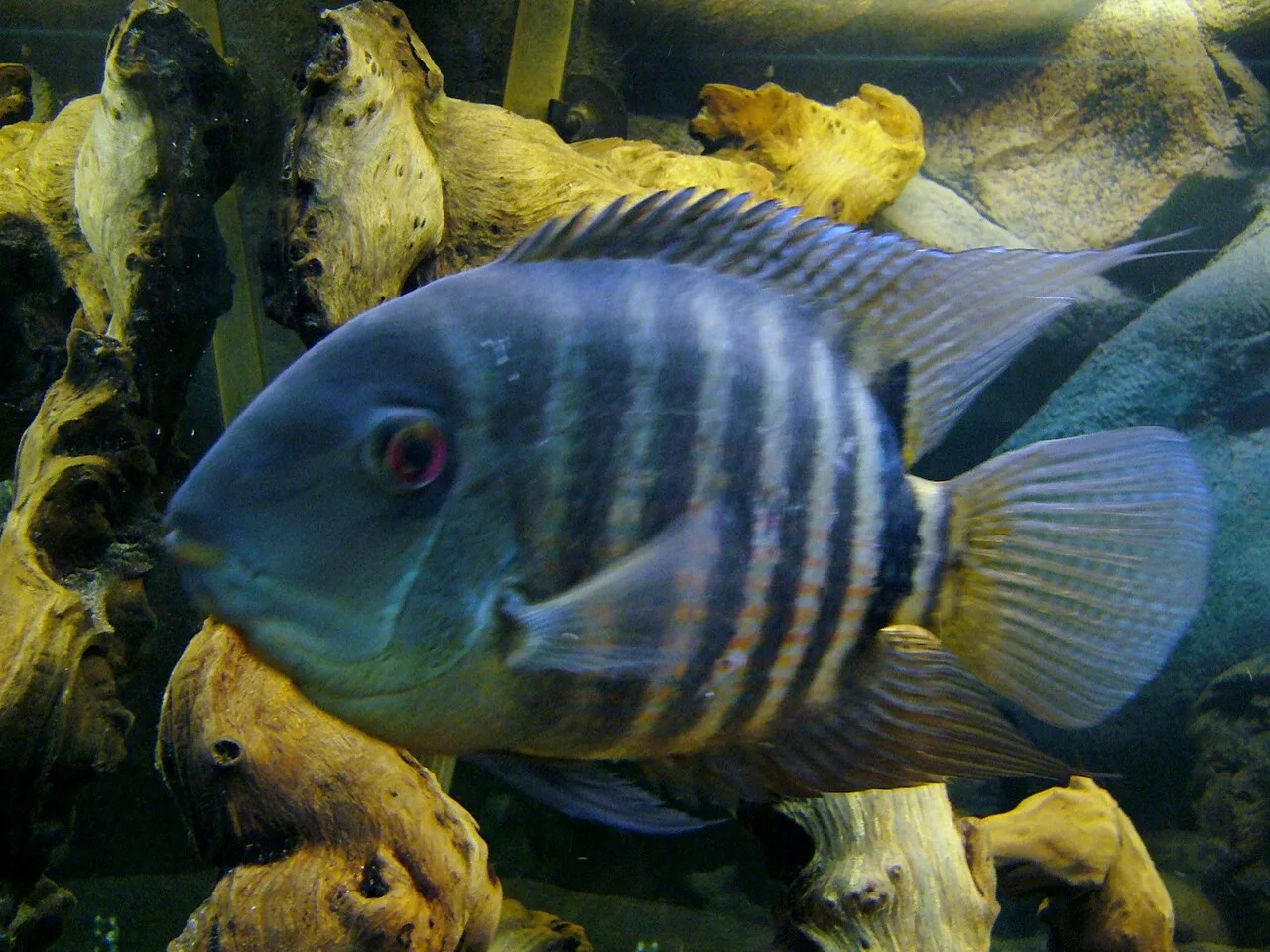
Blue acara
Andinoacara pulcher
28 views
A cichlid from Trinidad and the opposite part of Venezuela. Aequidens pulcher is the older genus name.
- Temperature
- 18 – 23 °C
- pH
- 6.5 – 8 pH
- General hardness
- 10 – 25 °dH
- Maximum size
- 16 cm
- Minimum tank size
- 200 L
3 min read · 356 words
Fresh water
Quick facts
Place in the aquarium
Highlighted are the water layer and the spots where the species usually stays in the tank.
- Middle water Usually stays in the middle of the tank, between bottom and surface.
- Near the bottom Mostly stays just above the bottom. Food has to reach the substrate.
- Rocks and caves Needs caves, crevices or rockwork as hiding place, territory or spawning site.
Shrimp in the tank
Not shrimp safe
- Not shrimp safe
- Dwarf shrimp at risk
- Shrimplets at risk
- Shrimp safe
- Adult dwarf shrimp
- At risk
- Shrimplets
- Get eaten
- Safe from shrimp size
- No size is safe
The blue acara is no fish for shrimp. It grows to 16 cm, is a predator that chases insects and other small prey directly, and defends its territory very aggressively when breeding. Dwarf shrimp and their young are eaten, and even larger shrimp such as Amano shrimp are not safe.
Anyone who wants to keep shrimp needs a separate tank. The blue acara suits robust fish of similar size in a spacious tank with stones and roots.
Home & range
Hatched countries are where the species occurs. It lives in particular waters there, not across the whole country. The points name known waters for orientation, not collection sites.
- Country of origin
- Water for orientation
Native
Overview
Males to 16 cm, females smaller, with longer fins. Olive green, eight dark bars, blue-green lines on the cheeks. Males turn blue when breeding.
Features and taxonomy
The body is laterally compressed. The scales are bright blue-grey. It differs from Geophagus by three anal spines, eight distinct body bands and the lack of a lobe on the first gill arch that only Geophagus has. Juveniles look fairly similar to adults. In males the elongated dorsal and anal rays often reach around the tail fin.
Theodore Nicholas Gill described the species in 1858 as Cychlasoma pulchrum. The Latin pulcher means beautiful. For a long time it was the lead species of the Aequidens pulcher group, which differed from other Aequidens in colour, bone structure and scalation. In 2009 Musilová, Říčan and Novák erected the genus Andinoacara after a genetic study. The species reached Germany as an aquarium fish in 1906.
Origin & habitat
This describes the origin, not how to furnish the aquarium.
Trinidad and the opposite parts of Venezuela. Still, turbid water and clear streams. Both countries stay coarse.
The species lives in streams and turbid tropical waters in Trinidad and Venezuela with pH 6.5 to 8.0 and 18 to 23 °C. The IUCN lists the species as least concern. It is regarded as common and is not targeted by fisheries. Possible threats are climate change with altered rainfall and rising sea levels on the coast.
Care
The otherwise peaceful fish become very aggressive when breeding.
Diet
Aquatic invertebrates and insects.
The blue acara is a predator with some evidence of omnivory. It eats mainly insects and other small prey, plus plant matter and detritus. The most common insect group in its diet are Hymenoptera such as ants, wasps and bees. It pursues prey directly.
Behavior
Open spawner. The eggs usually sit on leaf litter or another movable substrate. The female tends them, the male defends the territory.
Reproduction
The larvae hatch depending on temperature.
The larvae hatch after two to four days. The parents move them several times into previously dug pits, and after another three to four days they swim freely. The pair cleans a stone for the clutch and guards the eggs until they hatch. When danger threatens, the male takes the young into his mouth.
Gallery
More species in this group
Similar water needs
Species with a similar temperature, a similar pH and a comparable adult size. Whether their behaviour fits as well is what the compatibility check is for.