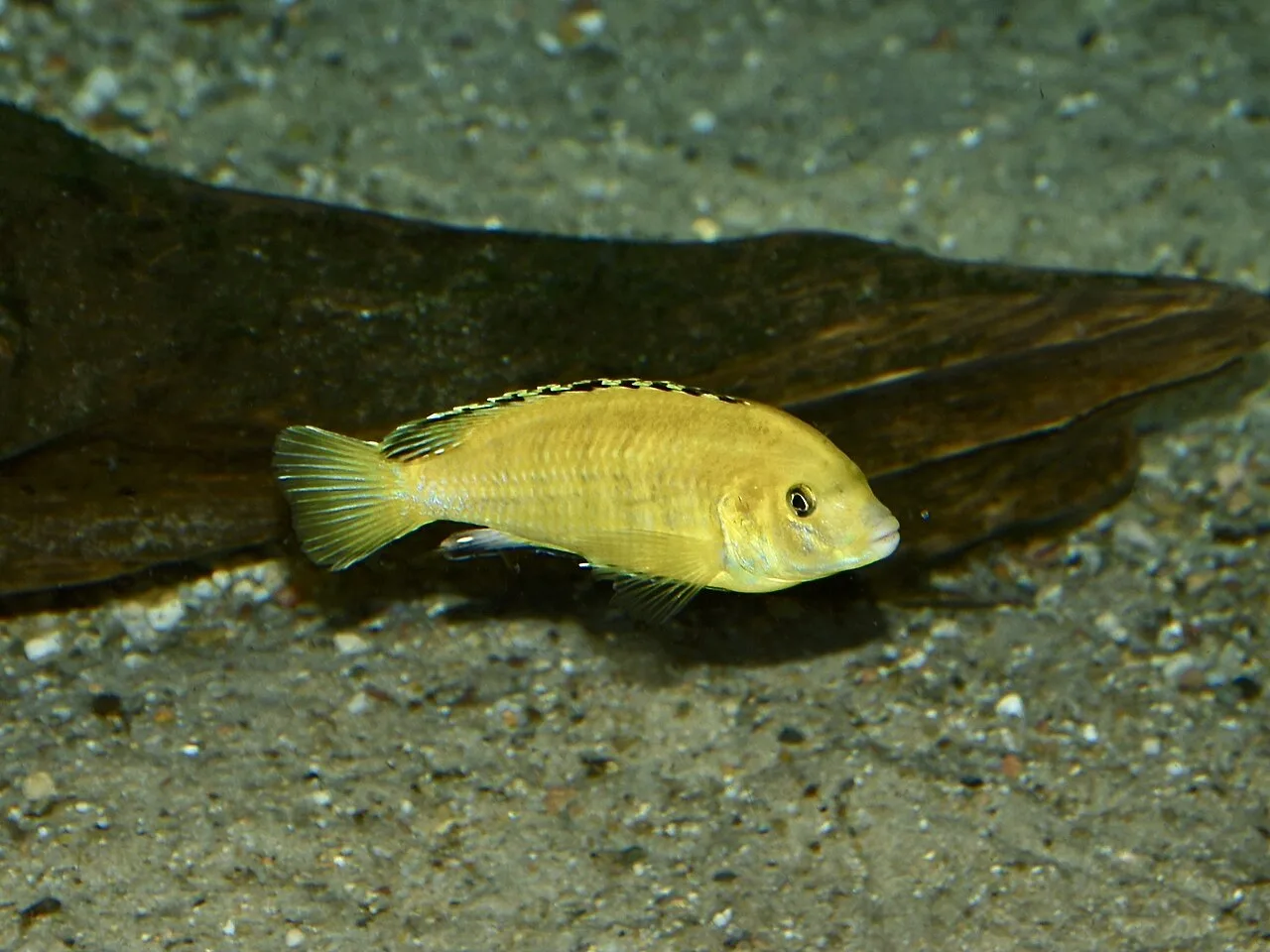
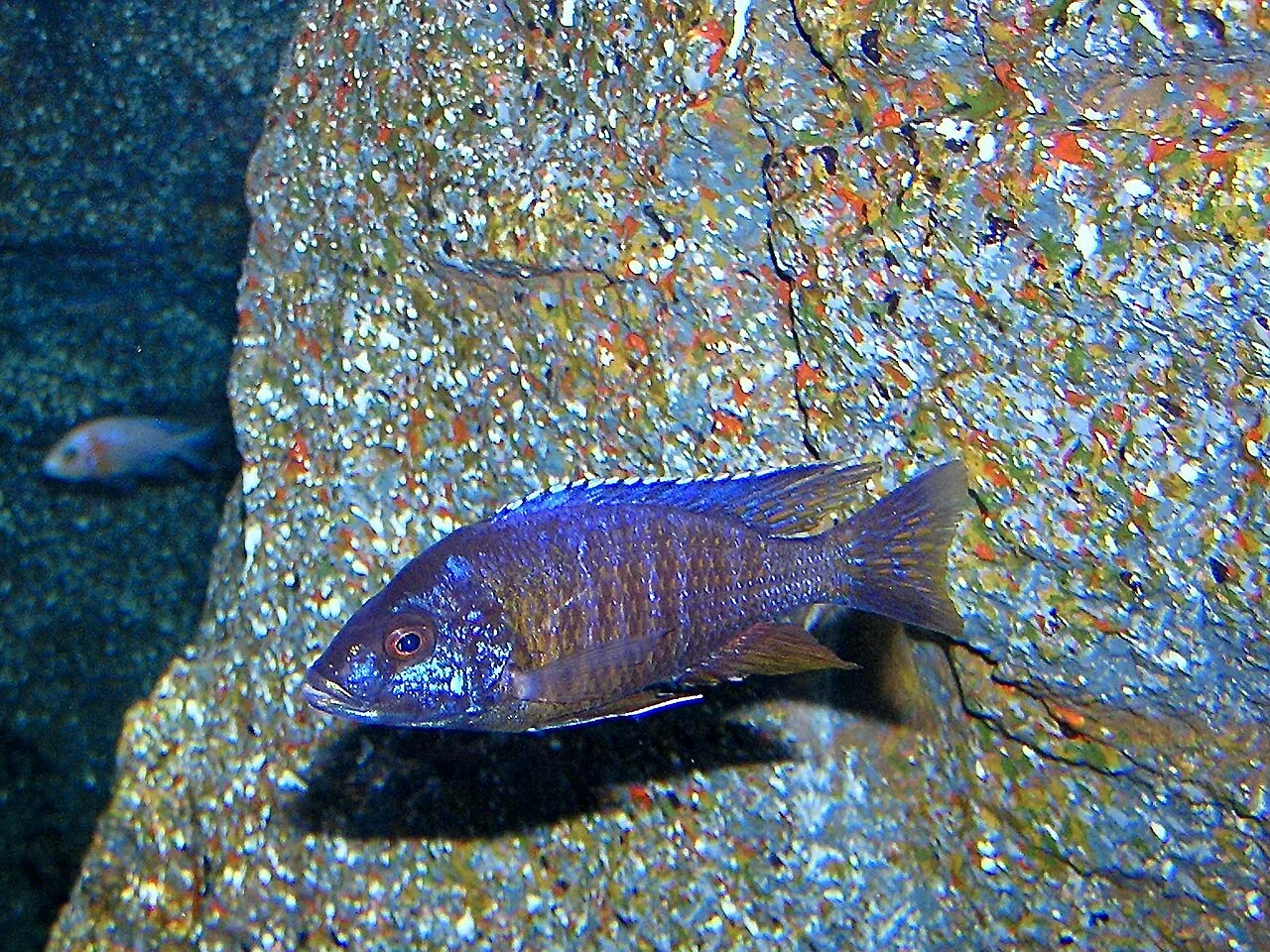
Blue mbuna
Labeotropheus fuelleborni
1 view
An mbuna from Lake Malawi with an underslung mouth that scrapes aufwuchs off rocks. It is robust and territorial.
- Temperature
- 24 – 27 °C
- pH
- 7.5 – 8.5 pH
- General hardness
- 10 – 20 °dH
- Maximum size
- 15 cm
- Minimum tank size
- 300 L
1 min read · 141 words
Quick facts
Place in the aquarium
Highlighted are the water layer and the spots where the species usually stays in the tank.
- Near the bottom Mostly stays just above the bottom. Food has to reach the substrate.
- Rocks and caves Needs caves, crevices or rockwork as hiding place, territory or spawning site.
Shrimp in the tank
Not shrimp safe
- Not shrimp safe
- Dwarf shrimp at risk
- Shrimplets at risk
- Shrimp safe
- Adult dwarf shrimp
- At risk
- Shrimplets
- Get eaten
- Safe from shrimp size
- No size is safe
Dwarf shrimp are not safe with the blue mbuna. It scrapes aufwuchs off stones and takes small crustaceans along the way. Mbuna are lively and search the whole rock.
The hard, alkaline water of Lake Malawi does not suit the usual dwarf shrimp either. Keeping them together makes no sense.
Home & range
Hatched countries are where the species occurs. It lives in particular waters there, not across the whole country. The points name known waters for orientation, not collection sites.
- Country of origin
- Water for orientation
Native
- Malawi
- Range: Lake Malawi.
- Mozambique
- Range: Lake Malawi.
- Tanzania
- Range: Lake Malawi.
Overview
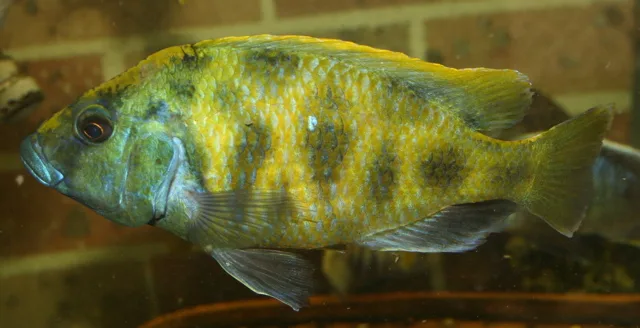
Labeotropheus fuelleborni reaches about 15 cm. The mouth sits below a protruding snout, and the head is broad. Males are usually blue with dark bars, females brownish or orange-blotched. There are many local forms.
It is not Labeotropheus trewavasae. Trewavasae is slimmer and stays slightly smaller. Both scrape aufwuchs and defend rocks.
Origin & habitat
This describes the origin, not how to furnish the aquarium.
Rocky shores of Lake Malawi. The lake stays the coarse origin. Hard, alkaline water and rock with aufwuchs match that.
Care
Rock
24 to 27 °C, pH 7.5 to 8.5, hard. One male with several females from about 300 litres and 150 cm. Plenty of stones, caves.
Company
Other mbuna, not too similarly coloured. Calm fish get chased.
Diet
Plant food. Spirulina, plant-based granules, vegetables. Protein-rich food easily leads to gut inflammation.
Behavior
Robust and territorial. Males defend rocks against other males and similarly coloured fish.
Reproduction
Mouthbrooder. The female carries eggs and young in her mouth.
Gallery
More species in this group

Similar water needs
Species with a similar temperature, a similar pH and a comparable adult size. Whether their behaviour fits as well is what the compatibility check is for.