Yellow lab
Labidochromis caeruleus
17 views
A mouthbrooding mbuna from Lake Malawi. The yellow aquarium form is social as long as the tank is long, the group is right, and no second yellow male claims the same niche.
- Temperature
- 24 – 28 °C
- pH
- 7.5 – 8.5 pH
- General hardness
- 10 – 20 °dH
- Maximum size
- 12 cm
- Minimum tank size
- 200 L
5 min read · 763 words
Fresh water
Quick facts
Place in the aquarium
Highlighted are the water layer and the spots where the species usually stays in the tank.
- Middle water Usually stays in the middle of the tank, between bottom and surface.
- Rocks and caves Needs caves, crevices or rockwork as hiding place, territory or spawning site.
Shrimp in the tank
Not shrimp safe
- Not shrimp safe
- Dwarf shrimp at risk
- Shrimplets at risk
- Shrimp safe
- Adult dwarf shrimp
- At risk
- Shrimplets
- Get eaten
- Safe from shrimp size
- No size is safe
The electric yellow is not suitable for shrimp. Depending on the report it grows to 8 to 15 cm, eats mainly insects and crustaceans and is fed krill, bloodworms and brine shrimp in the aquarium. It is peaceful for a Malawi cichlid, but shrimp fit exactly into its prey range, including larger species.
Shrimp belong in a separate tank. The electric yellow needs hard, alkaline water and a rock tank with other mbuna anyway.
Home & range
Overview
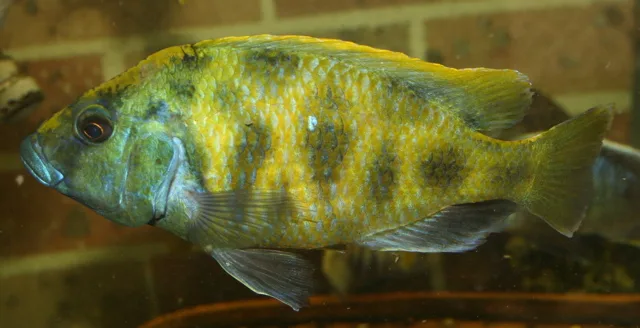
Labidochromis caeruleus reaches about 10 to 12 cm. The usual yellow form carries black markings in the fins, especially the dorsal. Wild populations are not yellow throughout. Blue and whitish strains exist. Anyone keeping the species should know which colour form they have and should not cross it with other Labidochromis.
Males grow larger, with a stronger forehead and deeper colour. Females stay slimmer. The female carries the longer brood. The species does not dig up a whole tank like a large cichlid, but it does pick aufwuchs from rock.
Features and name
The body is elongated and laterally compressed, and the small, slightly pointed mouth is terminal. The originally described population was whitish blue with six faint vertical bars. The aquarium form is lemon yellow with deep black dorsal, pectoral and anal fins. The upper edge of the dorsal fin is white with a black band below, and the lower half of the anal fin is black with one or two small yellow egg spots. The sexes look almost alike; females often have lighter or completely yellow pectoral fins and usually stay a little smaller. Males reach about 9 cm in the wild and 8 to 12 cm in the aquarium, at most 15 cm. Geoffrey Fryer described the species in 1956. Caeruleus means sky blue.
Origin & habitat
This describes the origin, not how to furnish the aquarium.
Lake Malawi is a clear, alkaline rift lake. L. caeruleus lives on rocky coasts and in transition zones where rock and a little sediment meet. The water is hard, the pH in the lake is clearly basic, and the temperature is tropical and fairly stable all year.
Malawi is a coarse origin. A lake map with a reviewed shoreline is not a point map of the species. For keeping, the lake type matters: plenty of oxygen, no blackwater, rockwork instead of peat.
The species lives in northern Lake Malawi, especially along the coasts of Lion's Cove and Nkhata Bay, at 10 to 40 m depth over rock with a sandy bottom. It belongs to the mbuna. The water has pH 7.8 to 8.9, and 23 to 26 °C is ideal. It has been exported since 1980 and is regarded as least concern.
Care
Water and layout
24 to 28 °C, pH 7.5 to 8.5, higher general hardness. Tanks from about 200 litres and, above all, from 100 cm long. The layout is rock: gaps, caves and visual barriers, with open sand in front. Plants survive only if they are tough-leaved or sit outside the rockwork. Mbuna eat soft shoots.
Group
One male with several females is the calmest stocking. Several males need a clearly longer tank and separate territories. Other mbuna work if colours and body shapes are not too similar and each species has its own field of cover. Angelfish, tetras and soft-water fish do not belong in this tank.
Diet
An aufwuchs feeder with an animal share. In the wild the fish rasp algae and the small animals in it from the rock. In the aquarium, plant flakes, spirulina tablets and blanched vegetables are the base. Brine shrimp, mosquito larvae and high-protein food only as a side.
Too much animal food and too little structure end in fat fish and still more fighting. Several small feeds through the day spread the rivalry better than one large meal at which one male holds everything.
Behavior
A mouthbrooder with a clear rank order. The dominant male shows on the rock. Subordinate fish need a way back that does not end at the glass. Toward Malawi cichlids that look different, the species is often more tolerant than many other mbuna, but that is not a licence for overcrowding.
Newly added fish are tested. The tank has to be ready before the group arrives: filter run in, rocks firm, no wobbling towers.
Reproduction
The female takes the eggs into her mouth. The carrying time is often about three weeks. She then releases free-swimming young that already feed. Care beyond the mouth is short. More young survive in a species tank. In a mixed mbuna tank they are often eaten.
Do not move a female with a full throat unless it is necessary. Stress makes her swallow the brood or release it too early.
The species is a maternal mouthbrooder. The male digs a small pit in the sand, and right after spawning the female takes eggs and sperm into her mouth, where fertilisation takes place. Brood care lasts about three weeks, during which the female does not eat. Depending on the female's size there are 5 to 15 young. The species suits Malawi tanks with other mbuna, not zebra danios or neon tetras. It is fed cichlid pellets or flakes, supplemented with krill, bloodworms, brine shrimp and spirulina.
Gallery
More species in this group
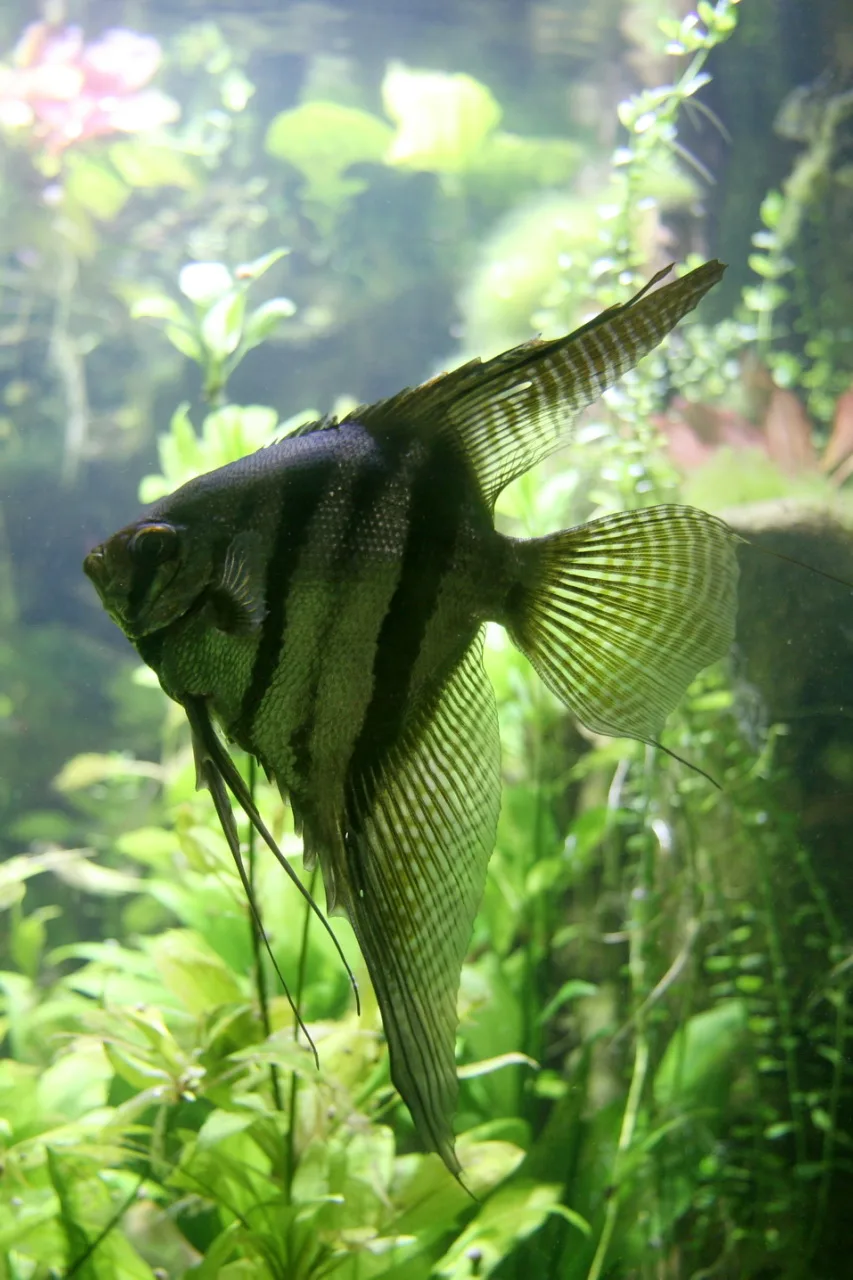
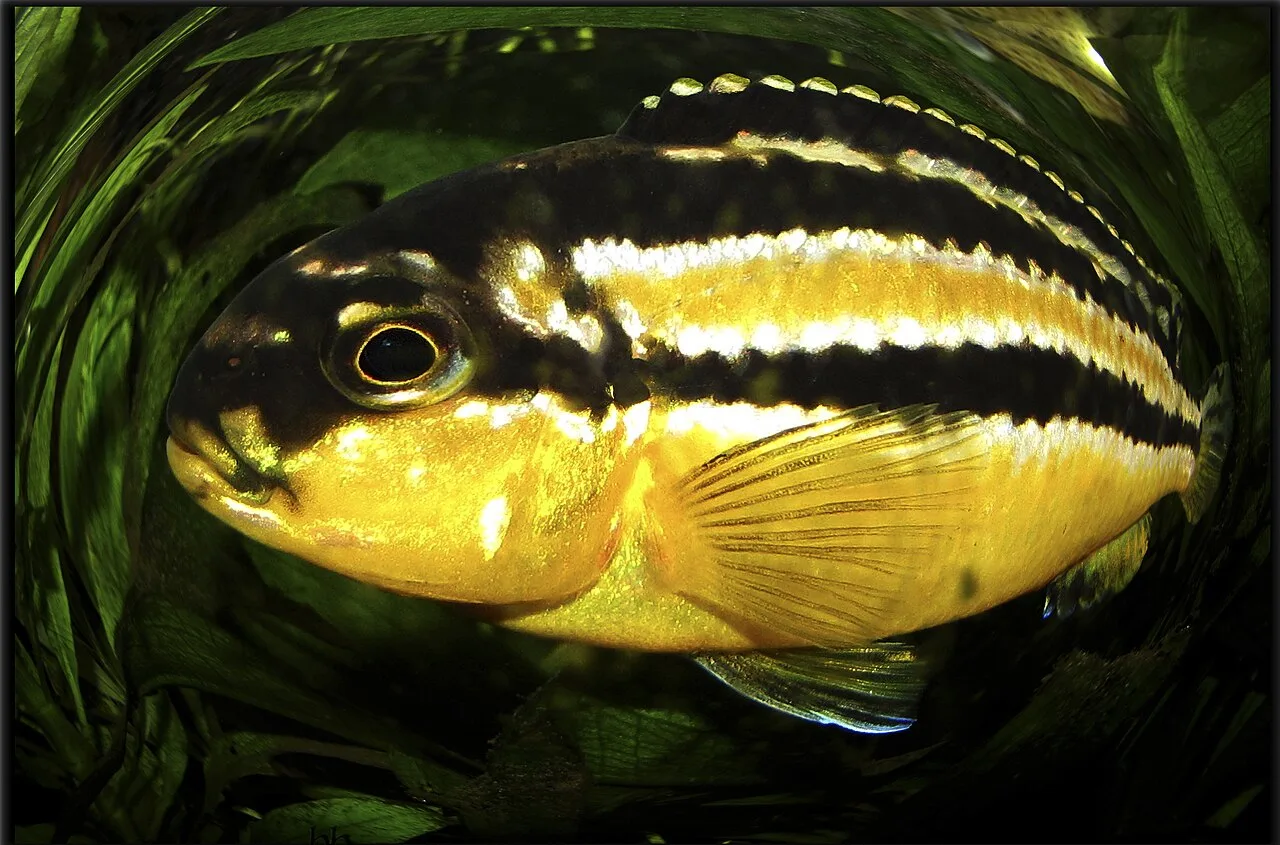

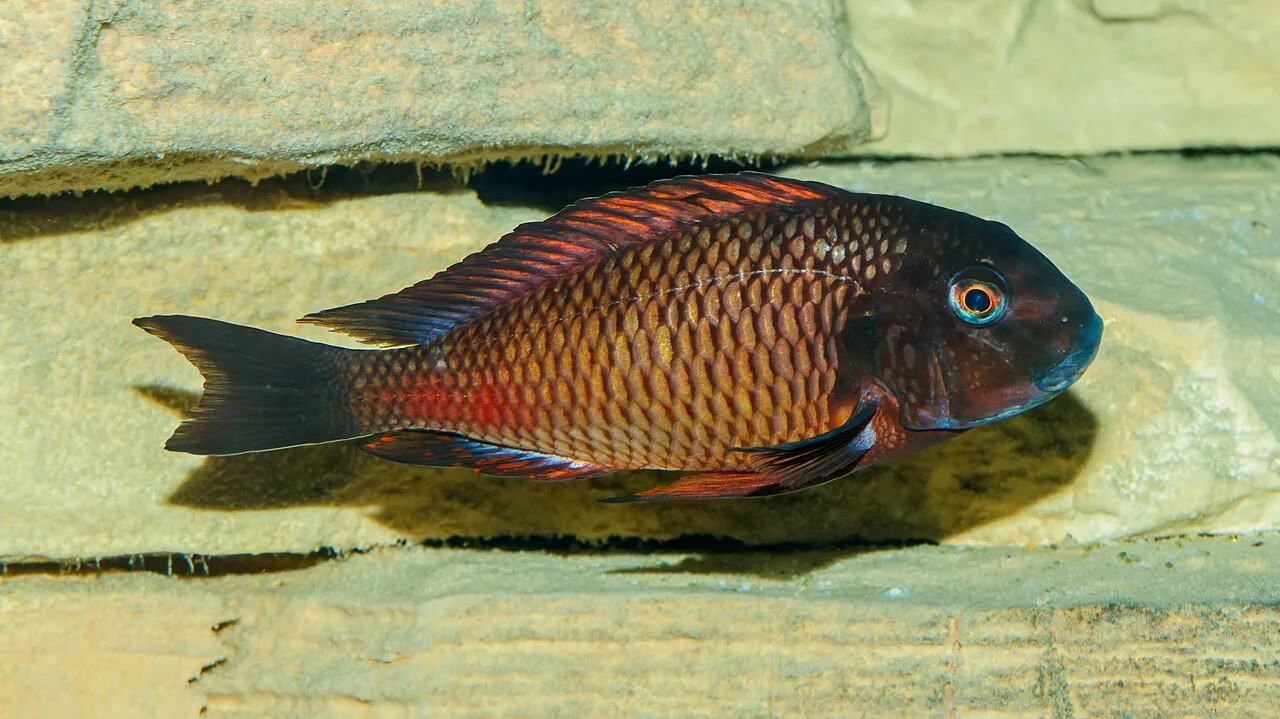
Similar water needs
Species with a similar temperature, a similar pH and a comparable adult size. Whether their behaviour fits as well is what the compatibility check is for.