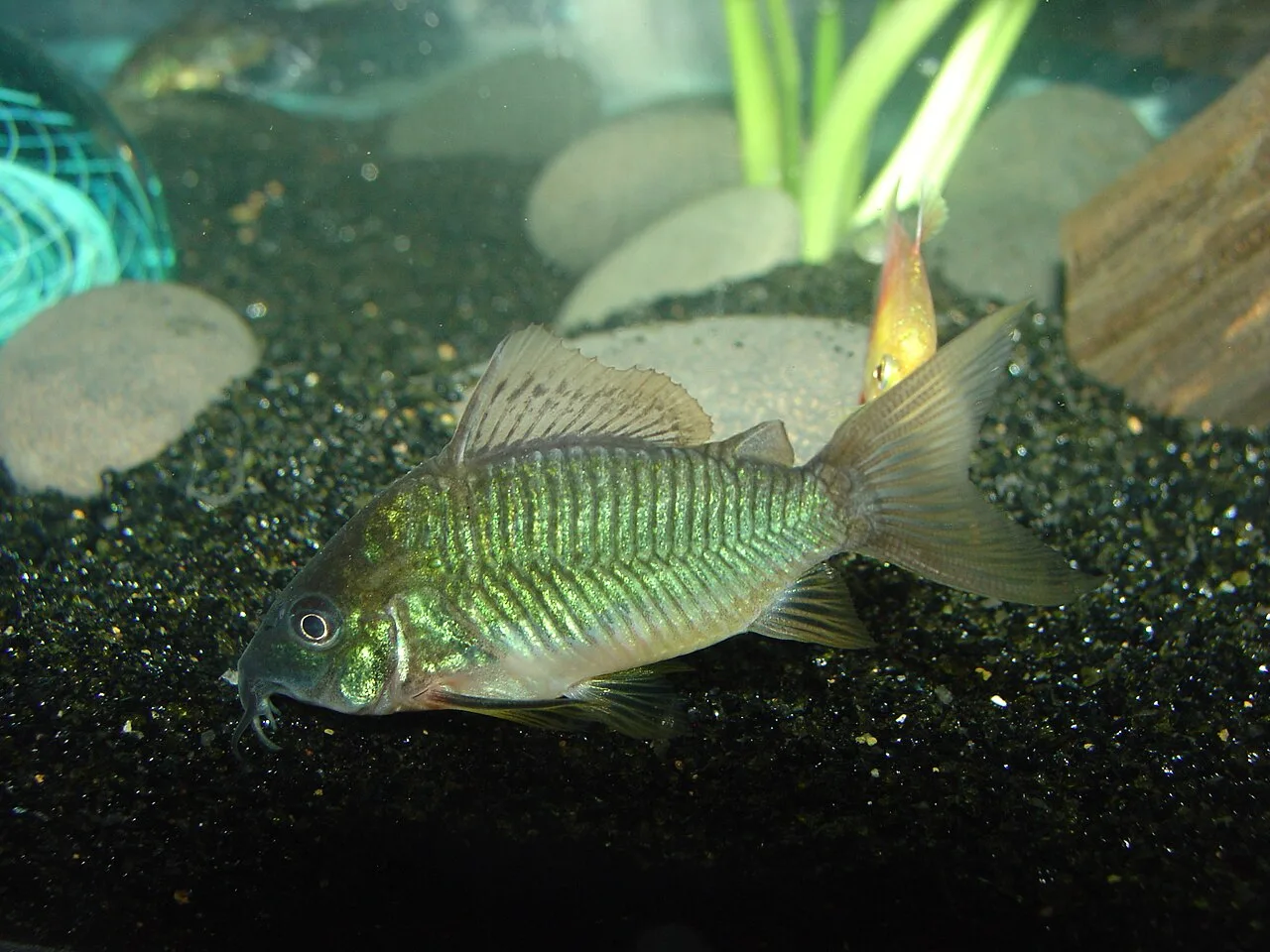
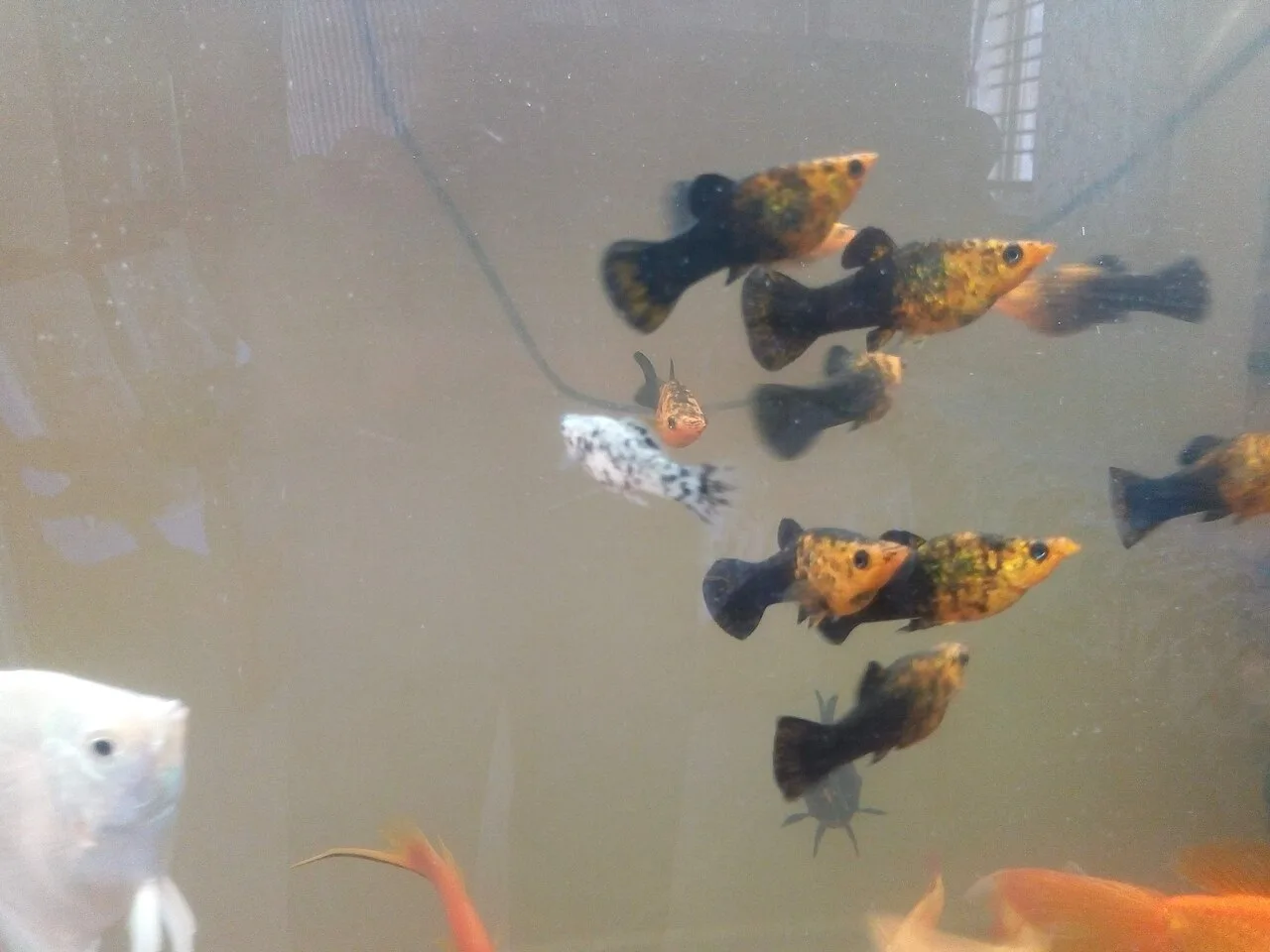
Marlieri cichlid
Julidochromis marlieri
19 views
Endemic to Lake Tanganyika. 24 to 26 °C and pH 7.5 to 8 are the water at the site, not a care optimum.
- Temperature
- 24 – 26 °C
- pH
- 7.5 – 8 pH
- General hardness
- 8 – 25 °dH
- Maximum size
- 15 cm
- Minimum tank size
- 100 – 200 L
2 min read · 313 words
Fresh water
Quick facts
Place in the aquarium
Highlighted are the water layer and the spots where the species usually stays in the tank.
- Near the bottom Mostly stays just above the bottom. Food has to reach the substrate.
- Rocks and caves Needs caves, crevices or rockwork as hiding place, territory or spawning site.
Shrimp in the tank
Not shrimp safe
- Not shrimp safe
- Dwarf shrimp at risk
- Shrimplets at risk
- Shrimp safe
- Adult dwarf shrimp
- At risk
- Shrimplets
- Get eaten
- Safe from shrimp size
- No size is safe
Marlier's julie does not tolerate shrimp. It grows to about 15 cm, lives on rocky shores of Lake Tanganyika and is aggressive towards other species as well as its own. Shrimp in its territory are hunted and eaten.
There is no safe shrimp size. In addition, its hard, alkaline water does not suit most dwarf shrimp. Shrimp belong in a tank of their own. Even putting them together for a while, for example to clean algae, is not a good idea, because added shrimp are quickly recognised as food. A small separate tank with moss and leaf litter is the most reliable solution for a stable shrimp colony and needs little effort to run.
Home & range
Hatched countries are where the species occurs. It lives in particular waters there, not across the whole country. The points name known waters for orientation, not collection sites.
- Country of origin
- Water for orientation
Native
Overview
About 15 cm. The genital papilla of the male is pointed, that of the female blunt. Old males grow a nuchal hump. Katoto, Magara and Gombe are locality forms. Gombe is only suspected to be another species and is not split off here.
Features and forms
Marlier's julie grows to about 15 cm. The sexes are hard to tell apart: the genital papilla is pointed in males and blunt in females, and fully grown males carry a fatty hump on the head. Adult females are said to be larger than males. Several local forms are known, such as Katoto, Magara and Gombe, and the Gombe form differs so much that it may be a separate species. Crosses with the yellow julie (Julidochromis ornatus) give sterile hybrids that resemble Julidochromis transcriptus.
Max Poll described the species in 1956. The name honours the Belgian zoologist Georges Marlier, who collected the types. In the trade it is also called the spotted or chequered julie. The IUCN lists it as least concern.
The species belongs to the tribe Lamprologini of the subfamily Pseudocrenilabrinae.
Origin & habitat
This describes the origin, not how to furnish the aquarium.
Rocky shore, mainly the northwest corner at Makabola in the Democratic Republic of the Congo. That country only, coarse, not the whole lake as four states.
The species is endemic to Lake Tanganyika and lives mainly in the northwest near Makabola in the Democratic Republic of the Congo. It inhabits rocky shores, also in deeper water. The water is 24 to 26 °C and slightly alkaline at pH 7.5 to 8.
Care
The lake figures stay in the origin text.
A pair needs about 100 to 200 litres. The species is aggressive towards other species as well as its own and therefore does not belong in a community tank.
Reproduction
The forms must not be counted as further profiles.
The female lays about 300 eggs in a cave. After three days the larvae hatch. The young stay near the spawning site for a long time.
Gallery
More species in this group
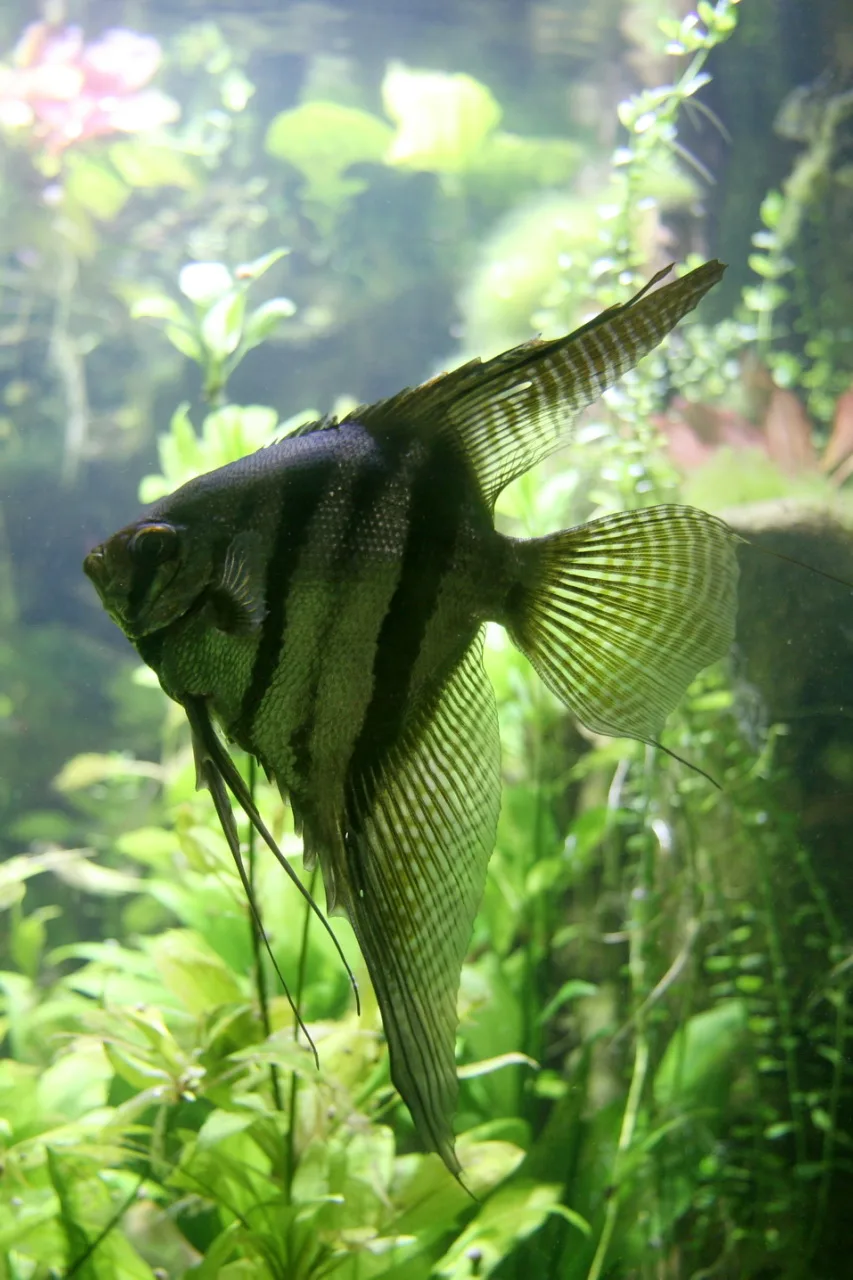
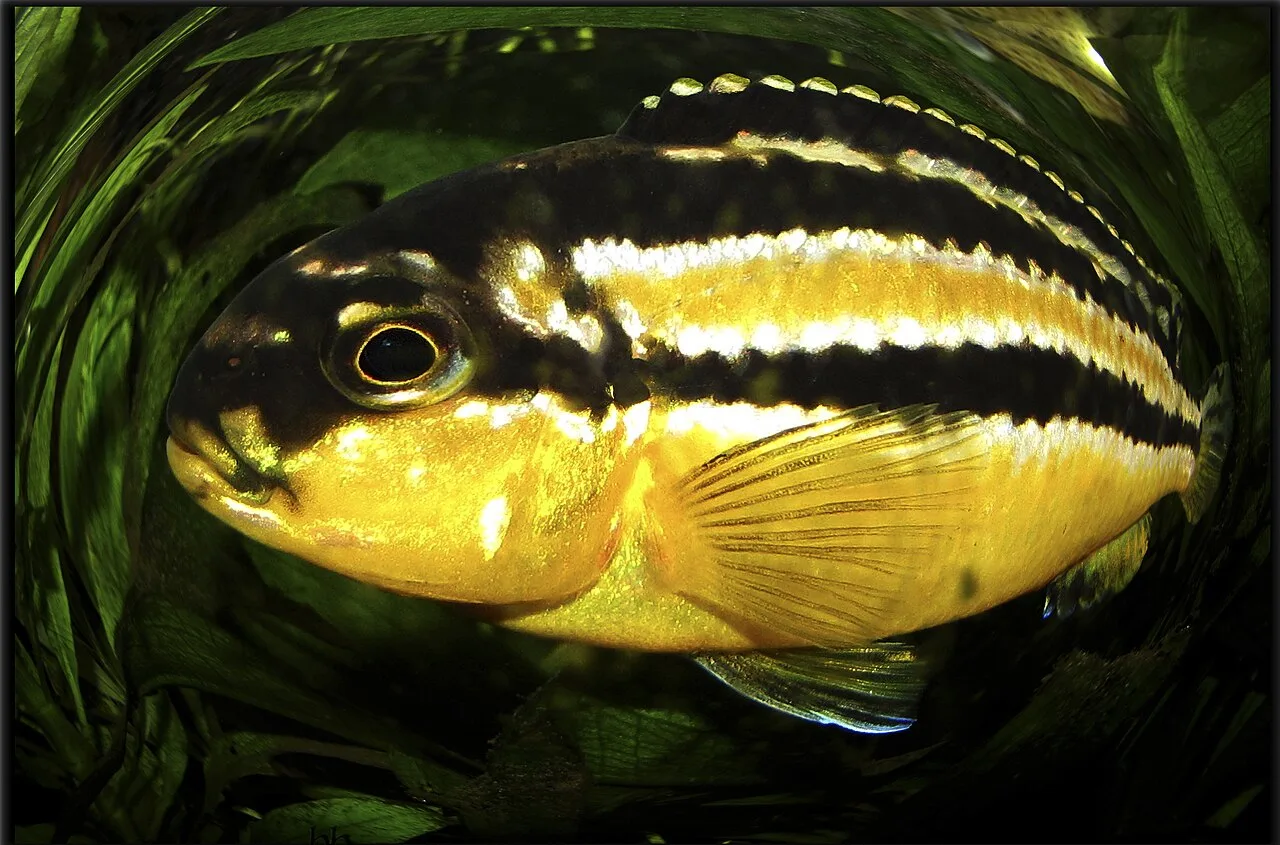


Similar water needs
Species with a similar temperature, a similar pH and a comparable adult size. Whether their behaviour fits as well is what the compatibility check is for.