Altum angelfish
Pterophyllum altum
1 view
A large, very deep-bodied angelfish from the Orinoco and Rio Negro. It needs tall tanks, soft water and a group.
- Temperature
- 27 – 31 °C
- pH
- 4.5 – 6.5 pH
- General hardness
- 1 – 6 °dH
- Maximum size
- 18 cm
- Minimum tank size
- 400 L
2 min read · 194 words
Quick facts
Place in the aquarium
Highlighted are the water layer and the spots where the species usually stays in the tank.
- Middle water Usually stays in the middle of the tank, between bottom and surface.
- Dense plants Looks for dense planting as cover, retreat or grazing ground.
- Wood and roots Uses roots as shelter or grazes biofilm from them.
Shrimp in the tank
Not shrimp safe
- Not shrimp safe
- Dwarf shrimp at risk
- Shrimplets at risk
- Shrimp safe
- Adult dwarf shrimp
- At risk
- Shrimplets
- Get eaten
- Safe from shrimp size
- No size is safe
Dwarf shrimp are not safe with the altum angelfish. It grows very large, has a large mouth and eats small fish, larvae and crustaceans. Neocaridina and Caridina are eaten, and larger shrimp are approached too.
On top of that comes the very warm, acidic water that does not suit most shrimp. Shrimp belong in a tank of their own here.
Home & range
Hatched countries are where the species occurs. It lives in particular waters there, not across the whole country. The points name known waters for orientation, not collection sites.
- Country of origin
- Water for orientation
Native
Overview
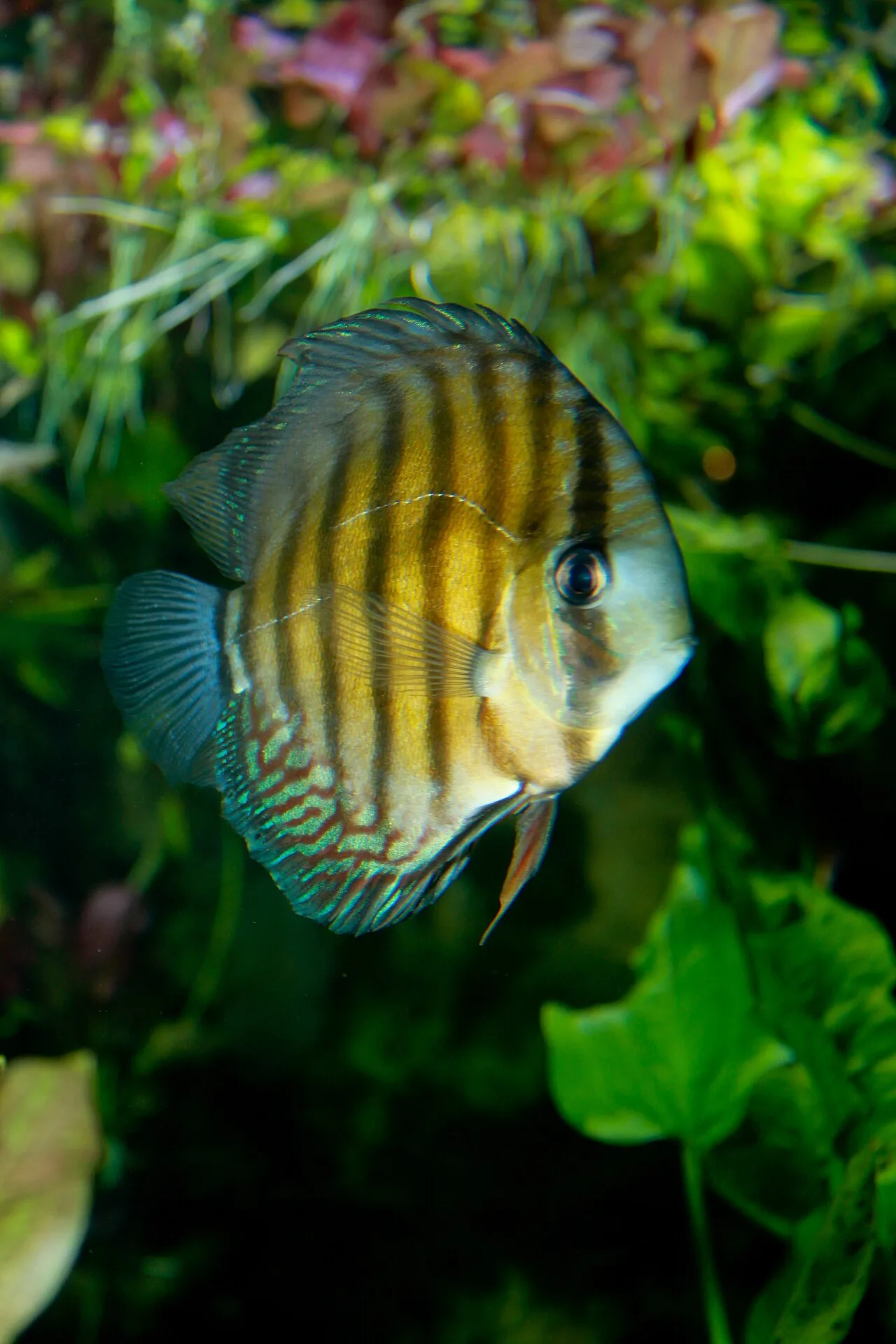
Pterophyllum altum grows clearly taller than the familiar angelfish. Adults measure more than 30 cm in height including fins. Dark bars run over the silvery body, and the forehead shows a clear notch above the mouth. The fins carry reddish edges.
It is not Pterophyllum scalare. The common angelfish is smaller, tolerates harder water and is widely available captive-bred. The altum angelfish often comes from the wild and is more sensitive.
Origin & habitat
This describes the origin, not how to furnish the aquarium.
Blackwater in the Orinoco and upper Rio Negro, in Venezuela, Colombia and Brazil. The countries stay a coarse origin. Very soft, acidic, warm water with wood matches that.
Care
Height
27 to 31 °C, pH 4.5 to 6.5, soft. A group from five, tanks from about 400 litres and 60 cm high. Wood, tall plants, gentle current.
Company
Calm fish that are not too small and share the same water. Neons and dwarf shrimp are eaten.
Diet
Omnivore with a meaty share. Mosquito larvae, mysis, brine shrimp, granules. Wild fish need frozen and live food at first.
Behavior
A calm group with a pecking order. Pairs separate to breed and defend a territory.
Reproduction
Open spawner on leaves or wood. The parents guard eggs and larvae. Breeding in the aquarium is considered difficult.
Gallery
More species in this group


Similar water needs
Species with a similar temperature, a similar pH and a comparable adult size. Whether their behaviour fits as well is what the compatibility check is for.