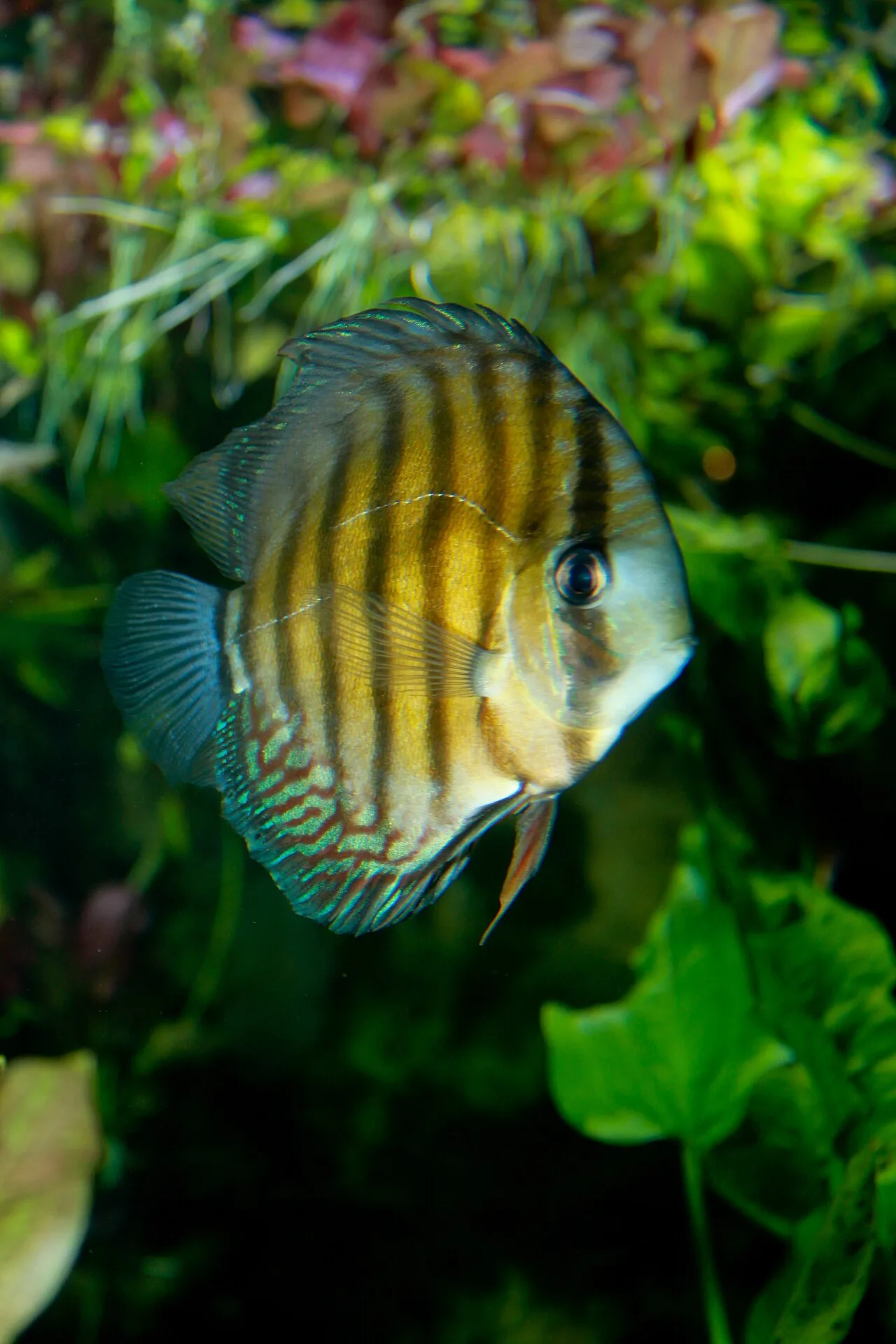
Demon eartheater
Satanoperca jurupari
1 view
An eartheater from the Amazon region that sifts sand through its gills. It needs fine sand, a group and plenty of floor area.
- Temperature
- 26 – 30 °C
- pH
- 5 – 7 pH
- General hardness
- 2 – 10 °dH
- Maximum size
- 25 cm
- Minimum tank size
- 400 L
1 min read · 164 words
Quick facts
Place in the aquarium
Highlighted are the water layer and the spots where the species usually stays in the tank.
- Near the bottom Mostly stays just above the bottom. Food has to reach the substrate.
- Substrate Sifts through the substrate or burrows into it. Fine, rounded sand without sharp edges suits it.
Shrimp in the tank
Not shrimp safe
- Not shrimp safe
- Dwarf shrimp at risk
- Shrimplets at risk
- Shrimp safe
- Adult dwarf shrimp
- At risk
- Shrimplets
- Get eaten
- Safe from shrimp size
- No size is safe
Shrimp are not safe with the demon eartheater. It reaches about 25 cm and sifts the bottom for small invertebrates. Shrimp sitting on the ground are found and eaten, larger species included.
Since the eartheater searches the whole bottom, there are no safe hiding places. Shrimp belong in a tank of their own.
Home & range
Hatched countries are where the species occurs. It lives in particular waters there, not across the whole country. The points name known waters for orientation, not collection sites.
- Country of origin
- Water for orientation
Native
Overview
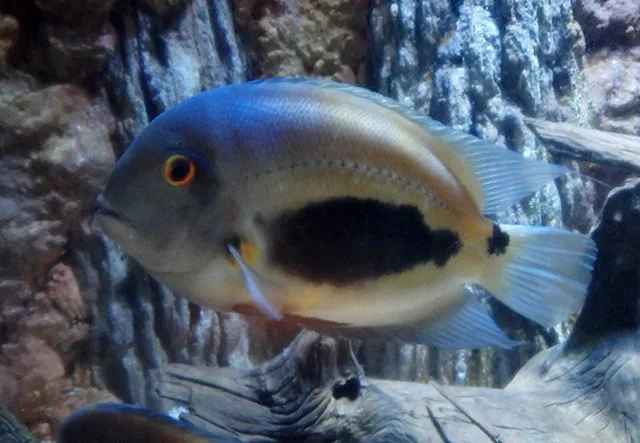
Satanoperca jurupari reaches about 25 cm. The head is long, the mouth sits low, and the body shimmers yellowish to olive green with blue dots on the head and fins. The fish take sand into the mouth and release it through the gills. That is how they look for food.
It is not a Geophagus. Both are eartheaters and need sand, but Satanoperca has a longer face and is calmer.
Origin & habitat
This describes the origin, not how to furnish the aquarium.
Calm river stretches in the Amazon basin. The origin stays coarse. Fine sand, leaf litter and soft water match that.
Care
Sand
26 to 30 °C, pH 5 to 7. A group from five, tanks from about 400 litres and 150 cm. Fine sand, large roots, sturdy plants in pots.
Company
Calm, larger fish. Small fish are eaten.
Diet
Omnivore. Sinking granules, mosquito larvae, mysis, vegetables. The food is searched for in the sand.
Behavior
A peaceful group. At spawning time a pair defends a zone.
Reproduction
Larvophile mouthbrooder. The eggs are laid in the open, and the parents take the larvae into their mouths.
Gallery
More species in this group
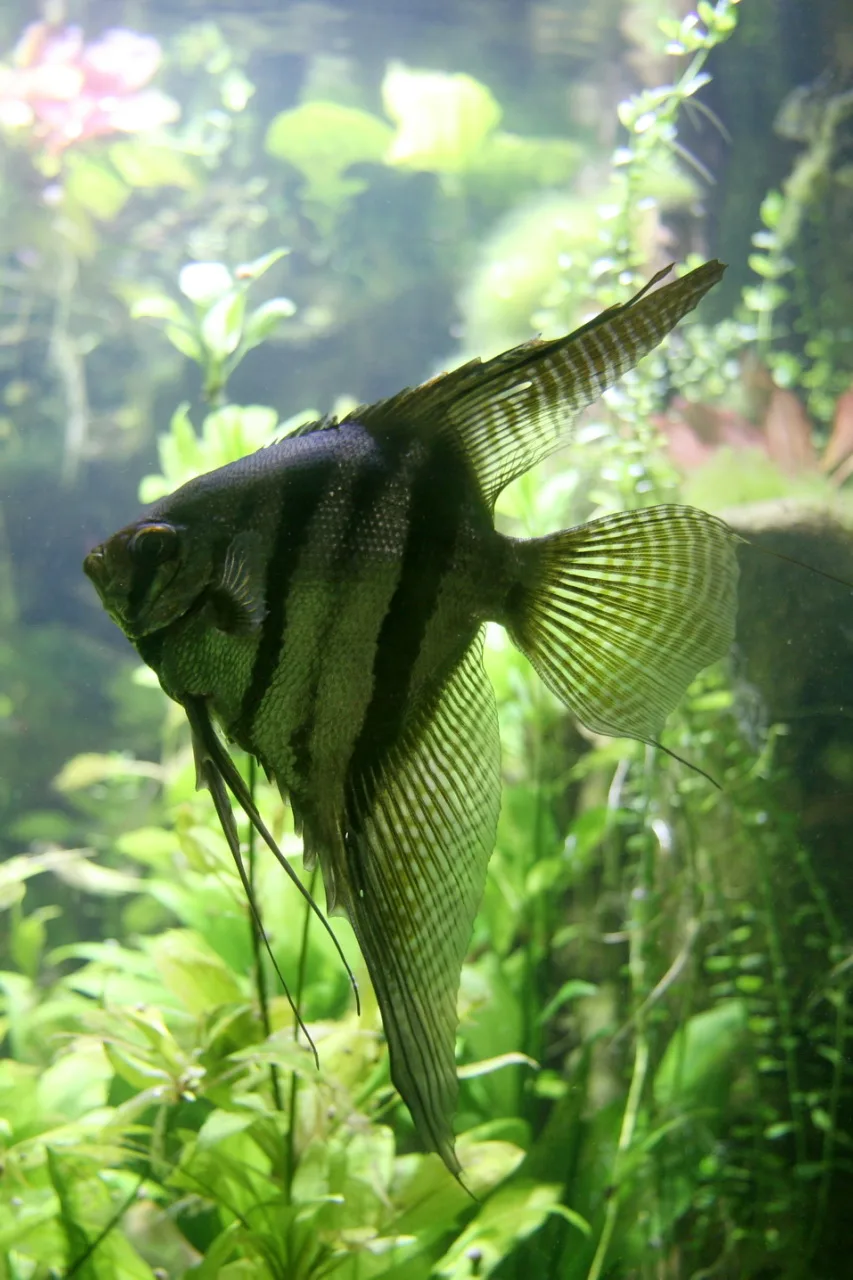
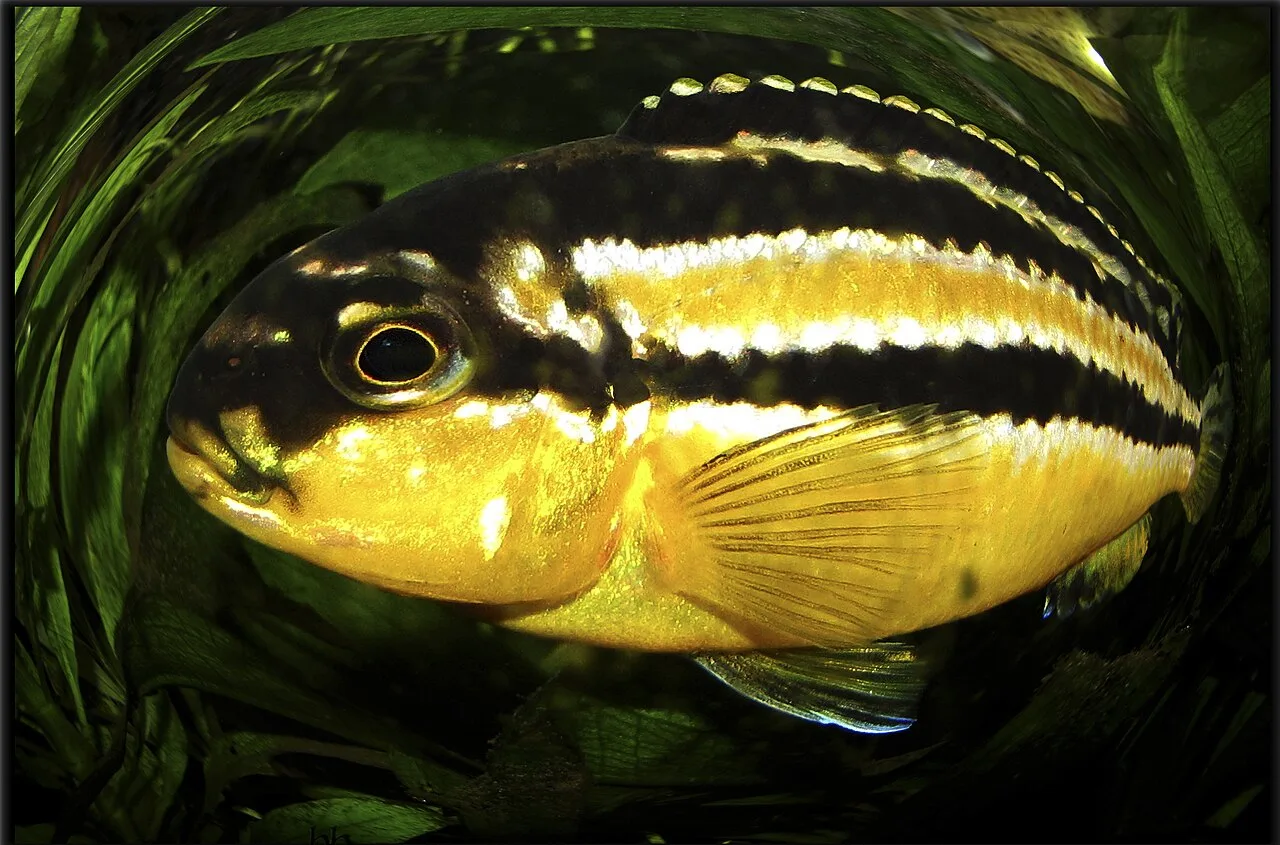
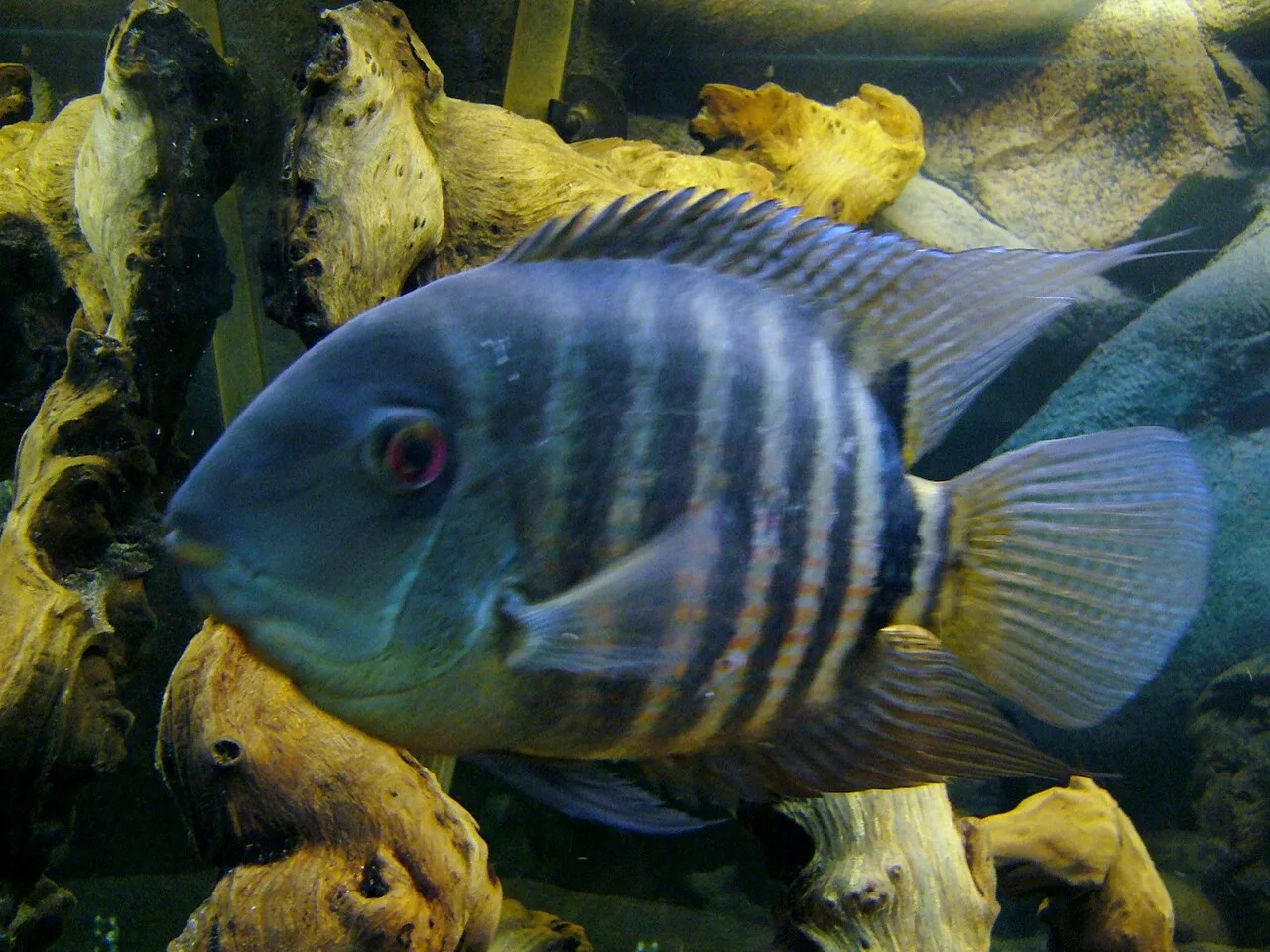


Similar water needs
Species with a similar temperature, a similar pH and a comparable adult size. Whether their behaviour fits as well is what the compatibility check is for.