Discus
Symphysodon aequifasciatus
27 views
A tall cichlid from quiet Amazon waters. It needs warmth, soft water, tank height and a group that already knows itself.
- Temperature
- 28 – 31 °C
- pH
- 6 – 7 pH
- General hardness
- 2 – 6 °dH
- Maximum size
- 20 cm
- Minimum tank size
- 300 L
5 min read · 780 words
Fresh water
Quick facts
Place in the aquarium
Highlighted are the water layer and the spots where the species usually stays in the tank.
- Middle water Usually stays in the middle of the tank, between bottom and surface.
- Wood and roots Uses roots as shelter or grazes biofilm from them.
Shrimp in the tank
Dwarf shrimp at risk
- Not shrimp safe
- Dwarf shrimp at risk
- Shrimplets at risk
- Shrimp safe
- Adult dwarf shrimp
- At risk
- Shrimplets
- Get eaten
- Safe from shrimp size
- about 4 cm
The discus endangers small dwarf shrimp. It grows to about 15 cm, larger in captivity, and as a cichlid it takes small animals that come in front of its mouth. Young shrimp and small Neocaridina or Caridina are eaten. Larger shrimp such as Amano shrimp from about 4 cm are usually safe.
Water is a further point: discus need very warm water, which many dwarf shrimp tolerate poorly in the long run. Dwarf shrimp are therefore better kept in a separate tank.
Home & range
Overview
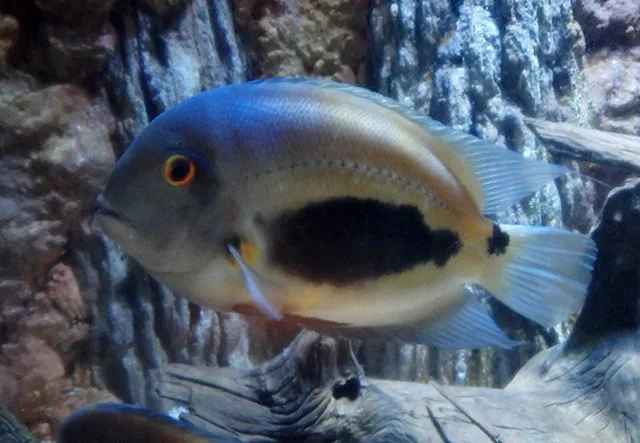
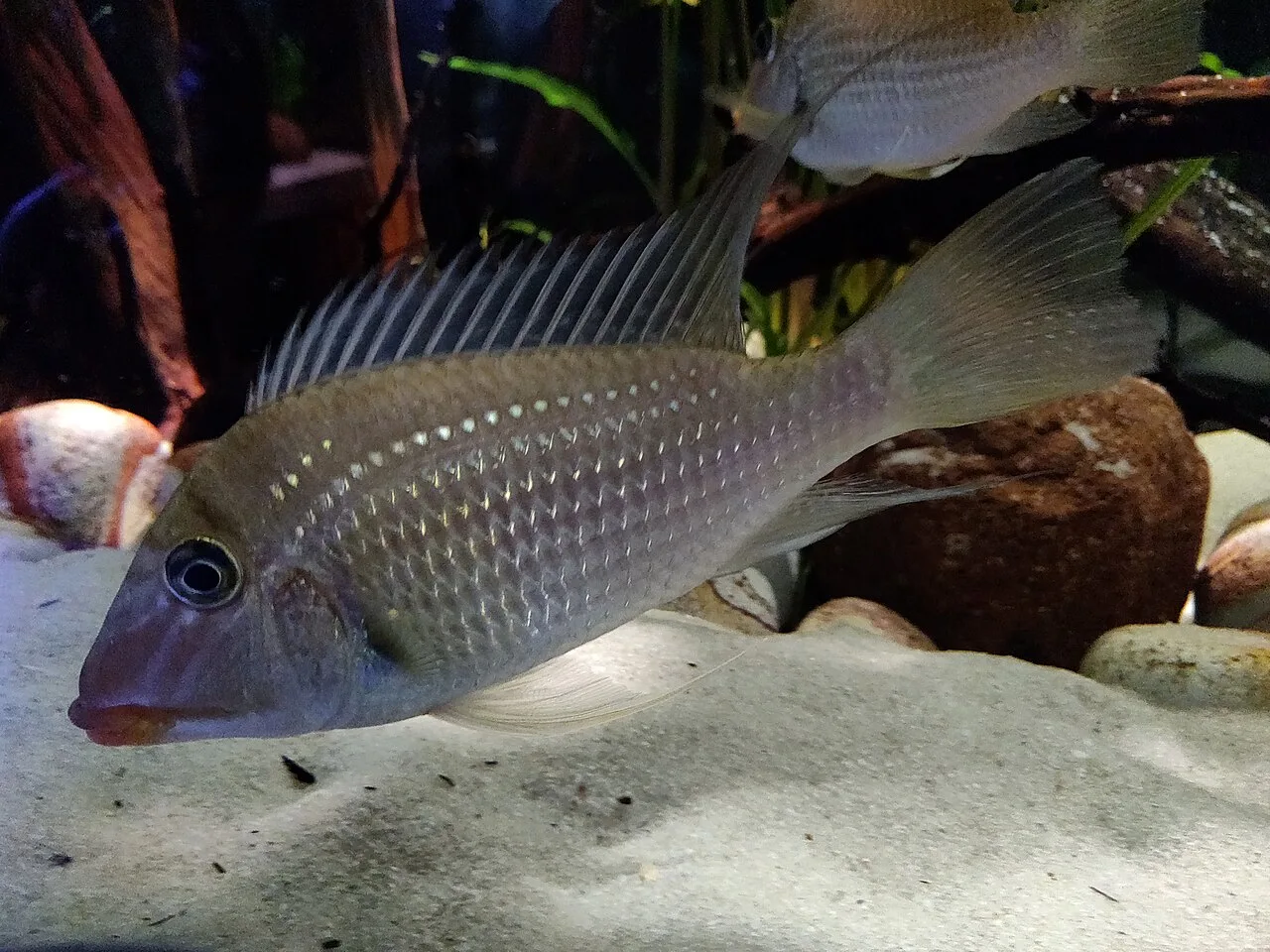
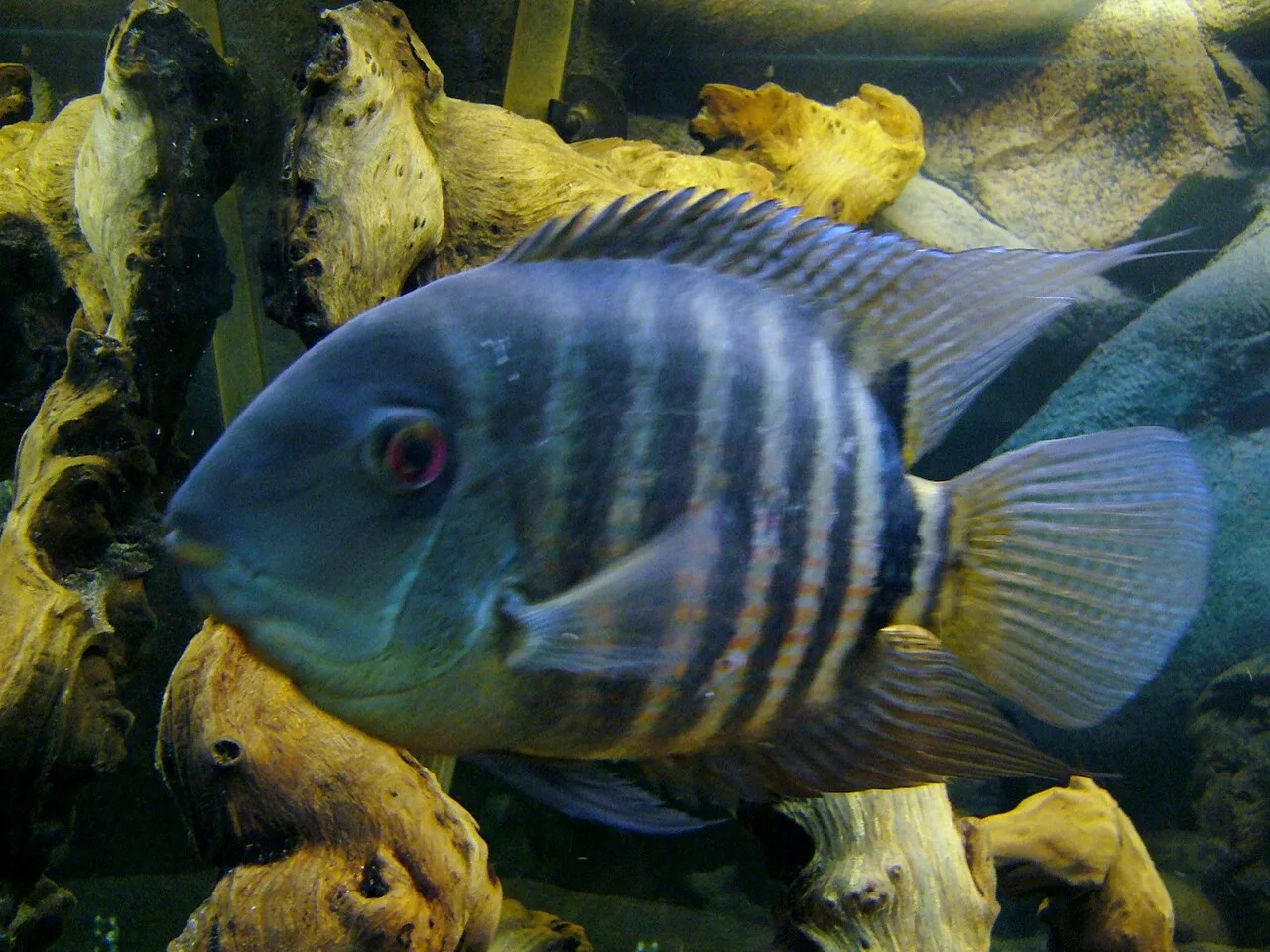
The discus reaches about 15 to 20 cm across. The body is round and strongly compressed. Nine vertical bars can be strong or almost gone, depending on mood. Turquoise, brown and red are wild colours. Pigeon blood, snakeskin and the other shop varieties are cultivated forms. They are not separate species and they have the same need for warmth and water.
The genus includes further discus forms. The catalogue lists Symphysodon aequifasciatus. A fish from a large Asian farm is usually tougher than a wild fish, but it is not undemanding. The group feeds together, stands together and falls ill together if one corner is driven off all the time.
Identification and taxonomy
The species differs from S. discus mainly by colour, pattern and scale count: a middle longitudinal row has up to 56 scales, in S. discus at most 51. The name refers to seven to nine equally broad, dark vertical bars on the brownish flanks, the last always at the base of the tail. Light blue, wavy longitudinal stripes lie on the forehead, nape, dorsal and anal fins. The species typically reaches up to 15.2 cm standard length, and captive fish are claimed to reach 23 cm.
Jacques Pellegrin described the form in 1904 as the subspecies S. discus aequifasciatus. In 1960 Schultz split it by colour slides into a brown, a green and a blue subspecies, which was long accepted in the hobby but is not supported by body characters. In 2006 the green discus of the western Amazon was described as S. tarzoo. A 2011 study kept only the discus of the lower Amazon as S. aequifasciatus, while the blue discus and a population from the Tocantins and Xingu are treated as undescribed species. Occasional mixing occurs between the forms and with the Heckel discus.
Origin & habitat
This describes the origin, not how to furnish the aquarium.
Slow, warm, often soft and humic waters of the Amazon basin, among wood and over leaf litter. The fish stand in groups, not as a pair on a stone like a dwarf cichlid. Brazil and the neighbouring Amazon stretches stay a coarse origin.
A bare cichlid tank with hard tap water does not match this habitat. Warmth, quiet, height and a group do more than a single show fish in 80 litres.
The species lives in the lower Amazon east of the mouth of the Rio Negro and in the lower reaches of the tributaries entering there. More broadly, its range covers the eastern and central Amazon basin downriver from the Purus Arch. The species lives in black-, clear- and whitewater and prefers still habitats such as floodplains and flooded forests, where even whitewater carries little suspended matter. It is largely restricted to water at 25 to 32 °C and pH 5.2 to 7.7. The IUCN lists it as least concern.
Care
Water and size
28 to 31 °C, pH about 6 to 7, soft to medium-hard. Tanks from about 300 litres and at least 50 cm high, better more, for a group from six. Wood, large leaves, dim light, little tapping on the glass. Daily or very regular water changes belong to the keeping, because the fish eat a lot and warm water tips quickly.
Group
Set them together while they are small. Pushing a single fish later into an established group often ends with a thin outsider. Tankmates only calm and able to take warm water: some tetras, corydoras. Angelfish are often named and in practice argue over the same space. Small prey fish and shrimp disappear.
Diet
Small, frequent food. Frozen food, brine shrimp, mosquito larvae, a good granule, several portions a day. The fish feed in midwater and from large leaves. One heavy feed in the evening lets the group feed unequally: the front fish grow round, the ones behind grow thin.
Beef heart and pure home mixes are not a permanent diet. They load the water and do not replace a varied food.
Behavior
A group fish with a quiet rank order. A healthy discus stands with the group, the bars changing with mood. A fish that wears dark bars, clamps in a corner and does not feed with the others is ill or driven off. Both call for action, not a different colour food.
The species is shy under constant tapping on the glass and with hectic tankmates. The tank should be a place where the group stands visible through the day.
Reproduction
Open substrate spawner, with skin mucus as the first food of the young. The pair guards the clutch and leads the larvae. In a group they often do not breed, or only briefly, because the other fish disturb them. Breeding is a separate tank with an established pair, very warm, clean water and the readiness to raise the young on the parents’ mucus and then on fine food.
In a community tank young are the exception.
Gallery
More species in this group
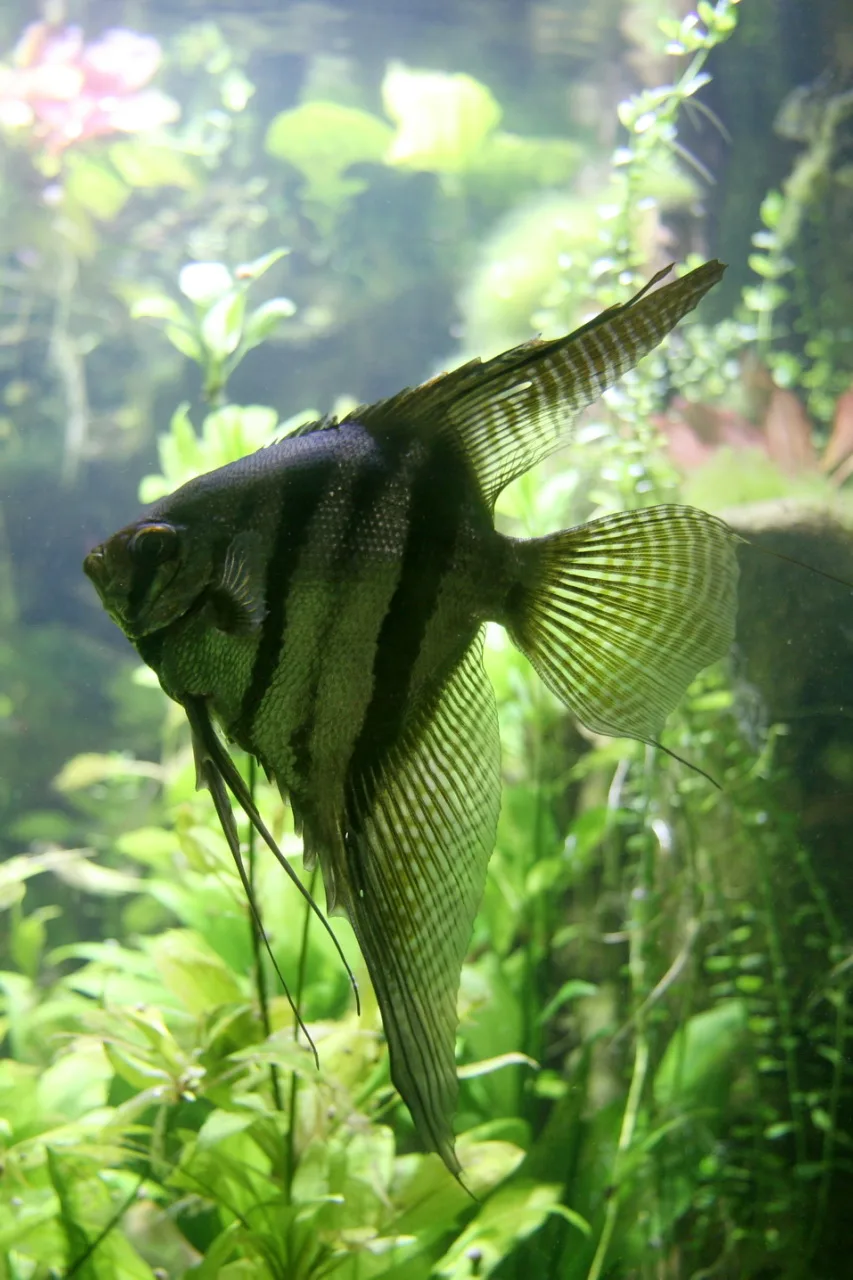
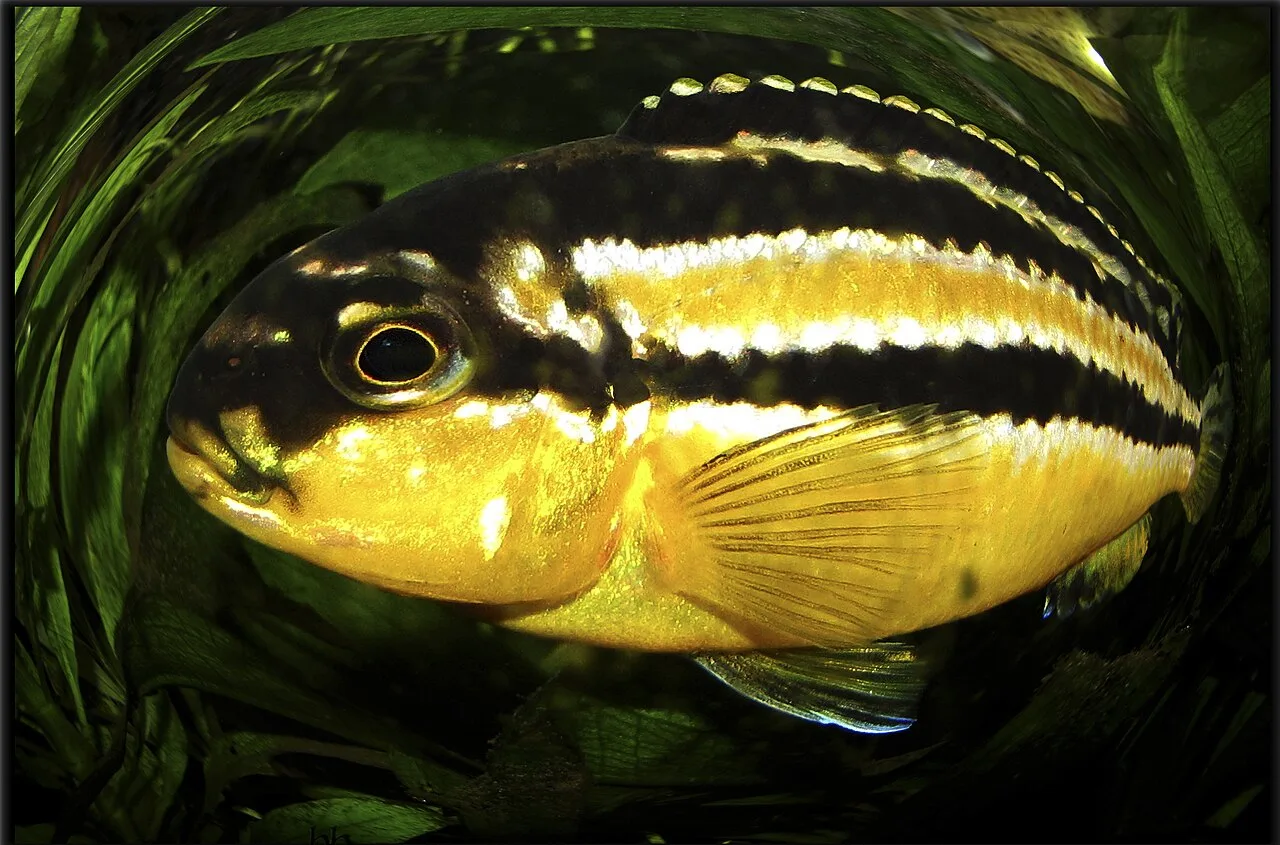

Similar water needs
Species with a similar temperature, a similar pH and a comparable adult size. Whether their behaviour fits as well is what the compatibility check is for.