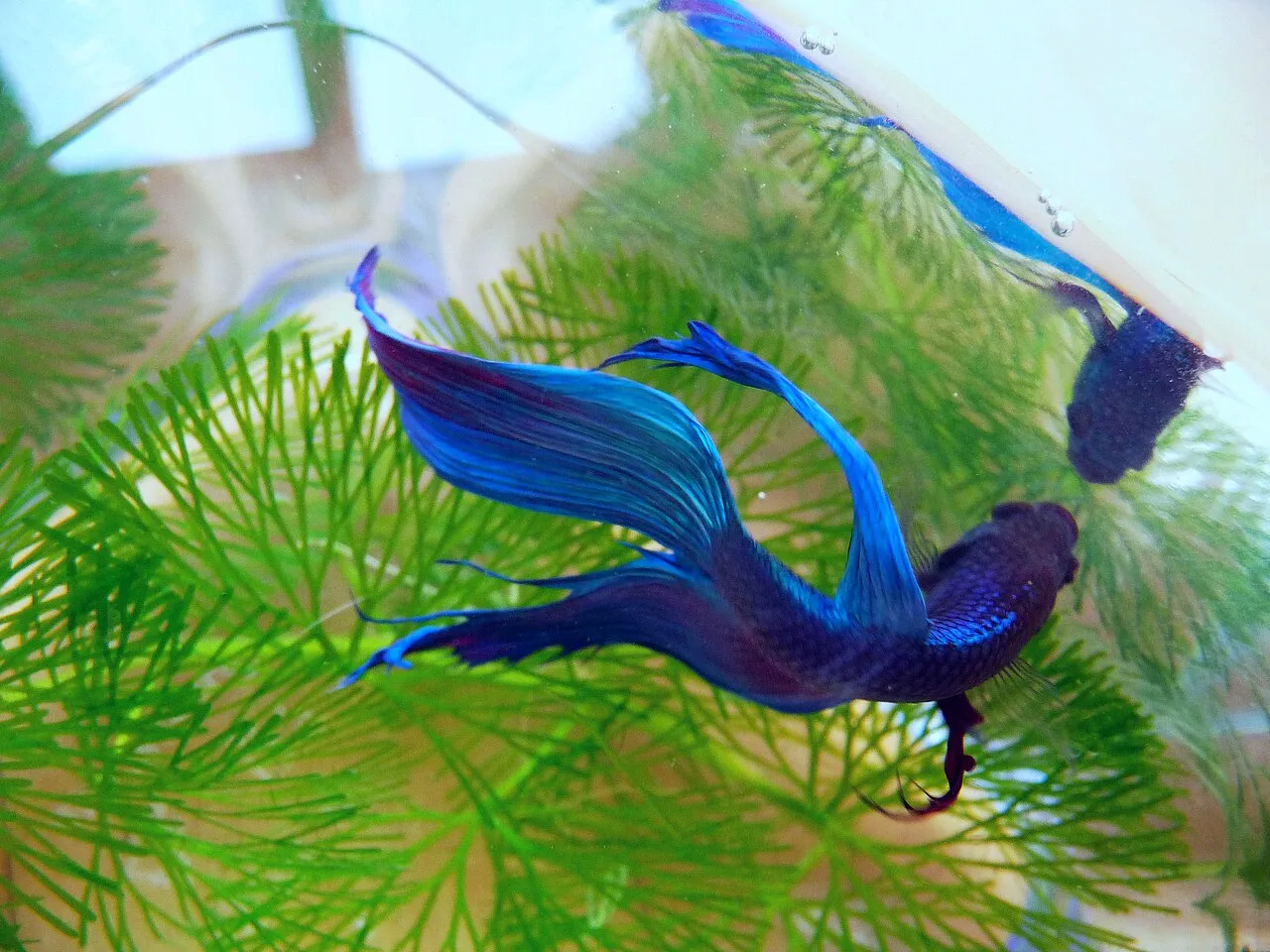
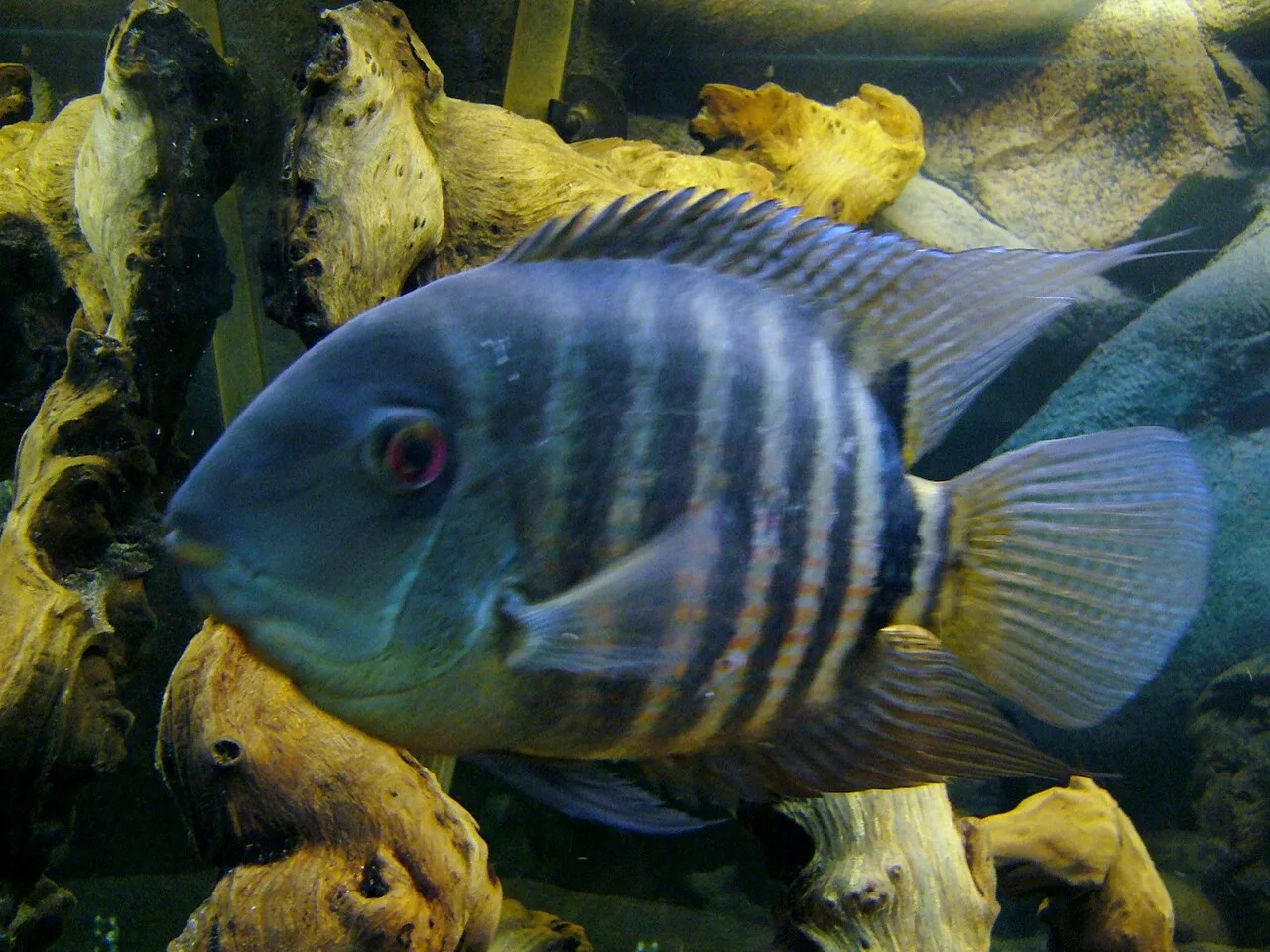
Buffalohead cichlid
Steatocranus casuarius
23 views
A cave brooder. Up to twelve years in captivity.
- Temperature
- 25 – 28 °C
- pH
- 6.5 – 7.5 pH
- General hardness
- 5 – 15 °dH
- Maximum size
- 10 cm
- Minimum tank size
- 120 L
2 min read · 299 words
Fresh water
Quick facts
Further published values
- Lifespan
- 12 a
Place in the aquarium
Highlighted are the water layer and the spots where the species usually stays in the tank.
- Near the bottom Mostly stays just above the bottom. Food has to reach the substrate.
- Rocks and caves Needs caves, crevices or rockwork as hiding place, territory or spawning site.
Shrimp in the tank
Dwarf shrimp at risk
- Not shrimp safe
- Dwarf shrimp at risk
- Shrimplets at risk
- Shrimp safe
- Adult dwarf shrimp
- At risk
- Shrimplets
- Get eaten
- Safe from shrimp size
- about 4 cm
The lionhead cichlid endangers even adult dwarf shrimp. It grows to 10 cm, as an omnivore also eats small animals and lies in wait at the cave entrance for drifting food. When breeding it clears and defends its territory. Young shrimp and Neocaridina or Caridina near the cave are eaten. Larger shrimp such as Amano shrimp from about 4 cm are usually safe.
Dwarf shrimp are better kept separately. Amano shrimp suit a tank with strong current and many stones, away from its cave.
Home & range
Overview
It digs at once. When breeding it removes plants within about 20 cm. Monogamous.
Features and sexes
The lionhead cichlid is also known in German as Buckelkopfcichlide, Helmcichlide or Löwenkopf. With enough food, males develop a large fatty pad on the forehead, which can become very impressive with age. Females often stay much smaller and have only a small hump. It reaches up to 10 cm total length. The swim bladder is reduced, so the fish moves over the bottom in jerks. It should not be confused with East African cichlids. Max Poll described the species in 1939. English names include lionhead, buffalohead and African blockhead.
Origin & habitat
This describes the origin, not how to furnish the aquarium.
The species lives in the Congo basin; the lower Congo and Pool Malebo are named. It inhabits fast-flowing rivers and stays in the calmer zones of the rapids, in caves and among hard plants. It is rheophilic, meaning adapted to strong current.
Care
Slightly acidic to pH 8.0, 25 to 28 °C, strong current, oxygen-rich water. Tanks from 60 cm long, not converted to litres. A cave, dark substrate.
Tankmates and oxygen
Neon tetras, guppies and other small tetras are not seen as prey but are only chased away near the cave. Keeping it with Pelvicachromis pulcher works if the tank is large enough for two territories, though males in particular show threat displays. Enough oxygen is important: tall tanks with a small surface and little water movement can lead to shortage. Over time the fish gets used to people in front of the tank.
Diet
Omnivore.
The lionhead cichlid often waits at the cave entrance for drifting food such as mosquito larvae.
Reproduction
Cave brooder, monogamous.
Spawning takes place in caves, for example in stone structures or coconut shells. The fry stay in the cave for a while. Then the parents lead them through the tank and keep predators away.
Gallery
More species in this group

Similar water needs
Species with a similar temperature, a similar pH and a comparable adult size. Whether their behaviour fits as well is what the compatibility check is for.