Siamese fighting fish
Betta splendens
32 views
Labyrinth fish from shallow, plant-rich water. Males fight each other. Long fins are cultivated.
- Temperature
- 25 – 30 °C
- pH
- 6 – 7.5 pH
- General hardness
- 4 – 15 °dH
- Maximum size
- 7 cm
- Minimum tank size
- 30 L
5 min read · 732 words
Fresh water
Quick facts
Further published values
- Lifespan
- 3 a
Place in the aquarium
Highlighted are the water layer and the spots where the species usually stays in the tank.
- Water surface Stays just below the surface. The top needs a calm current and a cover.
- Upper water Usually stays in the top third of the tank.
- Dense plants Looks for dense planting as cover, retreat or grazing ground.
Shrimp in the tank
Dwarf shrimp at risk
- Not shrimp safe
- Dwarf shrimp at risk
- Shrimplets at risk
- Shrimp safe
- Adult dwarf shrimp
- At risk
- Shrimplets
- Get eaten
- Safe from shrimp size
- about 4 cm
The betta is a risk for dwarf shrimp. It grows to 5 to 7 cm, has an upturned mouth and prefers live small animals such as mosquito larvae, water fleas and brine shrimp. Young shrimp are eaten, and many fish also hunt adult Neocaridina. How much depends on the individual fish. Larger shrimp from about 4 cm, such as Amano shrimp, are usually safe. A densely planted tank with moss improves the chances, but a stable dwarf shrimp colony rarely succeeds next to a betta.
Home & range
Hatched countries are where the species occurs. It lives in particular waters there, not across the whole country. The points name known waters for orientation, not collection sites.
- Country of origin
- Water for orientation
Native
Overview
Wild fish are usually reddish brown with green scale edges, females yellow-brown. Cultivated forms exist in almost every colour and fin shape. The fish reach about 5 to 7 cm and an age of about three years. The labyrinth organ takes air at the surface. The air above the tank must not be much colder than the water, or the fish chill. A small vase is not a suitable container, even though the species copes with tight space.
History of domestication
Local people bred fighting fish for show fights long before the species was described, because of the aggression of the males. The loser usually died from injuries or exhaustion. Simple farmers and nobles alike owned their own strains, and the fish were a status symbol. Genetic analysis dates domestication to at least 1,000 years ago. The king of Siam taxed the fights and in 1840 gave some fish to the Danish physician Theodore Cantor, who described them in 1849 as Macropodus pugnax. That name now applies to another species. The Siamese fighting fish is the national aquatic animal of Thailand, which is still the main breeder and exporter. The Thai name pla kat means biting fish and is used there for all Betta species.
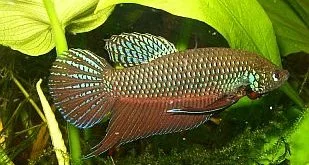
Wild fish are mostly green, brown and grey with relatively short fins and show strong colours only when agitated. It gives a length of 6 to 8 cm.
Threats
In the wild the IUCN lists the species as vulnerable despite the huge captive stocks. Causes are pollution from chemicals and agriculture, medication residues from sewage and the spread of oil palm plantations. Residues can even lower the hatch rate and make fathers more likely to eat their eggs.
Origin & habitat
This describes the origin, not how to furnish the aquarium.
The species comes from Thailand and Cambodia. Both are a coarse origin and are not filled. Other figures also name Laos, Vietnam, the Malay Peninsula, or only central Thailand. Because those accounts disagree, none of those further countries is drawn. The habitat is shallow, vegetated water, swamps, floodplain and rice fields.
In nature the fish live among dense plant growth and surface leaves such as fallen leaves and water lilies. Males claim dense plant areas as territory and so coexist. Shallow water and high air temperatures make these waters very poor in oxygen. The labyrinth organ lets the species survive there.
Care
The species is kept at 25–30 °C and pH 6–7.5, with 30 litres for one fish. What that text says: a quiet surface, clean water, and no tank in which two males cannot get away from each other. A single fish is preferable to a pair or a harem. Another account names habitat pH of about 6.9 to 8.2 and air temperatures of 15 to 40 °C. Those are not keeping figures.
Diet
Live food such as brine shrimp, mosquito larvae and daphnia, and frozen food as well. Dry and flake food is disputed because it can cause digestive trouble. Fine granules are therefore not an equal permanent diet. Fruit flies from the surface are named as an occasional extra.
Behavior
Males, and often females, attack conspecifics of the same sex and fight to the death in a tank, because there is no escape. They attack their reflection and can treat long-finned fish, especially male guppies, as rivals. Toward other species they are otherwise peaceful. In the wild, fights last only briefly. Strains bred for fighting last longer.
Fighting strains have been bred for aggression for more than six centuries and differ clearly from wild fish genetically. They are therefore considered a possible model organism for research into the genetic basis of aggression.
Reproduction
Bubble nest among surface plants. A female ready to spawn shows pale vertical bars. The male wraps around her. A clutch is usually 50 to 300 eggs. The male gathers them into the nest and then drives the female off. Care stays with the male.
How mating works
The male leads the female under the bubble nest. First come several mock matings in which the partners synchronise, so that eggs and sperm are later released at the same time. In the real mating the female lies on her back, both fall into a spawning rigidity and release eggs and sperm while trembling. The eggs are heavier than water and sink.
Show breeding
Show strains are now mostly judged by the standards of the International Betta Congress. Body counts for one third and fins for two thirds. Standards exist for halfmoon, crowntail, veiltail, doubletail, plakat, show plakat and shortfin halfmoon, among others.
Gallery
More species in this group
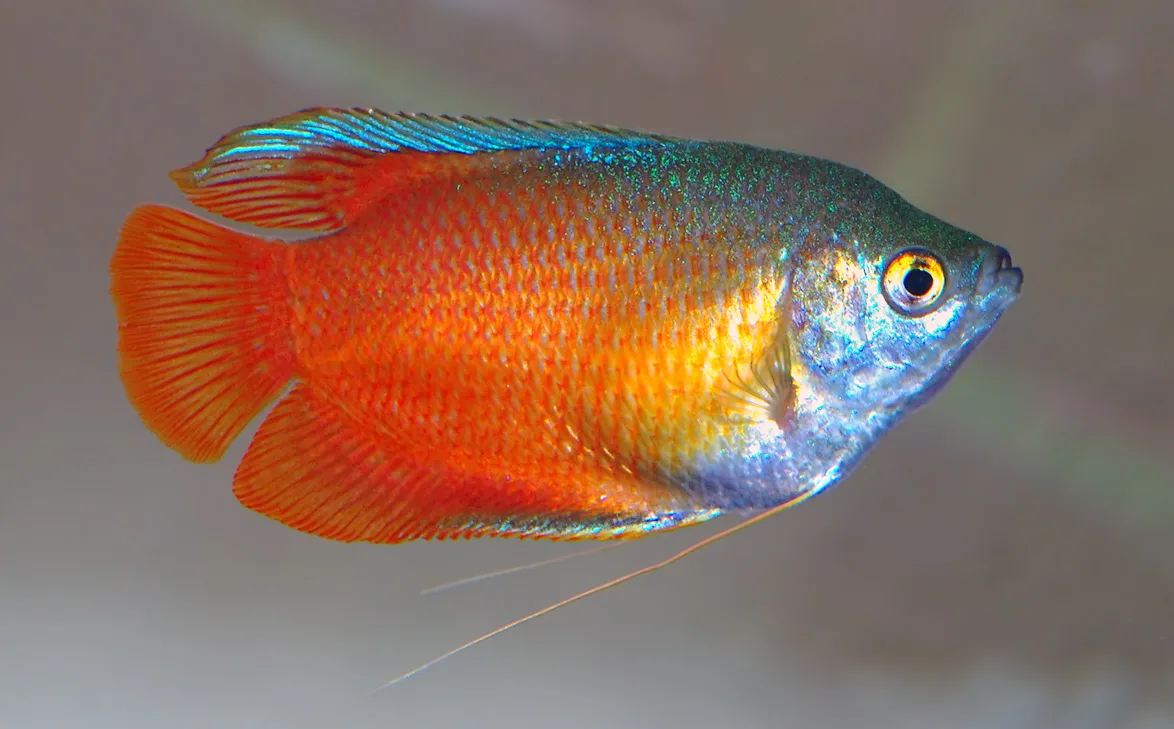

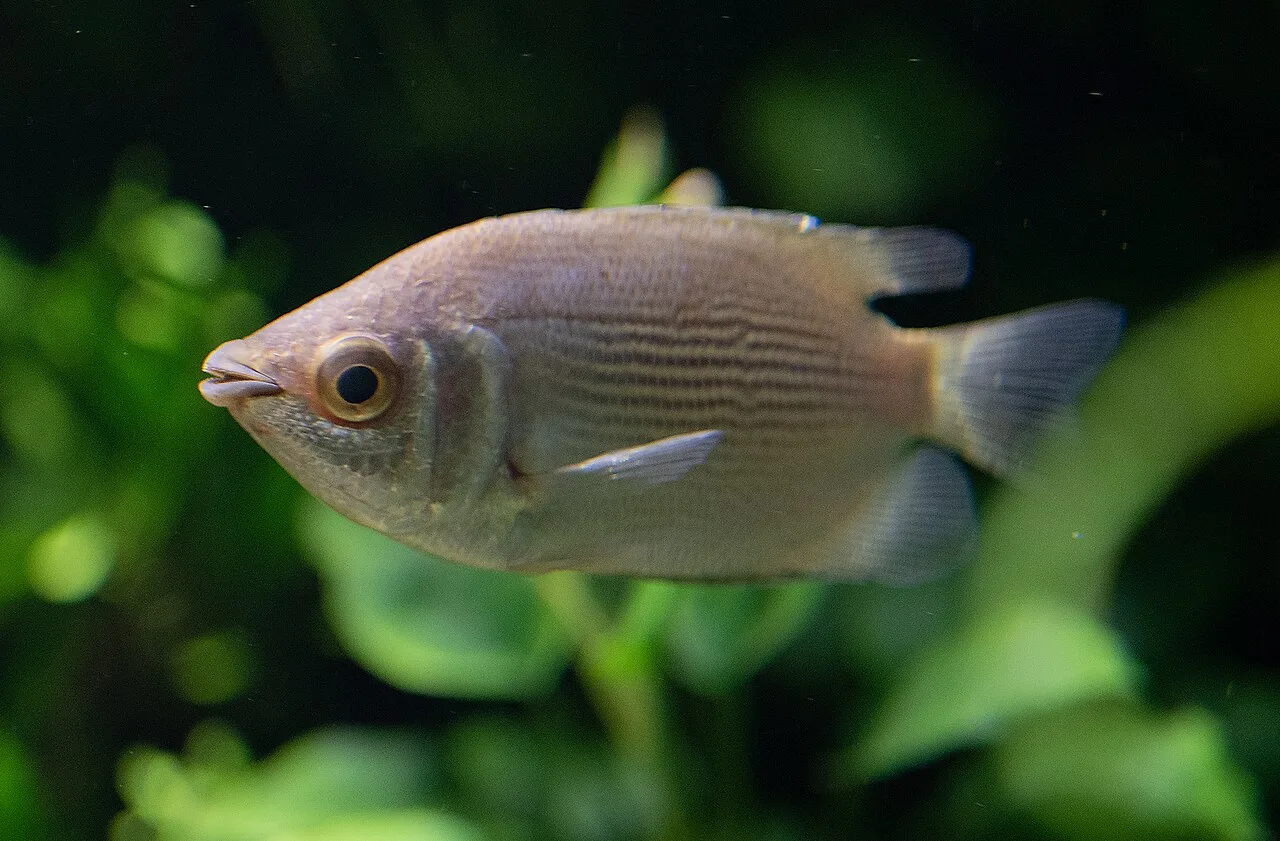
Similar water needs
Species with a similar temperature, a similar pH and a comparable adult size. Whether their behaviour fits as well is what the compatibility check is for.