
Emerald betta
Betta smaragdina
17 views
A betta with a green sheen and shorter fins than the veil breeds of Betta splendens. Peaceful toward other species does not mean that two males share a tank.
- Temperature
- 24 – 28 °C
- pH
- 6 – 7.5 pH
- General hardness
- 8 – 10 °dH
- Maximum size
- 6 cm
- Minimum tank size
- 40 L
4 min read · 522 words
Fresh water
Quick facts
Further published values
- Lifespan
- 2 a
Place in the aquarium
Highlighted are the water layer and the spots where the species usually stays in the tank.
- Water surface Stays just below the surface. The top needs a calm current and a cover.
- Upper water Usually stays in the top third of the tank.
- Dense plants Looks for dense planting as cover, retreat or grazing ground.
Shrimp in the tank
Dwarf shrimp at risk
- Not shrimp safe
- Dwarf shrimp at risk
- Shrimplets at risk
- Shrimp safe
- Adult dwarf shrimp
- At risk
- Shrimplets
- Get eaten
- Safe from shrimp size
- about 3 cm
The emerald betta is a risk for dwarf shrimp. It grows up to 7 cm, feeds on small animal food and hunts at the surface and in the upper midwater. Juvenile shrimp are eaten, and small adult dwarf shrimp too, depending on the individual. Larger shrimp from about 3 cm such as Amano shrimp are usually safe.
The species is shy and does best in a quiet species tank with dense plants. If shrimp are added, choose larger species. Dwarf shrimp are bred separately.
Home & range
Hatched countries are where the species occurs. It lives in particular waters there, not across the whole country. The points name known waters for orientation, not collection sites.
- Country of origin
- Water for orientation
Native
Overview
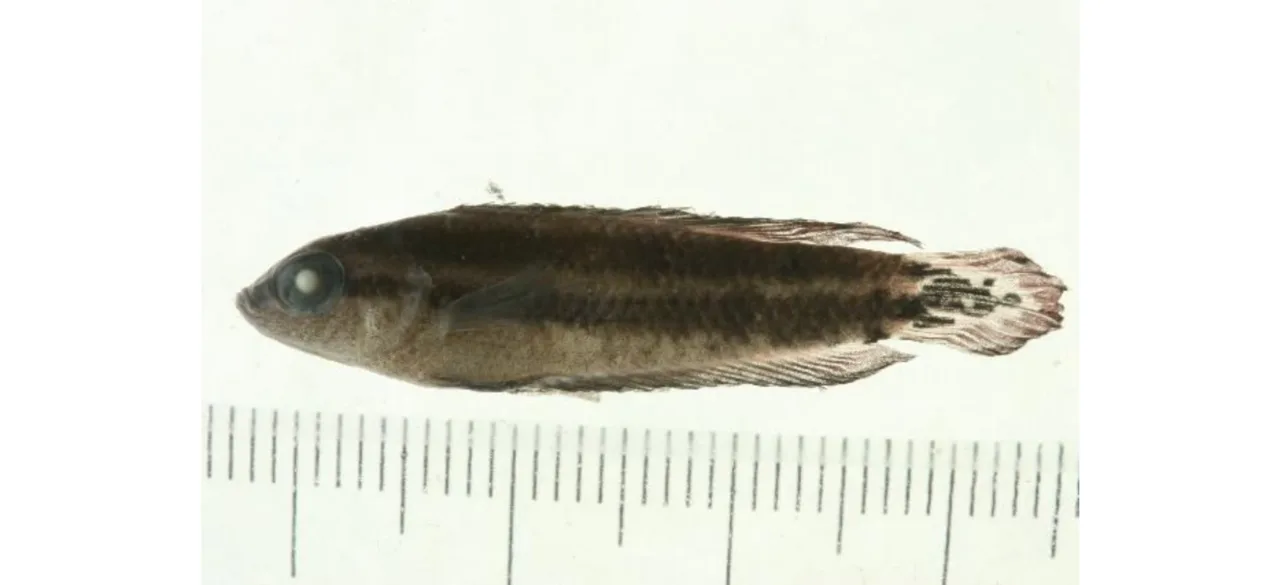
Betta smaragdina reaches about 5 to 6 cm. Males show a dark green to blue with red in the fins. Females are plainer. The fins stay shorter than in the long cultivated forms of the Siamese fighting fish. Crosses with B. splendens occur and should not be passed on as this species.
The green sheen appears in the right light on a dark ground. In a bare, glaring shop tank the fish looks brown. That is the place, not a pale strain.
Features
Werner Ladiges described the species in 1972. It grows up to 7 cm. The ground colour is dark brown, the fin membranes dark red and the pelvic fin tips bright white. The males' anal fin often ends pointed at the rear. Females ready to spawn show several beige-white cross bands. When frightened, both sexes turn pale beige with almost transparent fins and two to three dark brown longitudinal stripes. The species comes from northern and eastern Thailand.
Origin & habitat
This describes the origin, not how to furnish the aquarium.
Shallow, plant-rich waters in north-eastern Thailand, in Laos and in Cambodia. Warm, still water, floating plants, little current. The countries stay a coarse origin.\n\nThe habitat is tight and structured. Tightness alone is not an argument for an unheated glass without cover and without a lid.
Care
Keeping
24 to 28 °C, pH 6 to 7.5. From about 40 litres for one male, from about 60 litres for a pair if the female can get away. Dense plants, floating plants, two zones, a quiet warm surface. Weak current. A cover against jumps and against cold air over the labyrinth.
Company
One male alone is the simplest keeping. A pair only with a retreat. Other small, calm fish can fit. Long fins of other bettas, hectic barbs and a mirror as decoration do not. Shrimp are eaten depending on the individual.
56 litres are enough for a pair or one male with two females. The species is undemanding about water and temperature but sensitive to heavy organic load. Because it is shy it is only partly suited to community tanks; a species tank is ideal.
Diet
Small animal food. Brine shrimp, mosquito larvae, cyclops, fine frozen food. Dry food only as a supplement and in a small grain. The food has to arrive at the surface and in the upper midwater.\n\nA tablet that falls straight into the gravel is the poorer choice.
Behavior
Calm toward other species, clearly focused on its own male. Gill covers and fins are spread as soon as a second male or the reflection is visible. Females show vertical bars when they are ready to spawn. If the bars are missing and the fish flees all the time, it is not pair keeping. It is a chase.
Reproduction
Bubble nest under floating plants. The male takes over the clutch and then drives the female off. The larvae are tiny. Rearing needs a separate tank, warmth and infusoria. In a community tank the nest is usually destroyed before the larvae swim.
After the embrace the female falls into a spawning stupor while the male carries the eggs to the nest in his mouth. The larvae hatch after 24 to 36 hours and then hang in the nest for another 48 to 72 hours.
Gallery
More species in this group

Similar water needs
Species with a similar temperature, a similar pH and a comparable adult size. Whether their behaviour fits as well is what the compatibility check is for.



