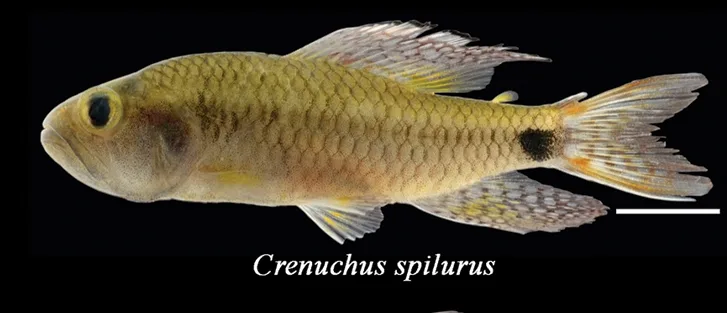
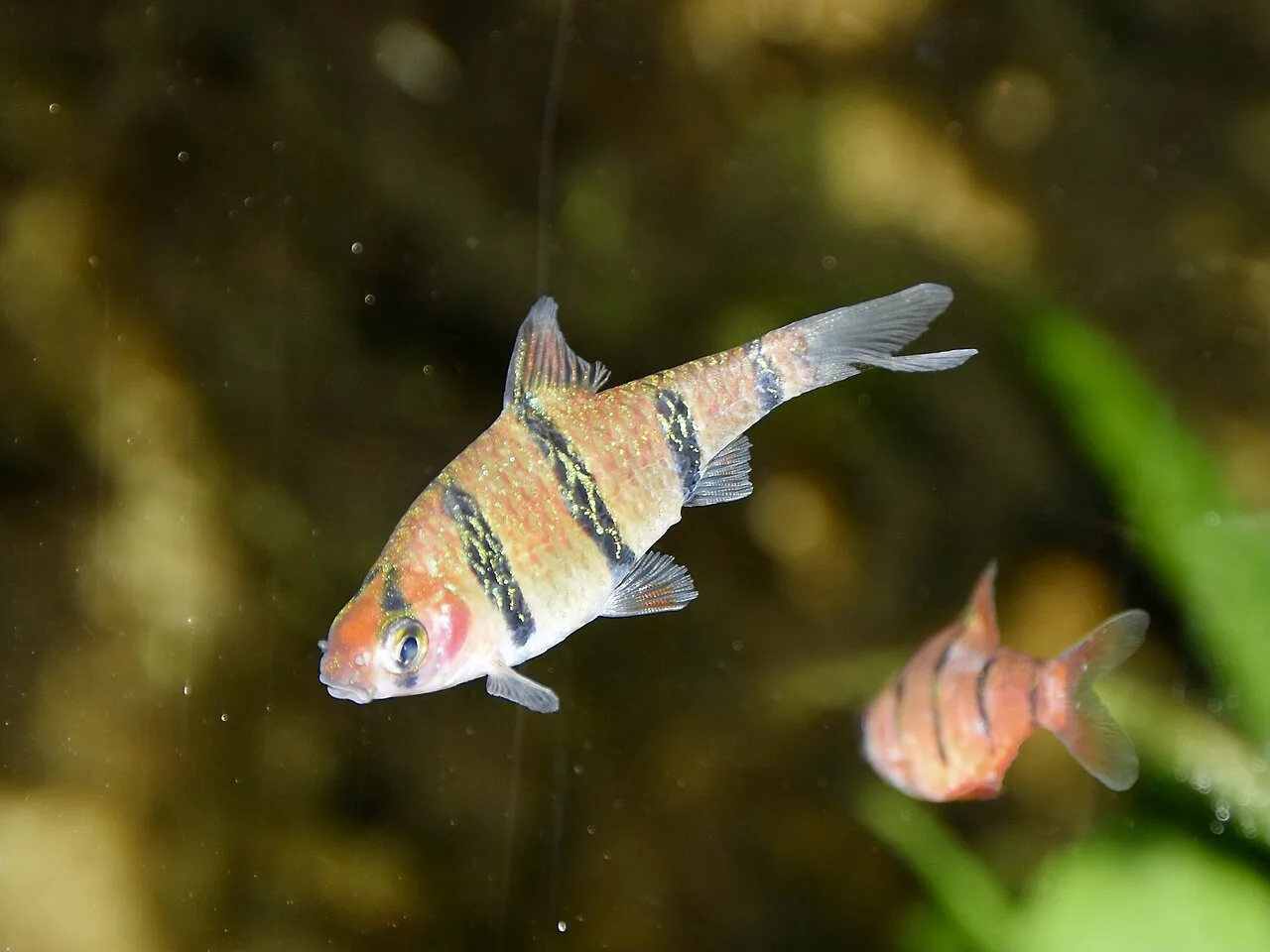
Liquorice gourami
Parosphromenus quindecim
21 views
A tiny labyrinth fish from acidic blackwater. The males show a barred breeding dress. The species is not a beginner fish.
- Temperature
- 24 – 28 °C
- pH
- 4 – 6 pH
- General hardness
- 0 – 4 °dH
- Maximum size
- 3 cm
- Minimum tank size
- 20 L
2 min read · 335 words
Fresh water
Quick facts
Place in the aquarium
Highlighted are the water layer and the spots where the species usually stays in the tank.
- Near the bottom Mostly stays just above the bottom. Food has to reach the substrate.
- Dense plants Looks for dense planting as cover, retreat or grazing ground.
- Rocks and caves Needs caves, crevices or rockwork as hiding place, territory or spawning site.
Shrimp in the tank
Shrimplets at risk
- Not shrimp safe
- Dwarf shrimp at risk
- Shrimplets at risk
- Shrimp safe
- Adult dwarf shrimp
- Safe
- Shrimplets
- Get eaten
- Safe from shrimp size
- about 1.5 cm
Adult dwarf shrimp are safe from this licorice gourami. At no more than 2.9 cm standard length it stays very small, and shrimp from about 1.5 cm are too large for it.
It can eat newly hatched baby shrimp as tiny food animals. With leaf litter, moss and dense planting enough young get through. Because the species is critically endangered, its tank should be set up mainly for its own needs. Shrimp are a side note there. The more fine structure lies on the bottom, the more young grow up, and food given in the evening distracts the fish as well.
Home & range
Hatched countries are where the species occurs. It lives in particular waters there, not across the whole country. The points name known waters for orientation, not collection sites.
- Country of origin
- Water for orientation
Native
Overview
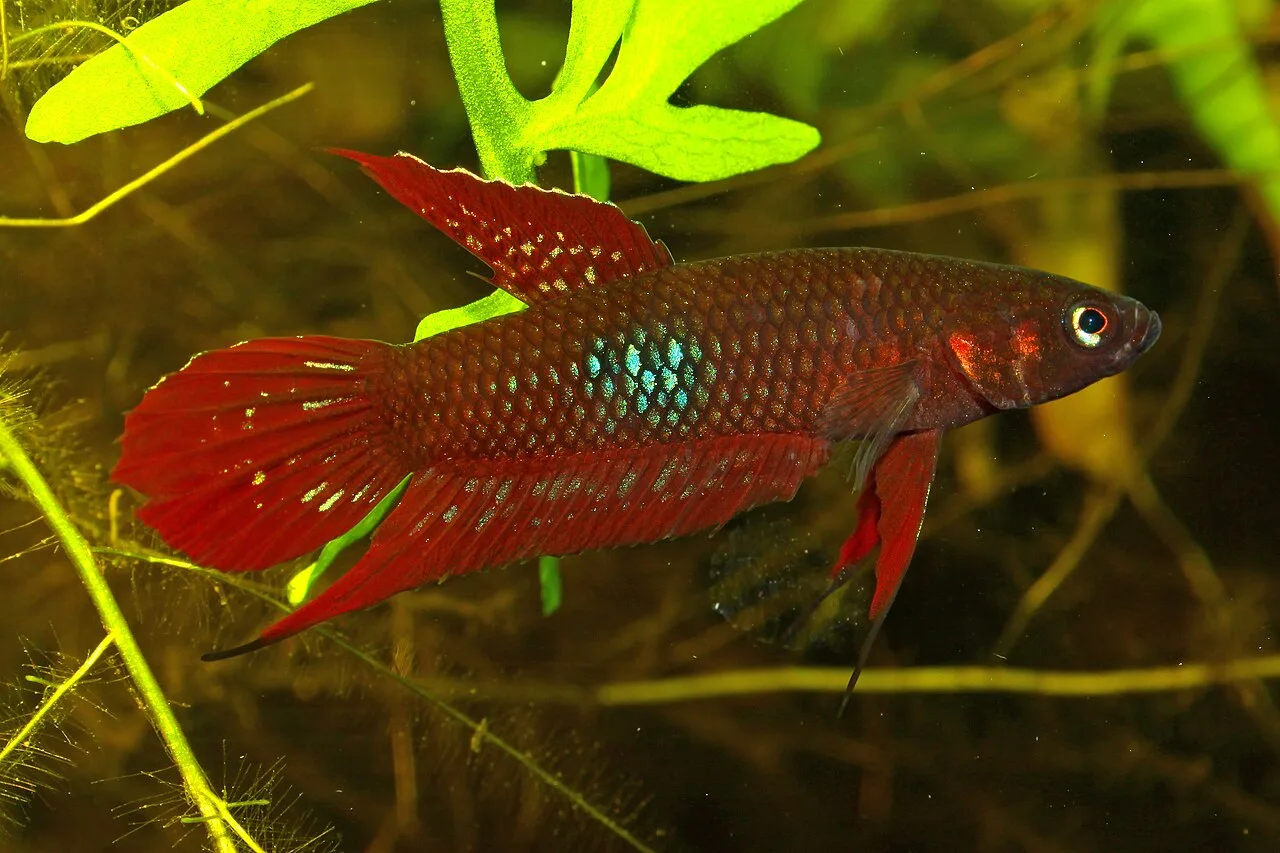
Parosphromenus quindecim stays at about 3 cm. Outside courtship the body is brown with a longitudinal stripe. When courting the male spreads the fins and shows pale and dark bands. The female stays plainer. The species stands just above the bottom among leaf litter and fine plants.
Many liquorice gouramis in the trade are not identified to species. This profile means P. quindecim. Other Parosphromenus have similar needs and must not be passed on as the same species if the origin is unclear.
Features
Parosphromenus quindecim reaches at most 2.9 cm standard length and can also breathe air. The name quindecim is the Latin word for fifteen and refers to the number of dorsal-fin spines, said to separate it from other species of the genus. Maurice Kottelat and P. K. L. Ng described it in 2005. It is known only from the Pawan basin in Indonesia. It is uncommon in the trade. The IUCN lists it as critically endangered.
Origin & habitat
This describes the origin, not how to furnish the aquarium.
Blackwater and peat swamps on Borneo. Extremely soft, acidic, warm, poor in nutrients, little light. Borneo stays the coarse origin. The small area is a reason to keep only captive-bred fish.
Care
Water
24 to 28 °C, pH 4 to 6, very soft, if possible under 2 °dH. From about 20 litres for a pair in a mature tank with leaf litter, moss and almost no current. No fresh tap water without adaptation.
Company
The species alone. Other fish take the food and stress them. A snail or a few shrimp can work, but are not necessary.
Diet
Only fine live food. Brine-shrimp nauplii, cyclops, microworms. Dry food is usually refused. Feed slowly and near the hiding place.
Behavior
Very quiet. The male courts in front of a small cave. A female that is not ready has to be able to get away. Glaring light and constant tapping make the fish disappear.
Reproduction
The male guards the clutch in a tight cave. The larvae are extremely small and need infusoria. That is a breeding project for patient keepers, not a by-product of the community tank.
Gallery
More species in this group
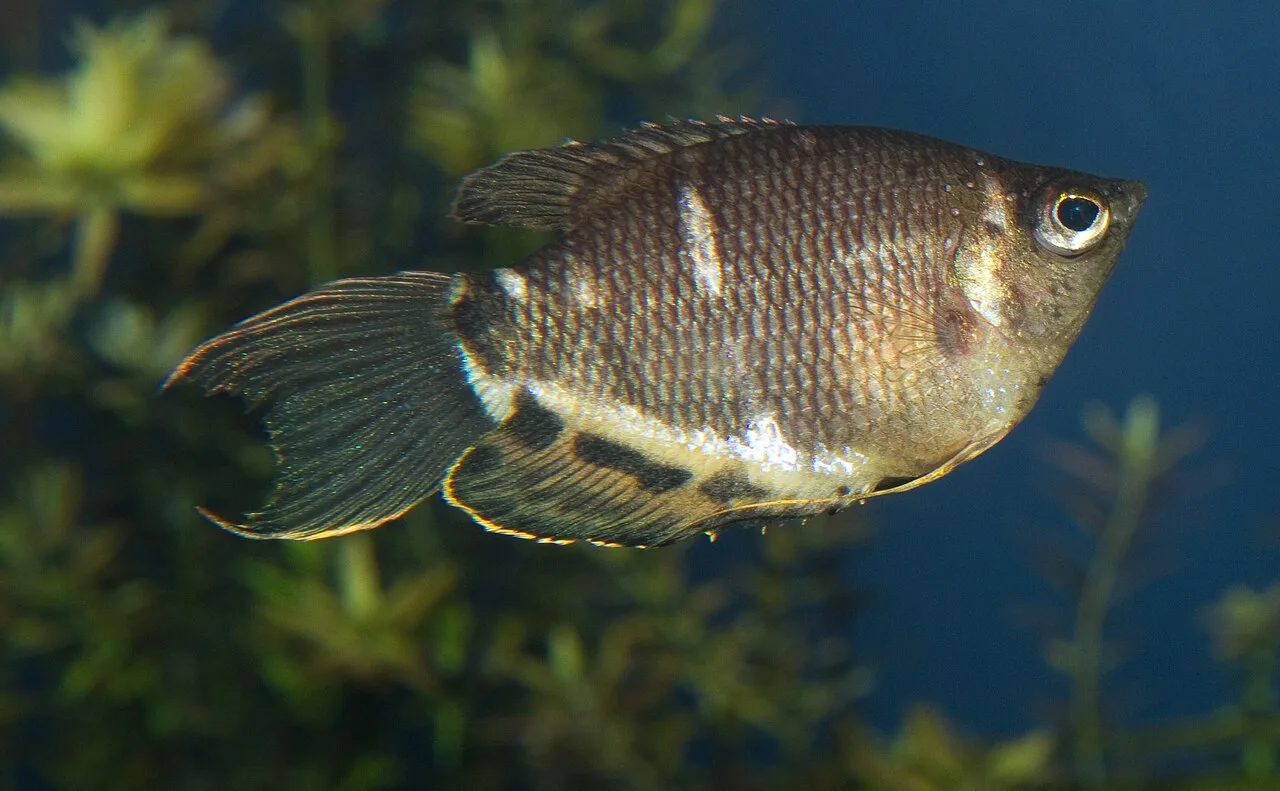
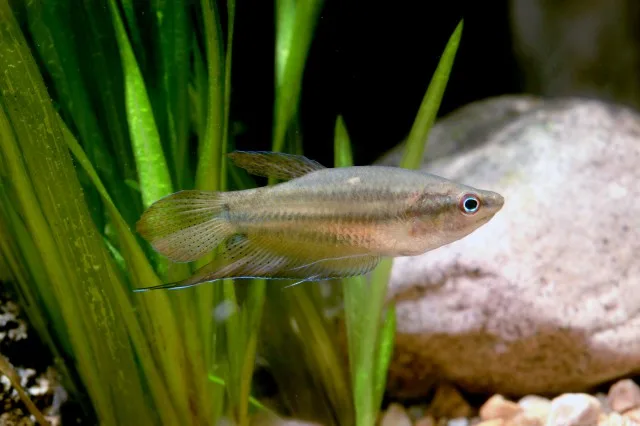

Similar water needs
Species with a similar temperature, a similar pH and a comparable adult size. Whether their behaviour fits as well is what the compatibility check is for.