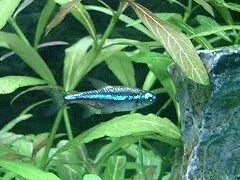
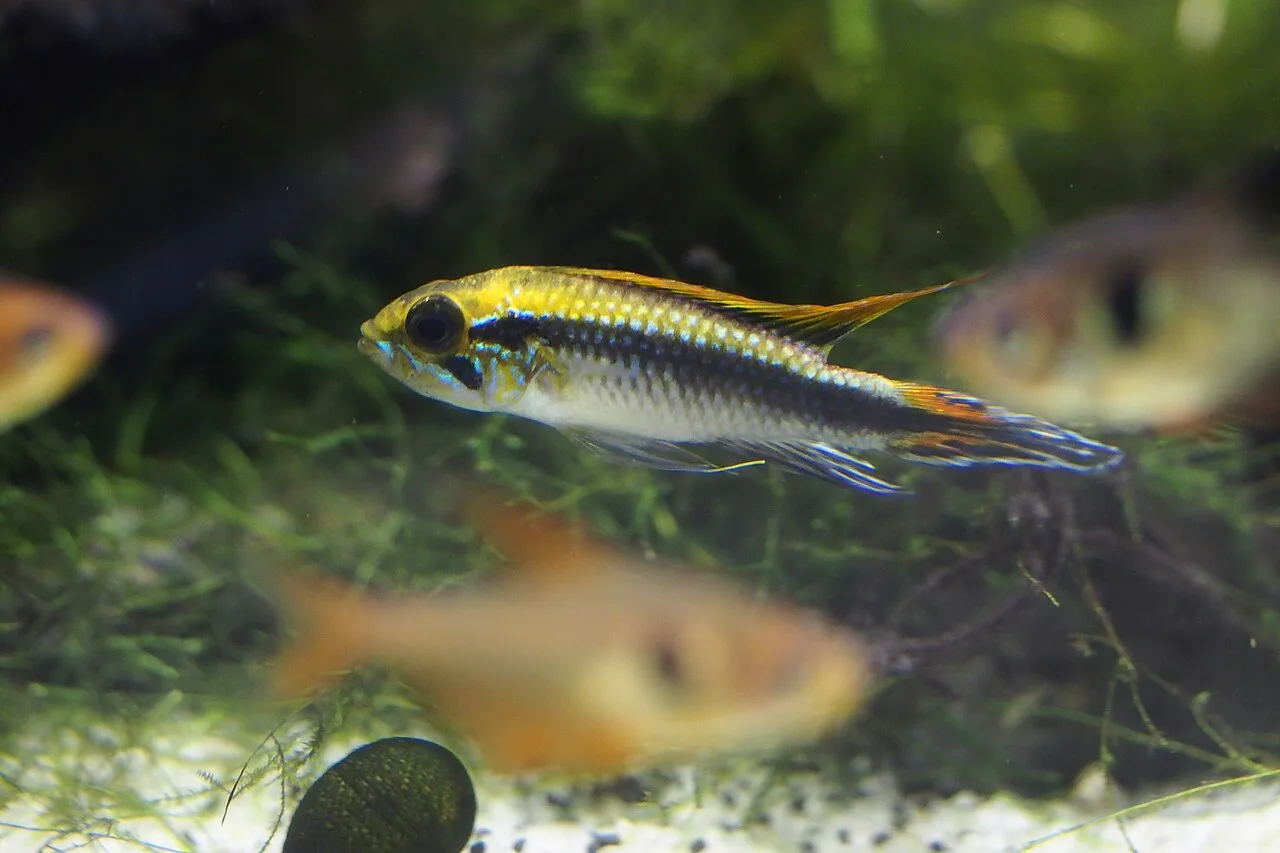
Sailfin tetra
Crenuchus spilurus
17 views
A small tetra whose males carry a high dorsal fin. It stands above the bottom and also eats very small tankmates.
- Temperature
- 24 – 28 °C
- pH
- 5 – 6.5 pH
- General hardness
- 1 – 8 °dH
- Maximum size
- 6 cm
- Minimum tank size
- 80 L
4 min read · 569 words
Fresh water
Quick facts
Place in the aquarium
Highlighted are the water layer and the spots where the species usually stays in the tank.
- Middle water Usually stays in the middle of the tank, between bottom and surface.
- Dense plants Looks for dense planting as cover, retreat or grazing ground.
- Wood and roots Uses roots as shelter or grazes biofilm from them.
Shrimp in the tank
Dwarf shrimp at risk
- Not shrimp safe
- Dwarf shrimp at risk
- Shrimplets at risk
- Shrimp safe
- Adult dwarf shrimp
- At risk
- Shrimplets
- Get eaten
- Safe from shrimp size
- about 4 cm
The sailfin tetra is no partner for dwarf shrimp. Males reach 6 cm, the species lives singly near the bottom and eats small invertebrates such as mayfly larvae, copepods and seed shrimps. Small crustaceans are thus explicitly part of its prey. Juvenile shrimp and small adult dwarf shrimp are at risk. Larger shrimp from about 4 cm are usually safe.
The males occupy caves and defend them. Dwarf shrimp are better kept separately. Amano shrimp can fit in a larger tank with plenty of hiding places.
Home & range
Hatched countries are where the species occurs. It lives in particular waters there, not across the whole country. The points name known waters for orientation, not collection sites.
- Country of origin
- Water for orientation
Native
Overview
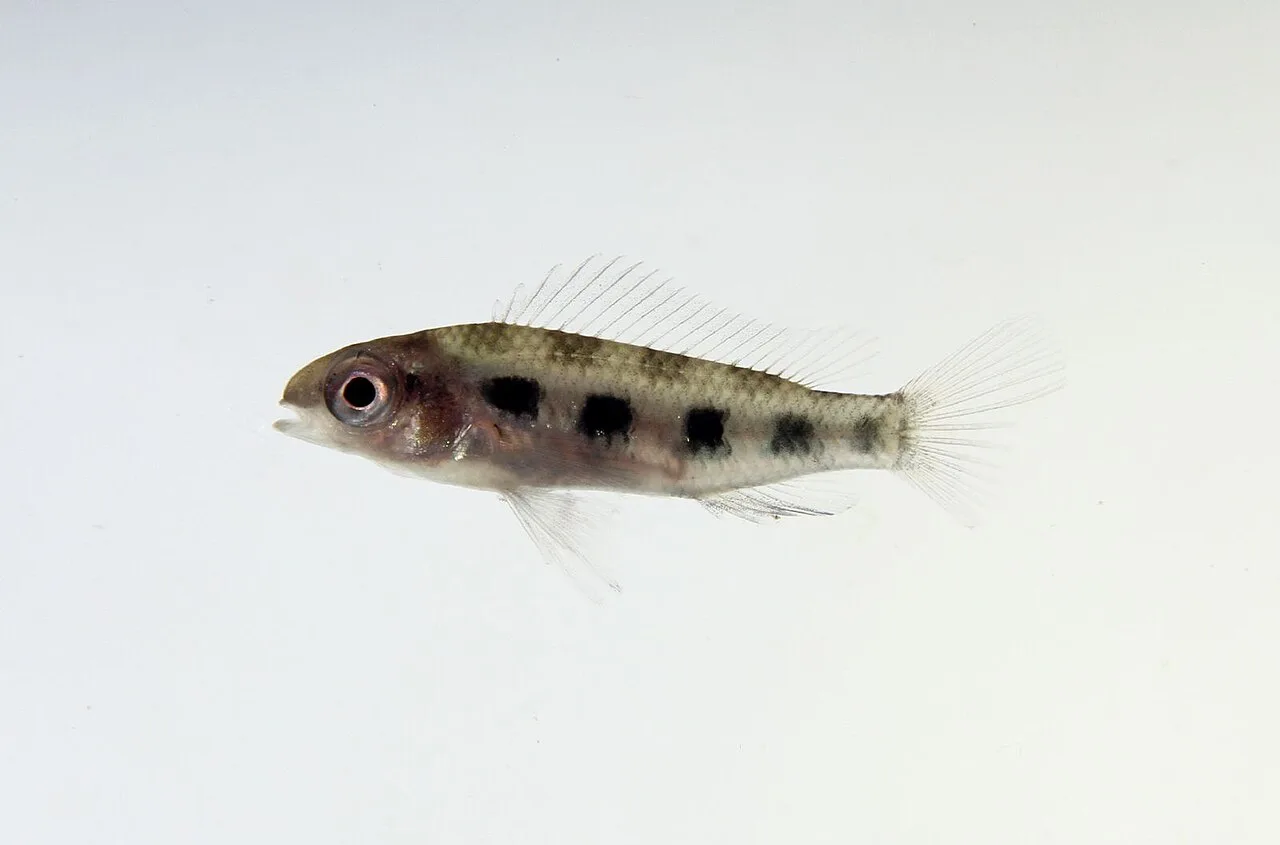
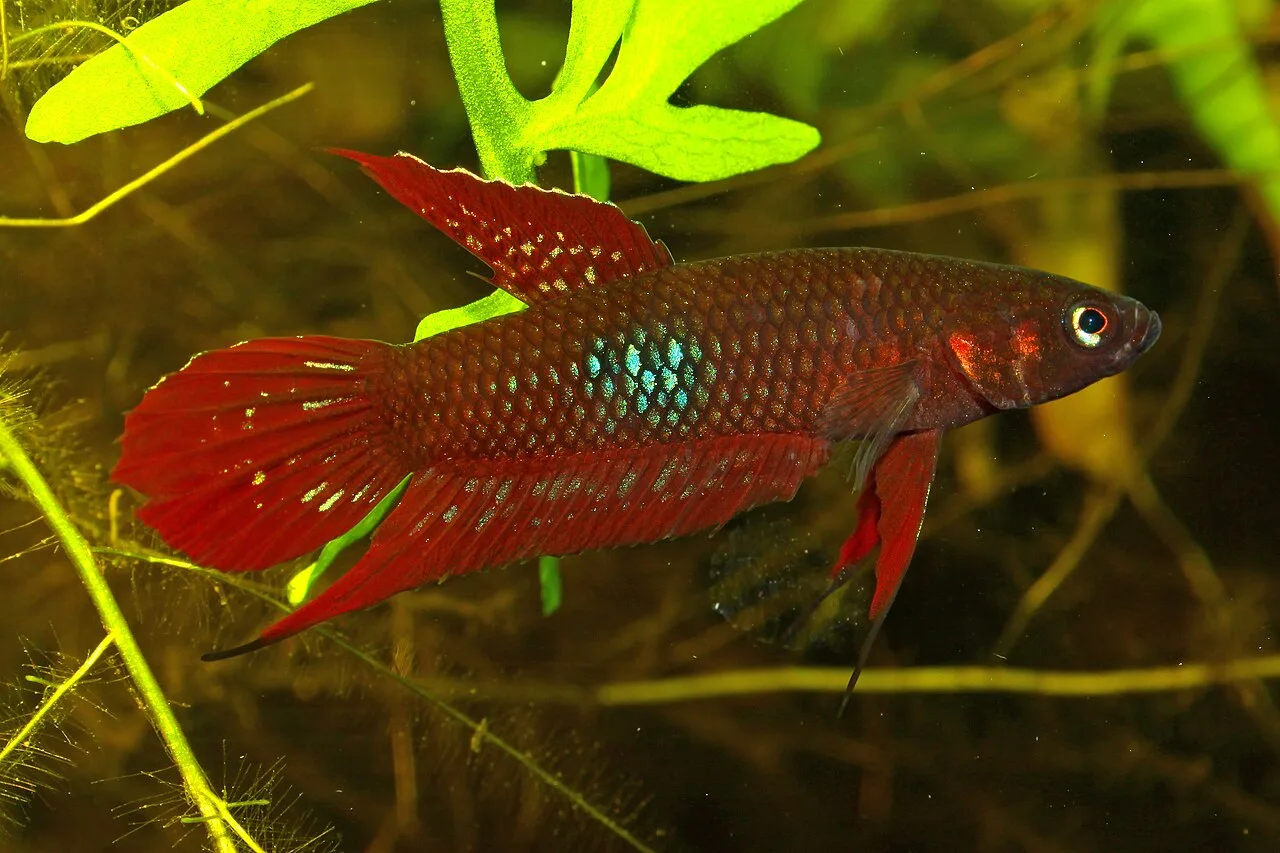
Crenuchus spilurus reaches about 6 cm. The males have a sail-like dorsal fin and a reddish sheen. The females are plainer and deeper. A dark spot sits at the tail base. The species stands just above the bottom among leaf litter and roots, not in the open school of the upper middle.
It is not an emperor tetra. The fin is the sail, the body stockier. Very small tetras and young shrimp fit into the mouth.
Name and systematics
The species is also called spot-tail tetra. Albert Günther described genus and species in 1863. Crenuchus spilurus is the only species of its genus and belongs to the South American darters (Crenuchidae). The species name combines the Greek words spilos, spot, and oura, tail, after the large black spot on the caudal peduncle. The genus name means roughly guardian of springs.
Features
Males reach 6 cm, females stay smaller. The upper jaw is toothless; the premaxilla and lower jaw carry bands of three-pointed teeth. Colour depends on the locality and is mostly reddish brown. A yellowish band runs from the gill cover to the base of the caudal fin, and the upper half of the iris is blood red. The middle longitudinal row has 29 to 32 scales, and there is an adipose fin. Fin formula: dorsal 3–4/13–15, anal 2/9. The males' flag-like enlarged dorsal and anal fins carry a mosaic of pale yellow spots and a yellow or red edge. Poecilocharax callipterus has a very similar spot in front of the caudal fin.
Origin & habitat
This describes the origin, not how to furnish the aquarium.
Slow, acidic forest streams of the Amazon region and the Guianas, over leaf litter. The origin stays coarse. Dim light and a dark bottom match that.
The species occurs in Guyana, Suriname and French Guiana and inhabits river systems of the upper and lower Amazon and the Orinoco. The water is soft and slightly acidic.
Care
Keeping
24 to 28 °C, pH 5 to 6.5, soft. A pair, or one male with females, tanks from about 80 litres, leaf litter, roots, caves, little current.
Company
Quiet fish that are clearly larger than the mouth. Dwarf rasboras and young shrimp, no. Two males in a small space fight.
Diet
Frozen and live food, plus fine granules. Brine shrimp, mosquito larvae, cyclops. Flakes alone are not enough in the long run.
In the wild the species eats mainly small invertebrates, for example mayfly larvae, copepods and seed shrimps.
Behavior
The male holds a small zone above the bottom and spreads the sail. The female has to be able to get away. The fish stay shy until the tank has cover.
Unlike most tetras the species does not form schools and lives singly. Mature males occupy a hiding place such as a cave. Fights between adult males are ritualised and cause no injuries. Mating takes place in the evening and at night.
Reproduction
The male guards the clutch in a cave or under a leaf. The larvae are small. A community tank eats them.
Paternal brood care
With each fertilisation one to three brownish red eggs are stuck to the ceiling of the hiding place, 20 to 60 eggs in all. The male cares alone, drives off egg predators and fans fresh water over them. At 25 °C the larvae hatch after about two days and hang from the ceiling by a thread. About three days later the male fans the young out of the shelter and ends his care. The light-sensitive larvae then live on their yolk sac for about another week.
Gallery
More species in this group






Similar water needs
Species with a similar temperature, a similar pH and a comparable adult size. Whether their behaviour fits as well is what the compatibility check is for.