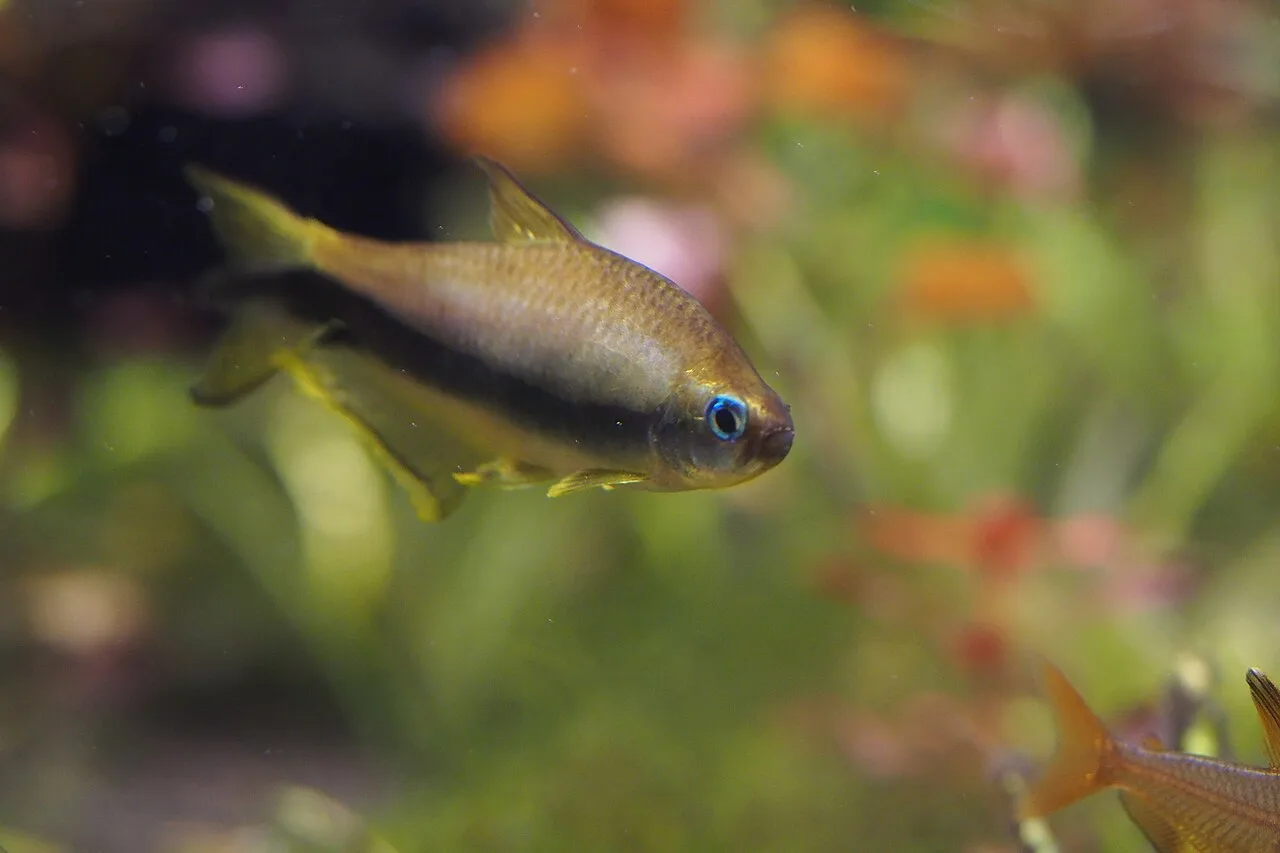
Agassizs dwarf cichlid
Apistogramma agassizii
23 views
A dwarf cichlid from blackwater. It is an omnivore and a frequent aquarium fish.
- Temperature
- 23 – 28 °C
- pH
- 6 pH
- General hardness
- 5 – 10 °dH
- Maximum size
- 8 cm
- Minimum tank size
- 38 L
4 min read · 577 words
Fresh water
Quick facts
Place in the aquarium
Highlighted are the water layer and the spots where the species usually stays in the tank.
- Near the bottom Mostly stays just above the bottom. Food has to reach the substrate.
- Dense plants Looks for dense planting as cover, retreat or grazing ground.
- Rocks and caves Needs caves, crevices or rockwork as hiding place, territory or spawning site.
Shrimp in the tank
Dwarf shrimp at risk
- Not shrimp safe
- Dwarf shrimp at risk
- Shrimplets at risk
- Shrimp safe
- Adult dwarf shrimp
- At risk
- Shrimplets
- Get eaten
- Safe from shrimp size
- about 4 cm
Agassiz's dwarf cichlid endangers even adult dwarf shrimp. Males reach about 8 cm, and the species hunts insects and other small animals on the bottom. During breeding it defends its territory and eats more. Young shrimp hardly stand a chance, and adult Neocaridina or Caridina are often caught. Larger shrimp such as Amano shrimp from about 4 cm are usually safe.
Anyone who wants to breed dwarf shrimp keeps them separately. With Amano shrimp, living together usually works in a well-structured tank with roots and dense plants.
Home & range
Hatched countries are where the species occurs. It lives in particular waters there, not across the whole country. The points name known waters for orientation, not collection sites.
- Country of origin
- Water for orientation
Native
- Peru
- Range: the Marañón and Ucayali rivers in Peru.
- Brazil
- Range: the Amazon down to its mouth at the Atlantic, which lies in Brazil.
Overview
Agassiz’s dwarf cichlids are usually kept with other dwarf cichlids and tetras. Because they come from blackwater rivers, peat filtration is recommended.
Features and sexes
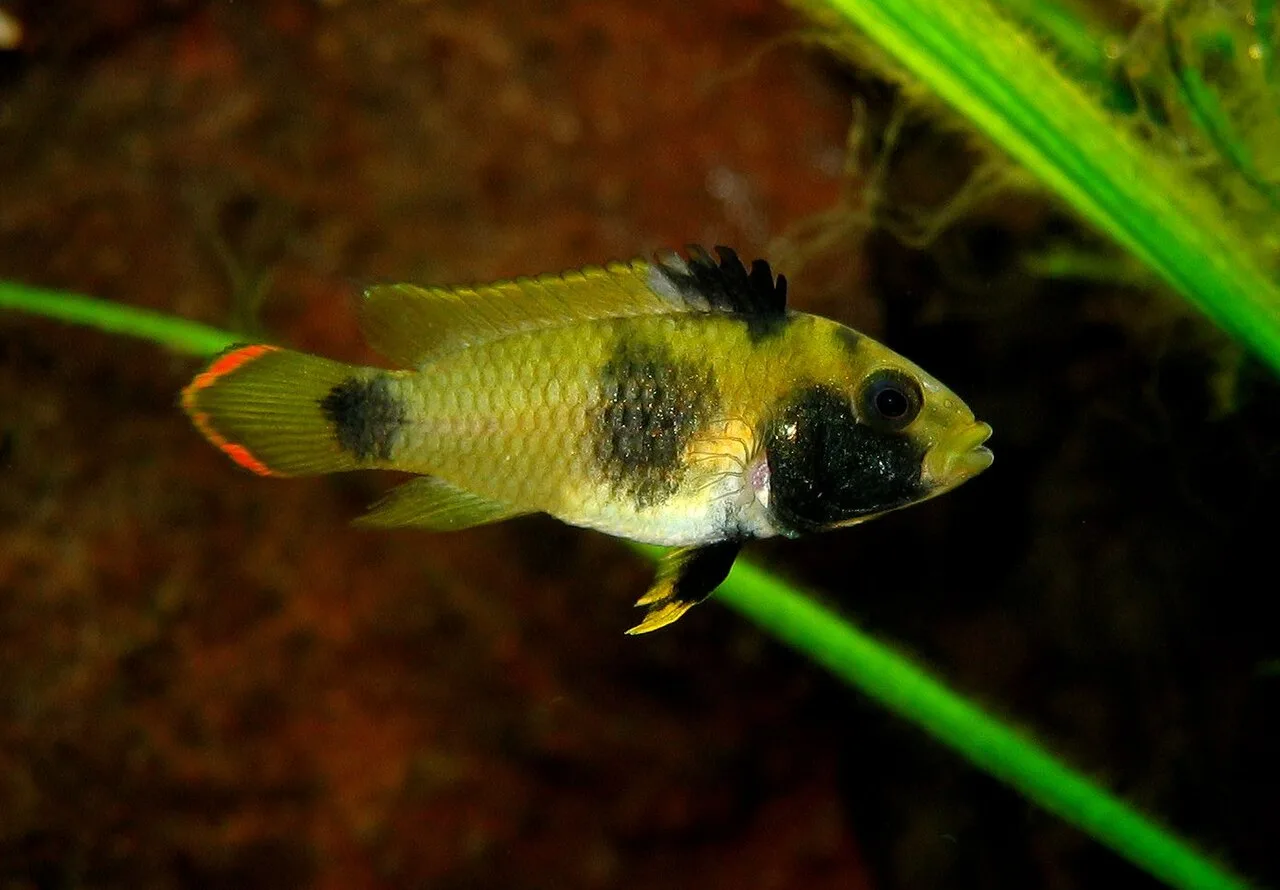
Females reach about 7.5 cm body length, while males grow larger, are more colourful and carry pointed ends to the dorsal and anal fins. A broad dark band runs from the mouth to the base of the tail. Because of the large range the colour is very variable: there are mainly green, yellowish and strongly red forms. Body colour and fin length matter during courtship. Larger males hold the better territories and have more access to food.
Taxonomy
Franz Steindachner described the species in 1875 as Geophagus agassizii. The name honours the naturalist Louis Agassiz. Charles Tate Regan only introduced the genus Apistogramma in 1913. A study published in 2020 on 1151 fish from 35 sites around Iquitos found three outwardly very similar but genetically separate groups that diverged in the Pliocene or Pleistocene. The authors consider it possible that several dozen cryptic species hide behind the name.
Origin & habitat
This describes the origin, not how to furnish the aquarium.
Blackwater rivers.
The species lives in shallow, slow-flowing or still waters of the Amazonian lowlands and stays above the layer of fallen leaves. The leaves give shelter from larger fish and from birds. It occurs in the Marañón and Ucayali in Peru, in tributaries of the Amazon and in the river itself down to its mouth at the Atlantic. Along with A. cacatuoides and A. bitaeniata it is one of the few Apistogramma species with a large range.
The species is threatened by rising water temperatures, deforestation and the use of the fish poison barbasco. It is also highly sensitive to copper.
Care
Peat is recommended because of the blackwater origin.
One male, several caves
Agassiz’s dwarf cichlid reaches about 8 cm, the males with an extended dorsal and, depending on the locality, very different colour. 24 to 28 °C, pH 5.5 to 7, rather soft, tanks from about 80 litres for one male with several females. Each female needs a cave of her own out of sight of the others.
Two males on one run fight. While breeding the female guards the cave, the male the wider territory. Calm tetras in the upper water fit. Shrimp rarely survive.
Diet
Omnivore. It eats tubifex, mosquito larvae, frozen food, granules and flakes.
Small frozen food, brine shrimp and a fine granule on the bottom. While breeding the parents eat more. A scarce feeding makes the male still more irritable.
Behavior
Agassiz's dwarf cichlid is territorial and lives in harems: one male holds several females. In the aquarium, roots, wood and hardy plants help to break lines of sight. Other dwarf cichlids should not be added; a shoal of tetras or other small Amazonian fish suits better. Recommended are weekly partial water changes for low nitrate, a pH around 6.0 and a tank of at least about 38 litres (10 gallons).
Reproduction
The species is a cave spawner. The female lays about 150 eggs on the ceiling of a cave and fans fresh water over them with her fins. After hatching she moves the larvae to a pit on the bottom, where they stay until the yolk sac is used up. After that the fry are fed brine shrimp nauplii. Mature females release a single batch of eggs per breeding season, and not all fish spawn at the same time. This is seen as a possible adaptation to strongly changing water levels. In forest areas the fish mainly eat adult insects, in pasture areas rather insect larvae, for example of true flies.
Gallery
More species in this group
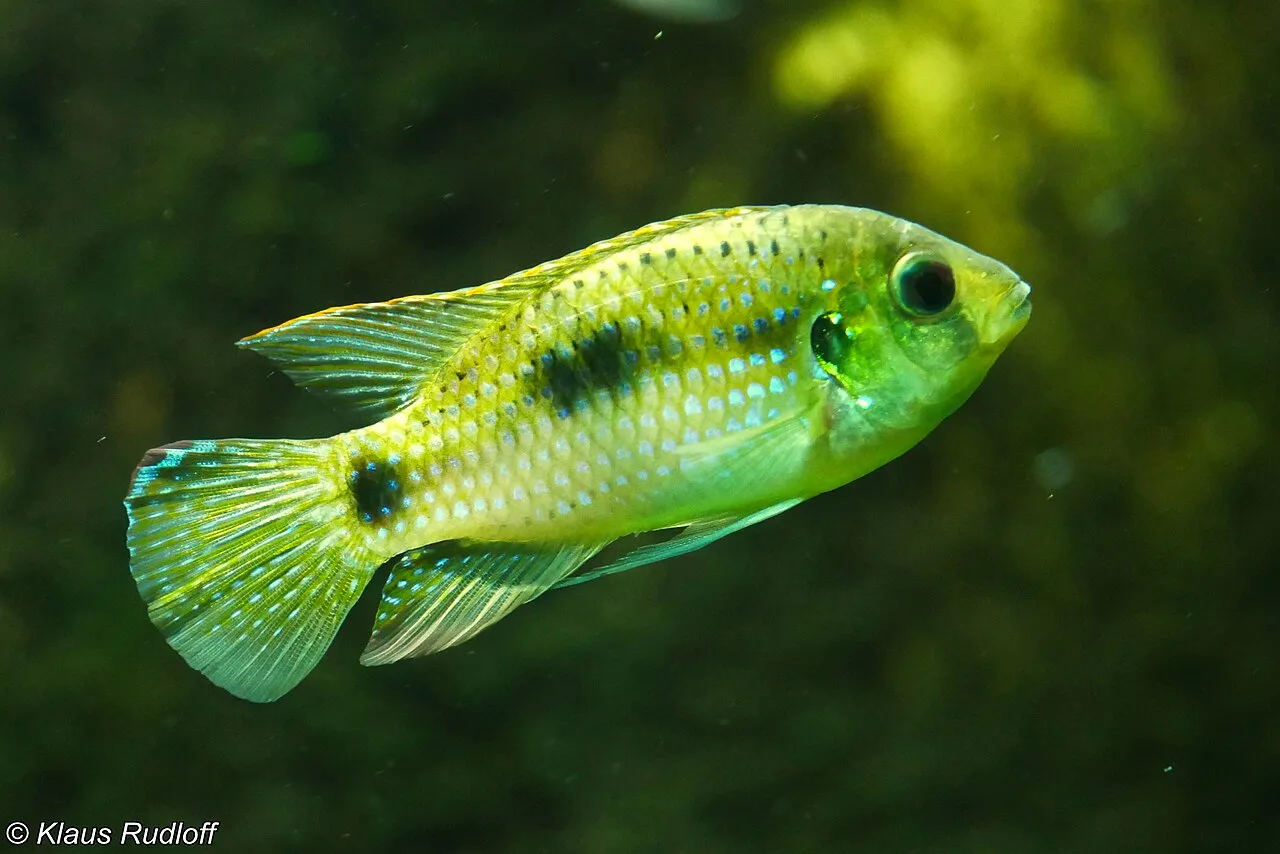
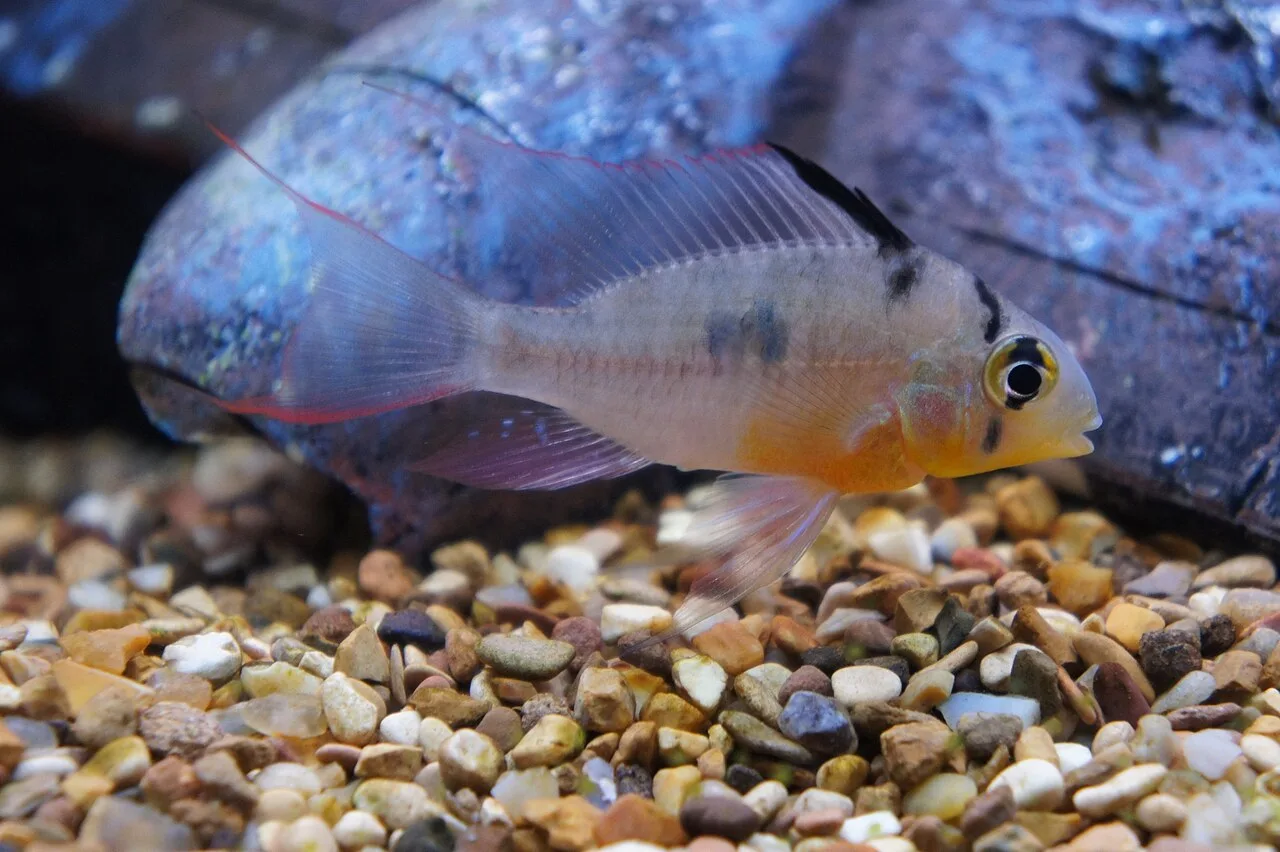
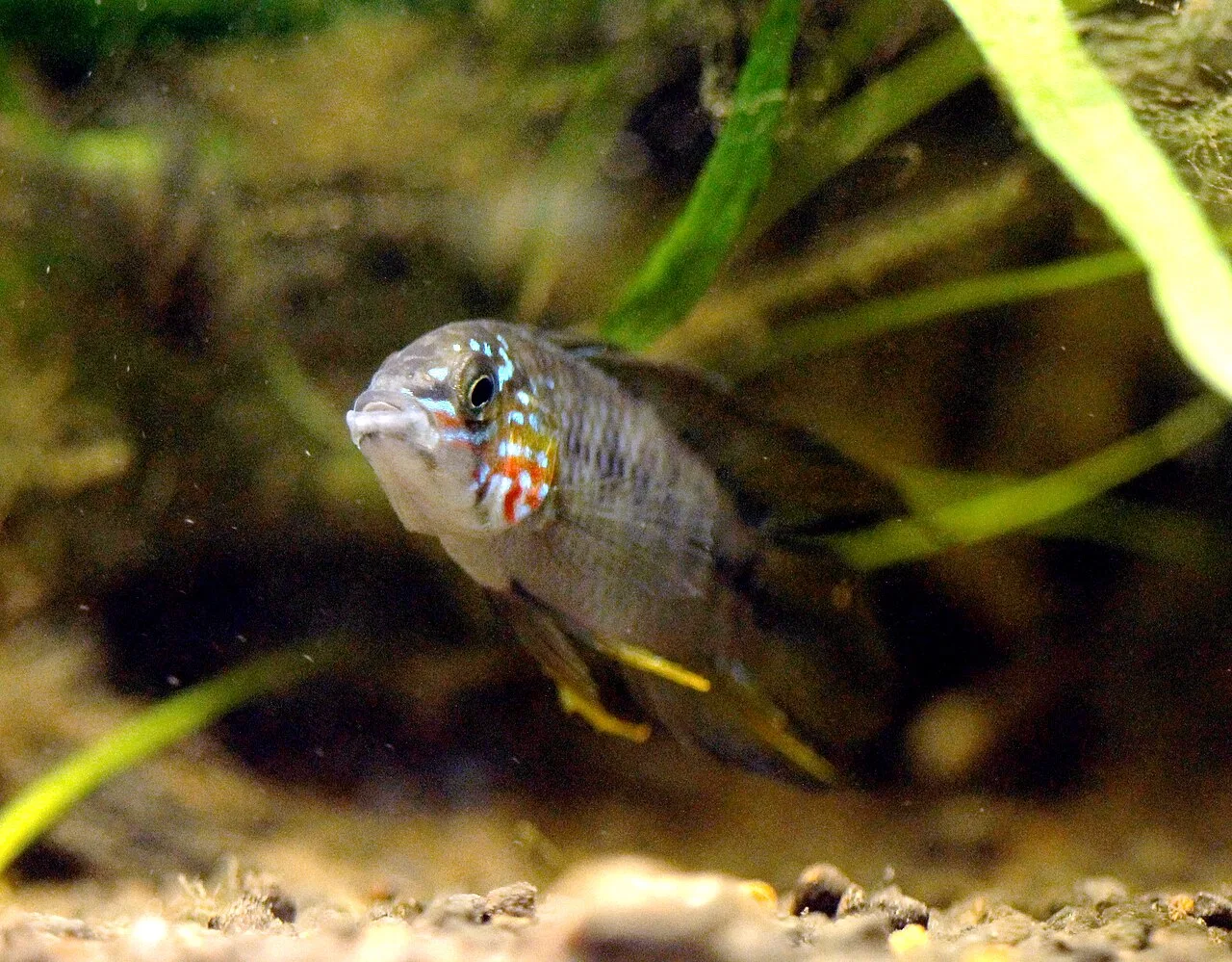

Similar water needs
Species with a similar temperature, a similar pH and a comparable adult size. Whether their behaviour fits as well is what the compatibility check is for.