Borellis dwarf cichlid
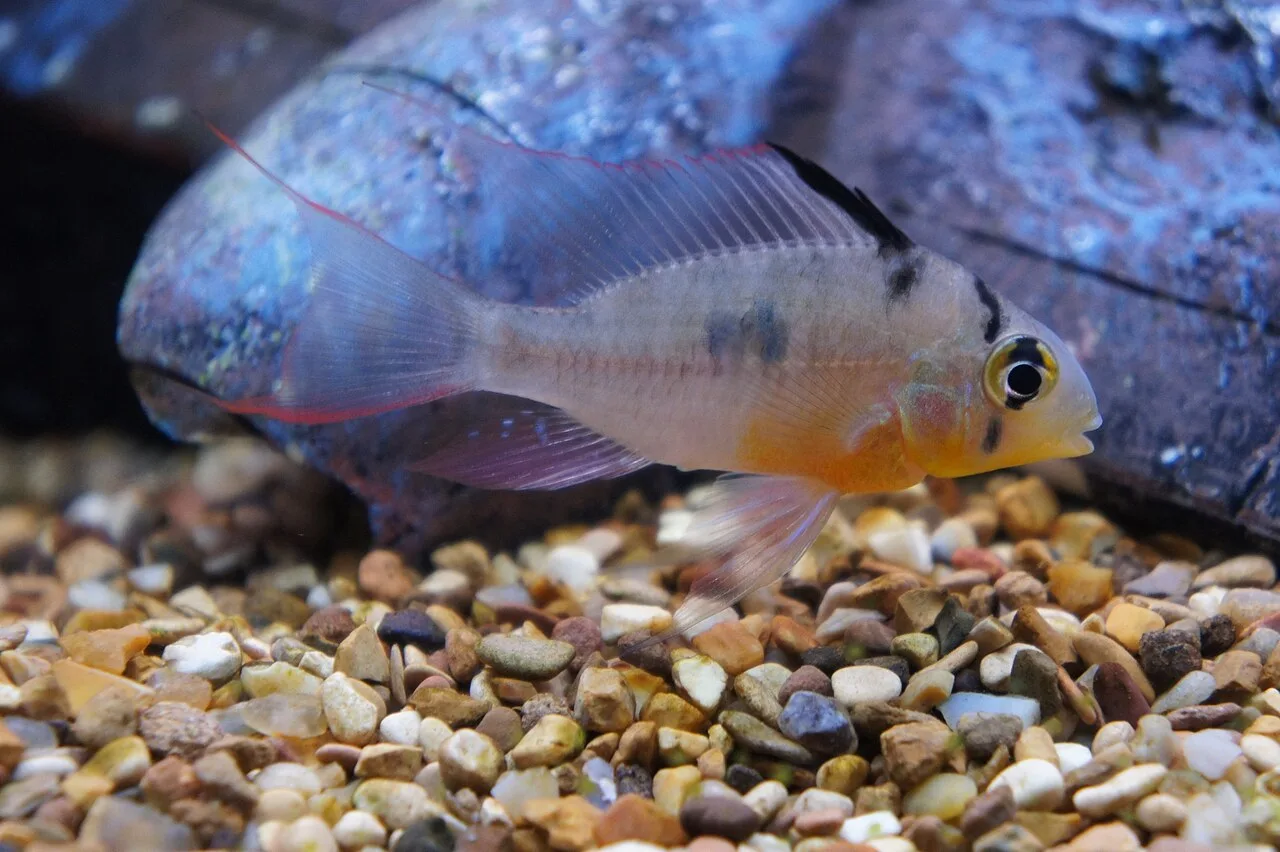
Apistogramma borellii
25 views
A dwarf cichlid from Mato Grosso and the Paraguay system. Apistogramma reitzigi is a synonym. Opal is a colour form.
- Temperature
- 20 – 28 °C
- pH
- 6 – 7 pH
- General hardness
- 10 °dH
- Maximum size
- 8 cm
- Minimum tank size
- 100 L
2 min read · 300 words
Fresh water
Quick facts
Further published values
- Lifespan
- 4 a
Place in the aquarium
Highlighted are the water layer and the spots where the species usually stays in the tank.
- Near the bottom Mostly stays just above the bottom. Food has to reach the substrate.
- Dense plants Looks for dense planting as cover, retreat or grazing ground.
- Rocks and caves Needs caves, crevices or rockwork as hiding place, territory or spawning site.
Shrimp in the tank
Dwarf shrimp at risk
- Not shrimp safe
- Dwarf shrimp at risk
- Shrimplets at risk
- Shrimp safe
- Adult dwarf shrimp
- At risk
- Shrimplets
- Get eaten
- Safe from shrimp size
- about 4 cm
Borelli's dwarf cichlid endangers even adult dwarf shrimp. It grows to about 8 cm and eats insects and crustaceans. During breeding the females defend their sub-territories, and any shrimp nearby is chased off or eaten. Young shrimp hardly stand a chance. Larger shrimp such as Amano shrimp from about 4 cm are usually safe.
Dwarf shrimp are better kept separately. Amano shrimp cope with the species if there are enough caves, plants and leaf litter.
Home & range
Hatched countries are where the species occurs. It lives in particular waters there, not across the whole country. The points name known waters for orientation, not collection sites.
- Country of origin
- Water for orientation
Native
Overview
About 8 cm and about four years. Males are larger, more colourful, with longer anal and dorsal fins. Some males keep the plain colour of a female inside a dominant male territory. The Opal form from the Paraguay is not a second species.
Features and name
Borelli's dwarf cichlid is also called the yellow dwarf cichlid. The fin formula after Sterba is dorsal XVI/5 to 6 and anal III/6 to 7. In the Opal colour form from the Río Paraguay the males are bluish. Charles Tate Regan described the species in 1906 as Heterogramma borellii. The name honours the zoologist Alfredo Borelli, who collected the type specimen. Synonyms include Apistogramma aequipinnis and A. reitzigi. English names are umbrella cichlid and yellow dwarf cichlid.
Origin & habitat
This describes the origin, not how to furnish the aquarium.
Mainly Mato Grosso and the Paraguay basin. Clear, still or slow, plant-rich water, also among floating roots and in caves. Brazil and Paraguay stay coarse.
It lives in the Paraguay and Paraná rivers. The species occurs further south than most members of the genus and therefore tolerates cooler temperatures. The IUCN lists it as least concern.
Care
Care notes
Because the species comes from blackwater, peat filtration is recommended. Overfeeding should be avoided. For breeding, aquarists often use Indian almond leaves or other tannin-rich materials to imitate flooded banks. Rich food such as bloodworms or brine shrimp encourages spawning.
Diet
The species eats insects and crustaceans.
Behavior
Territorial. Males live polygynously with several females that hold sub-territories.
Reproduction
Cave spawner, 40 to 70 eggs. Females turn intense yellow when breeding and guard eggs and larvae.
In the wild the species breeds in the rainy season, when more food enters the water. The female leads the male into the cave, drives him out after spawning and fans the eggs for 36 hours until they hatch. Afterwards she guards the young closely until they have grown.
Gallery
More species in this group
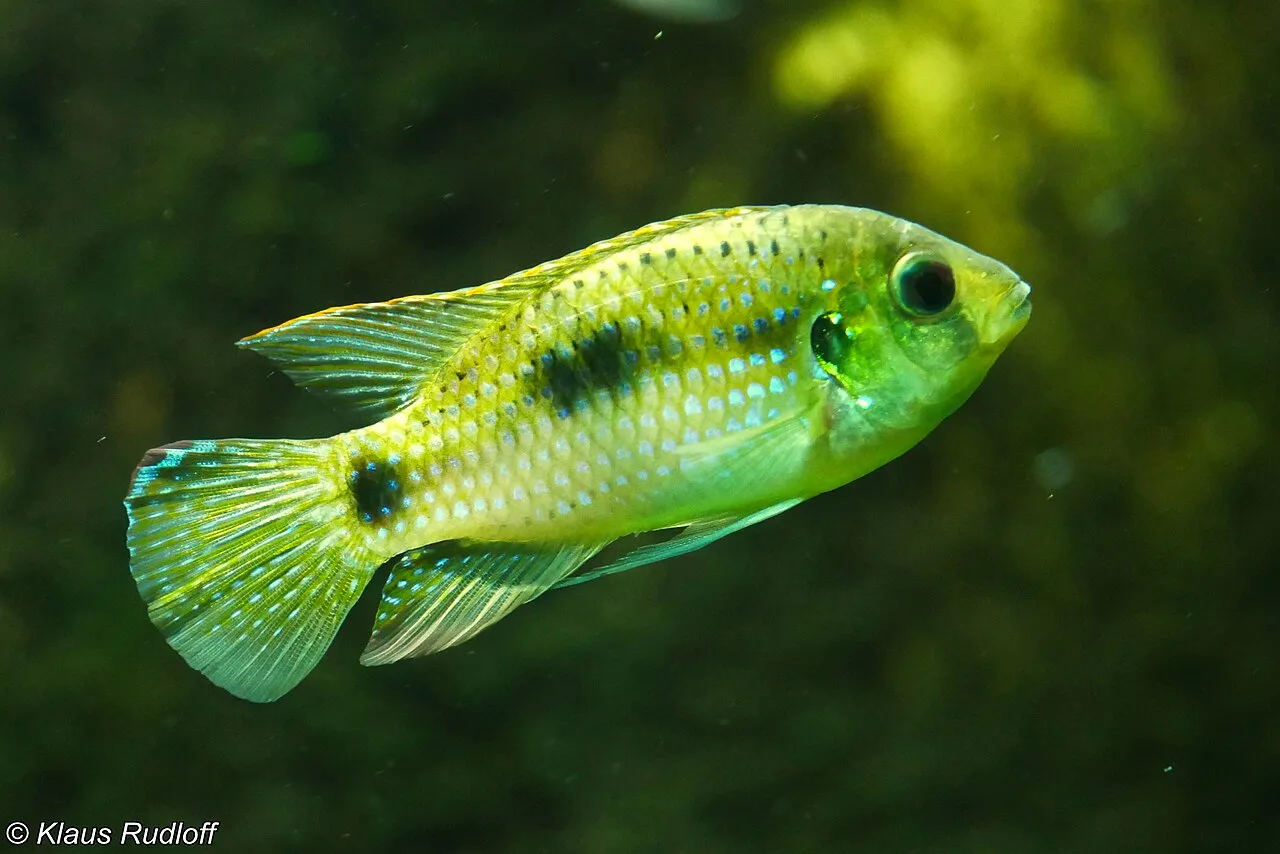
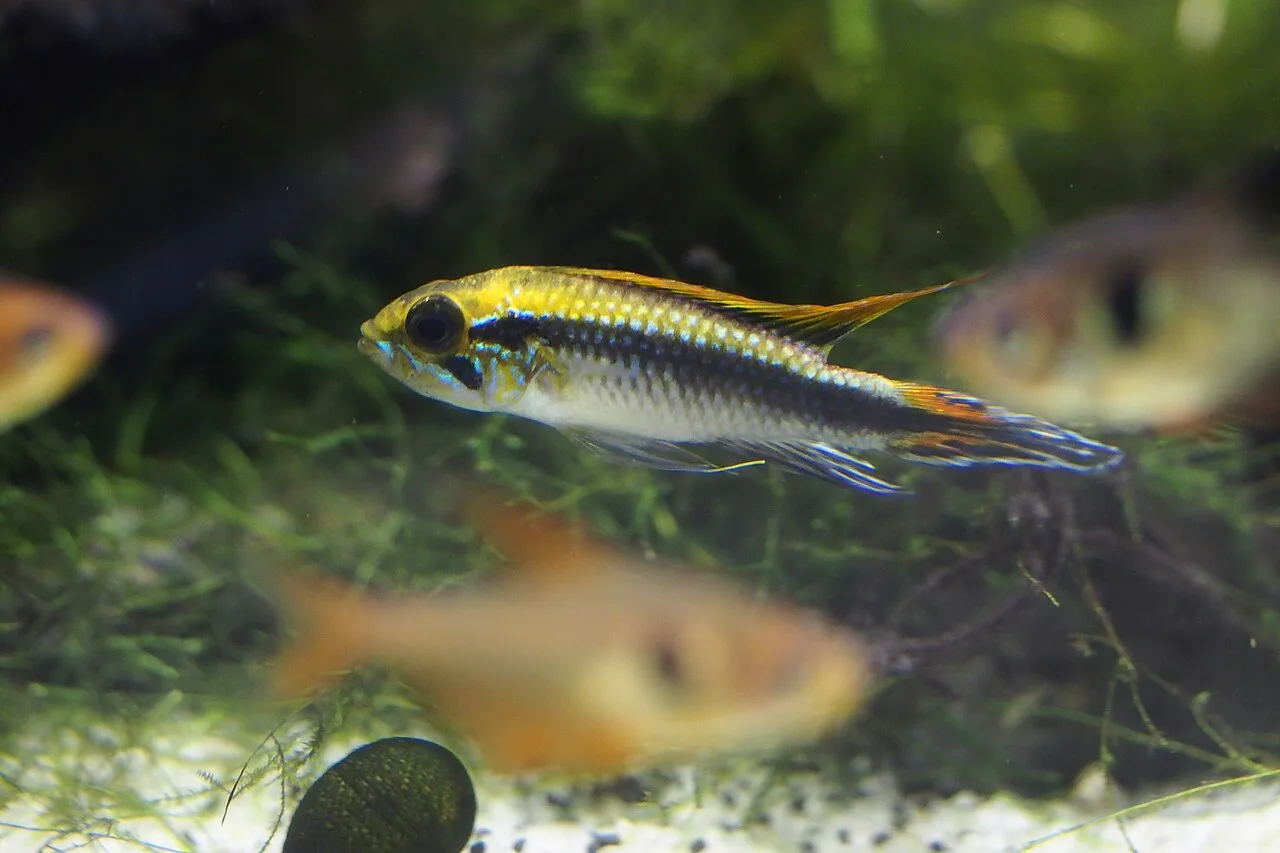

Similar water needs
Species with a similar temperature, a similar pH and a comparable adult size. Whether their behaviour fits as well is what the compatibility check is for.