
Flag acara
Laetacara curviceps
17 views
A small, pair-living cichlid from the Amazon basin. It stays workable in a planted tank as long as the pair has a territory and the tankmates do not swim through the brood zone.
- Temperature
- 24 – 28 °C
- pH
- 6 – 7.5 pH
- General hardness
- 5 – 12 °dH
- Maximum size
- 8 cm
- Minimum tank size
- 80 L
3 min read · 493 words
Fresh water
Quick facts
Place in the aquarium
Highlighted are the water layer and the spots where the species usually stays in the tank.
- Middle water Usually stays in the middle of the tank, between bottom and surface.
- Near the bottom Mostly stays just above the bottom. Food has to reach the substrate.
- Dense plants Looks for dense planting as cover, retreat or grazing ground.
Shrimp in the tank
Dwarf shrimp at risk
- Not shrimp safe
- Dwarf shrimp at risk
- Shrimplets at risk
- Shrimp safe
- Adult dwarf shrimp
- At risk
- Shrimplets
- Get eaten
- Safe from shrimp size
- about 4 cm
The flag cichlid is a risk for dwarf shrimp. It grows up to 10 cm and lives as a pair with a territory. When breeding, both parents drive other animals away from the clutch and then eat more. Juvenile and small adult dwarf shrimp are at risk. Larger shrimp from about 4 cm are usually safe.
The cichlid is considered very peaceful and does not uproot plants. In a large, well-structured tank Amano shrimp can fit. Dwarf shrimp are bred separately.
Home & range
Overview
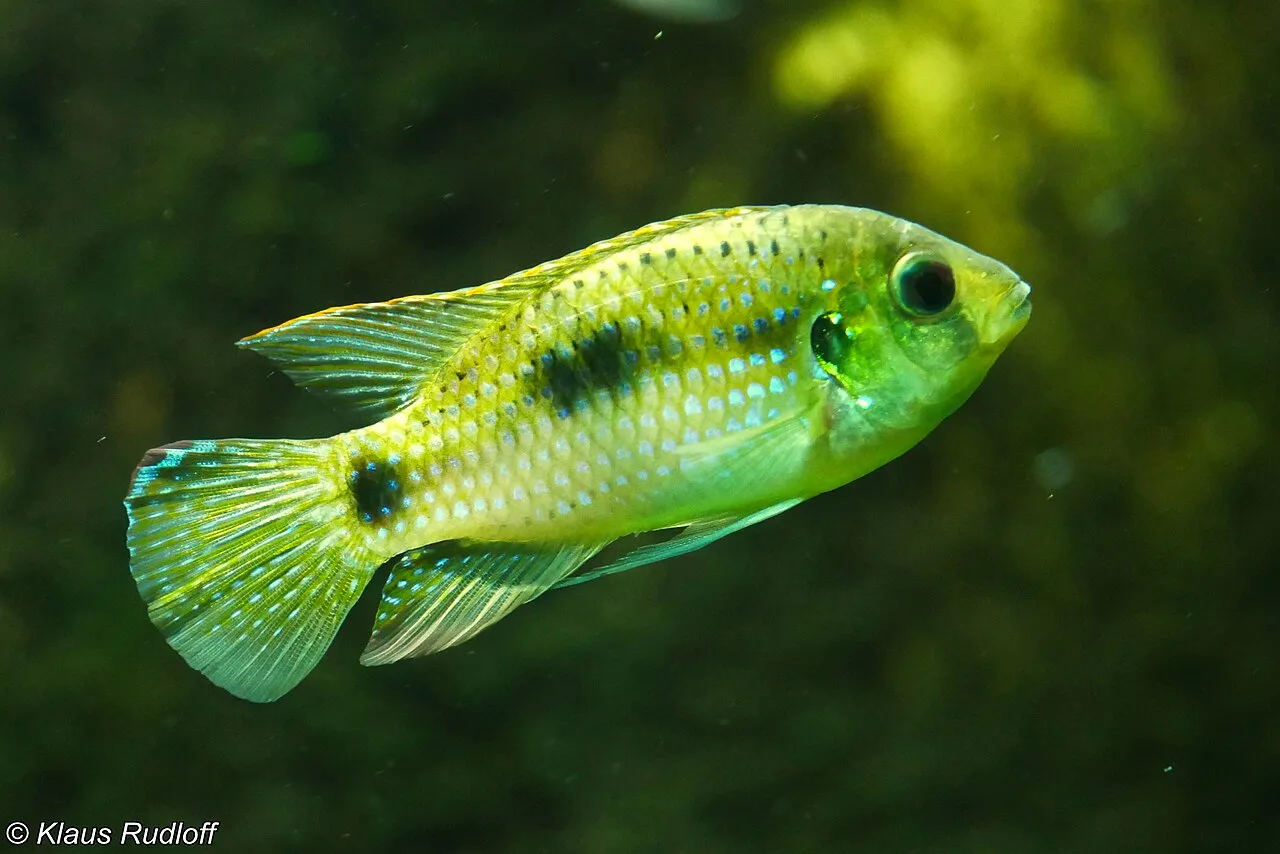
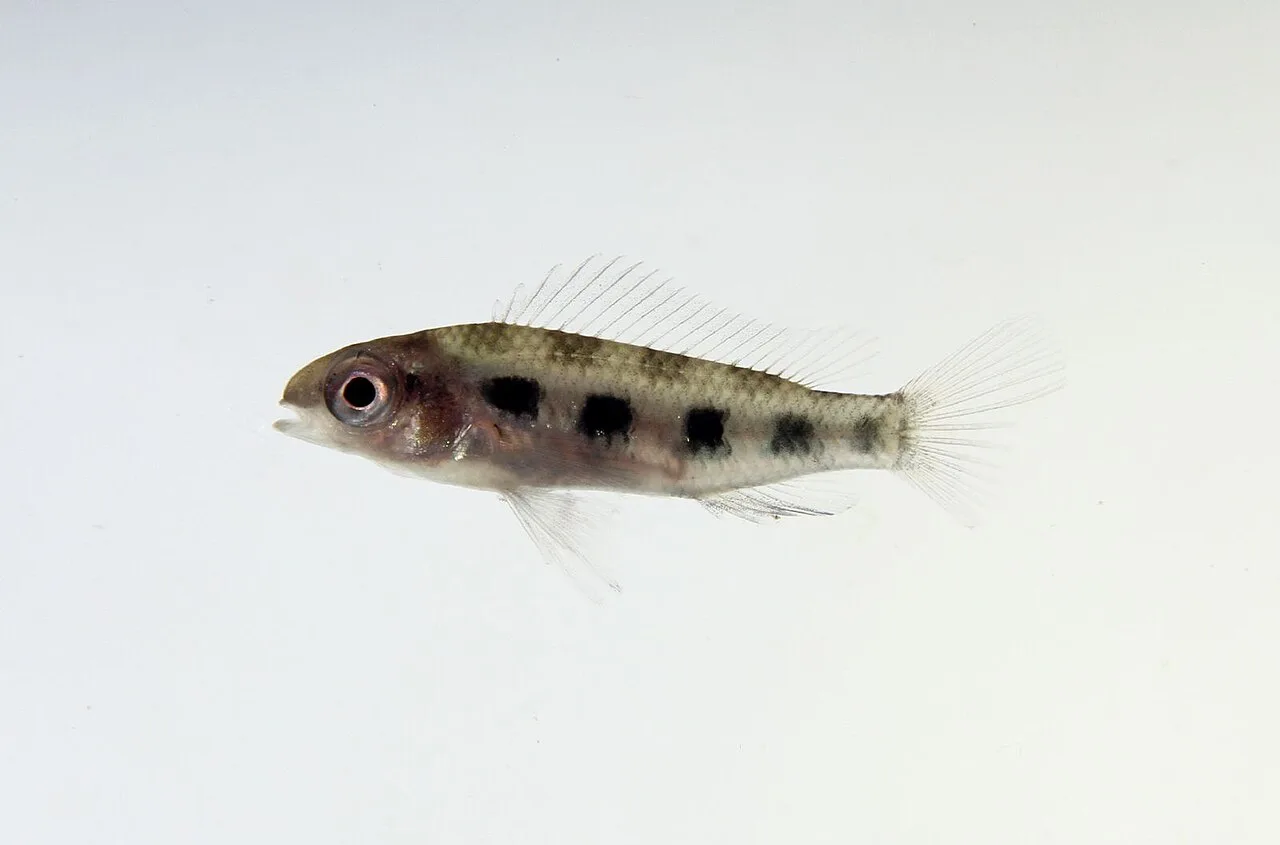
Laetacara curviceps rarely passes 8 cm. The body is beige to olive, with an iridescent speckle pattern and, on courting fish, blue and red markings on the face and fins. The species looks more delicate than a convict cichlid and treats the tank more gently: it does not dig up the whole hardscape.
A pair that fits is recognised because both fish share the same cave or stone and threaten together, instead of fleeing from each other. A pair that does not get on does not become a pair just because they were bought together.
Origin & habitat
This describes the origin, not how to furnish the aquarium.
The species comes from quiet, plant- and wood-rich waters of the Amazon basin. Soft to medium-hard, slightly acidic to neutral water, dim light and a bottom in which a small pit can be dug match that picture better than a Malawi tank.
Brazil and the neighbouring Amazon stretches are a coarse origin. Individual rivers are not a reviewed line here.
Care
Tank
24 to 28 °C, pH 6 to 7.5. From about 80 litres for a pair, with hiding places, a flat stone or a leaf as a spawning site, and open space above. Wood and plants divide the territory. A second pair of the same species needs a clearly longer tank.
Tankmates
Calm tetras and corydoras that do not stand exactly on the spawning site. While breeding, the parents become much more decided and drive other fish out of a radius. Shrimp rarely survive once young are present. Angelfish are too large and too present as partners.
Diet
Omnivore with a liking for small animal food. Frozen food, brine shrimp, mosquito larvae and a good granule. While guarding a brood the parents eat more and become more irritable if food is scarce.
Food should also reach the bottom. The fish do not search only at the surface.
Behavior
A pair with a territory, otherwise rather reserved. The threat is a sideways stance with spread fins and a darker pattern. Serious biting starts when the losing fish cannot get out of the other’s sight.
The species is not a school. Three or five fish without a pair bond usually end as one dominant pair and a permanently driven remainder.
Reproduction
Open substrate spawner. The pair cleans a surface, lays the eggs and guards eggs and larvae. Both parents take part. The larvae are moved into a pit. In a community tank this fails as soon as other fish reach the clutch, or the parents are so busy driving them off that the eggs fungus.
A breeding setup is a separate, quiet tank with the established pair, not an overnight rebuild of the community tank.
Ernst Ahl described the species in 1923 as Acara curviceps. It grows up to 10 cm. Pairs form at only about 3.8 cm length and usually stay together for life. After a few days the larvae hatch and remain attached to the spawning site for five to seven days. When threatened, the parents take turns carrying the young in their mouths to another spot.
Gallery
More species in this group

Similar water needs
Species with a similar temperature, a similar pH and a comparable adult size. Whether their behaviour fits as well is what the compatibility check is for.



