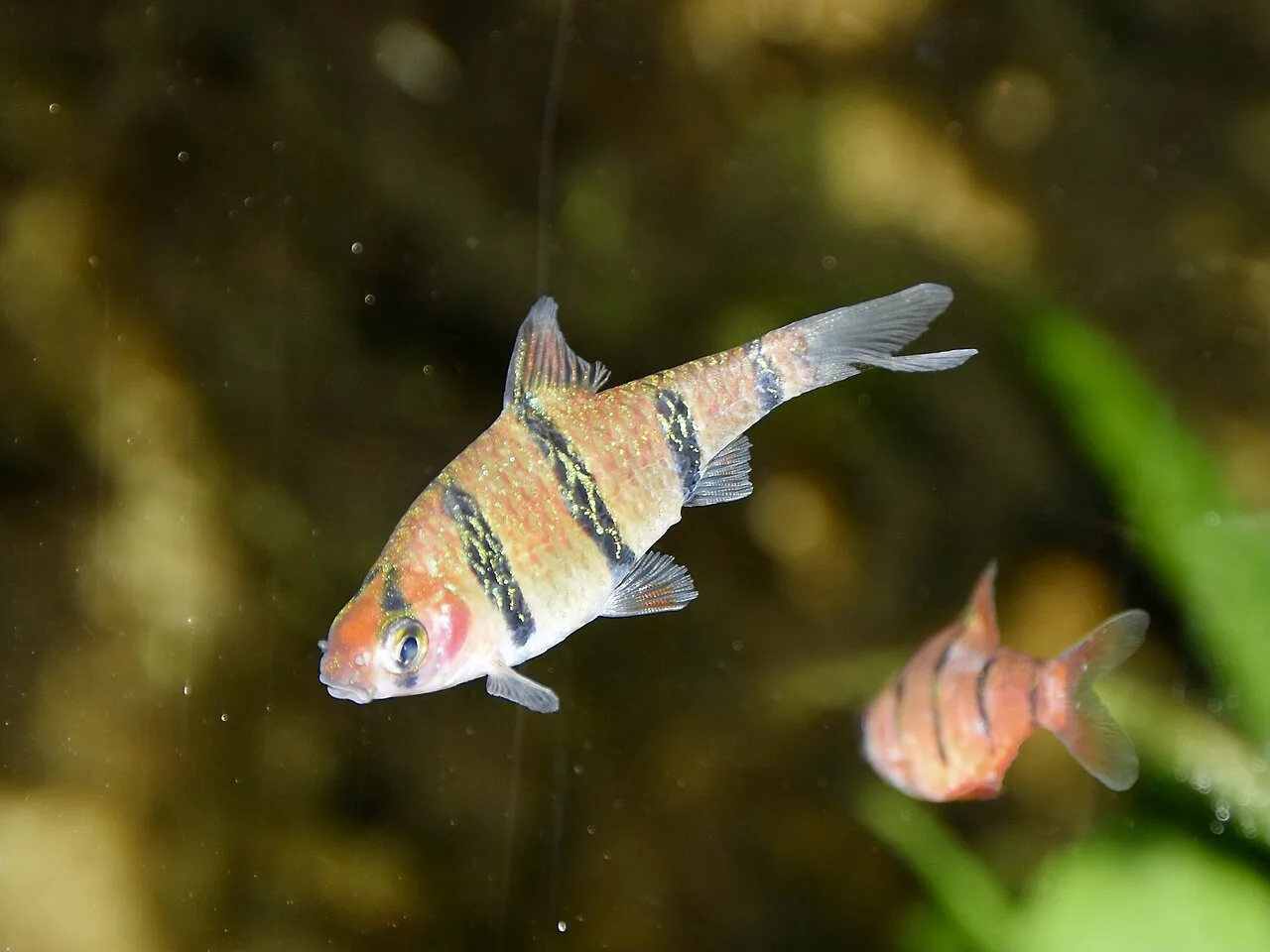
Checkerboard cichlid
Dicrossus filamentosus
28 views
A slender dwarf cichlid. Crenicara filamentosa is the synonym. Dicrossus maculatus and D. gladicauda are other species.
- Temperature
- 24 – 29 °C
- pH
- 4 – 6.8 pH
- General hardness
- 5 – 8 °dH
- Maximum size
- 9 cm
- Minimum tank size
- 60 L
2 min read · 327 words
Fresh water
Quick facts
Place in the aquarium
Highlighted are the water layer and the spots where the species usually stays in the tank.
- Near the bottom Mostly stays just above the bottom. Food has to reach the substrate.
- Dense plants Looks for dense planting as cover, retreat or grazing ground.
Shrimp in the tank
Dwarf shrimp at risk
- Not shrimp safe
- Dwarf shrimp at risk
- Shrimplets at risk
- Shrimp safe
- Adult dwarf shrimp
- At risk
- Shrimplets
- Get eaten
- Safe from shrimp size
- about 4 cm
The chessboard cichlid endangers even adult dwarf shrimp. Males grow to 9 cm and females to about 6 cm, and the species readily takes small crustaceans such as brine shrimp. During breeding the female defends the clutch. Young shrimp and Neocaridina or Caridina of 2 to 3 cm are eaten. Larger shrimp such as Amano shrimp from about 4 cm are usually safe.
Dwarf shrimp are kept separately. Amano shrimp suit a densely planted softwater tank with plenty of hiding places. The females find shelter there too.
Home & range
Hatched countries are where the species occurs. It lives in particular waters there, not across the whole country. The points name known waters for orientation, not collection sites.
- Country of origin
- Water for orientation
Native
Overview
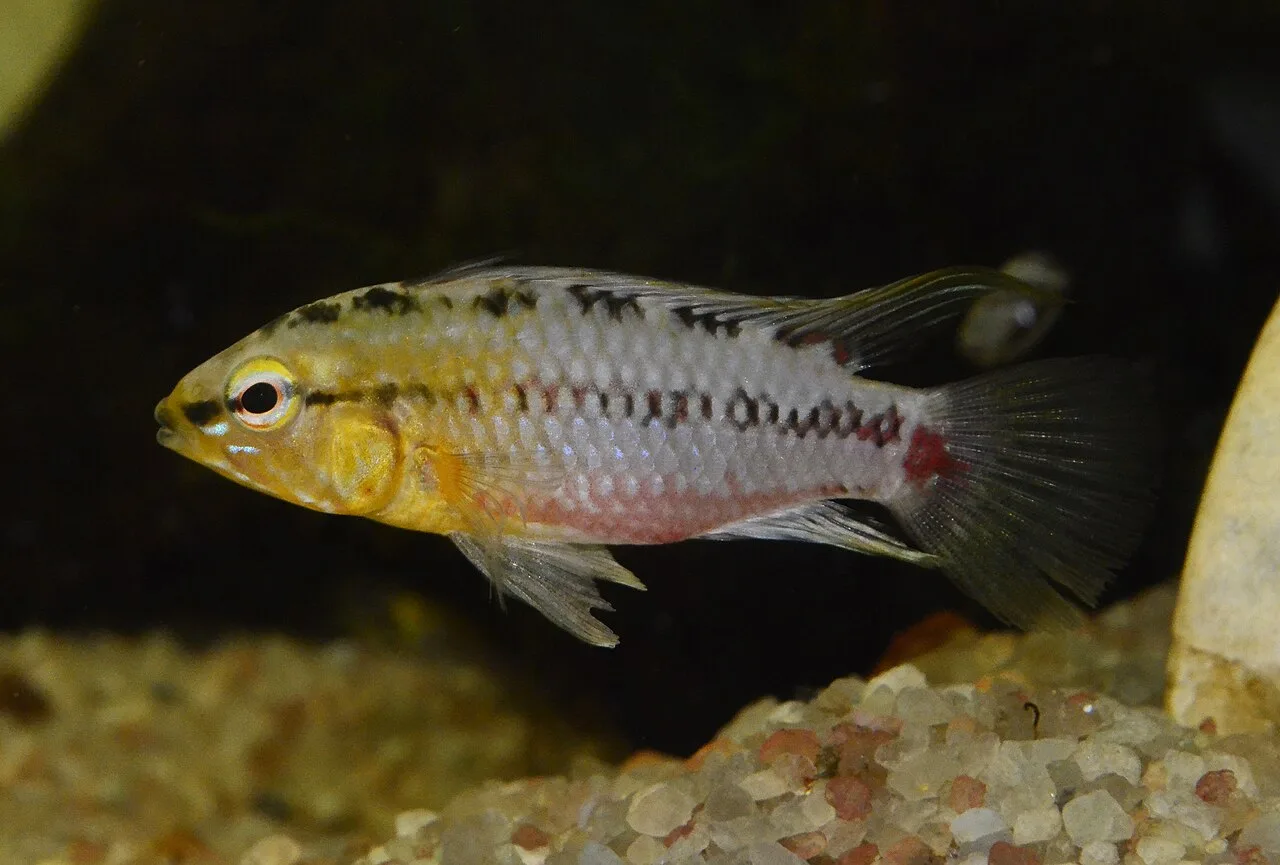
Males about 9 cm with a lyre tail, females about 6 cm with a round tail and red pelvic fins when mature. Checkerboard pattern.
Features and name
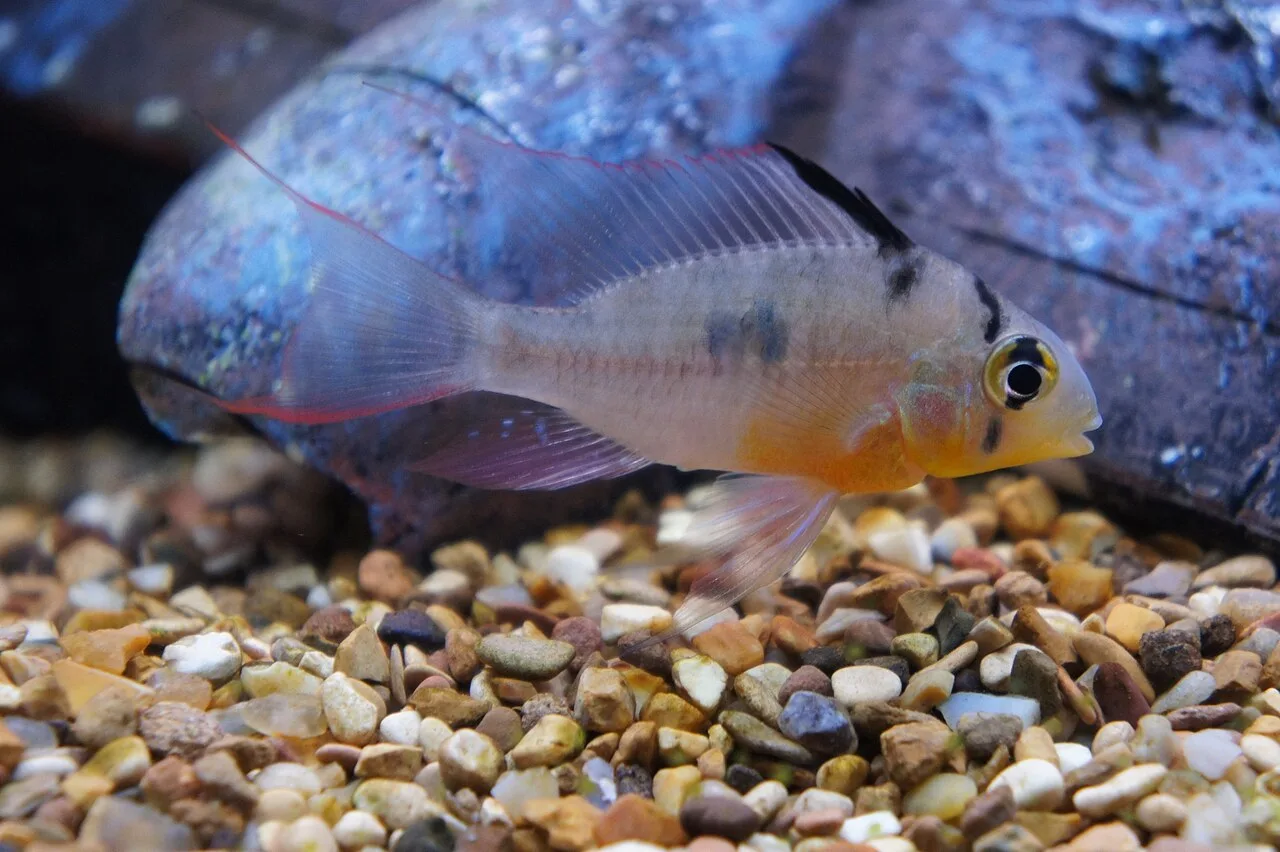
The body is cylindrical, slender and brownish with a checkerboard pattern. The male's tail fin splits like a lyre into two long points, while the female's is round and spade-shaped. Females are somewhat less colourful than males. The specific name filamentosus means provided with threads and probably refers to the male's two-pointed tail. The species is also called checkerboard cichlid. Ladiges described it in 1958 as Crenicara filamentosa, and Kullander redescribed it in 1978. Together with D. maculatus and D. gladicauda it is one of the only members of the genus among the South American geophagines.
Origin & habitat
This describes the origin, not how to furnish the aquarium.
Orinoco, Tapajós and Rio Negro, clear and black water, sand. At the site 1 °dGH and pH 5.5. That is the habitat, not a care optimum. An undescribed Dicrossus is said to live above the Tapajós rapids.
The species lives in the Rio Negro, Orinoco and Rio Tapajós basins in Colombia, Venezuela and Brazil.
Care
Plants and cover. High demands on water quality, without a second numeric span. Shy. Livebearers or tetras are named as company.
Keeping
It is kept in a tank of at least 60 litres with plenty of hiding places, 24 to 29 °C, pH 4 to 6.8 and a hardness of 5 to 8 dH. In Austria the species must be kept in pairs in a tank of at least 80 by 35 by 40 cm. The fish are regarded as peaceful and shy. Flake food is rarely taken, brine shrimp readily. The species is omnivorous.
Behavior
Polygynous, one male with several females. Mature from 6 cm in males and 4 cm in females.
One male holds a harem of several females.
Reproduction
Open spawner, not a cave brooder.
Spawning takes place at high temperatures of 28 to 30 °C on plant leaves or directly on the bottom. The female cares for the brood alone and chases the male away after spawning. The eggs hatch after three days.
Gallery
More species in this group
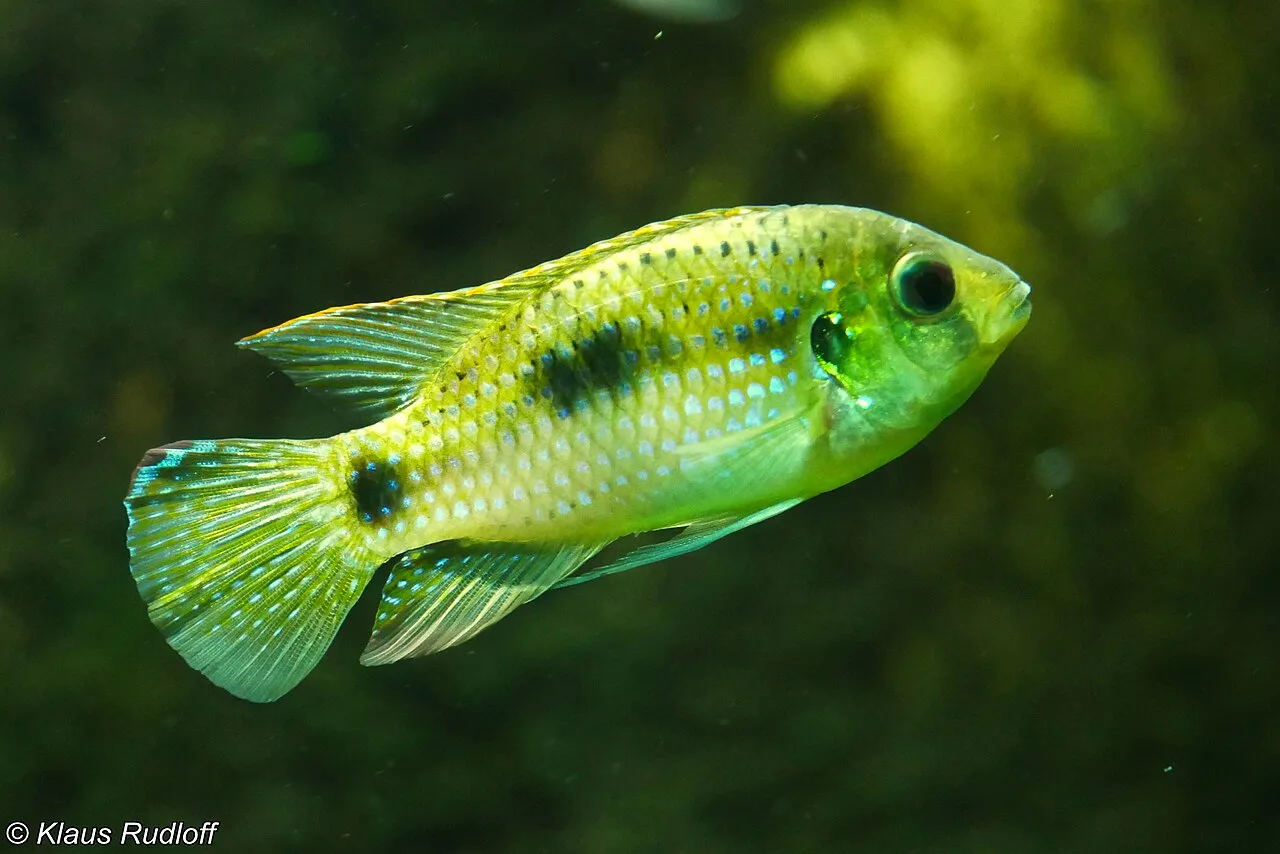
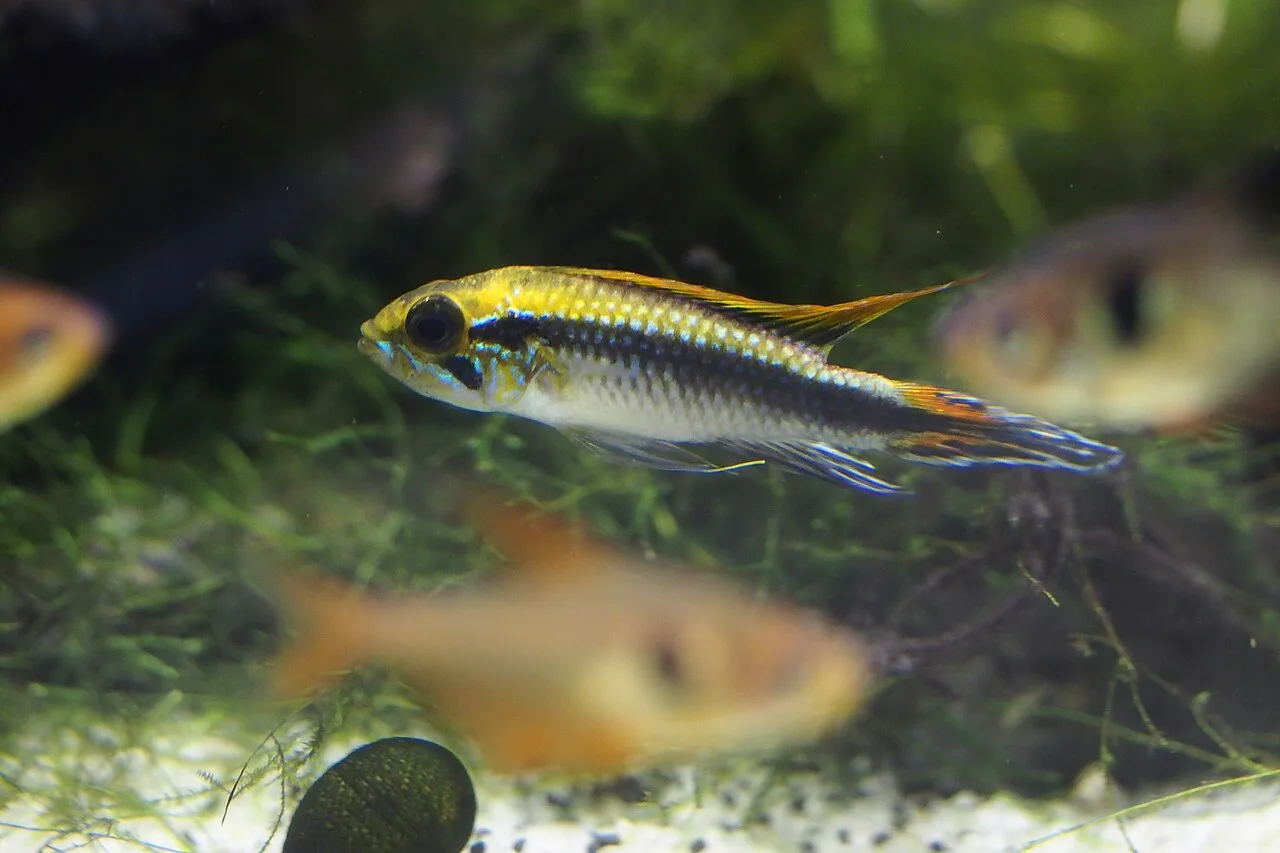

Similar water needs
Species with a similar temperature, a similar pH and a comparable adult size. Whether their behaviour fits as well is what the compatibility check is for.