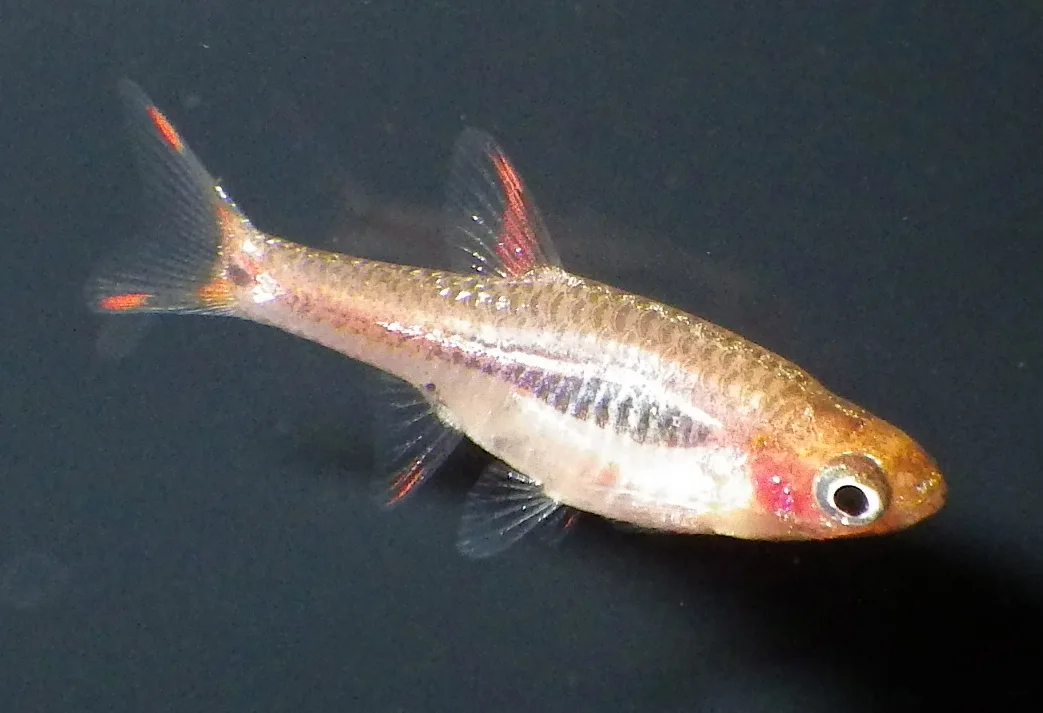
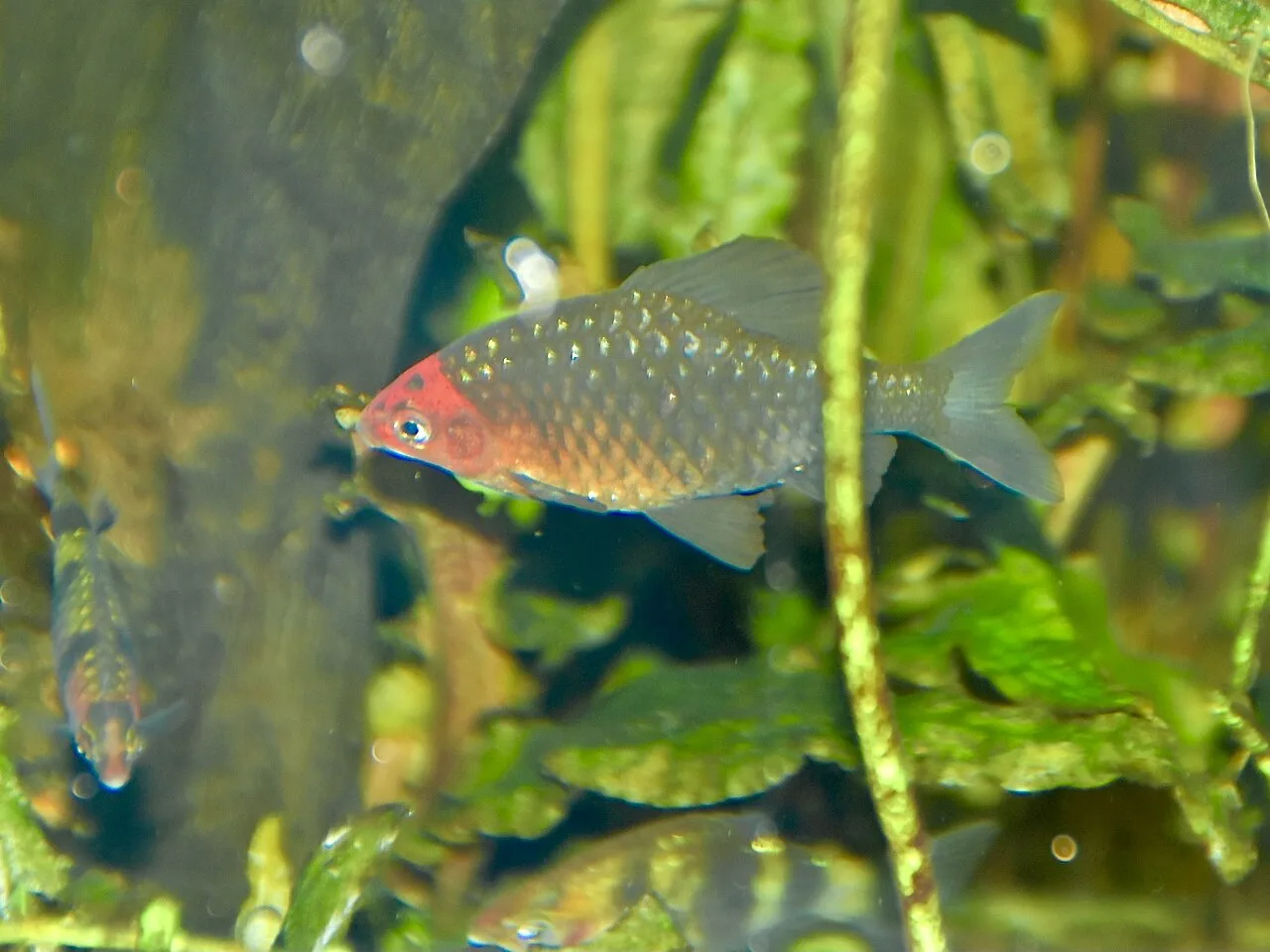
Fiveband barb
Desmopuntius pentazona
1 view
A small barb with five dark bars from blackwater. It is clearly calmer than the tiger barb.
- Temperature
- 24 – 28 °C
- pH
- 5 – 6.5 pH
- General hardness
- 2 – 10 °dH
- Maximum size
- 5 cm
- Minimum group size
- 8
- Minimum tank size
- 80 L
1 min read · 141 words
Quick facts
Place in the aquarium
Highlighted are the water layer and the spots where the species usually stays in the tank.
- Middle water Usually stays in the middle of the tank, between bottom and surface.
- Dense plants Looks for dense planting as cover, retreat or grazing ground.
Shrimp in the tank
Shrimplets at risk
- Not shrimp safe
- Dwarf shrimp at risk
- Shrimplets at risk
- Shrimp safe
- Adult dwarf shrimp
- Safe
- Shrimplets
- Get eaten
- Safe from shrimp size
- about 2 cm
Adult dwarf shrimp are usually safe with the fiveband barb. It reaches about 5 cm and eats small invertebrates and plant food. Shrimp from about 2 cm are rarely approached. Juvenile shrimp are eaten.
The soft, acidic water suits Caridina better. With moss and leaf litter on the bottom a group can hold its own.
Home & range
Hatched countries are where the species occurs. It lives in particular waters there, not across the whole country. The points name known waters for orientation, not collection sites.
- Country of origin
- Water for orientation
Native
Overview
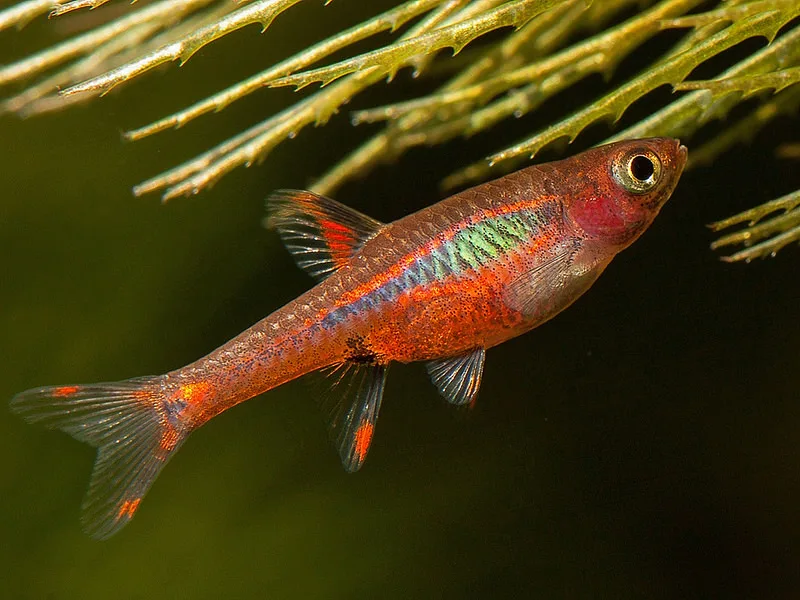
Desmopuntius pentazona reaches about 5 cm. Five dark bars run over the reddish golden body. The fins are red. Males are slimmer and more strongly coloured.
It is not the tiger barb, which carries four bars, grows slightly larger and nips fins. The fiveband barb is calmer and needs softer water.
Origin & habitat
This describes the origin, not how to furnish the aquarium.
Blackwater and swamps on the Malay Peninsula, in Singapore, on Borneo and Sumatra. The countries stay a coarse origin. Soft, acidic, dim water matches that.
Care
School
24 to 28 °C, pH 5 to 6.5. A group from eight, tanks from about 80 litres. Plants, leaf litter, wood, subdued light.
Company
Calm tetras, rasboras, dwarf gouramis with the same water.
Diet
Omnivore. Flakes, granules, mosquito larvae, brine shrimp, plant food.
Behavior
A calm school. Too few fish stay shy and pale.
Reproduction
Egg scatterer without brood care in fine plants. Young can be raised in soft water without the parents.
More species in this group
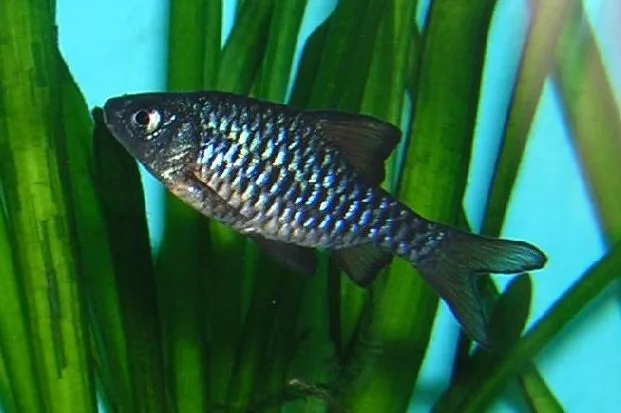
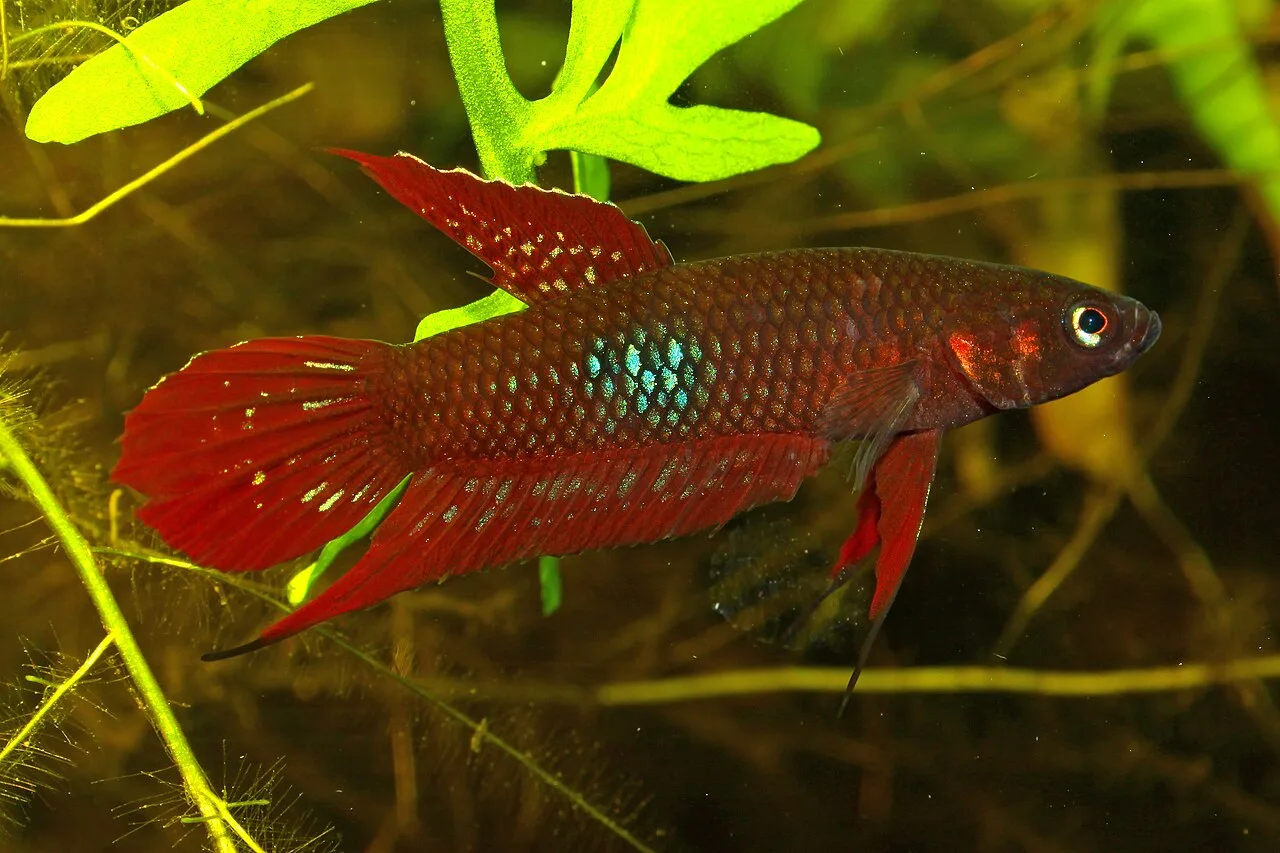
Similar water needs
Species with a similar temperature, a similar pH and a comparable adult size. Whether their behaviour fits as well is what the compatibility check is for.