Mosquito rasbora
Boraras brigittae
17 views
A very small rasbora. Standard length is usually 1.8 cm.
- Temperature
- 25 – 28 °C
- pH
- 5 – 7 pH
- General hardness
- 5 – 10 °dH
- Maximum size
- 2 cm
- Minimum tank size
- 30 L
3 min read · 378 words
Fresh water
Quick facts
Place in the aquarium
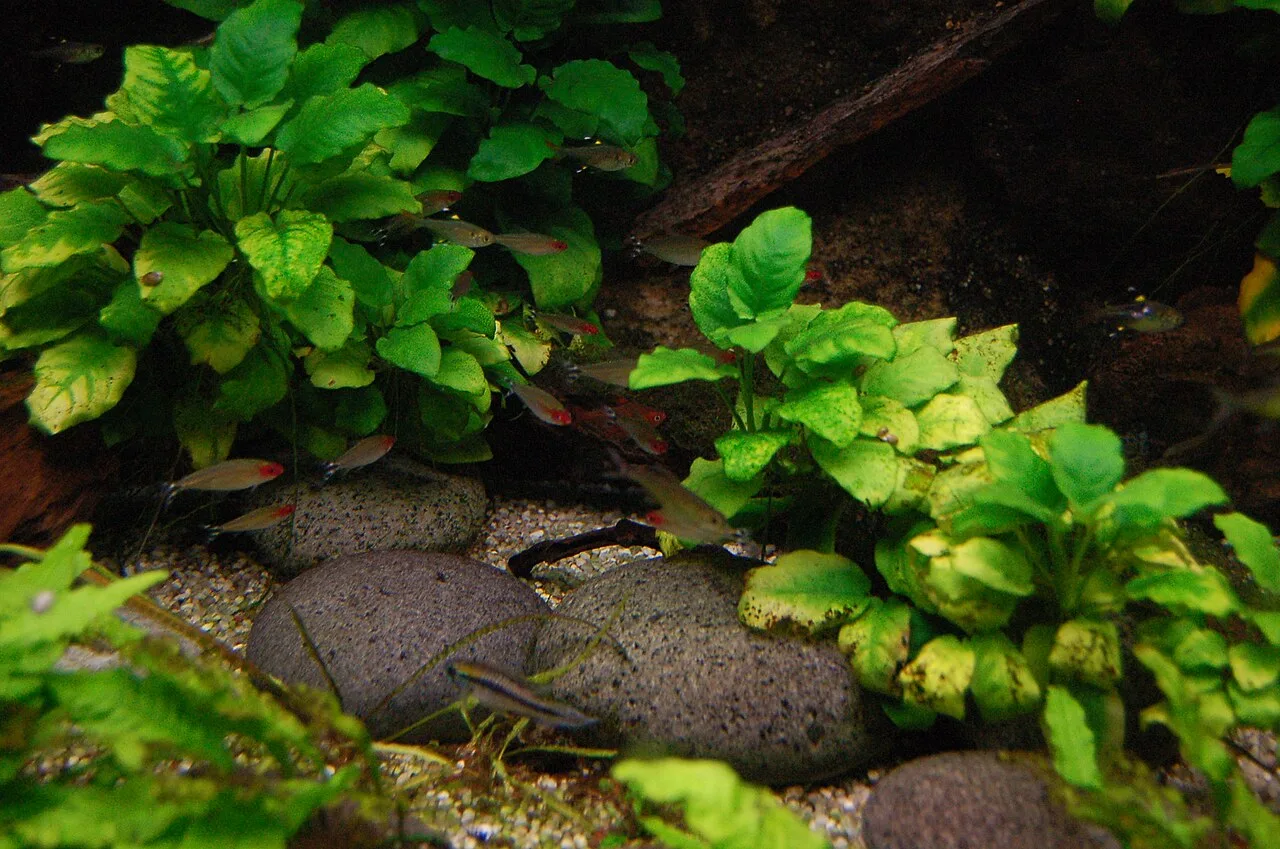
Highlighted are the water layer and the spots where the species usually stays in the tank.
- Upper water Usually stays in the top third of the tank.
- Middle water Usually stays in the middle of the tank, between bottom and surface.
- Dense plants Looks for dense planting as cover, retreat or grazing ground.
Shrimp in the tank
Shrimplets at risk
- Not shrimp safe
- Dwarf shrimp at risk
- Shrimplets at risk
- Shrimp safe
- Adult dwarf shrimp
- Safe
- Shrimplets
- Get eaten
- Safe from shrimp size
- about 1 cm
The chili rasbora is one of the best tankmates for dwarf shrimp. Usually only 1 to 2 cm long, it is one of the smallest cyprinids and as a micropredator eats small insects, worms, crustaceans and zooplankton. Adult shrimp are far too large for it, and even young from about 1 cm are safe. Only newly hatched shrimp may occasionally be eaten. Both species like densely planted tanks with moss and leaf litter, in which the shrimp population usually grows undisturbed.
Home & range
Hatched countries are where the species occurs. It lives in particular waters there, not across the whole country. The points name known waters for orientation, not collection sites.
- Country of origin
- Water for orientation
Native
Overview
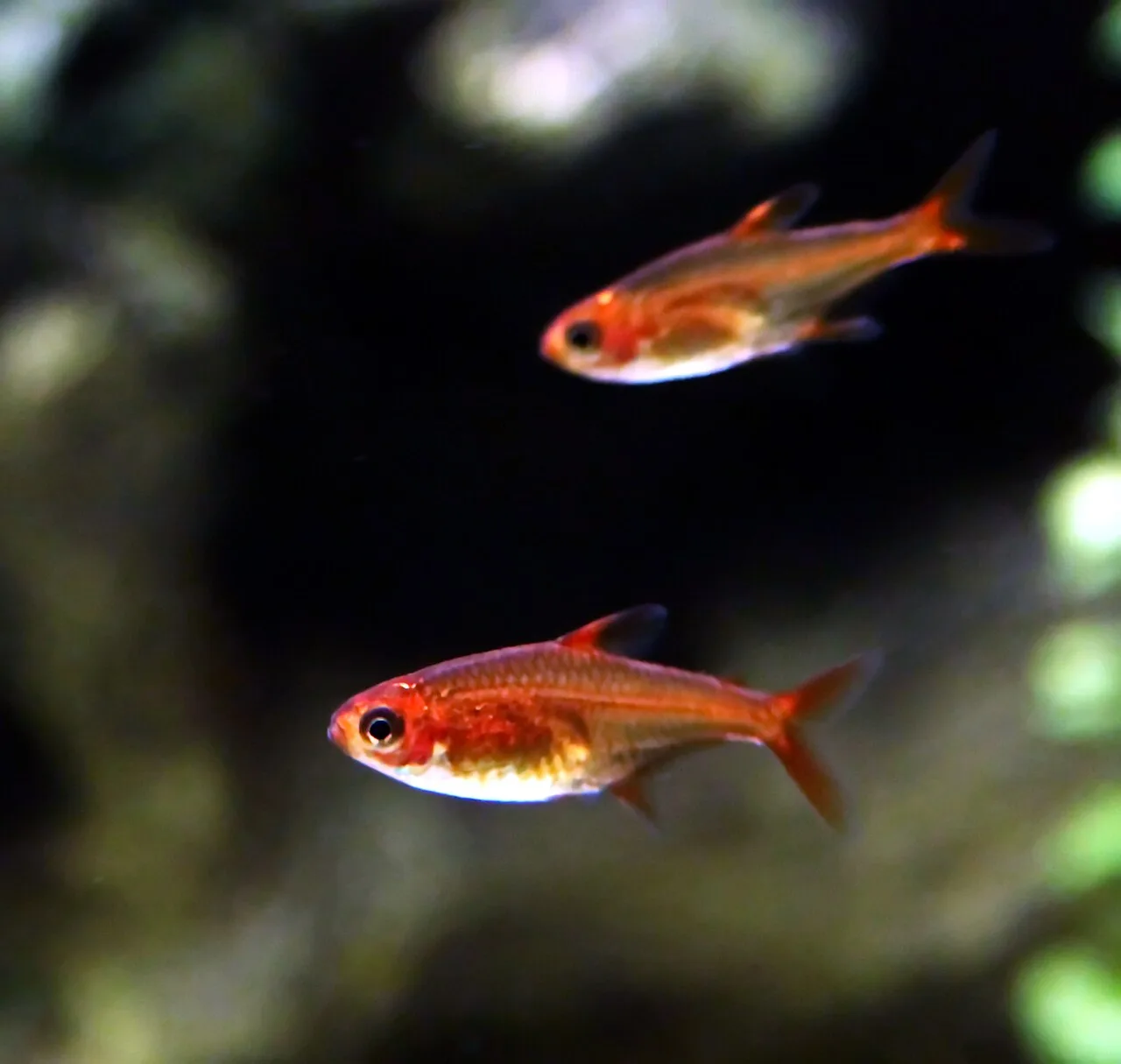
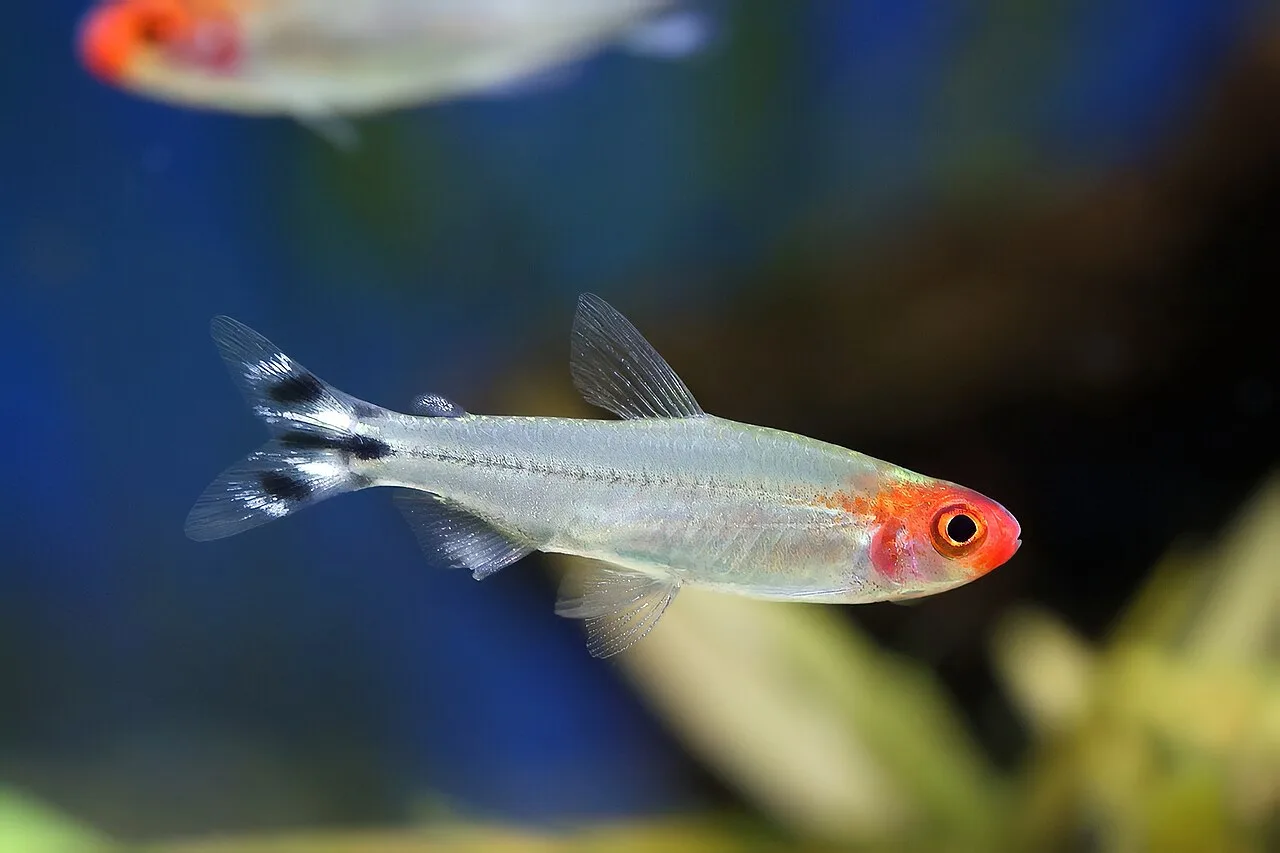
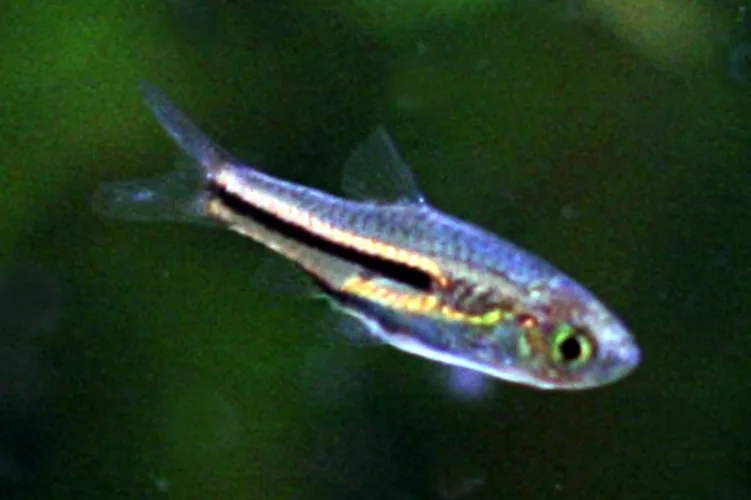
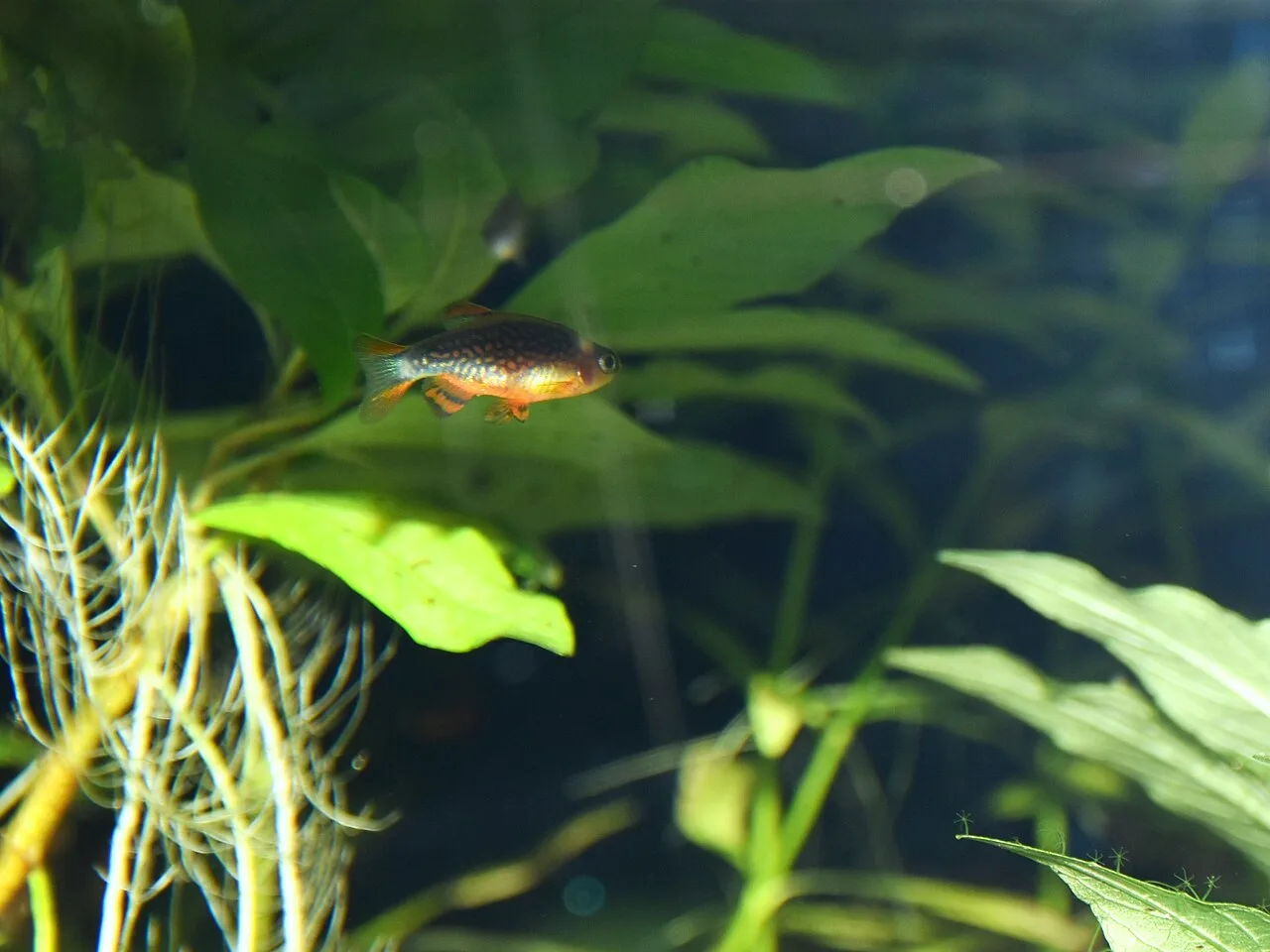
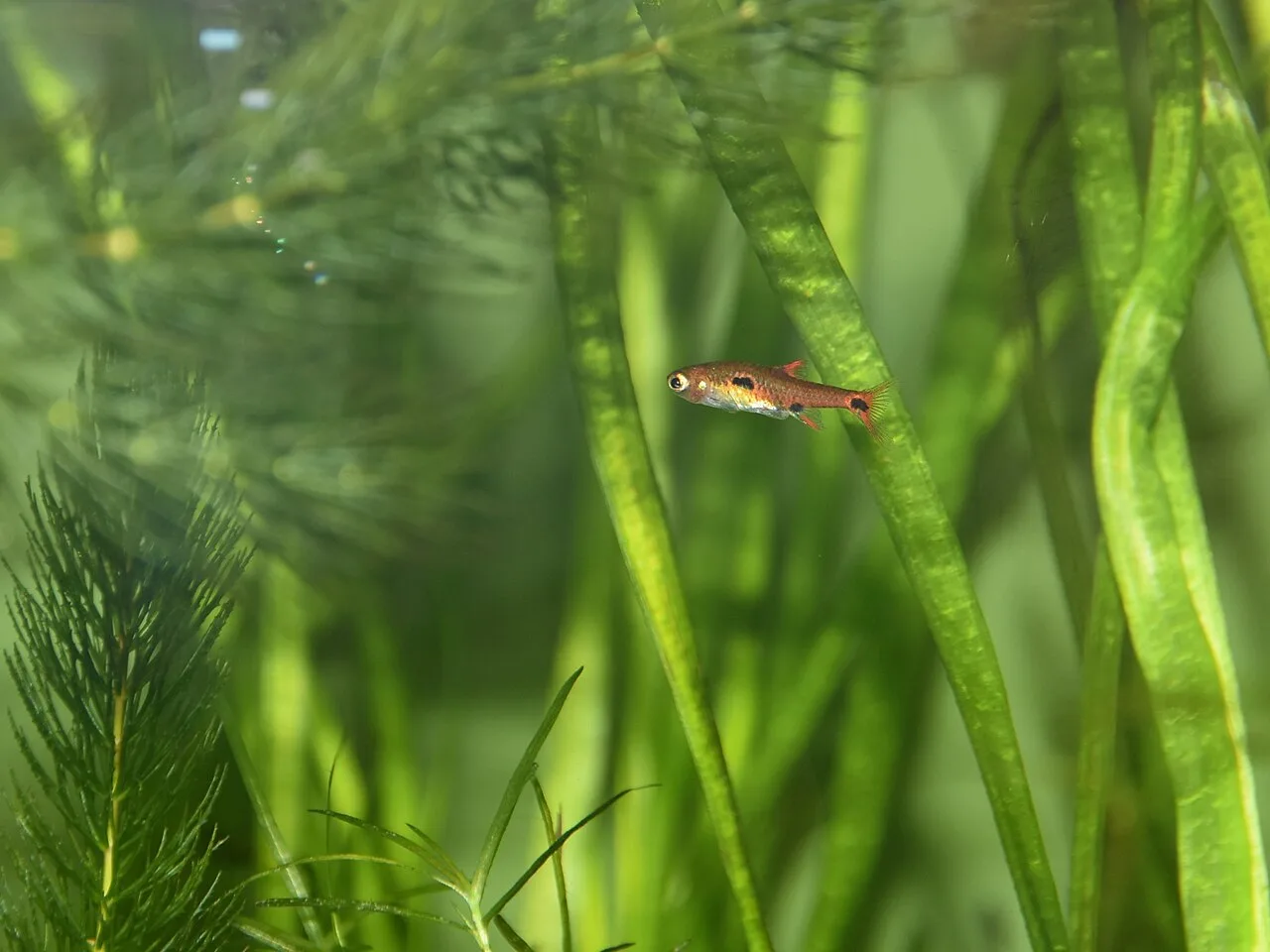
Males are described as fire red, females as orange, though females can also turn reddish. A club-shaped black band runs behind the head. A red band above it surrounds the front like the eye of a needle. Dorsal, anal and caudal fins carry red.
Name and description
The chili rasbora is also called mosquito rasbora and belongs to the genus Boraras in the family Danionidae. Dieter Vogt first described it as the subspecies Rasbora urophthalma brigittae and named it after his wife Brigitte. He chose the German name mosquito rasbora because the fish are so small and his group was badly bitten by mosquitoes at the water.
The fish usually stay at 10 to 20 mm. Figures for the largest total length range from 3.1 to 3.5 cm. The female described by Vogt measured 1.3 cm standard and 1.7 cm total length. The black band behind the head is more club-shaped than in Boraras urophthalmoides. Above the red band a fine dark line runs to the tail stalk, and the tail fin carries red spots. The fin formula is D I–II/5–6 and A I–II/5. Females have rounder bellies and are paler, males are smaller and more brightly coloured, the dominant ones most of all.
Origin & habitat
This describes the origin, not how to furnish the aquarium.
Origin and habitat
The species comes from southern Borneo and is endemic to the swamps of south-west Borneo in Indonesia, in blackwater streams and pools of the peat swamp forests. Vogt found the fish in early July in the dry season in both cola-coloured and crystal-clear water. They prefer lower to middle river stretches with swamps and slow streams and stay in schools near the bottom. In blackwater they live together with Boraras merah but seem more tolerant and also occur in brown, acidic streams.
Care
Size is the standard length of about 1.8 cm.
Chili rasboras are lively schooling fish and among the smallest cypriniforms. They are very delicate: even slight pressure on the body can kill them, so catching and handling are demanding. They prefer a tank resembling their natural habitat and can live up to eight years with good care.
Diet
Like all Boraras, the species is a micropredator and eats mainly small insects, worms, crustaceans and other zooplankton. In the aquarium it takes pellets, frozen food, flakes, young brine shrimp and worms.
Gallery
More species in this group

Similar water needs
Species with a similar temperature, a similar pH and a comparable adult size. Whether their behaviour fits as well is what the compatibility check is for.