Dwarf rasbora
Boraras maculatus
22 views
A tiny schooling fish with red spots. It belongs in a quiet, mature tank and not among large tetras.
- Temperature
- 23 – 28 °C
- pH
- 5.5 – 7 pH
- General hardness
- 4 – 10 °dH
- Maximum size
- 2.5 cm
- Minimum group size
- 10
- Minimum tank size
- 30 L
2 min read · 323 words
Fresh water
Quick facts
Place in the aquarium
Highlighted are the water layer and the spots where the species usually stays in the tank.
- Upper water Usually stays in the top third of the tank.
- Middle water Usually stays in the middle of the tank, between bottom and surface.
- Dense plants Looks for dense planting as cover, retreat or grazing ground.
Shrimp in the tank
Shrimplets at risk
- Not shrimp safe
- Dwarf shrimp at risk
- Shrimplets at risk
- Shrimp safe
- Adult dwarf shrimp
- Safe
- Shrimplets
- Get eaten
- Safe from shrimp size
- about 1 cm
The dwarf rasbora is completely harmless to adult shrimp. At 10 to 20 mm, at most 25 mm, it is among the smallest aquarium fish and is considered very peaceful. It cannot eat shrimp from about 1 cm. Only newly hatched young just fit its tiny mouth.
The species is an ideal partner for a shrimp tank. In an established, densely planted tank with moss most of the young survive. Soft-water Caridina fit especially well.
Home & range
Overview
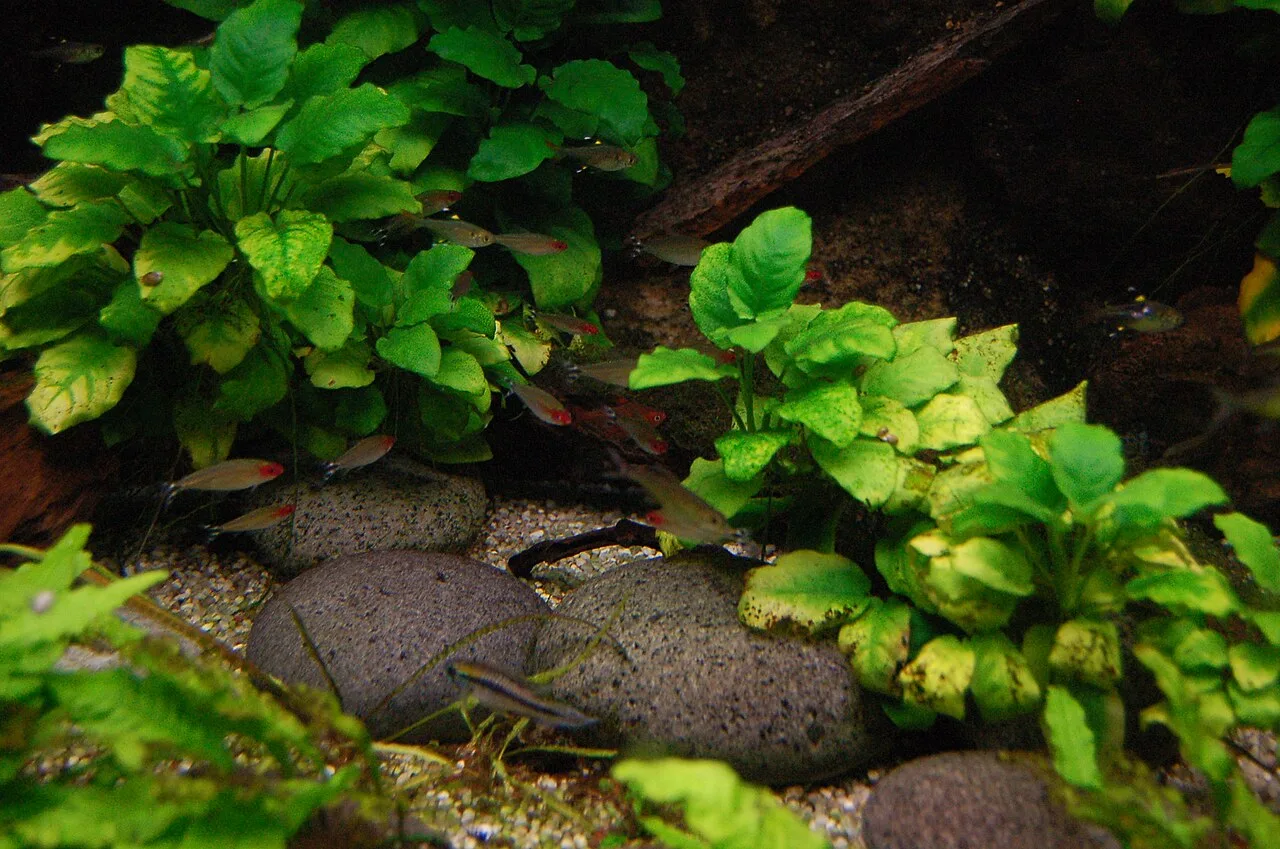
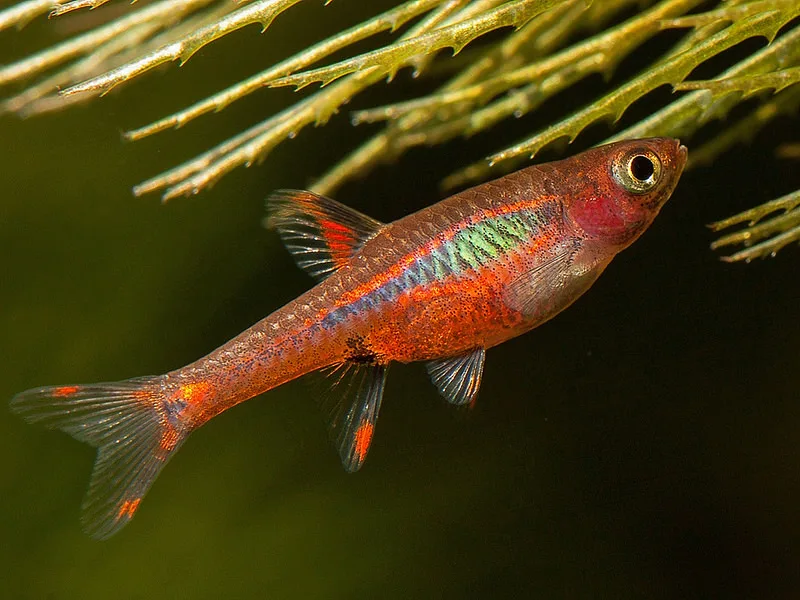
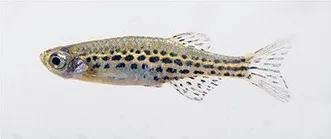
Boraras maculatus stays at about 2 to 2.5 cm. The body is translucent with red spots, the males more strongly coloured, the females deeper. In a school against a dark bottom and moss the spots are visible. As a single fish or on pale gravel they disappear.
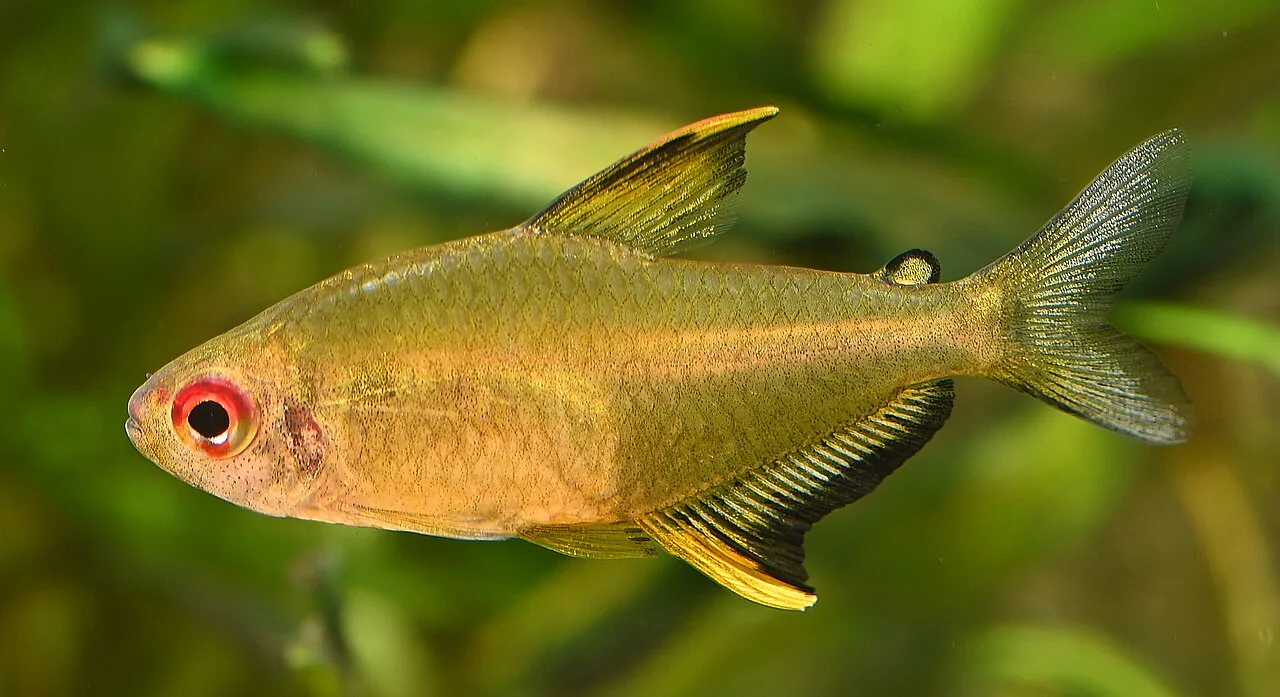
The species is not the phoenix rasbora and not the mosquito rasbora. The spot pattern separates them. All three are too small for an ordinary community tank.
Description
Georg Duncker described the species in 1904 as Rasbora maculata. It now belongs to the family Danionidae. Adults reach 10 to 20 mm, at most 25 mm.
Origin & habitat
This describes the origin, not how to furnish the aquarium.
Slow, often acidic and plant-rich small waters in Southeast Asia. Soft water, leaf litter, little current. The origin stays coarse. Hard, bright water and a strong filter current are the opposite of this bank.
Care
Tank
23 to 28 °C, pH 5.5 to 7. A school from ten, tanks from about 30 litres if it is mature, densely planted and without large fish. Floating plants, moss, a dark bottom, a cover, almost no current.
Company
Only other very small species, or the species alone. Shrimp in a mature tank bother them little. Every larger fish treats them as food or takes every feeding away from them.
Diet
Dust-fine food. Nauplii, microworms, cyclops, crushed flakes. A food for guppies is often too coarse. Several tiny feeds among the plants, not one tablet on the bottom.
Behavior
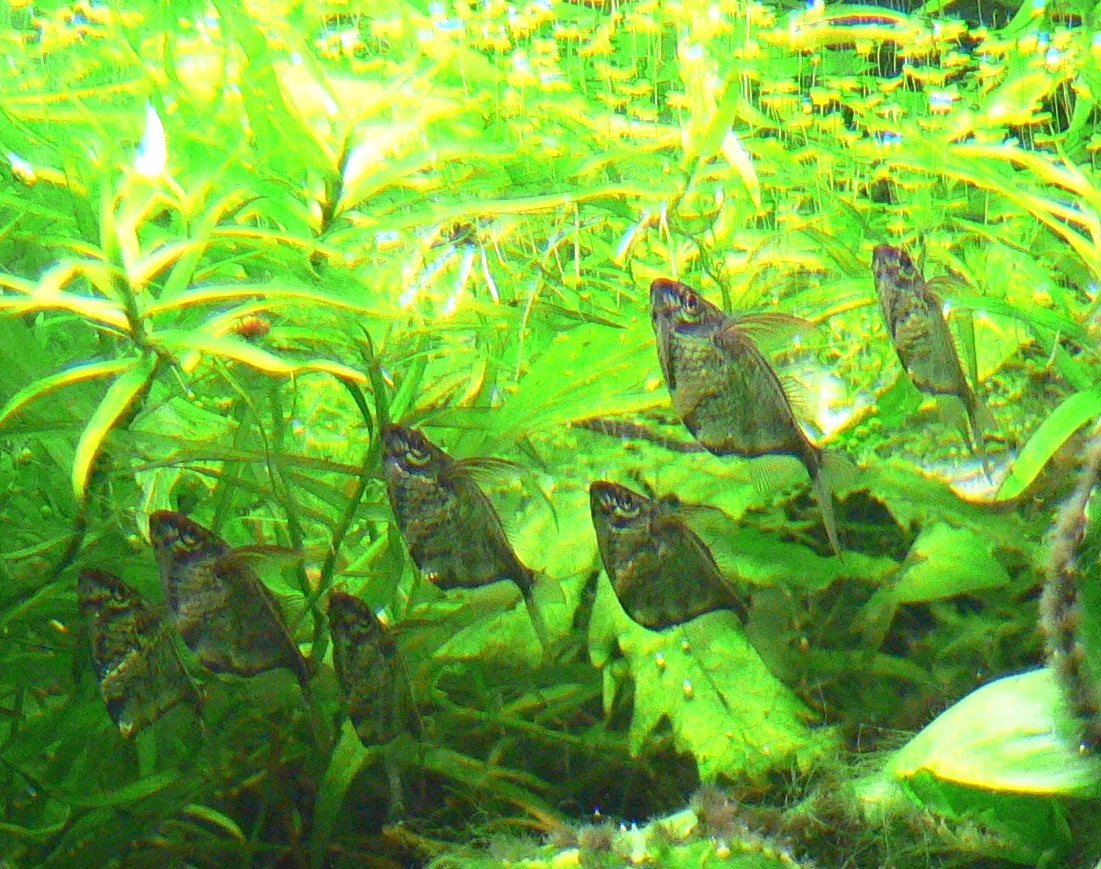
A close, quiet school in the plants. When startled they disappear into the moss. Too few fish stand singly and lose the red spots. Within the species they are peaceful.
The species is a very peaceful schooling fish that should always be kept in groups of eight or more. It lives in the fresh waters of Southeast Asia. The IUCN rates it least concern.
Reproduction
Egg scatterer in fine plants. The eggs are small, the parents eat them. Breeding needs a separate, soft tank and even finer rearing food. In a community tank young are not to be expected.
More species in this group

Similar water needs
Species with a similar temperature, a similar pH and a comparable adult size. Whether their behaviour fits as well is what the compatibility check is for.