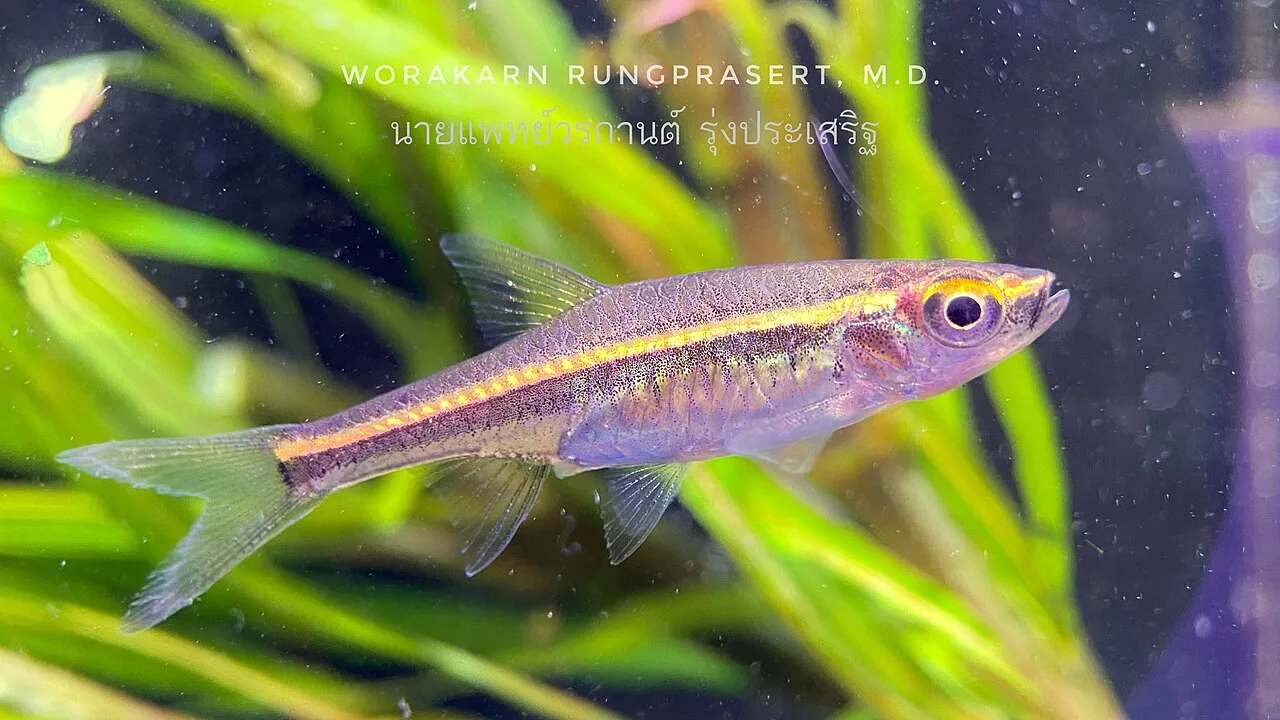
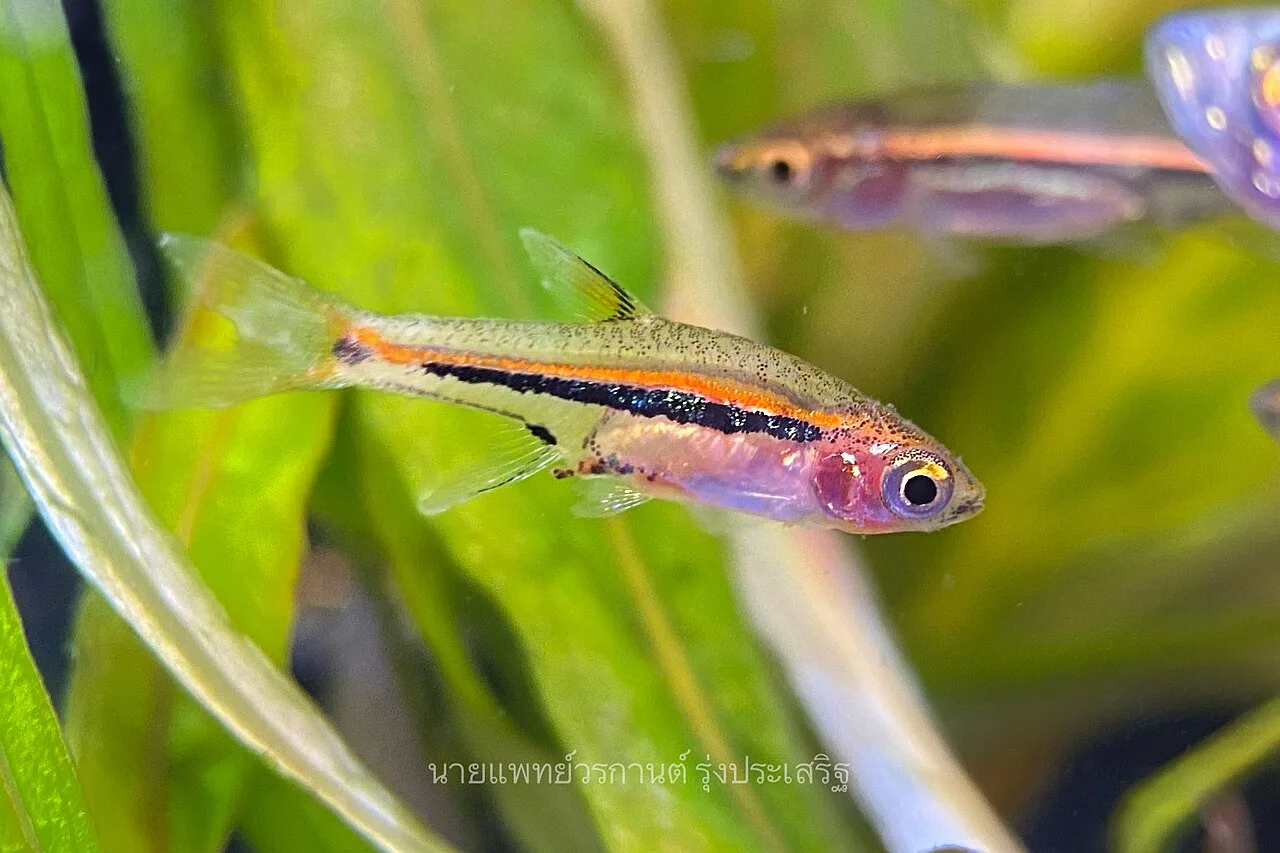
Axelrod's rasbora
Sundadanio axelrodi
3 views
A tiny rasbora from peat swamps that shimmers blue, red or green depending on its form. It needs soft, acidic water.
- Temperature
- 22 – 27 °C
- pH
- 4 – 6.5 pH
- General hardness
- 0 – 5 °dH
- Maximum size
- 2 cm
- Minimum group size
- 10
- Minimum tank size
- 40 L
2 min read · 176 words
Quick facts
Place in the aquarium
Highlighted are the water layer and the spots where the species usually stays in the tank.
- Middle water Usually stays in the middle of the tank, between bottom and surface.
- Dense plants Looks for dense planting as cover, retreat or grazing ground.
Shrimp in the tank
Shrimp safe
- Not shrimp safe
- Dwarf shrimp at risk
- Shrimplets at risk
- Shrimp safe
- Adult dwarf shrimp
- Safe
- Shrimplets
- Mostly safe
- Safe from shrimp size
- Any size
Axelrod's rasbora is harmless to shrimp. It reaches only about 2 cm and eats very fine food. Adult shrimp are too large, and even juvenile shrimp are hardly taken.
Only the water is difficult. The species needs very soft, acidic water. That suits some Caridina, but not Neocaridina, which prefer medium-hard water.
Home & range
Hatched countries are where the species occurs. It lives in particular waters there, not across the whole country. The points name known waters for orientation, not collection sites.
- Country of origin
- Water for orientation
Native
Overview
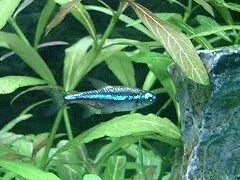
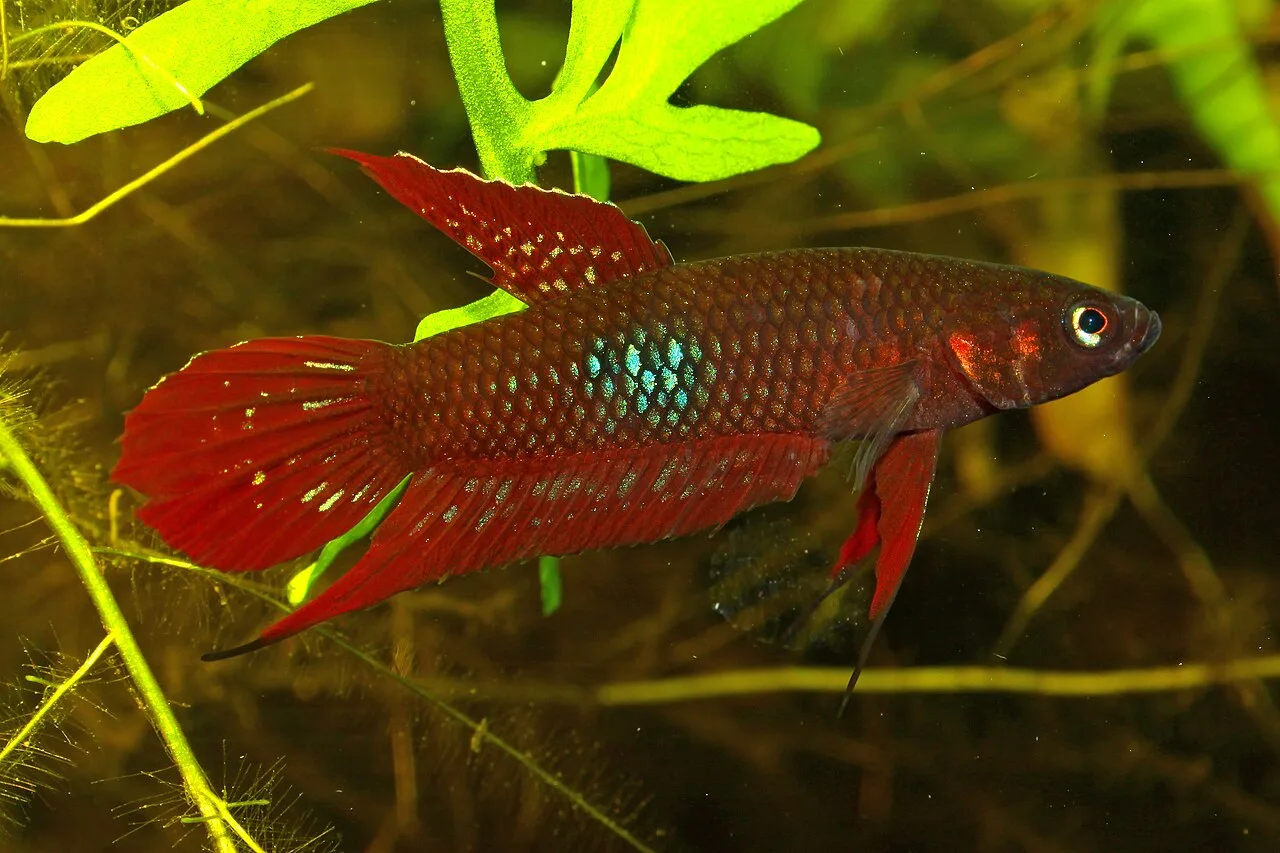
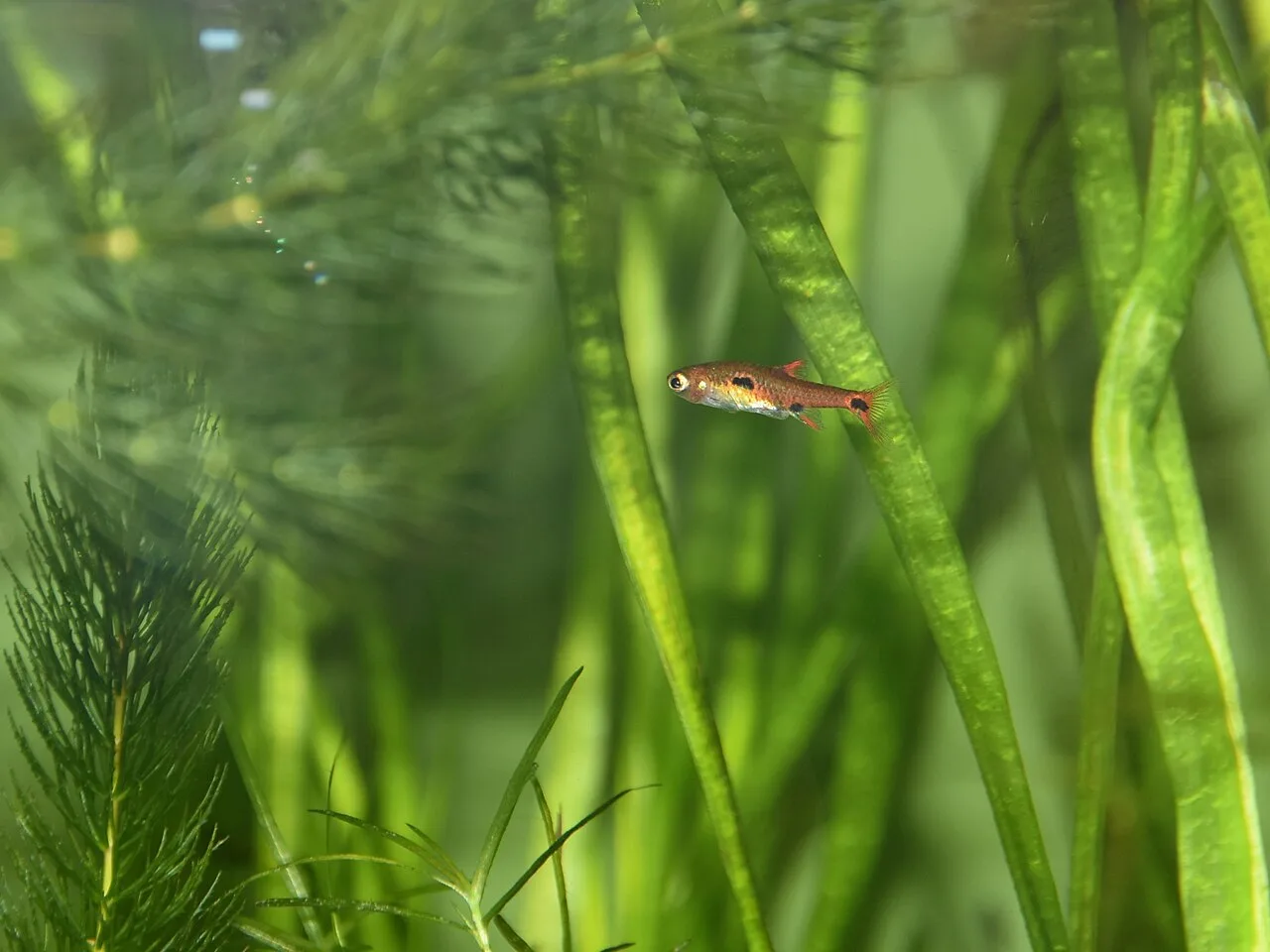
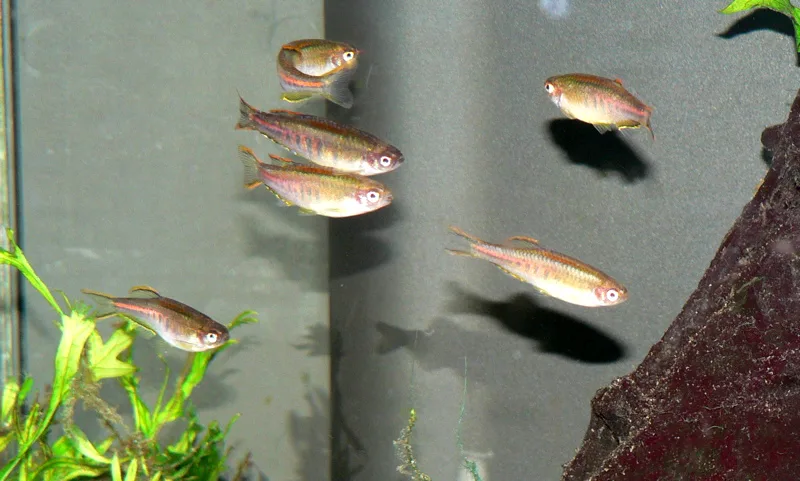
Sundadanio axelrodi reaches about 2 cm. Depending on origin, males shimmer blue, green or reddish, with red fin tips. Females are paler. The colour forms come from different areas. Whether they are separate species is open. This profile treats them together.
It is not a neon tetra and not a Boraras. It is a dwarf rasbora of its own that shows its colour only in very soft water.
Origin & habitat
This describes the origin, not how to furnish the aquarium.
Peat swamp waters on Borneo, Sumatra and Bangka. The islands stay a coarse origin. Soft, acidic, dim blackwater matches that.
Care
Water
22 to 27 °C, pH 4 to 6.5, very soft. A group from ten, tanks from about 40 litres. Leaf litter, wood, floating plants, subdued light.
Company
Only very small, calm fish with the same water. A species tank shows the fish best.
Diet
Very fine food. Brine shrimp nauplii, cyclops, micro granules. Several small feeds a day.
Behavior
A calm, shy school. Males show strong colours when courting. In hard water the fish fade.
Reproduction
Egg scatterer in fine plants. The clutches are small. Young are raised only in very soft water without the parents.
Gallery
More species in this group

Similar water needs
Species with a similar temperature, a similar pH and a comparable adult size. Whether their behaviour fits as well is what the compatibility check is for.