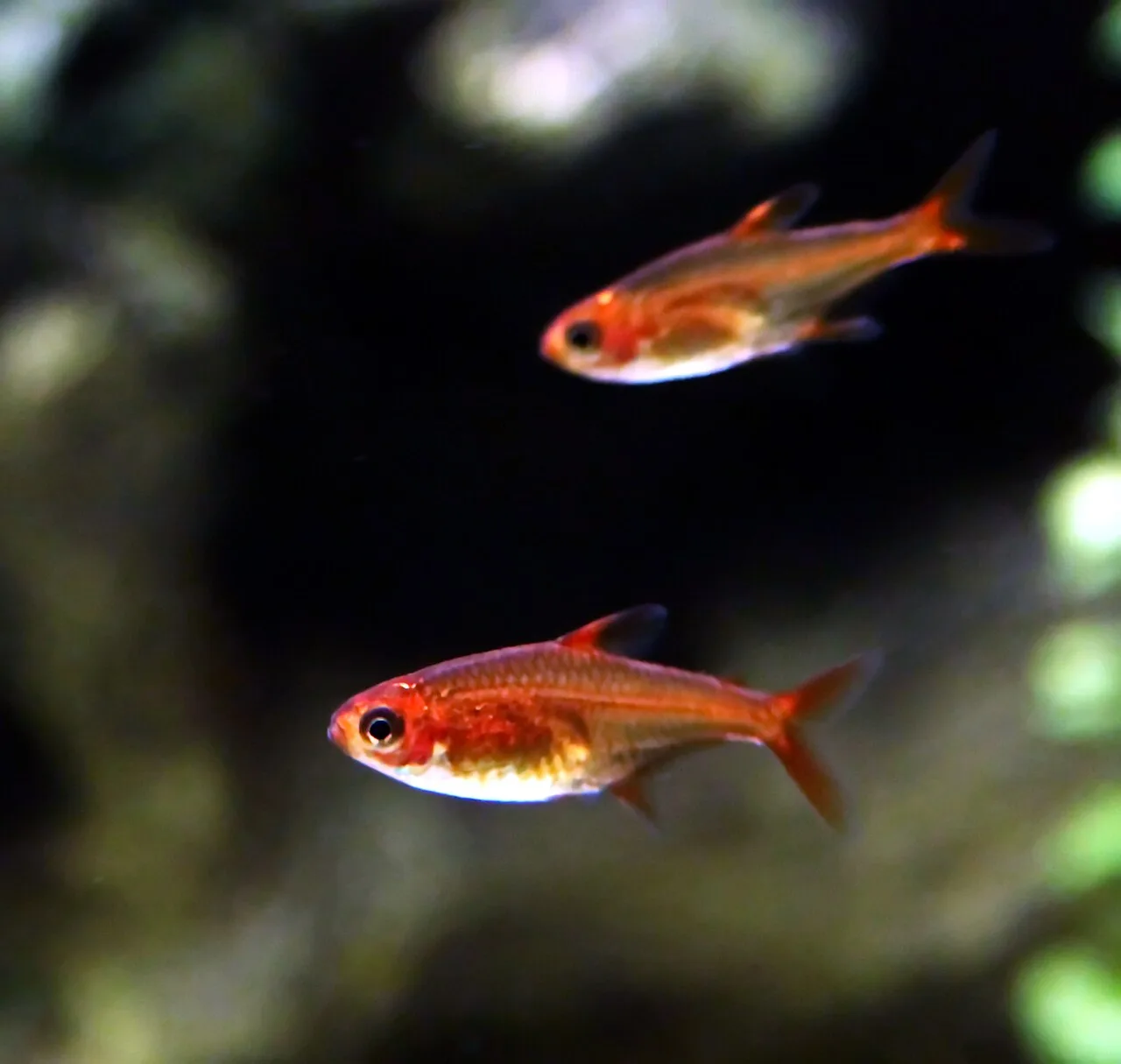
Somphongs rasbora
Trigonostigma somphongsi
21 views
A rasbora from Thailand, to 3 cm, males smaller. Not Trigonostigma heteromorpha.
- Temperature
- 24 – 28 °C
- pH
- 5.5 – 7 pH
- General hardness
- 2 – 10 °dH
- Maximum size
- 3 cm
- Minimum group size
- 8
- Minimum tank size
- 40 L
2 min read · 312 words
Fresh water
Quick facts
Place in the aquarium
Highlighted are the water layer and the spots where the species usually stays in the tank.
- Middle water Usually stays in the middle of the tank, between bottom and surface.
- Dense plants Looks for dense planting as cover, retreat or grazing ground.
Shrimp in the tank
Shrimplets at risk
- Not shrimp safe
- Dwarf shrimp at risk
- Shrimplets at risk
- Shrimp safe
- Adult dwarf shrimp
- Safe
- Shrimplets
- Get eaten
- Safe from shrimp size
- about 1 cm
The Siamese dwarf rasbora is harmless to adult shrimp. At no more than 3 cm and with a small mouth it cannot eat shrimp from about 1 cm. Newly hatched shrimp, however, are small enough to fit its prey range, as with almost all small schooling fish.
The species prefers densely planted, dark tanks. That very setup also protects the young shrimp: moss, leaf litter and fine plants on the bottom let enough juveniles survive. Soft-water Caridina suit the water values especially well.
Home & range
Hatched countries are where the species occurs. It lives in particular waters there, not across the whole country. The points name known waters for orientation, not collection sites.
- Country of origin
- Water for orientation
Native
Overview
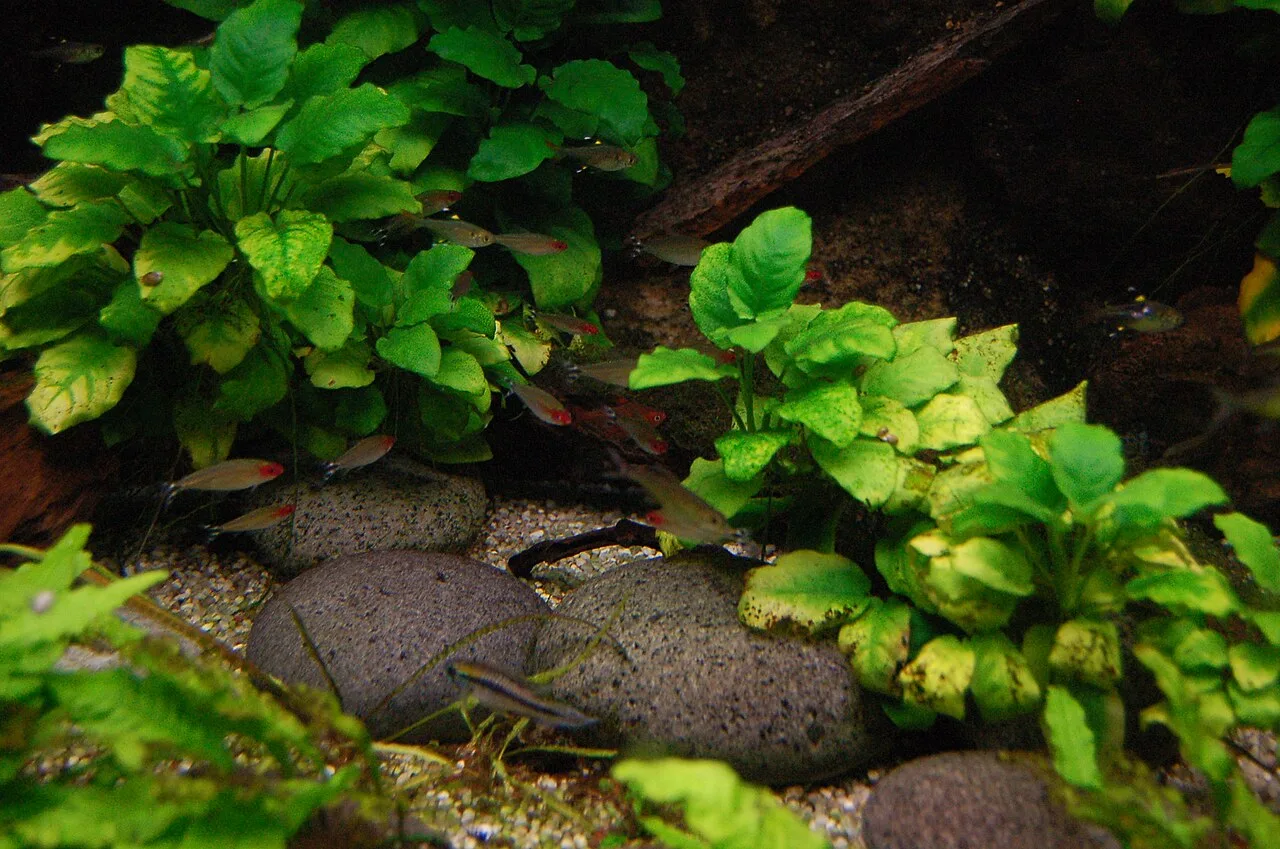
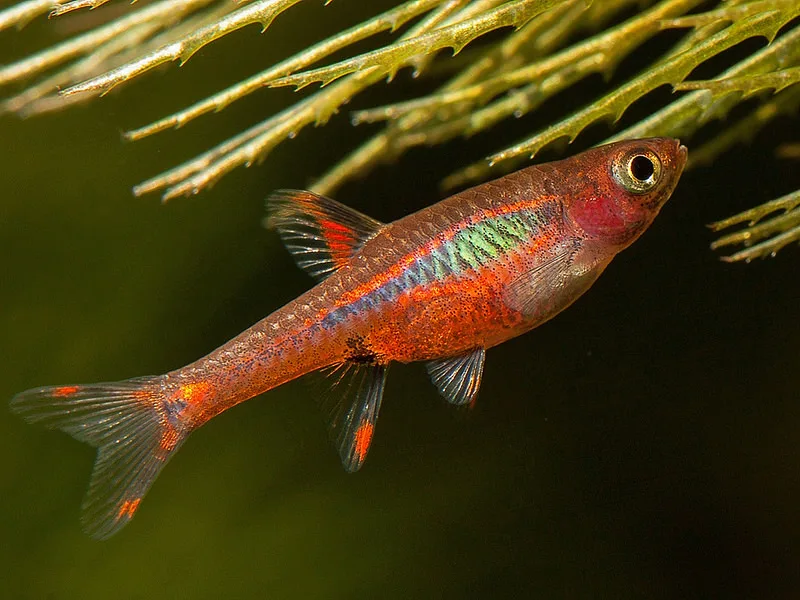
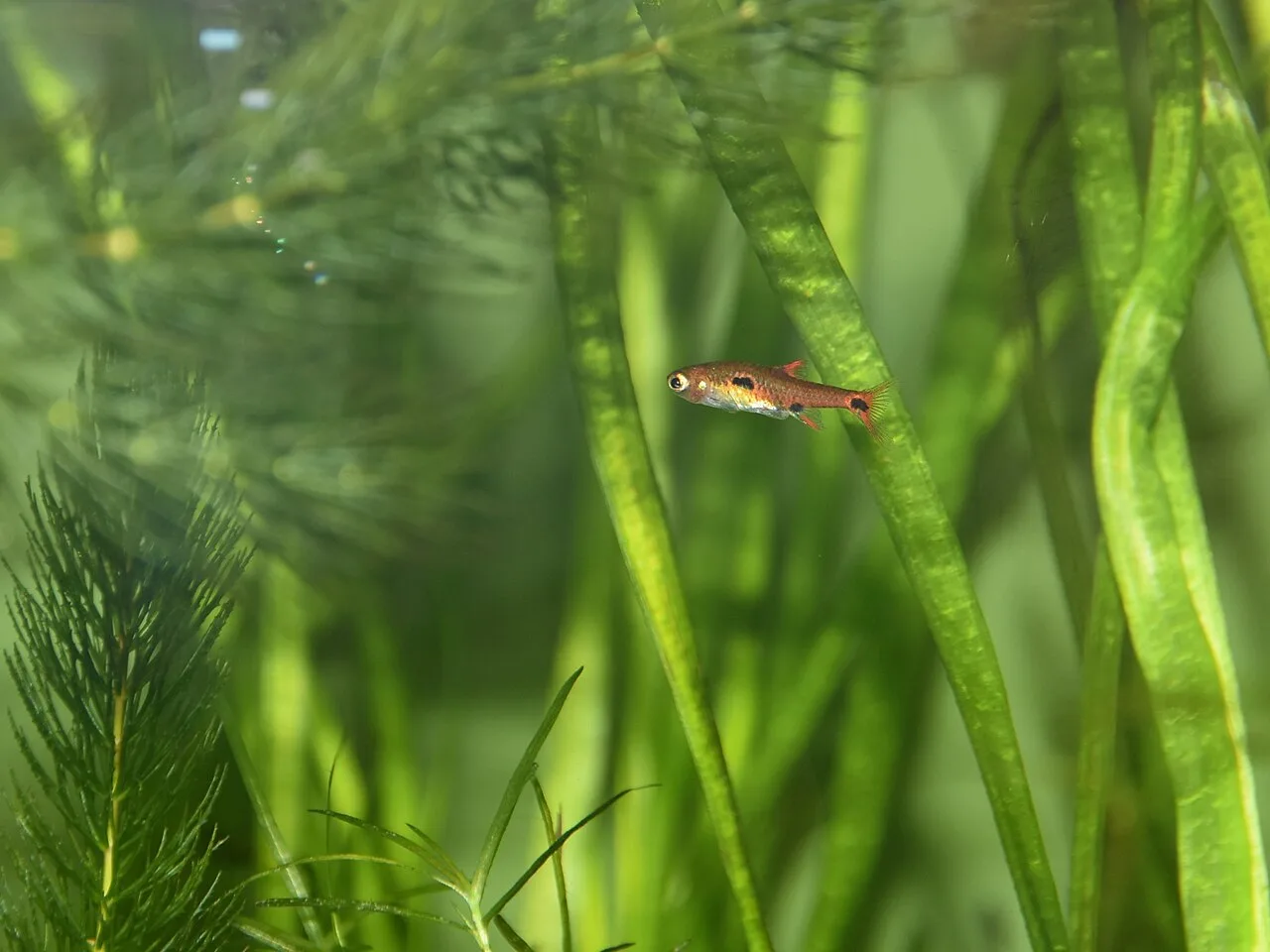
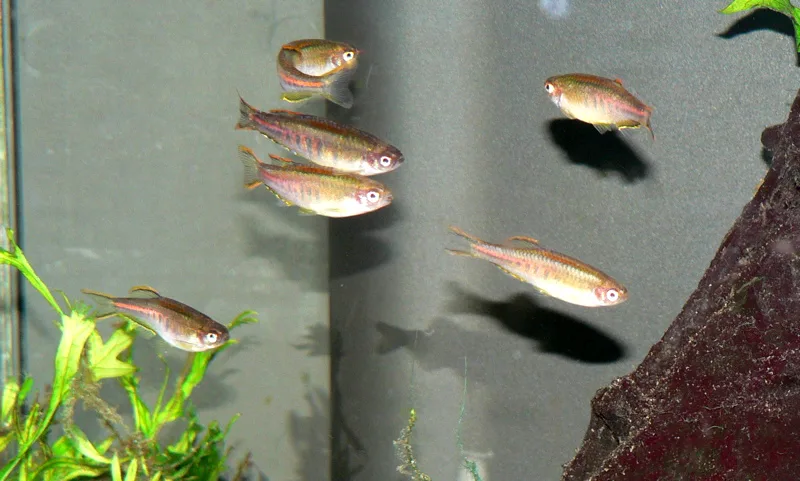
Elongated and laterally flattened, not deep-bodied like the other harlequin rasboras. Yellowish to pale brownish, a net pattern on the back, two longitudinal bands, the upper one golden.
Description and name
Hermann Meinken described the species in 1958. It belongs to the genus Trigonostigma in the family Danionidae. Older names are Rasbora somphongsi and Barbus somphongsi. The species name honours Somphong Lek-aree, a Thai ornamental fish dealer who collected the type specimens.
Two longitudinal bands run along each flank. The upper, golden one starts behind the gill cover. The lower one is dark to black, begins below the start of the dorsal fin and runs to the base of the caudal fin. A further dark band forms a black triangle above the anal fin. The fins are transparent with a faint brownish to yellowish tint. There is no lateral line. Fin formula: dorsal 2/6–7, anal 2/5. The middle longitudinal row has 24 to 25 scales.
What sets it apart from the other wedge-spot rasboras is mainly the elongated body, which is not high-backed. Males stay smaller than females.
Origin & habitat
This describes the origin, not how to furnish the aquarium.
Mae Nam Mae Klong and Mae Nam Chao Phraya in Thailand. Thailand only, coarse.
The species is probably endemic to the lower Mae Klong basin near Ratchaburi Province. Densely vegetated, dark river sections with neutral to weakly acidic water are suspected, where decaying organic matter releases tannins. In 2012 Thai scientists surveyed deep-water rice fields in Nakhon Nayok Province near Bangkok as habitat. Two species from the same area, the bala shark Balantiocheilos melanopterus and the dwarf loach, have disappeared there because the rivers were altered.
Reproduction
Named after the dealer Somphong, who caught the types.
Spawning takes place under a plant leaf, similar to the related harlequin rasbora. The clutch is small, about 70 eggs.
Threat
Since the assessment by C. Vidthayanon in 2011 the IUCN lists the species as critically endangered. The cause is habitat loss.
Gallery
More species in this group
Similar water needs
Species with a similar temperature, a similar pH and a comparable adult size. Whether their behaviour fits as well is what the compatibility check is for.