Checker barb
Oliotius oligolepis
2 views
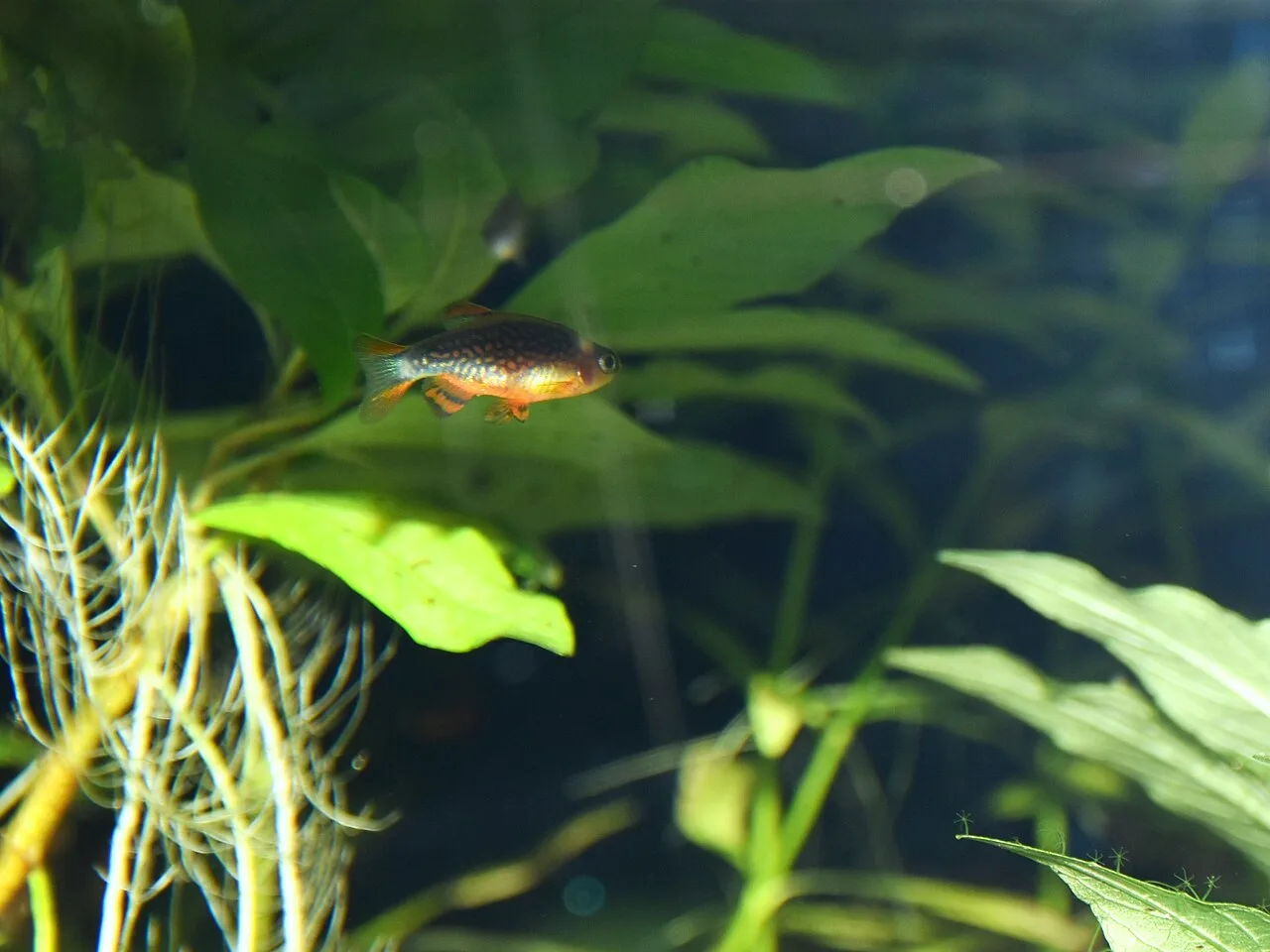
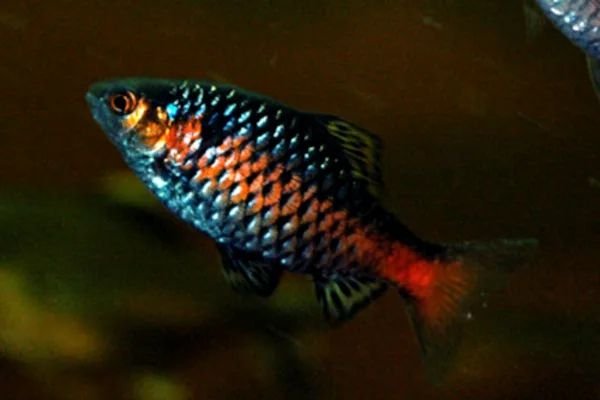
A small barb from Sumatra with a checkerboard scale pattern. Males carry red fins with a black edge.
- Temperature
- 20 – 26 °C
- pH
- 6 – 7.5 pH
- General hardness
- 4 – 15 °dH
- Maximum size
- 5 cm
- Minimum group size
- 8
- Minimum tank size
- 60 L
1 min read · 139 words
Quick facts
Place in the aquarium
Highlighted are the water layer and the spots where the species usually stays in the tank.
- Middle water Usually stays in the middle of the tank, between bottom and surface.
- Dense plants Looks for dense planting as cover, retreat or grazing ground.
Shrimp in the tank
Shrimplets at risk
- Not shrimp safe
- Dwarf shrimp at risk
- Shrimplets at risk
- Shrimp safe
- Adult dwarf shrimp
- Safe
- Shrimplets
- Get eaten
- Safe from shrimp size
- about 2 cm
Adult dwarf shrimp are usually safe with the checker barb. It reaches about 5 cm and eats small invertebrates and plant food. Shrimp from about 2 cm are rarely approached. Juvenile shrimp are eaten when they move around in the open.
In a densely planted tank with moss a group of Neocaridina holds its own next to the school.
Home & range
Hatched countries are where the species occurs. It lives in particular waters there, not across the whole country. The points name known waters for orientation, not collection sites.
- Country of origin
- Water for orientation
Native
Overview
Oliotius oligolepis reaches about 5 cm. The large scales carry dark edges, which creates a checkerboard pattern. Males are copper red with red fins edged in black. Females are paler with yellowish fins. Older names say Puntius oligolepis. It is the same species.
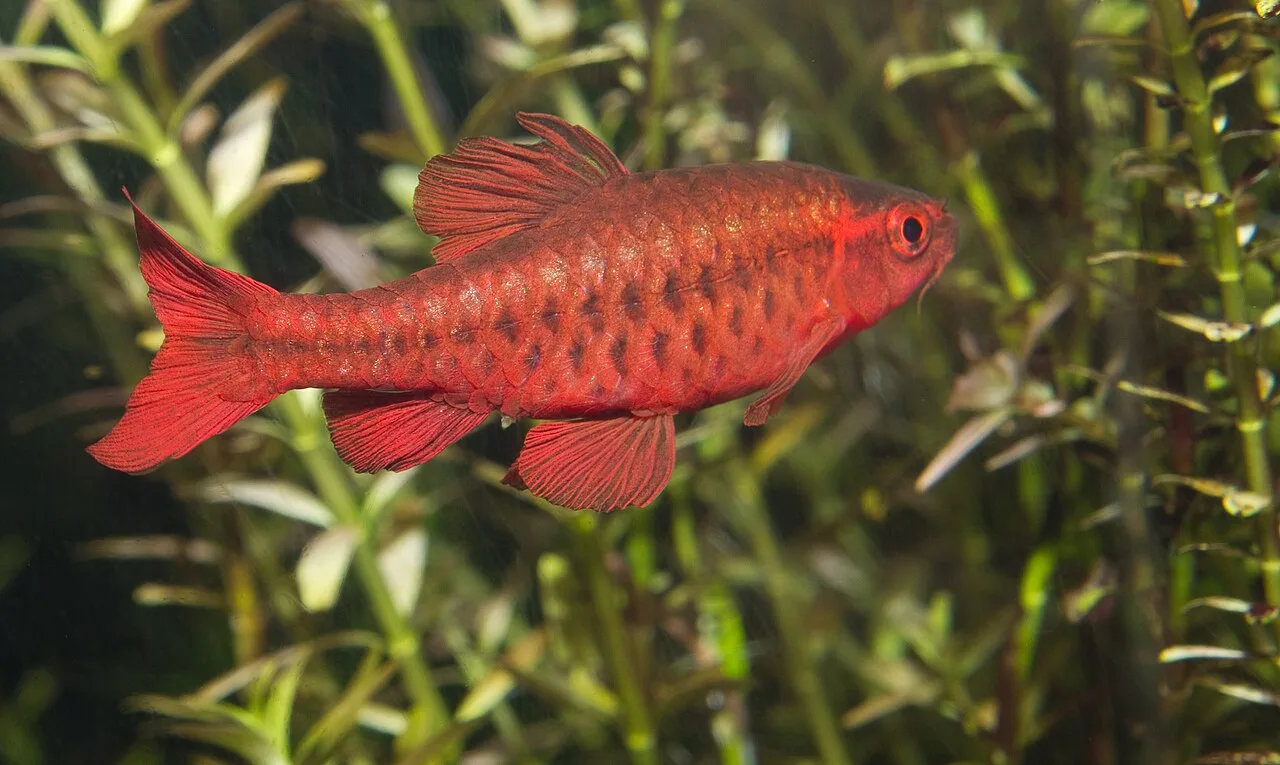
It is not the cherry barb, which is cherry red with a dark longitudinal band and shows no checkerboard pattern.
Origin & habitat
This describes the origin, not how to furnish the aquarium.
Waters on Sumatra. The island stays the coarse origin. Plant-rich, slow water matches that.
Care
School
20 to 26 °C, pH 6 to 7.5. A group from eight, tanks from about 60 litres. Plants, open space.
Company
Small, peaceful fish. Long-finned fish are rarely nipped if the school is large enough.
Diet
Omnivore. Flakes, granules, mosquito larvae, brine shrimp, plant food.
Behavior
A peaceful school with small courtship chases among males.
Reproduction
Egg scatterer without brood care in fine plants. The parents eat spawn.
More species in this group
Similar water needs
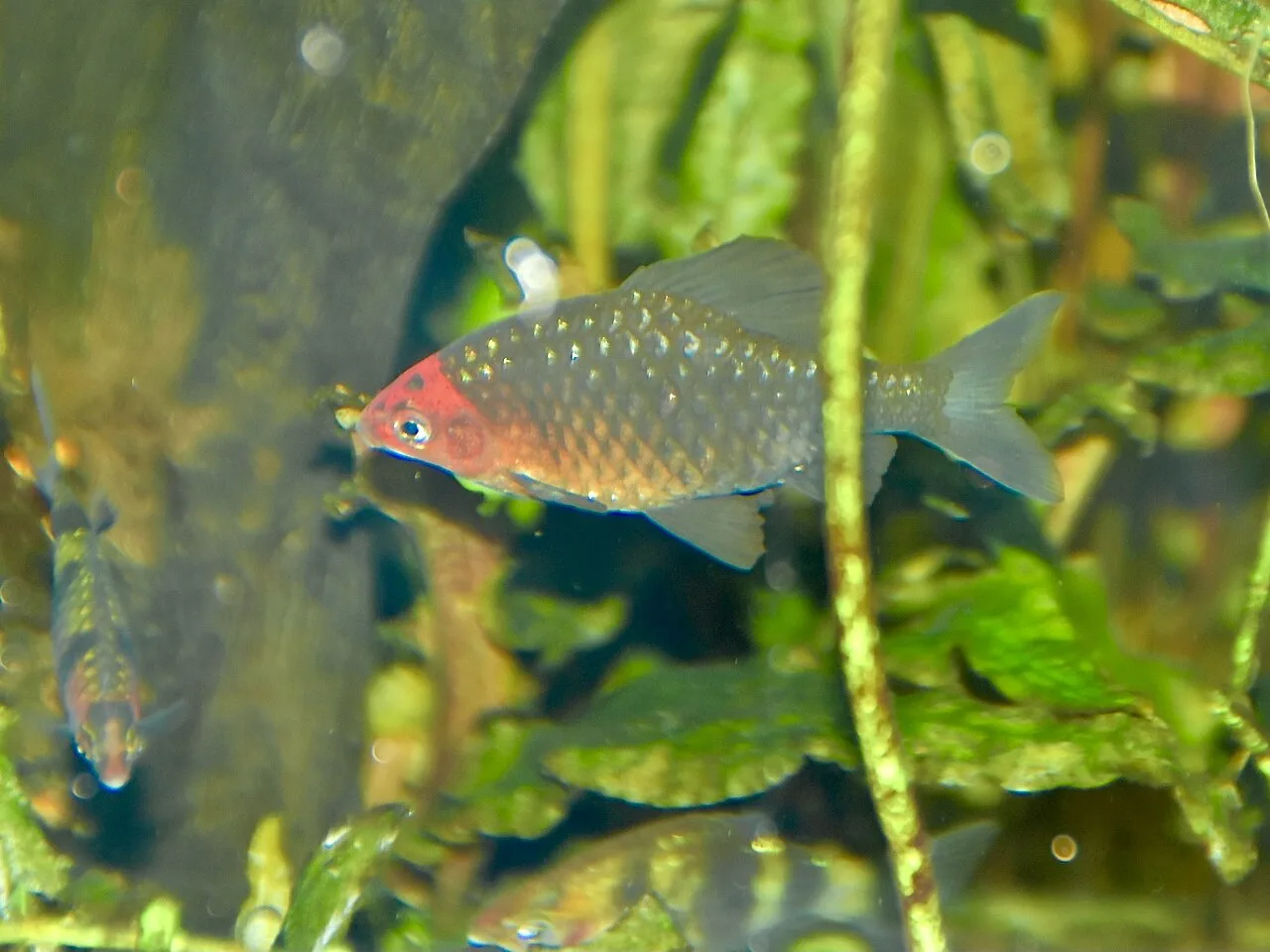
Species with a similar temperature, a similar pH and a comparable adult size. Whether their behaviour fits as well is what the compatibility check is for.