Denison barb
Dawkinsia denisonii
19 views
A barb of the Western Ghats, 15 cm. Puntius denisonii and Crossocheilus denisonii are synonyms.
- Temperature
- 18 – 26 °C
- pH
- 6.8 – 7.8 pH
- General hardness
- 5 – 25 °dH
- Maximum size
- 15 cm
- Minimum group size
- 6
- Minimum tank size
- 300 L
3 min read · 397 words
Fresh water
Quick facts
Place in the aquarium
Highlighted are the water layer and the spots where the species usually stays in the tank.
- Upper water Usually stays in the top third of the tank.
- Middle water Usually stays in the middle of the tank, between bottom and surface.
- Open swimming space Needs an open area without plants or decor to swim at length. Tank length matters more than height.
Shrimp in the tank
Dwarf shrimp at risk
- Not shrimp safe
- Dwarf shrimp at risk
- Shrimplets at risk
- Shrimp safe
- Adult dwarf shrimp
- At risk
- Shrimplets
- Get eaten
- Safe from shrimp size
- about 5 cm
The Denison barb is not safe for dwarf shrimp. It usually grows to 9 to 11 cm, sometimes up to 15 cm, eats insect larvae and other invertebrates besides plants and accepts shrimp as food in the aquarium. Young shrimp and adult Neocaridina or Caridina are eaten. Larger shrimp such as adult Amano shrimp from about 5 cm are usually safe.
Dwarf shrimp belong in a separate tank. Larger shrimp need hiding places among stones and plants while the barbs use the open space as a shoal.
Home & range
Hatched countries are where the species occurs. It lives in particular waters there, not across the whole country. The points name known waters for orientation, not collection sites.
- Country of origin
- Water for orientation
Native
Overview
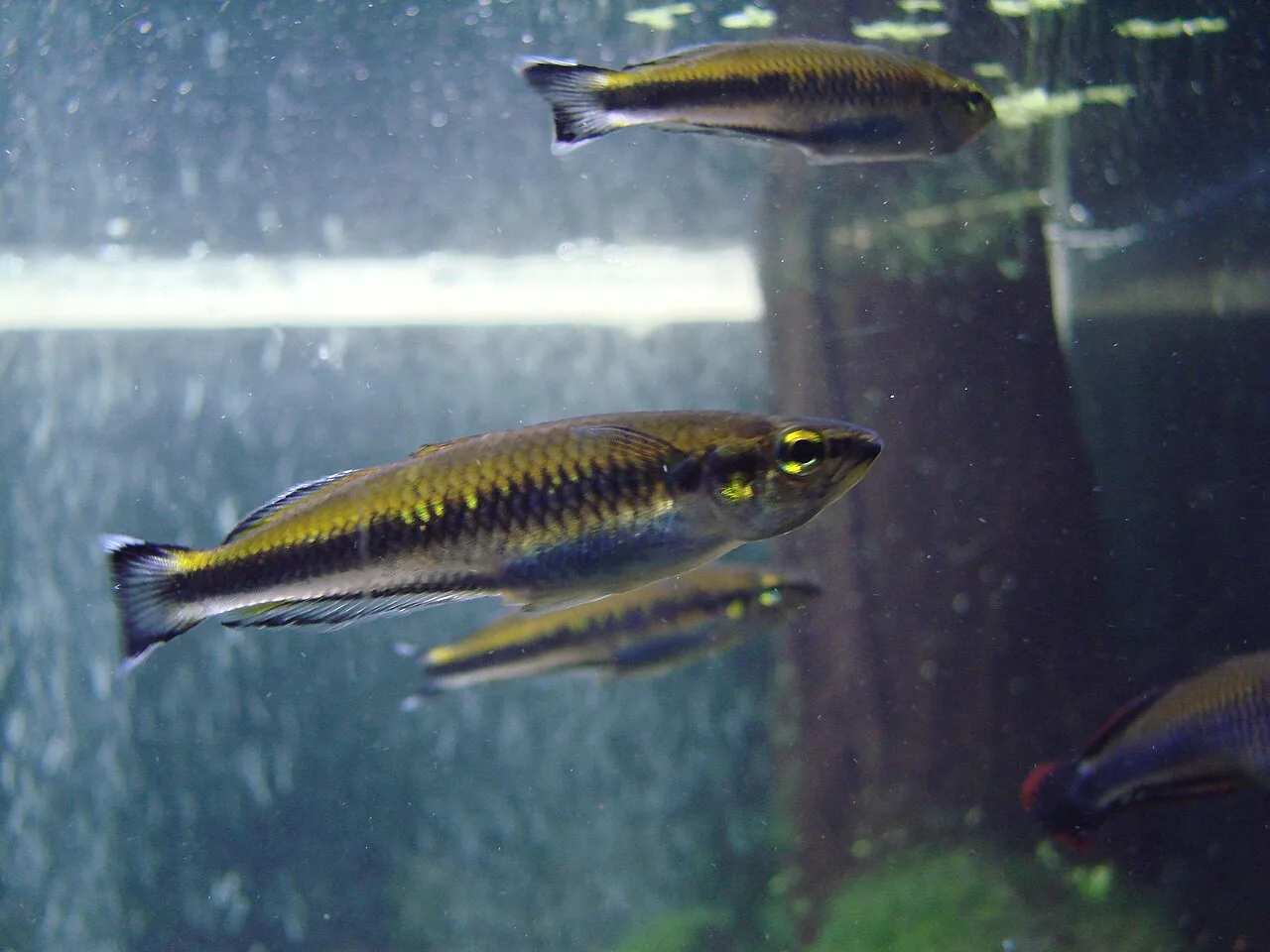
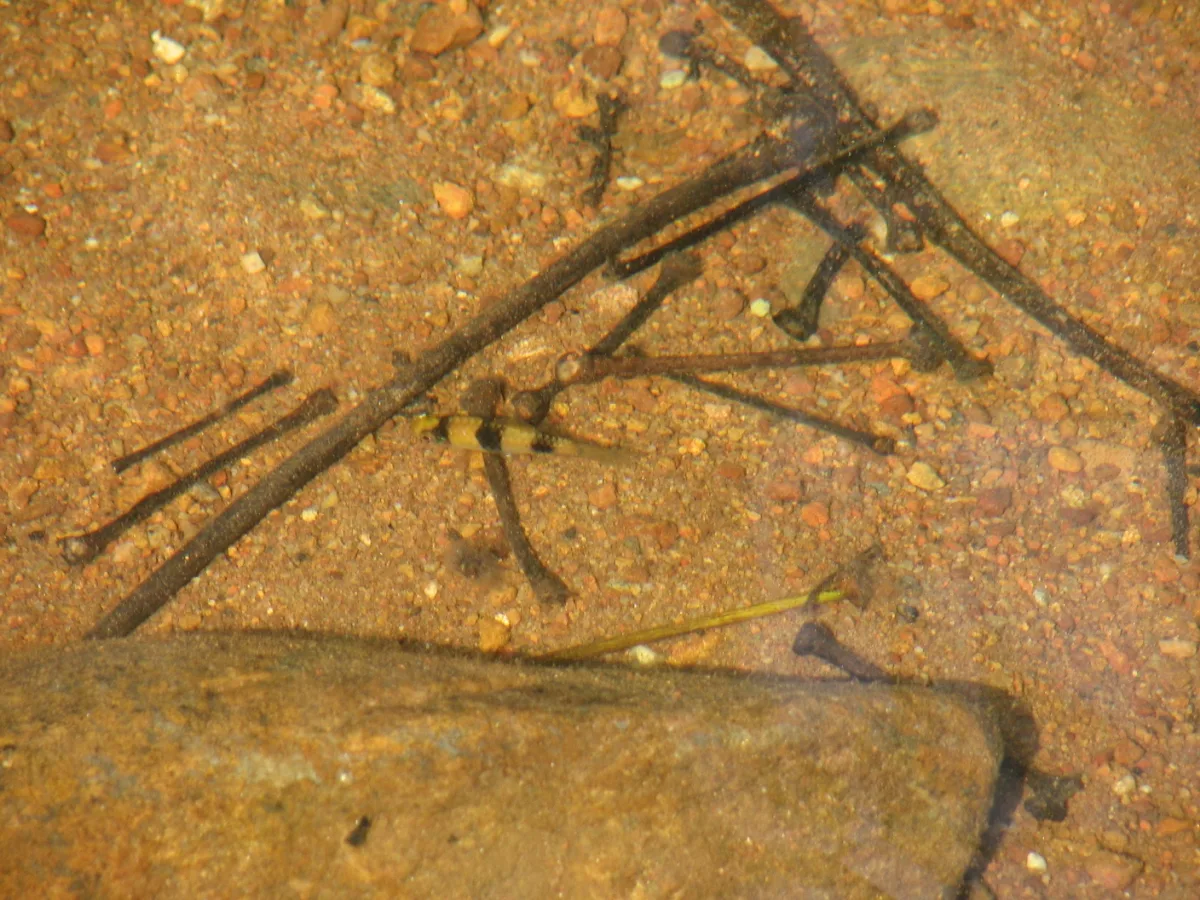
Long and spindle-shaped. Olive above, whitish below, a black band, accompanied in the first half of the body by the red band. First dorsal rays red, tail tips with a black and a white spot. Outside the spawning season the sexes look alike.
Features
The body is torpedo-shaped with silver scales. The red line runs from the snout through the eye to the middle of the body, with a black line below it running to the tail. As the fish matures a green to blue marking appears on top of the head. The species reputedly reaches 15 cm but usually stays at 9 to 11 cm. In the spawning season females are fuller. It is sometimes confused with Dawkinsia chalakkudiensis, which is larger, less colourful and more aggressive.
Name and taxonomy
Francis Day described the species in 1865 as Labeo denisonii. The name honours Sir William Denison. Other names include red-line torpedo barb, Miss Kerala and roseline shark. Earlier genus placements included Barbus, Puntius, Crossocheilus and Sahyadria.
Origin & habitat
This describes the origin, not how to furnish the aquarium.
Fast hill streams in Kerala and Karnataka, India. India stays coarse.
It lives in the Achankovil, Pamba and Chaliyar rivers and is known from four localities, among them the Cheenkannipuzha as a tributary of the Valapattanam and the area around Mundakayam. The estimated range covers 8805 km². The fish live in shoals in rocky pools with dense bank vegetation. The water there has pH 6.8 to 7.8, a hardness of 5 to 25 dGH and 18 to 26 °C.
The IUCN rates the species as endangered, mainly because of collection for the aquarium trade. Around 2007 and 2008 it made up about 60 to 65 percent of the live ornamental fish exported from India. Kerala has banned fishing and export. The golden form is regarded as extinct in the wild.
Care
Keeping
The Denison barb is a shoaling fish and is usually kept in groups. It is generally peaceful, but some fish become slightly aggressive at feeding time, especially in tanks that are too small. It is fed bloodworms, shrimp, meat, flake food and some plant matter.
Diet
Mainly plant matter, plus insect larvae and other invertebrates.
Reproduction
Gregarious, in rocky bays with dense bank vegetation.
Breeding attempts had little success for a long time. In 2009 it worked through the efforts of Bony Joseph at the Fisheries College in Kerala, with Chester Zoo and two hobbyists from Chennai also involved. Large numbers are now bred at commercial facilities. The species was probably first exported in 1996.
Gallery
More species in this group
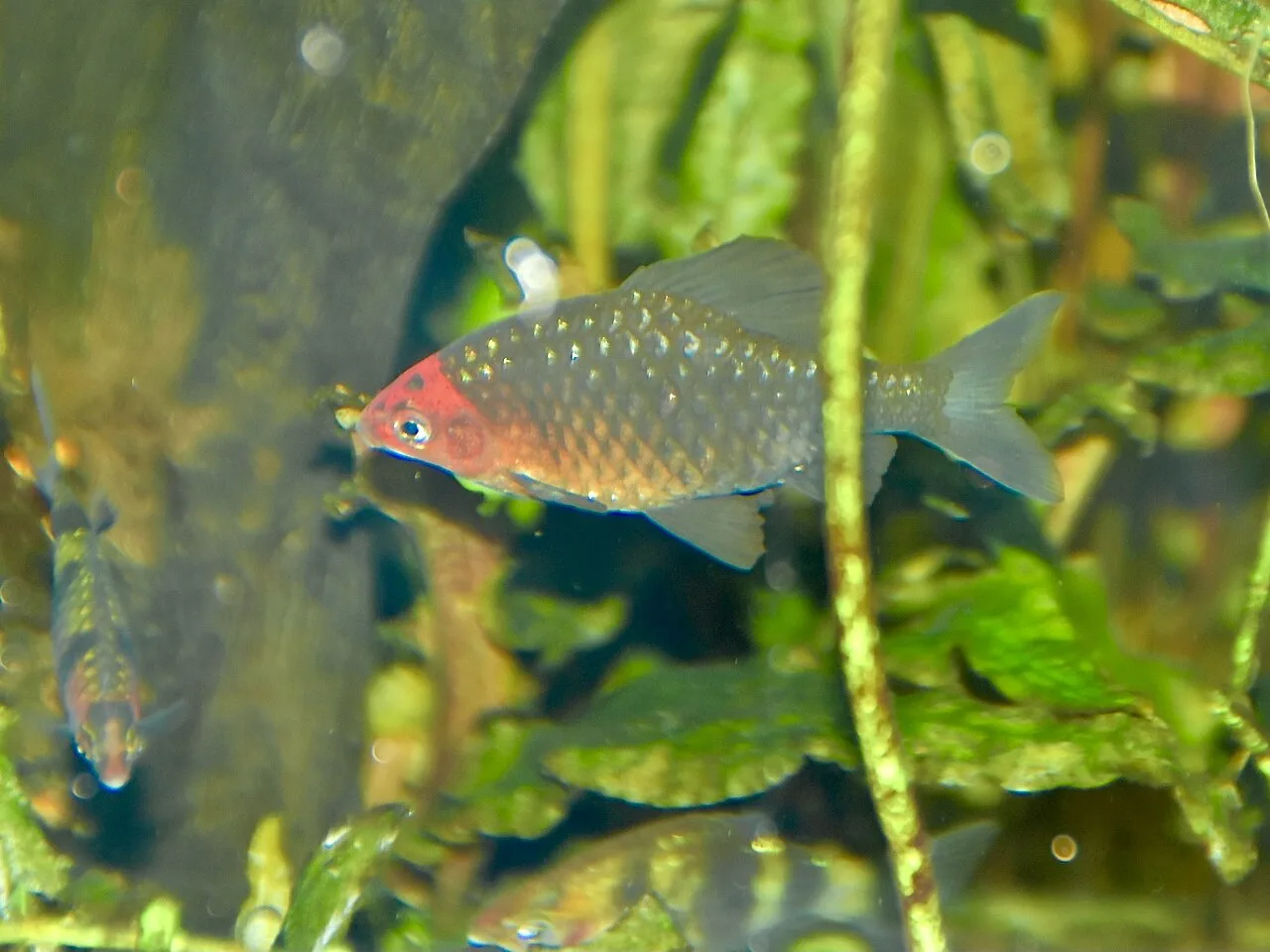
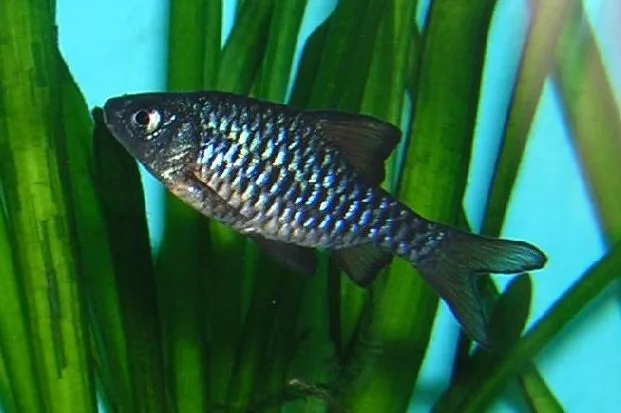
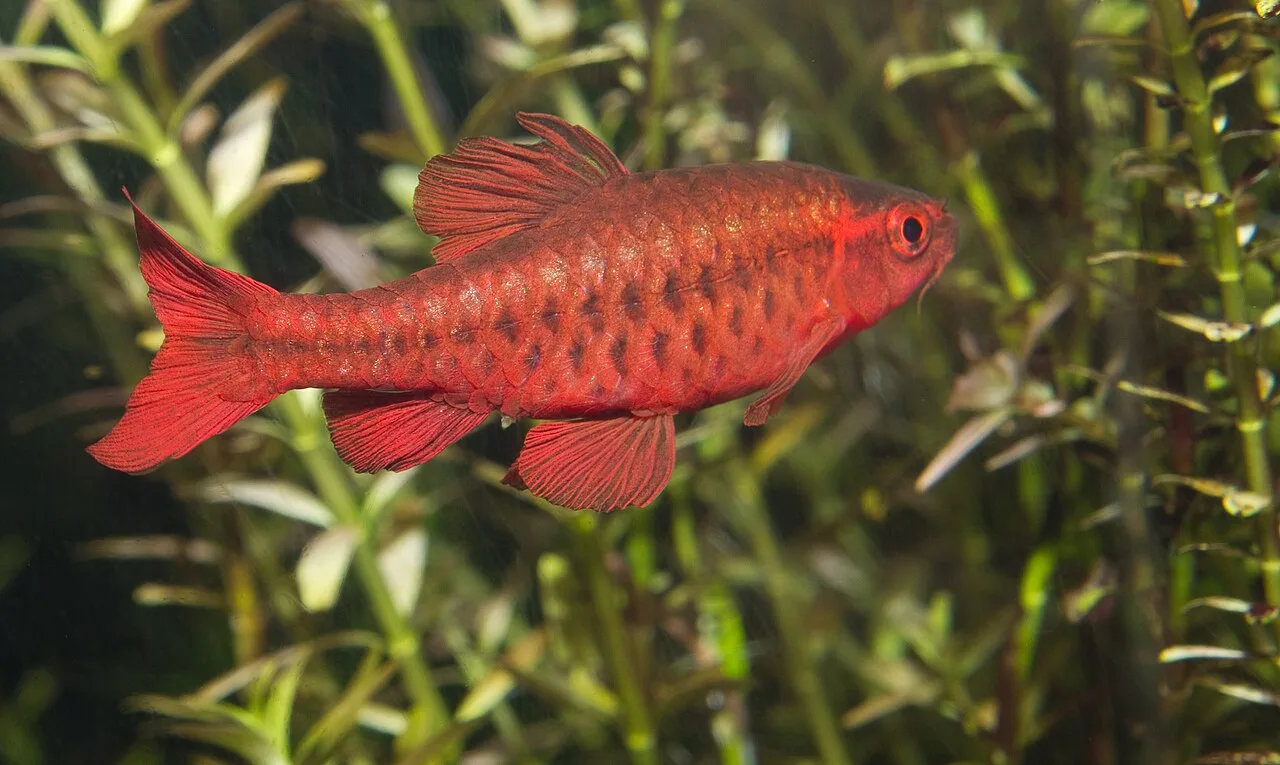
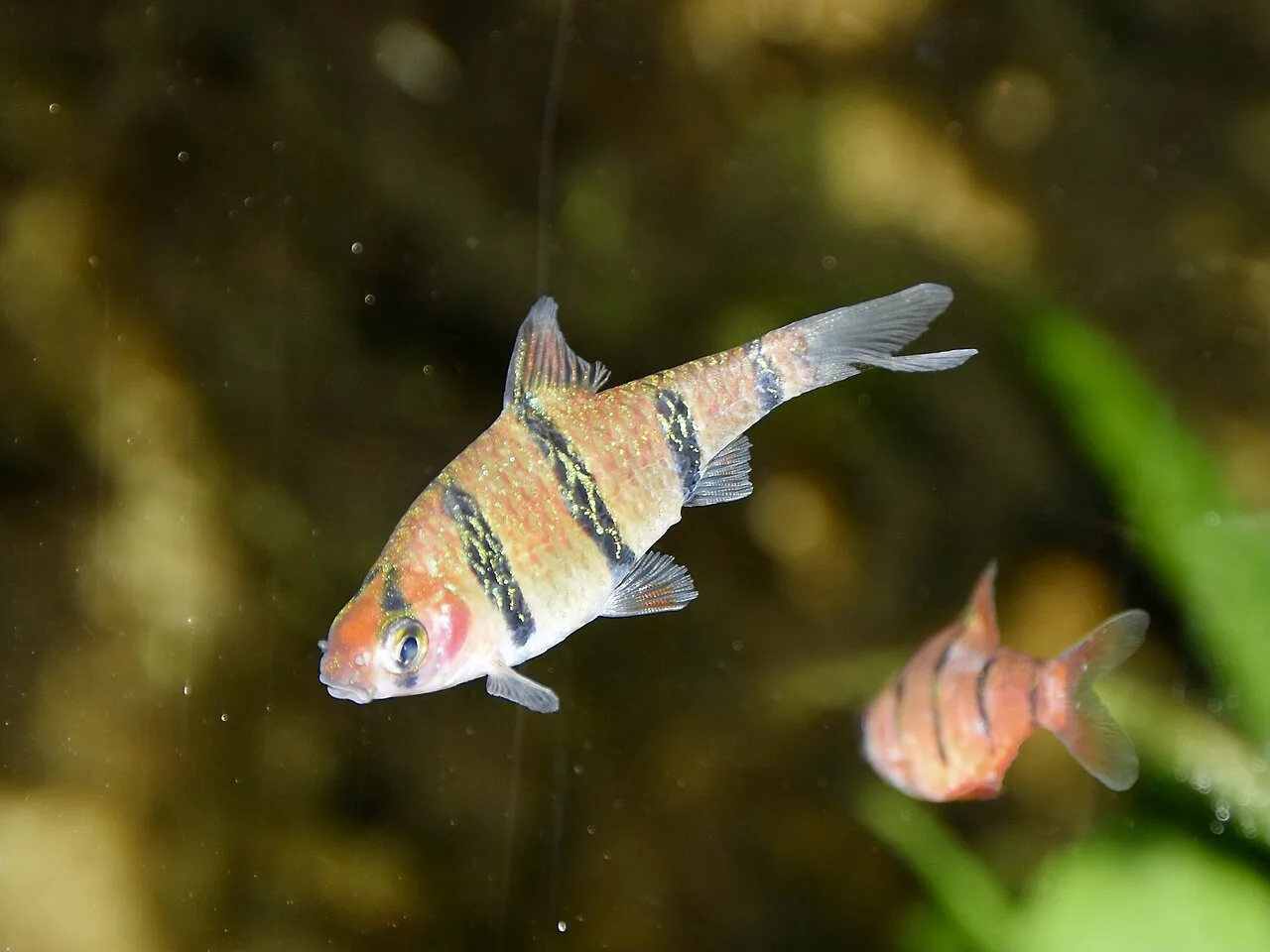
Similar water needs
Species with a similar temperature, a similar pH and a comparable adult size. Whether their behaviour fits as well is what the compatibility check is for.