
Zebra loach
Botia striata
20 views
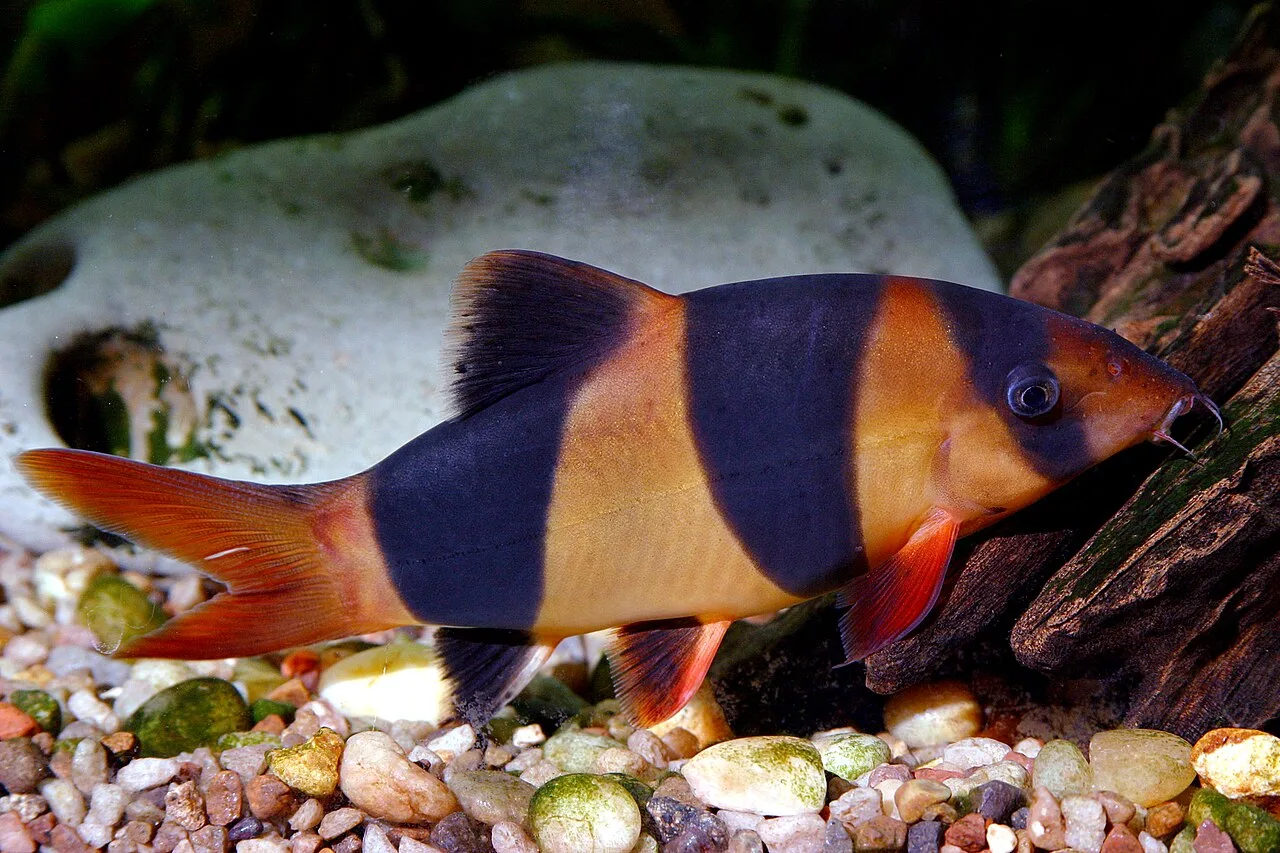
A loach from the Western Ghats, 6 to 8 cm. Not the clown loach Chromobotia macracanthus.
- Temperature
- 23 – 26 °C
- pH
- 6 – 8 pH
- General hardness
- 5 – 15 °dH
- Maximum size
- 8 cm
- Minimum group size
- 5
- Minimum tank size
- 75 L
2 min read · 297 words
Fresh water
Quick facts
Place in the aquarium
Highlighted are the water layer and the spots where the species usually stays in the tank.
- Near the bottom Mostly stays just above the bottom. Food has to reach the substrate.
- Rocks and caves Needs caves, crevices or rockwork as hiding place, territory or spawning site.
Shrimp in the tank
Dwarf shrimp at risk
- Not shrimp safe
- Dwarf shrimp at risk
- Shrimplets at risk
- Shrimp safe
- Adult dwarf shrimp
- At risk
- Shrimplets
- Get eaten
- Safe from shrimp size
- about 3 cm
The zebra loach is a risk for dwarf shrimp. It grows 6 to 8 cm long, is an omnivore and prefers to take food from the bottom. In the aquarium it eats water snails. Like other botiid loaches it searches crevices and substrate where shrimp hide. Juvenile and small adult dwarf shrimp are at risk. Larger shrimp from about 3 cm are usually safe.
The species lives in groups of five or more and is very active. Dwarf shrimp are better kept separately; Amano shrimp can fit with plenty of hiding places.
Home & range
Hatched countries are where the species occurs. It lives in particular waters there, not across the whole country. The points name known waters for orientation, not collection sites.
- Country of origin
- Water for orientation
Native
Overview
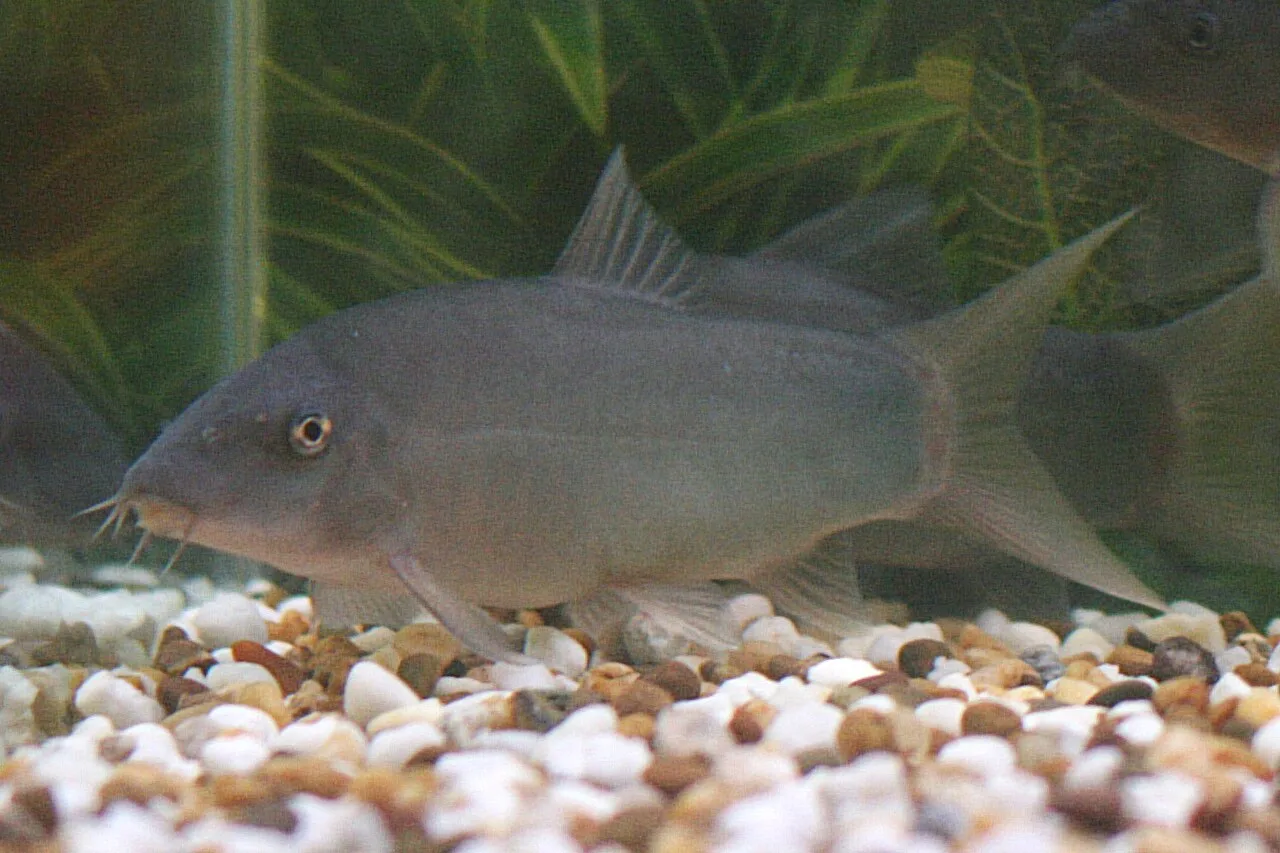
Deep, laterally compressed body, six short barbels, scaleless head. Narrow vertical stripes. The suborbital spine under the eye can be raised. Clicking sounds keep distance, without marking a territory.
Description
The Indian zoologist C. R. Narayan Rao described the species in 1920. It was based on five fish from Shimoga, held by the Natural History Museum in London under numbers 1919.11.19.8-12. Botia var. kolhapurensis, later set up by Kalawar and Kelkar, is regarded as an invalid description of the same species.
The fish reach 6 to 8 cm total length. Three pairs of short, thin barbels surround the underslung mouth. Head and cheeks are scaleless, and the body is covered with very many, very small scales. Fin formula: dorsal II/9–10, anal I/6–7, pectoral 13–14, ventral 8.
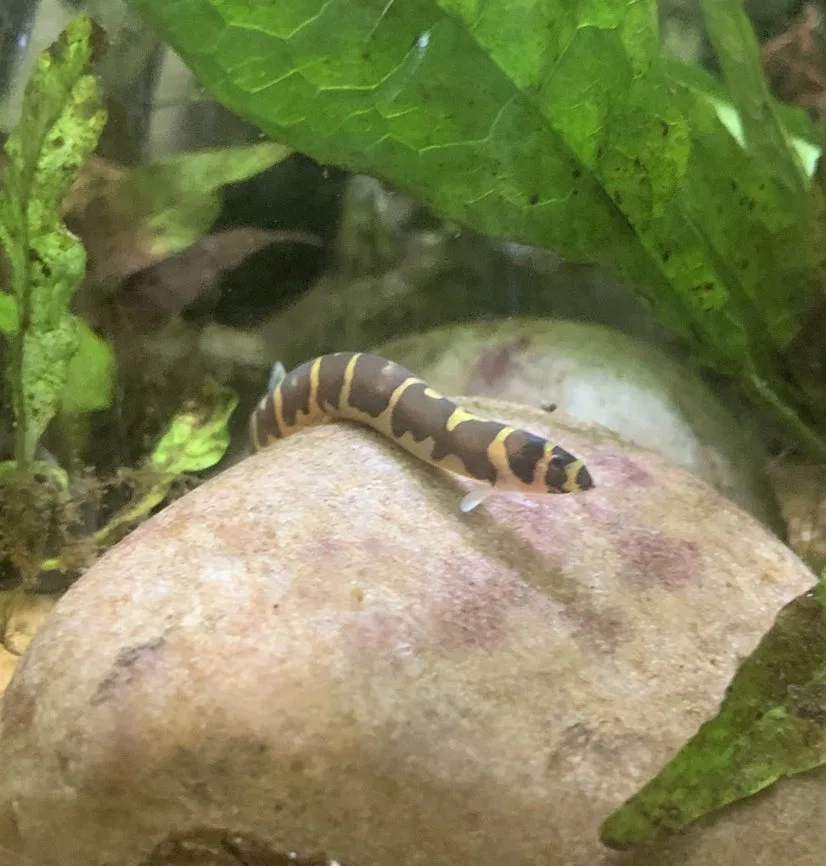
The narrow vertical stripes alternate between light and dark brown and green tones. In adults some stripes can look reddish. The cross bands on the head point towards the mouth. The fins carry longitudinal rows of dots. The erectile spine below the eye has two points.
Origin & habitat
This describes the origin, not how to furnish the aquarium.
Clear, fast hill streams, especially the Thunga, in Maharashtra and Karnataka. India stays coarse.
The species is a habitat specialist and prefers sandy or gravel bottoms. Its known range is under 400 km² and split into four separate areas. Since the assessment by N. Dahanukar in 2011 the IUCN lists it as endangered. It is threatened by siltation of the streams after deforestation and by water pollution.
Care
Juveniles are regularly sold as aquarium fish. Breeding in the aquarium has rarely succeeded so far.
Diet
Food is taken mainly from the bottom. What the species eats in the wild is hardly known. Observations in aquaria suggest that water snails are part of it.
Reproduction
The sounds do not replace a group minimum.
Little is known about reproduction in the wild. In the aquarium it rarely succeeds.
Gallery
More species in this group
Similar water needs
Species with a similar temperature, a similar pH and a comparable adult size. Whether their behaviour fits as well is what the compatibility check is for.




