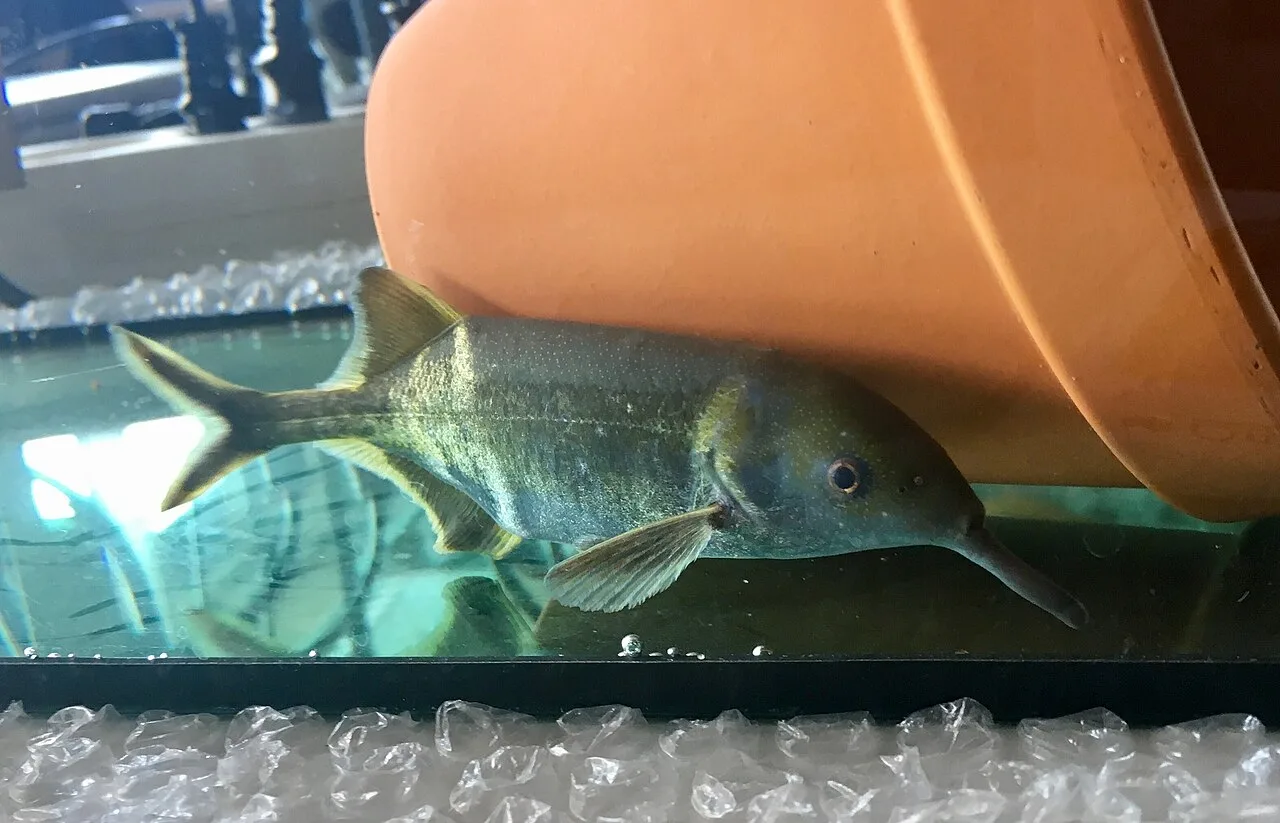
Blue botia
Yasuhikotakia modesta
2 views
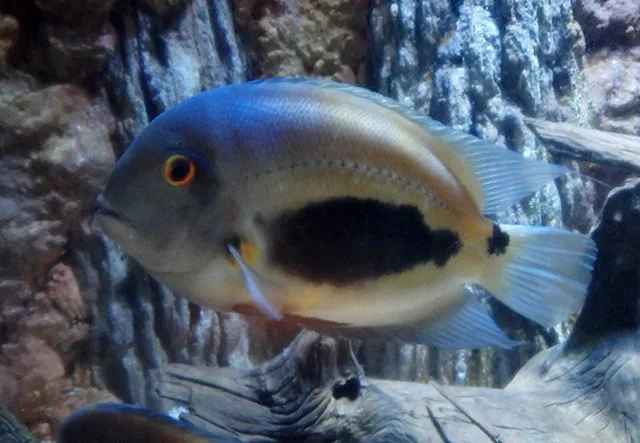
A blue-grey loach with red to orange fins from the Mekong region. It lives in groups and eats snails.
- Temperature
- 26 – 30 °C
- pH
- 6 – 7.5 pH
- General hardness
- 5 – 15 °dH
- Maximum size
- 25 cm
- Minimum group size
- 5
- Minimum tank size
- 300 L
1 min read · 164 words
Quick facts
Place in the aquarium
Highlighted are the water layer and the spots where the species usually stays in the tank.
- Near the bottom Mostly stays just above the bottom. Food has to reach the substrate.
- Rocks and caves Needs caves, crevices or rockwork as hiding place, territory or spawning site.
Shrimp in the tank
Not shrimp safe
- Not shrimp safe
- Dwarf shrimp at risk
- Shrimplets at risk
- Shrimp safe
- Adult dwarf shrimp
- At risk
- Shrimplets
- Get eaten
- Safe from shrimp size
- No size is safe
Shrimp are not safe with the blue botia. It grows large, searches the bottom and caves and eats snails, larvae and crustaceans. Shrimp of any size are found and eaten.
Since loaches search exactly where shrimp hide, even many hiding places do not help. Shrimp belong in a tank of their own.
Home & range
Hatched countries are where the species occurs. It lives in particular waters there, not across the whole country. The points name known waters for orientation, not collection sites.
- Country of origin
- Water for orientation
Native
Overview
Yasuhikotakia modesta reaches about 25 cm, though it usually stays smaller in the aquarium. The body is blue-grey to greenish, and the fins glow red, orange or yellow. Juveniles sometimes show faint bars. An erectile spine sits below the eye.
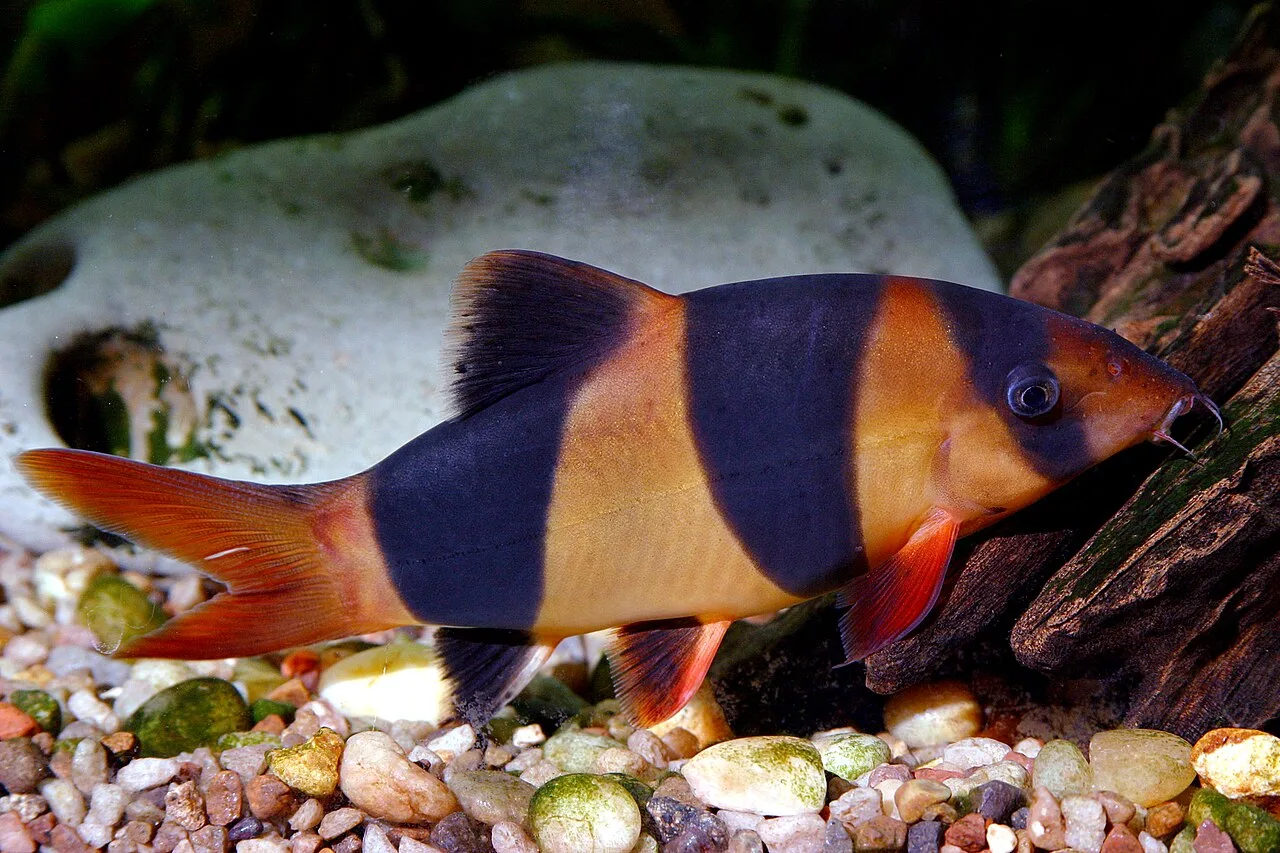
It is not the clown loach Chromobotia macracanthus with its three black bands. Both need a group and plenty of space.
Origin & habitat
This describes the origin, not how to furnish the aquarium.
Rivers in the Mekong region. The countries stay a coarse origin. Moving, warm water with stones and caves matches that.
Care
Group
26 to 30 °C, pH 6 to 7.5. A group from five, tanks from about 300 litres and 150 cm. Caves, stones, wood, a fine bottom, current.
Company
Sturdy fish of the same size. Calm, long-finned fish get harassed. Shrimp and snails are eaten.
Diet
Omnivore with a meaty share. Snails, mosquito larvae, sinking granules, tablets.
Behavior
A group with a rough pecking order. Single fish or groups that are too small turn shy or aggressive.
Reproduction
Practically no young in the aquarium. Keeping counts on fish that were bought.
Gallery
More species in this group
Similar water needs
Species with a similar temperature, a similar pH and a comparable adult size. Whether their behaviour fits as well is what the compatibility check is for.