
Burmese border loach
Botia kubotai
25 views
A loach from the Salween system, to 10 cm. Not the dwarf loach Ambastaia sidthimunki.
- Temperature
- 24 – 28 °C
- pH
- 6 – 7.5 pH
- General hardness
- 2 – 12 °dH
- Maximum size
- 10 cm
- Minimum group size
- 5
- Minimum tank size
- 100 L
3 min read · 360 words
Fresh water
Quick facts
Place in the aquarium
Highlighted are the water layer and the spots where the species usually stays in the tank.
- Near the bottom Mostly stays just above the bottom. Food has to reach the substrate.
- Rocks and caves Needs caves, crevices or rockwork as hiding place, territory or spawning site.
Shrimp in the tank
Not shrimp safe
- Not shrimp safe
- Dwarf shrimp at risk
- Shrimplets at risk
- Shrimp safe
- Adult dwarf shrimp
- At risk
- Shrimplets
- Get eaten
- Safe from shrimp size
- No size is safe
The Burmese border loach eats shrimp. It grows up to 10 cm, prefers animal food and explicitly eats dwarf shrimp, along with snails, mussels and small animals. As a snail specialist it roots through the substrate and finds hidden animals too. Adult dwarf shrimp are no safer than their young, and larger shrimp are also flushed out of crevices.
Even dense hiding places do not help, because the loaches search crevices and tubes deliberately. Shrimp do not belong in a tank with these loaches. Anyone who wants to keep both keeps them in separate tanks.
Home & range
Hatched countries are where the species occurs. It lives in particular waters there, not across the whole country. The points name known waters for orientation, not collection sites.
- Country of origin
- Water for orientation
Native
Overview
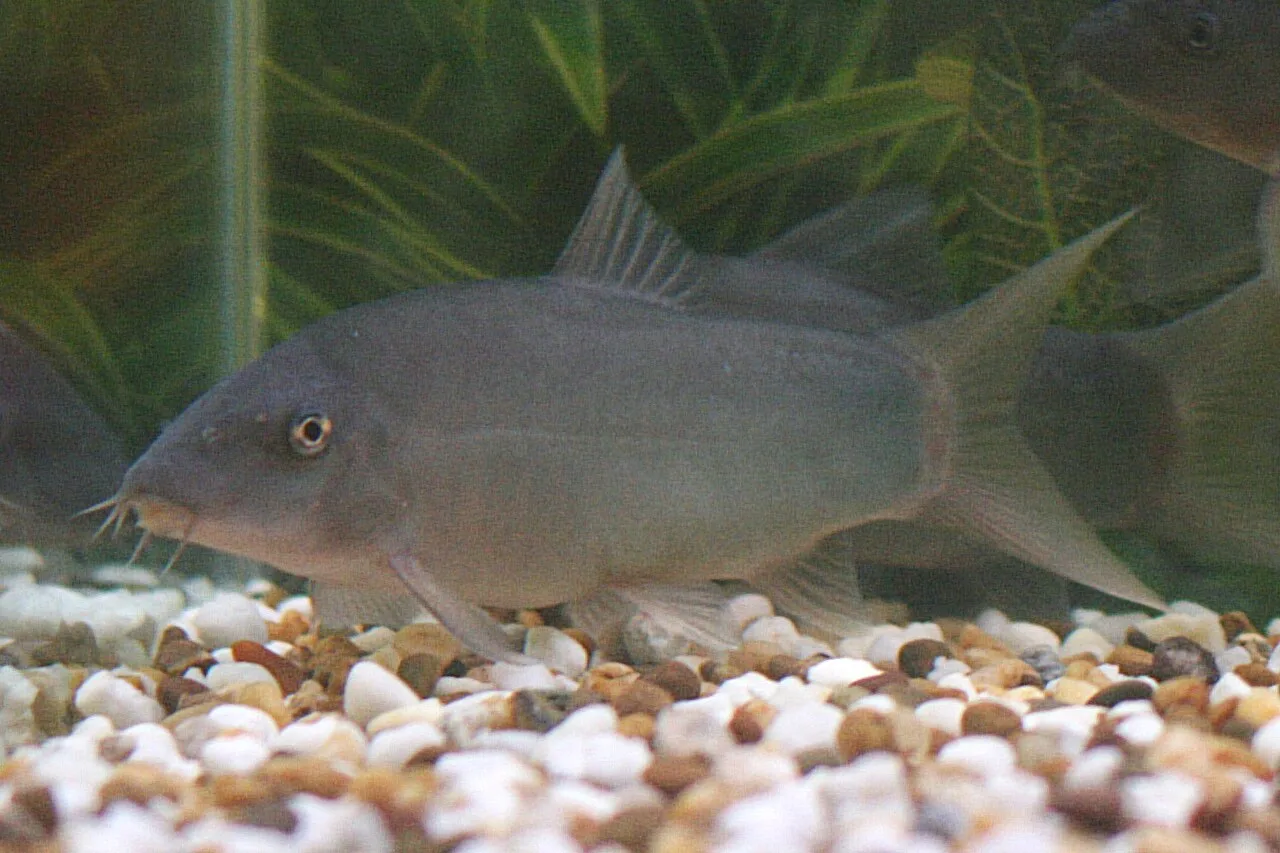
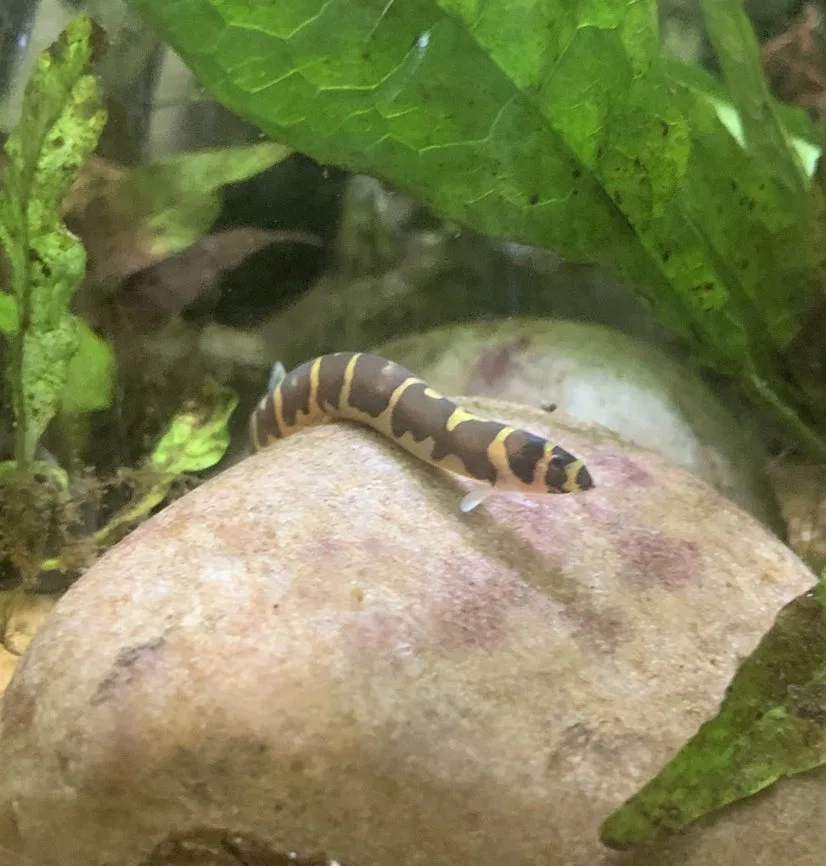
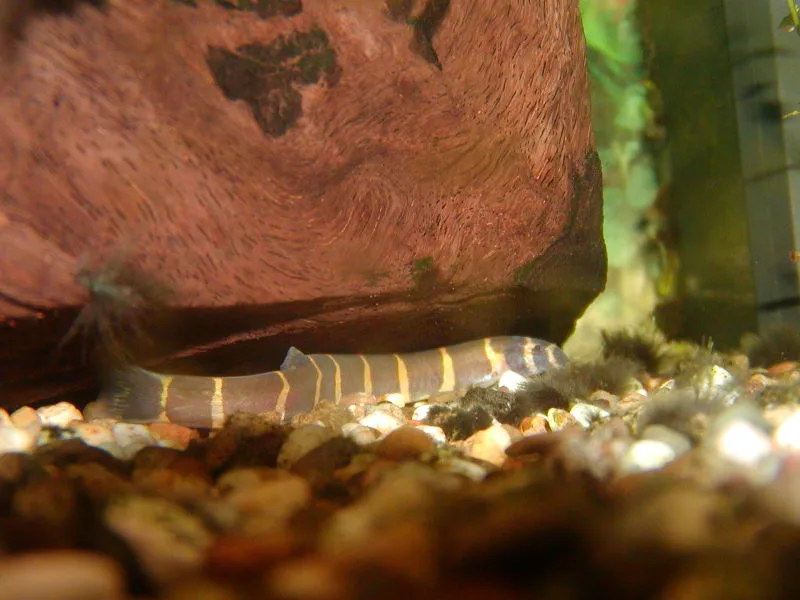
Gold, black and grey, checkerboard-like. At about 2.5 cm easy to confuse with Botia histrionica, from about 5 cm large yellow ovals. Inferior mouth, two barbels. The pattern changes with age and is not a second species.
Name and systematics
Maurice Kottelat described the species in 2004. It is named after Katsuma Kubota, managing director of the company Siam Pet Fish Trading in Thailand, which discovered the fish and sent it in for identification. In German it is also called Birma-Prachtschmerle, in English Burmese border loach. Because of its maximum length of 10 cm it is counted among the dwarf loaches.
Origin & habitat
This describes the origin, not how to furnish the aquarium.
Discovered in 2002 on the Thailand-Myanmar border, type locality in the Megathat Chaung, upper Ataran basin. Further finds in the Ataran and Suriya in Thung Yai Naresuan, Tak province. Thailand and Myanmar stay coarse.
The species lives in rivers, at waterfalls and in adjacent streams lined by forest edges. Groups search the sandy bottom for food. Whether these habitats are protected is uncertain.
Care
From 100 litres peaceful toward other fish, 24 to 28 °C, pH 6.0 to 7.5, dGH 2 to 12. Cover. Sensitive to poor water. Wild fish often carry parasites. Groups, in the wild about five or six.
Setup
The fish are territorial and need many hiding places of plants, stones and tubes. Because they react sensitively to poor water quality, frequent water changes, good aeration and strong filtration are part of keeping them.
Diet
Omnivore with a preference for animal food, including snails, mussels, shrimp, bloodworms, tubifex and other small animals. It digs the substrate.
The species is regarded as a snail specialist and can greatly reduce a snail population. Besides snails it eats freshwater mussels and dwarf shrimps.
Behavior
The fish are active, curious and strongly social. They live in groups but also defend small territories.
Threat
The IUCN lists the species as data deficient, because it was found and recognised as a separate species only recently. The main threats are its growing popularity in aquaria, high trade demand and heavy fishing in its habitat. In Myanmar fishing pressure has fallen because of the political situation. Thai populations may already have declined markedly.
Reproduction
Lively and social. IUCN: data deficient. The trade is named as a threat.
Gallery
More species in this group
Similar water needs
Species with a similar temperature, a similar pH and a comparable adult size. Whether their behaviour fits as well is what the compatibility check is for.




