Odessa barb
Pethia padamya
23 views
A small schooling fish from Myanmar, with a red flank band on the males. It stays fit for a community tank when the group is large enough and the males work out their rivalry inside the school.
- Temperature
- 20 – 26 °C
- pH
- 6.5 – 7.5 pH
- General hardness
- 5 – 19 °dH
- Maximum size
- 6 cm
- Minimum group size
- 8
- Minimum tank size
- 80 L
4 min read · 585 words
Fresh water
Quick facts
Place in the aquarium
Highlighted are the water layer and the spots where the species usually stays in the tank.
- Middle water Usually stays in the middle of the tank, between bottom and surface.
- Open swimming space Needs an open area without plants or decor to swim at length. Tank length matters more than height.
Shrimp in the tank
Dwarf shrimp at risk
- Not shrimp safe
- Dwarf shrimp at risk
- Shrimplets at risk
- Shrimp safe
- Adult dwarf shrimp
- At risk
- Shrimplets
- Get eaten
- Safe from shrimp size
- about 4 cm
The Odessa barb is a risk for dwarf shrimp. It grows to about 7 cm, is a voracious eater and takes almost any food, including bloodworms. In a school the fish search for food all the time, and a 2 cm Neocaridina fits into the mouth.
Larger shrimp such as Amano shrimp from about 4 cm are usually left alone. Baby shrimp hardly stand a chance in the same tank. Anyone who wants dwarf shrimp should keep them in a separate tank or provide very dense moss as cover.
Home & range
Hatched countries are where the species occurs. It lives in particular waters there, not across the whole country. The points name known waters for orientation, not collection sites.
- Country of origin
- Water for orientation
Native
Overview
Male Odessa barbs show a red longitudinal band and, when courting, a clearly stronger colour. Females stay more silvery and deeper-bodied. Length is about 5 to 6 cm. The species was long sold under other names and is not the rosy barb, even though both can look red.
In a school the males stand forward and show each other the flank. A single male among other species loses the colour and becomes shy or, the other way, fidgety toward long fins.
Pattern and name
The body is silvery grey to light olive, and dark scale edges form a net pattern. A blue spot sits on the upper edge of the gill cover, and two black spots lie on the flank, one at the shoulder and a smaller one above the end of the anal fin. The lateral line is short, and the upper jaw carries one pair of short barbels. The describers measured at most about 4.6 cm standard length. Hobby figures reach 7 cm.
Kullander and Britz described the species only in 2008, as Puntius padamya, although it had been kept since the 1970s. Fish with a known collecting site were missing. The epithet is the Burmese word for ruby. The IUCN lists the species as data deficient.
Origin & habitat
This describes the origin, not how to furnish the aquarium.
The species comes from Myanmar. The waters are shallow, planted and not extremely soft. A tighter locality geometry is not drawn here. The name Odessa refers to the history of the aquarium form, not to an origin in Ukraine.
Wild and captive-bred fish differ in colour depth. For keeping, the fish tolerate current and still need dense plants as a visual screen.
Care
School and tank
20 to 26 °C, pH 6.5 to 7.5. Groups from eight, tanks from about 80 litres and 80 cm long. More males than a single pair, so the courtship is spread. Planted margins, an open middle, and no glaring empty space without cover.
Company
Other calm barbs, rasboras, tetras and corydoras. Long fins of bettas and angelfish are a risk once the group is too small or feeding turns hectic. The Odessa barb nips less than an undersized tiger-barb group, but it is not an automatic tankmate for every show tank.
Diet
Omnivore. Flakes, granules, fine frozen food and a plant share. The fish feed in midwater and also take food from the bottom. Several small meals keep the colour better than one fattening feed of a single food.
Mosquito larvae as a permanent menu make the fish fast and fat without replacing the plant food they also take.
Behavior
A school with a small internal rank among the males. Short threats, spread fins, rarely serious injury when the number is right. Six fish in a short tank look different: one male is pushed aside and stands pale in a corner.
The species is active by day and does not stand hidden on the bottom. A tank without a swimming run does not show it.
Reproduction
Egg scatterer without brood care. Soft, slightly acidic water, spawning plants or a grate, and removing the parents, are the usual path if someone wants to breed on purpose. In a community tank the eggs are eaten. The young are tiny and need dust-fine food.
Mature fish are told by colour and depth, not by a fin formula that is certain for every individual.
The eggs are usually scattered over clumps of moss or other plants. The larvae usually hatch after about 24 hours and first need microscopically fine food. Depending on temperature, food and water quality, the young reach maturity after five to eight months.
Gallery
More species in this group
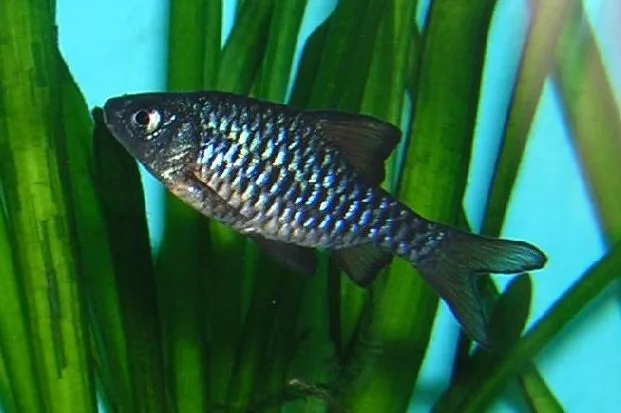
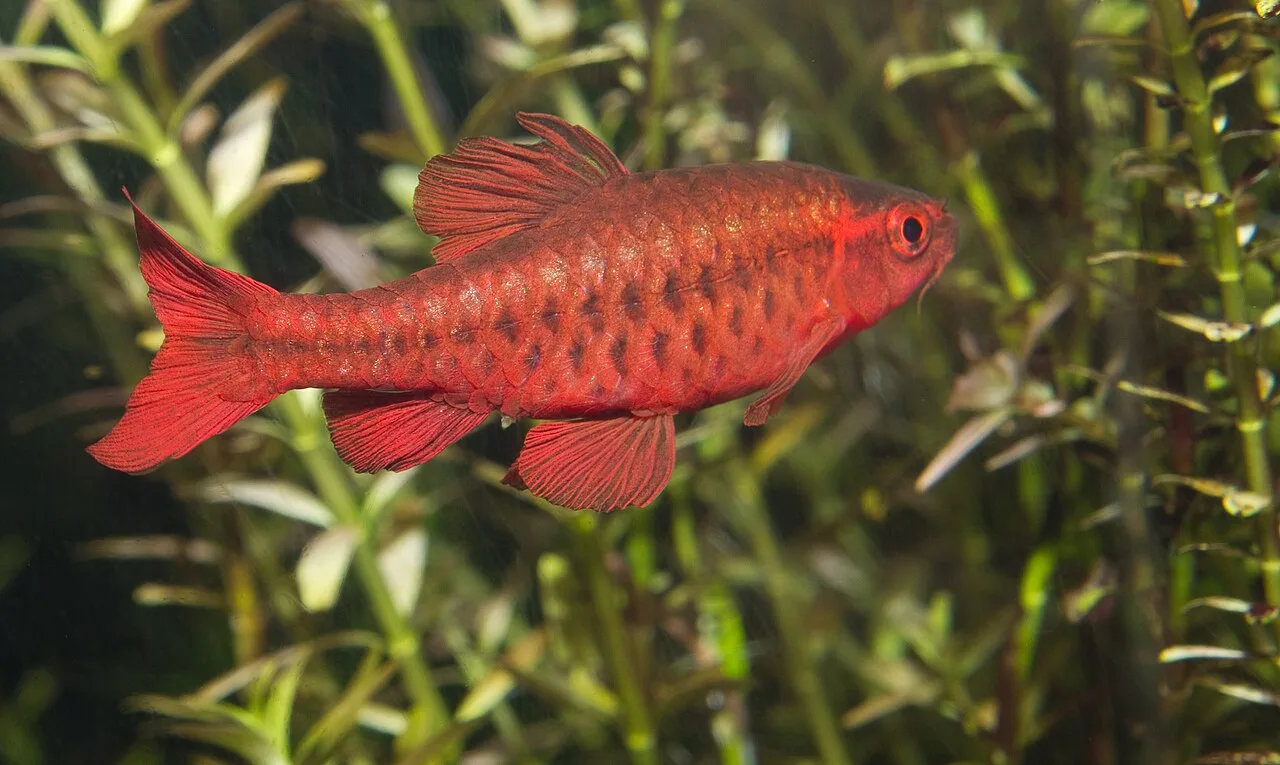
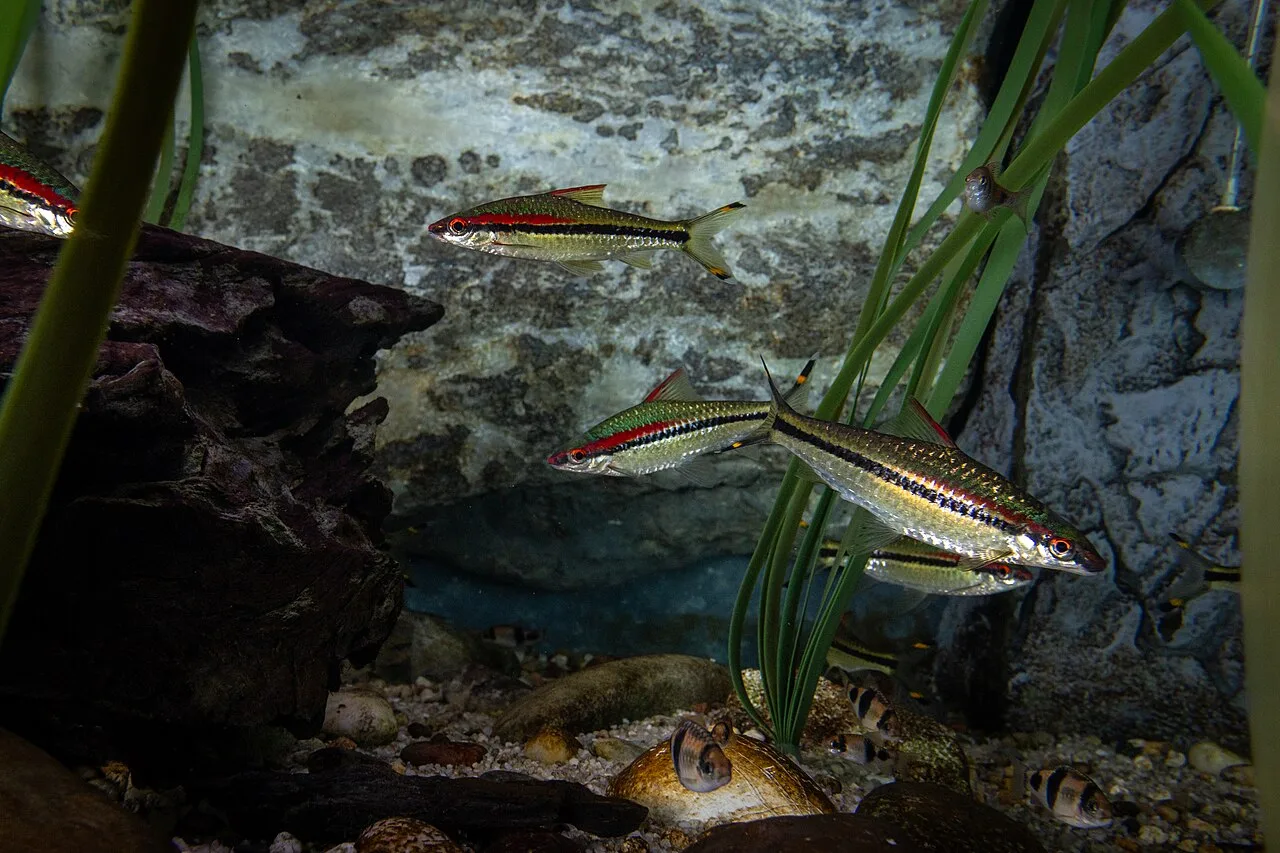
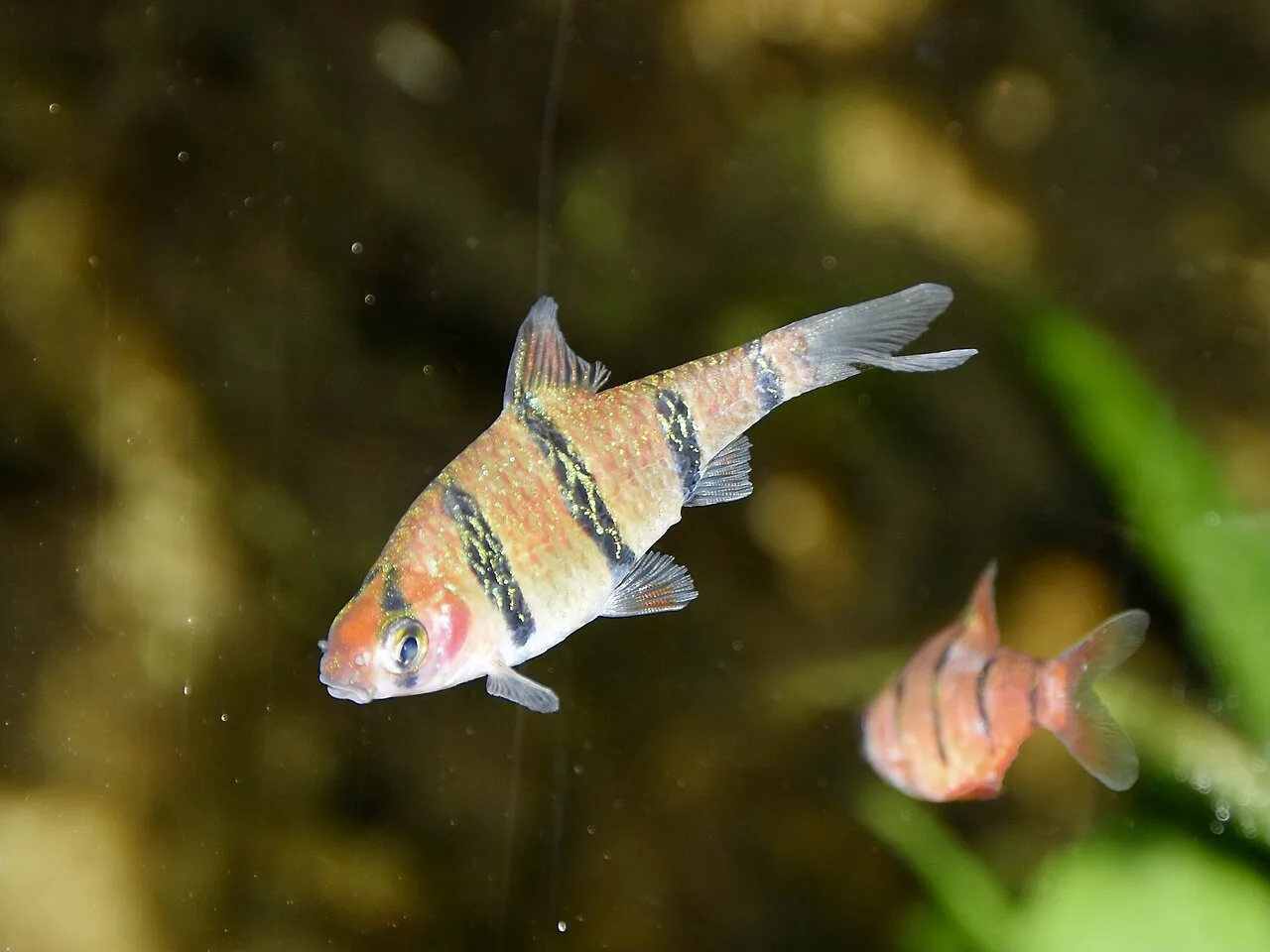
Similar water needs
Species with a similar temperature, a similar pH and a comparable adult size. Whether their behaviour fits as well is what the compatibility check is for.