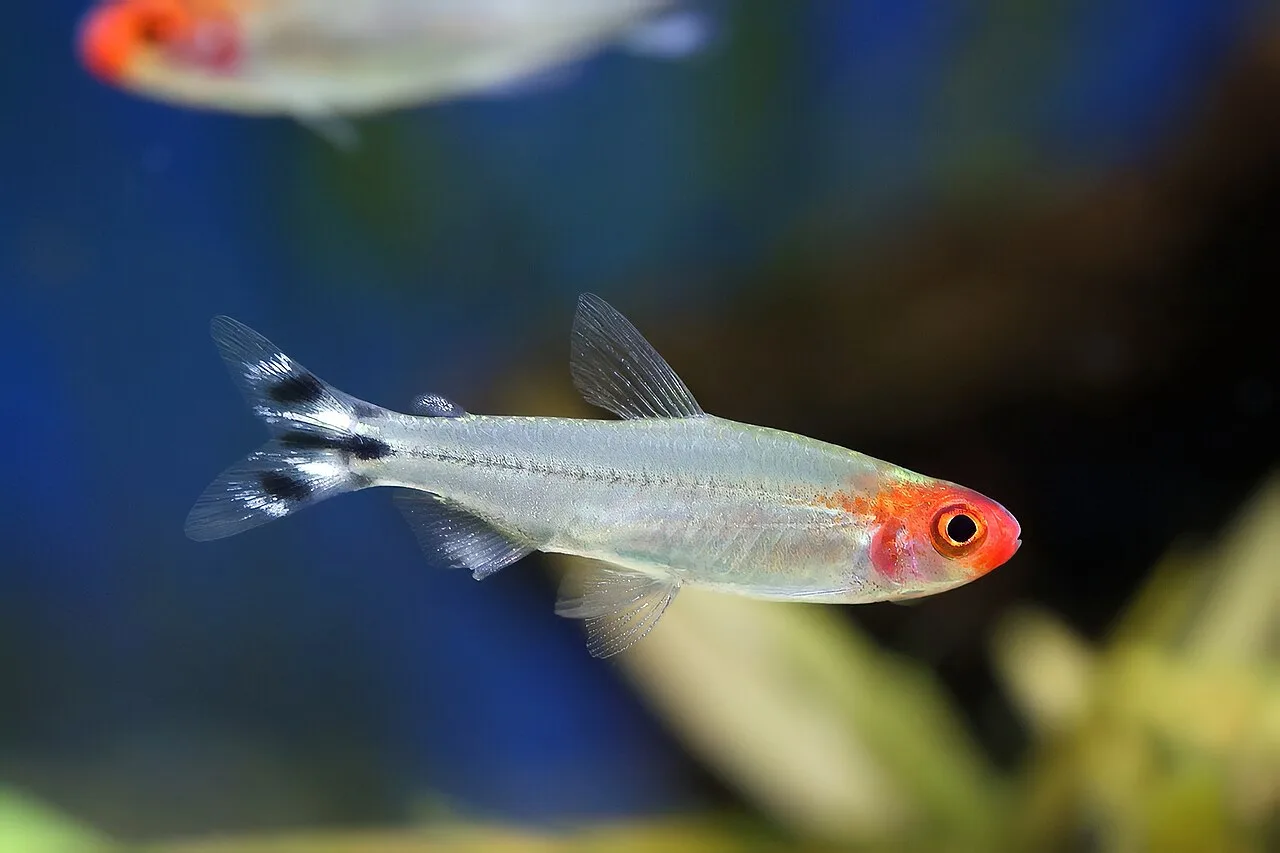
Phoenix rasbora
Boraras merah
17 views
A tiny schooling fish from Borneo, the males with a red body. It belongs in a quiet species tank or only with fish that are just as small.
- Temperature
- 24 – 28 °C
- pH
- 5 – 7 pH
- General hardness
- 2 – 10 °dH
- Maximum size
- 2 cm
- Minimum group size
- 10
- Minimum tank size
- 30 L
3 min read · 464 words
Fresh water
Quick facts
Place in the aquarium
Highlighted are the water layer and the spots where the species usually stays in the tank.
- Upper water Usually stays in the top third of the tank.
- Middle water Usually stays in the middle of the tank, between bottom and surface.
- Dense plants Looks for dense planting as cover, retreat or grazing ground.
Shrimp in the tank
Shrimplets at risk
- Not shrimp safe
- Dwarf shrimp at risk
- Shrimplets at risk
- Shrimp safe
- Adult dwarf shrimp
- Safe
- Shrimplets
- Get eaten
- Safe from shrimp size
- about 1 cm
Adult dwarf shrimp are safe from the phoenix rasbora. At only 15 to 20 mm and with a tiny mouth it cannot handle any shrimp from about 1 cm.
Newly hatched baby shrimp drifting in open water can serve as food, though. In tanks with moss, leaf litter and fine plants the losses stay small. Phoenix rasboras are therefore among the most pleasant companions for dwarf shrimp, especially in small, soft-water tanks. The more fine structure lies on the bottom, the more young grow up, and food given in the evening distracts the fish as well.
Home & range
Hatched countries are where the species occurs. It lives in particular waters there, not across the whole country. The points name known waters for orientation, not collection sites.
- Country of origin
- Water for orientation
Native
Overview
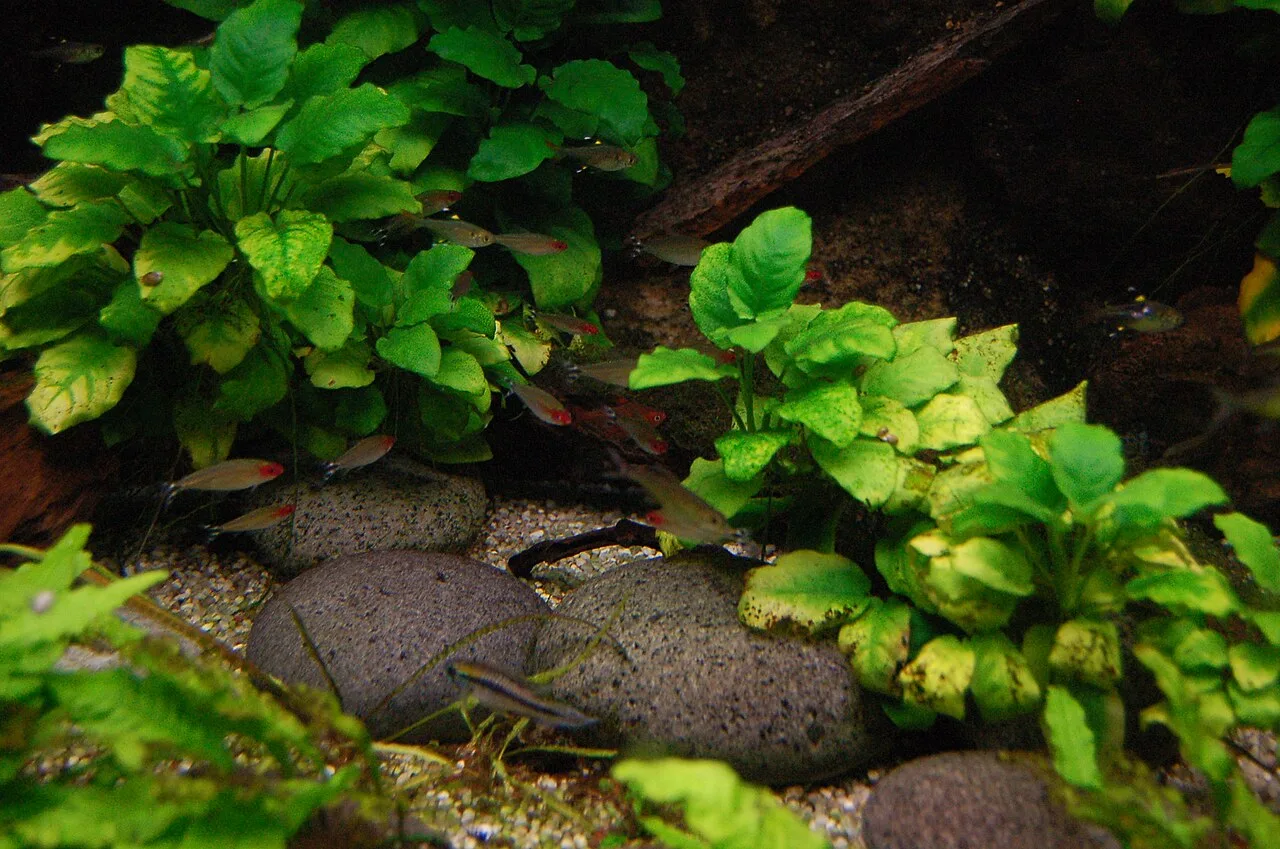
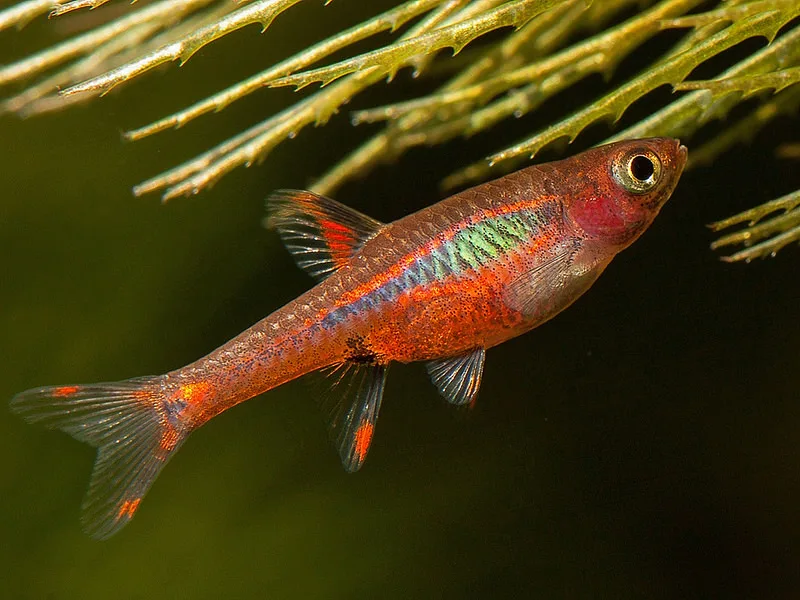
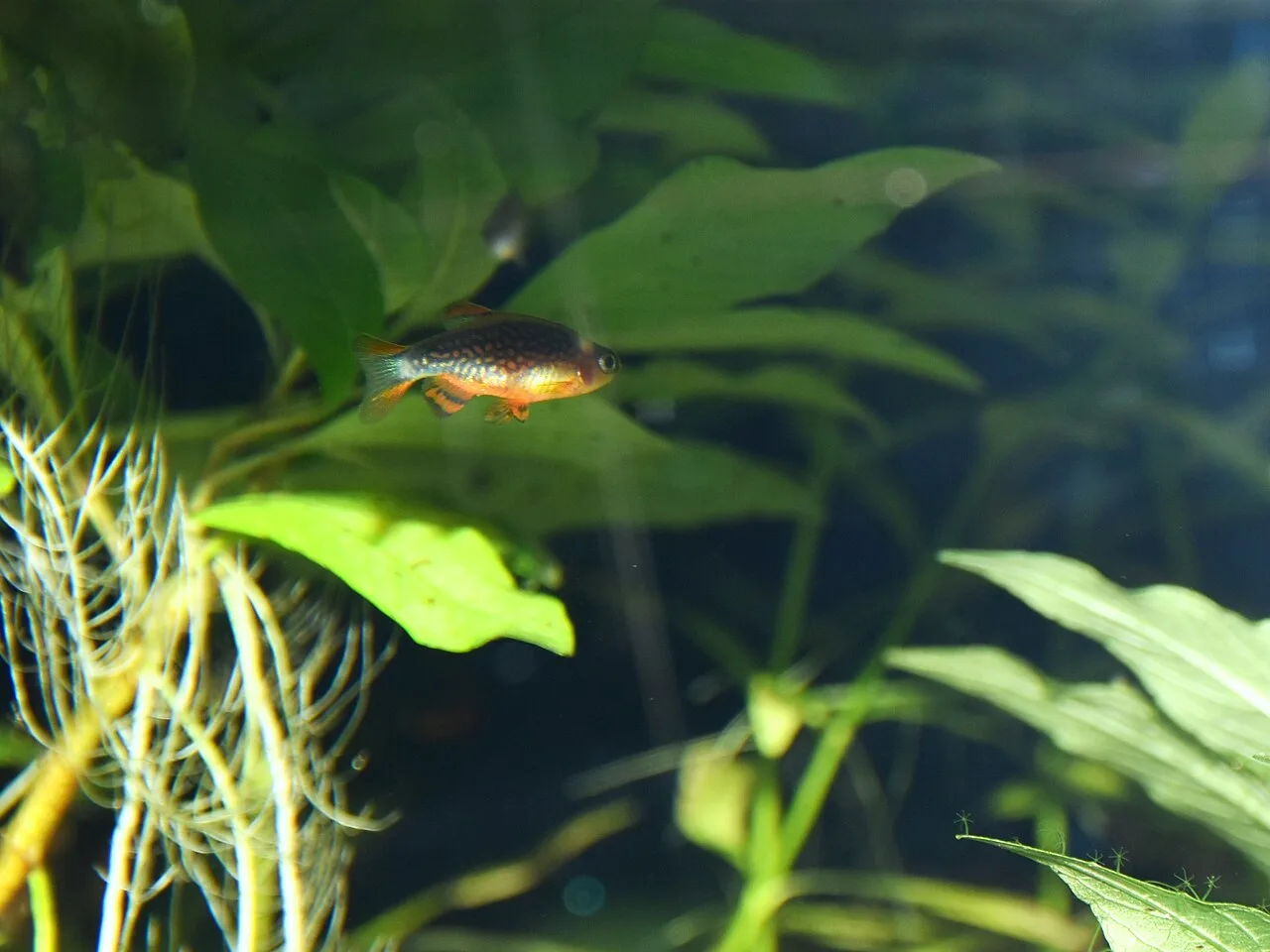
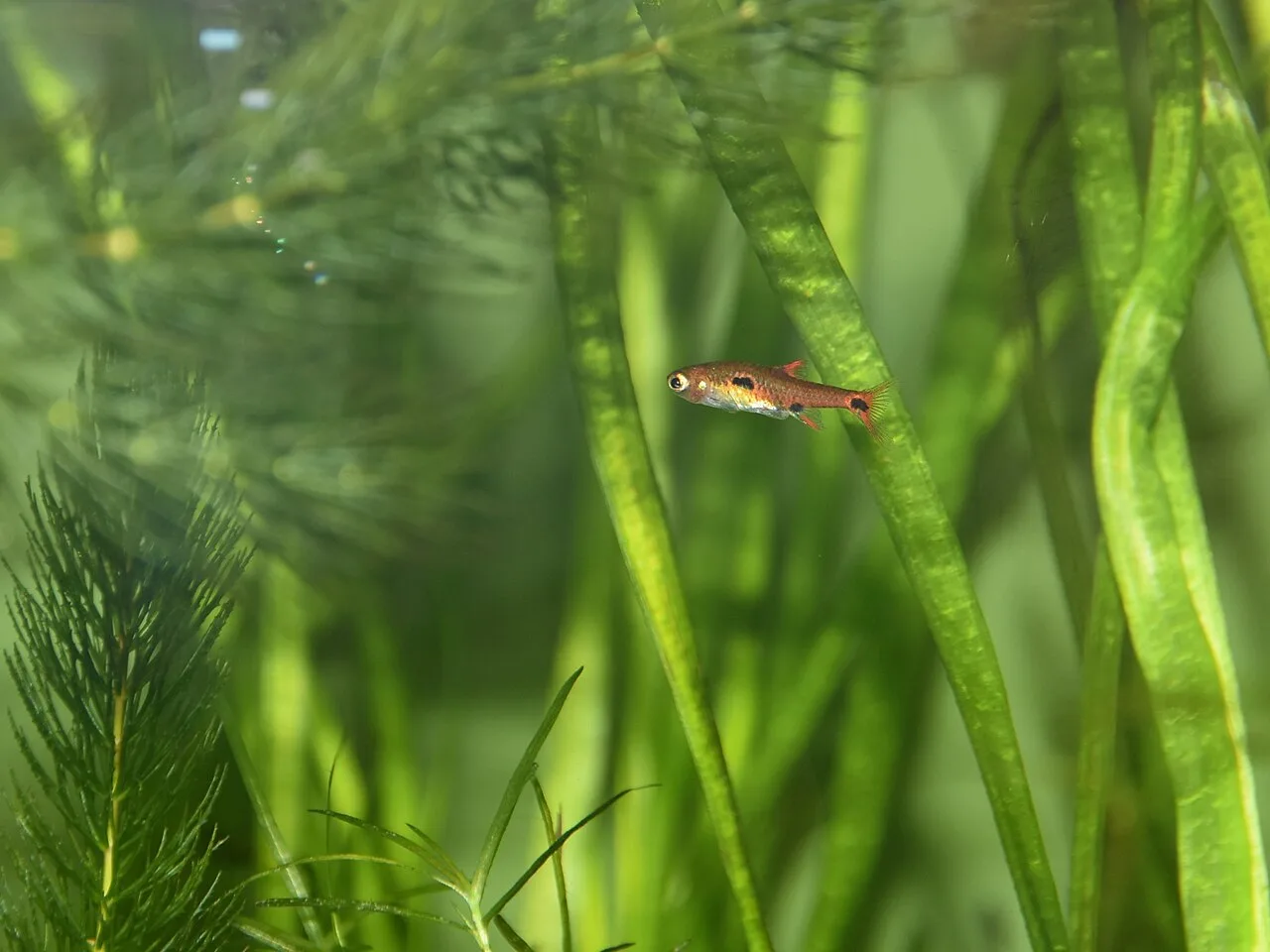
Boraras merah stays at about 2 cm. The males are strongly red with a dark spot in the middle of the body, the females paler and deeper. In a school the colour holds. On a single fish it goes out. The species is not the mosquito rasbora. Boraras brigittae has a different spot pattern and a different red pattern.
The mouth is tiny. A food that a neon tetra can still swallow is often already too coarse here. The fish then go hungry beside a full feeding ring.
Name and features
The phoenix rasbora grows to 15 to 20 mm. An oval spot with a light pink edge sits on the flank, and a more or less clear pink stripe runs from it to the tail. Adult females are rounder and often somewhat larger, and males are usually more strongly coloured. Maurice Kottelat described the species in 1991 as Rasbora merah. Boraras is an anagram of Rasbora and alludes to the reversed ratio of abdominal and caudal vertebrae. Merah is the Indonesian word for red.
The species belongs to the Danionidae.
Origin & habitat
This describes the origin, not how to furnish the aquarium.
Blackwater-near, plant-rich and often acidic small waters in Borneo. Soft water, dim light, leaf litter and moss. Borneo stays the coarse origin. A hard, bright community tank is the opposite of this bank.
The species lives in western and southern Borneo in peat-rich streams and rivers. The holotype comes from the Indonesian part of the island, from the Sungai Jelai Bila basin about 30 km south of the town of Sukamara. The IUCN lists it as data deficient.
Care
Tank
24 to 28 °C, pH 5 to 7, rather soft. From about 30 litres if the tank is mature, densely planted and without large tankmates. A school from ten. Floating plants, moss, a dark bottom. A cover, because the fish can jump. Almost no current.
Company
Only other very small, quiet fish, or better the species alone. Guppies, barbs and even lively danios are too much. Shrimp in a mature tank bother them little. Every larger fish treats them as food.
Diet
Dust-fine food. Brine-shrimp nauplii, microworms, cyclops, crushed flakes. Several tiny feeds a day. The food has to arrive in midwater and among the plants, not as one tablet on the bottom.
Behavior
A close, quiet school among the plants, not a ball in open water. When startled they disappear into the moss. Too few fish stand singly and lose the red colour.
Male courtship is a display in a small space. Serious injury is rare as long as the number is right and nobody hunts the group.
Reproduction
Egg scatterer in fine plants. The eggs are small, the parents eat them. Breeding needs a separate, very soft tank and rearing food that is even finer than that of the adults. In a community tank young are not to be expected.
Gallery
More species in this group
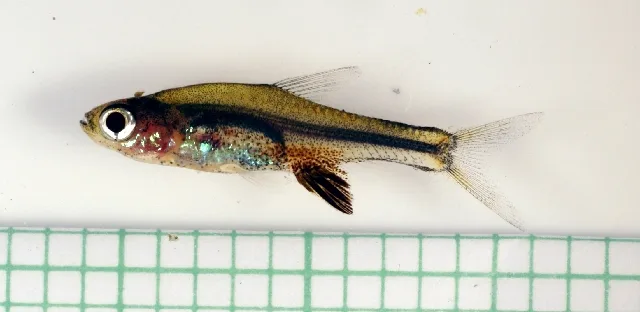
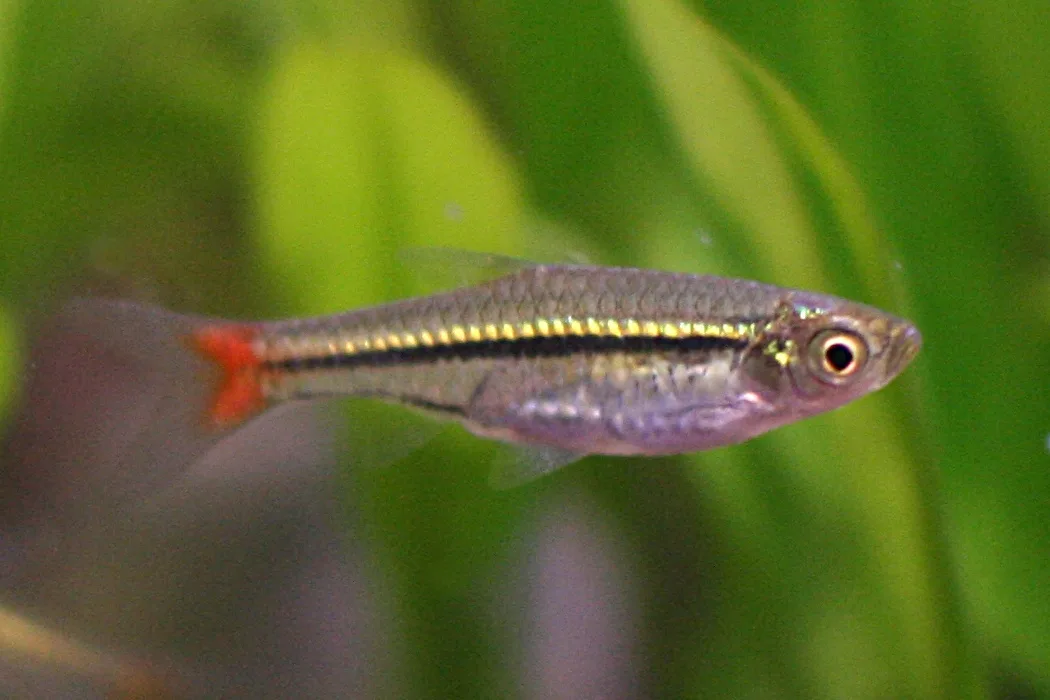

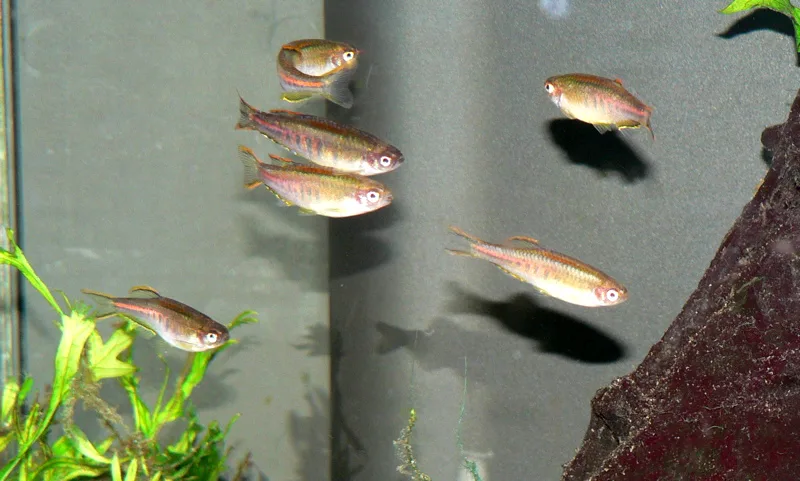
Similar water needs
Species with a similar temperature, a similar pH and a comparable adult size. Whether their behaviour fits as well is what the compatibility check is for.