Royal tetra
Inpaichthys kerri
18 views
A tetra to 4 cm. Schooling is not strongly developed in this species.
- Temperature
- 24 – 27 °C
- pH
- 5.5 – 7.5 pH
- General hardness
- 2 – 12 °dH
- Maximum size
- 4 cm
- Minimum group size
- 8
- Minimum tank size
- 60 L
2 min read · 303 words
Fresh water
Quick facts
Place in the aquarium
Highlighted are the water layer and the spots where the species usually stays in the tank.
- Middle water Usually stays in the middle of the tank, between bottom and surface.
- Open swimming space Needs an open area without plants or decor to swim at length. Tank length matters more than height.
Shrimp in the tank
Shrimplets at risk
- Not shrimp safe
- Dwarf shrimp at risk
- Shrimplets at risk
- Shrimp safe
- Adult dwarf shrimp
- Safe
- Shrimplets
- Get eaten
- Safe from shrimp size
- about 1.5 cm
Adult dwarf shrimp are safe from the royal tetra. It grows to only about 4 cm and eats anything that moves and fits its mouth, including the spawn of other species. Shrimp from about 1.5 cm no longer fit. Young shrimp, however, are eaten without fail. Males hold small territories but are not focused on the bottom. Anyone combining shrimp with royal tetras provides dense moss cushions and many hiding places so that some of the young survive.
Home & range
Hatched countries are where the species occurs. It lives in particular waters there, not across the whole country. The points name known waters for orientation, not collection sites.
- Country of origin
- Water for orientation
Native
Overview
Maximum 4 cm.
Name and sexes
The royal tetra belongs to the characin family Acestrorhamphidae and was long the only species in its genus. It is named after Warwick Estevam Kerr (1922–2018), a Brazilian agricultural engineer, geneticist and entomologist who directed the Amazon research institute INPA. Its field station at Núcleo Aripuanã in Mato Grosso lies near the collection site. In the trade the species is also called blue, purple or black emperor tetra and regal tetra. It should not be confused with the similar-looking and similarly named emperor tetra Nematobrycon palmeri.
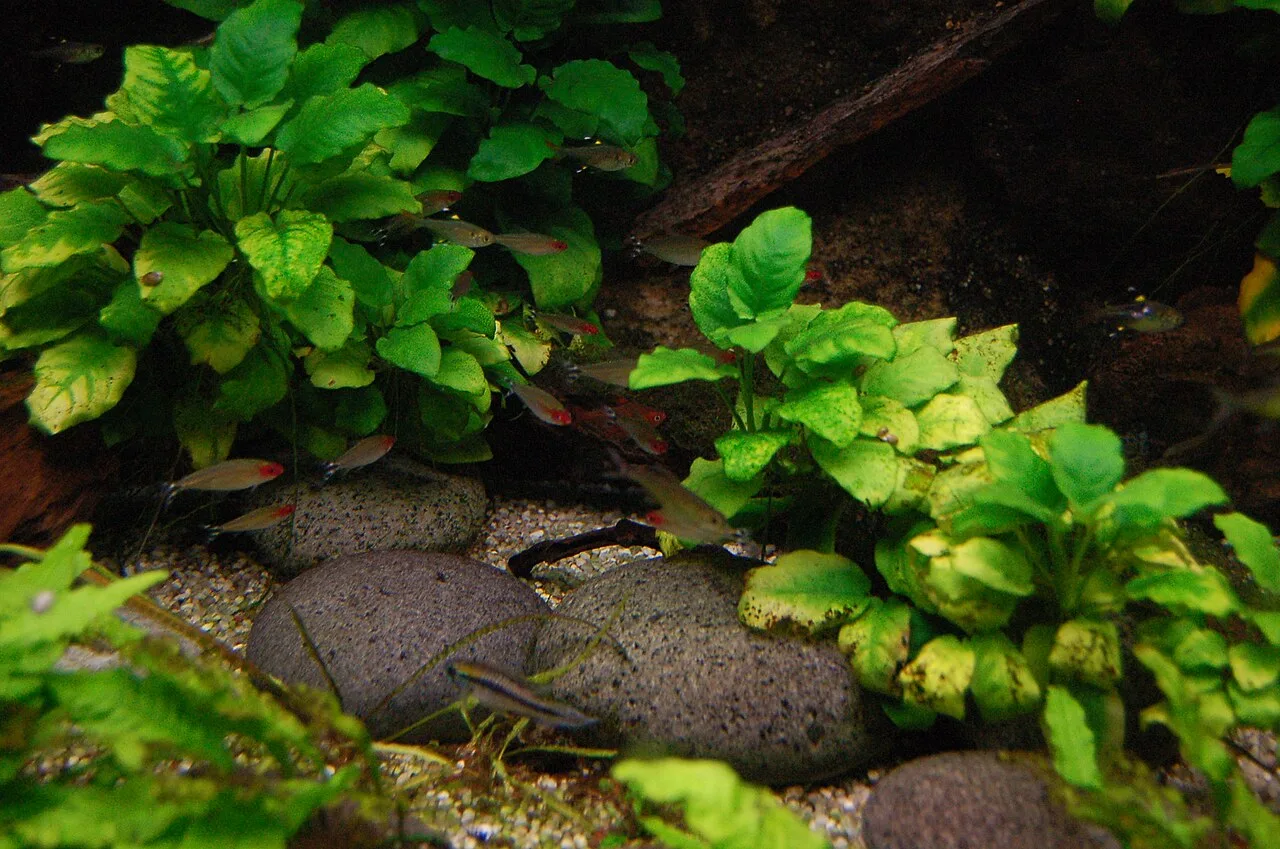
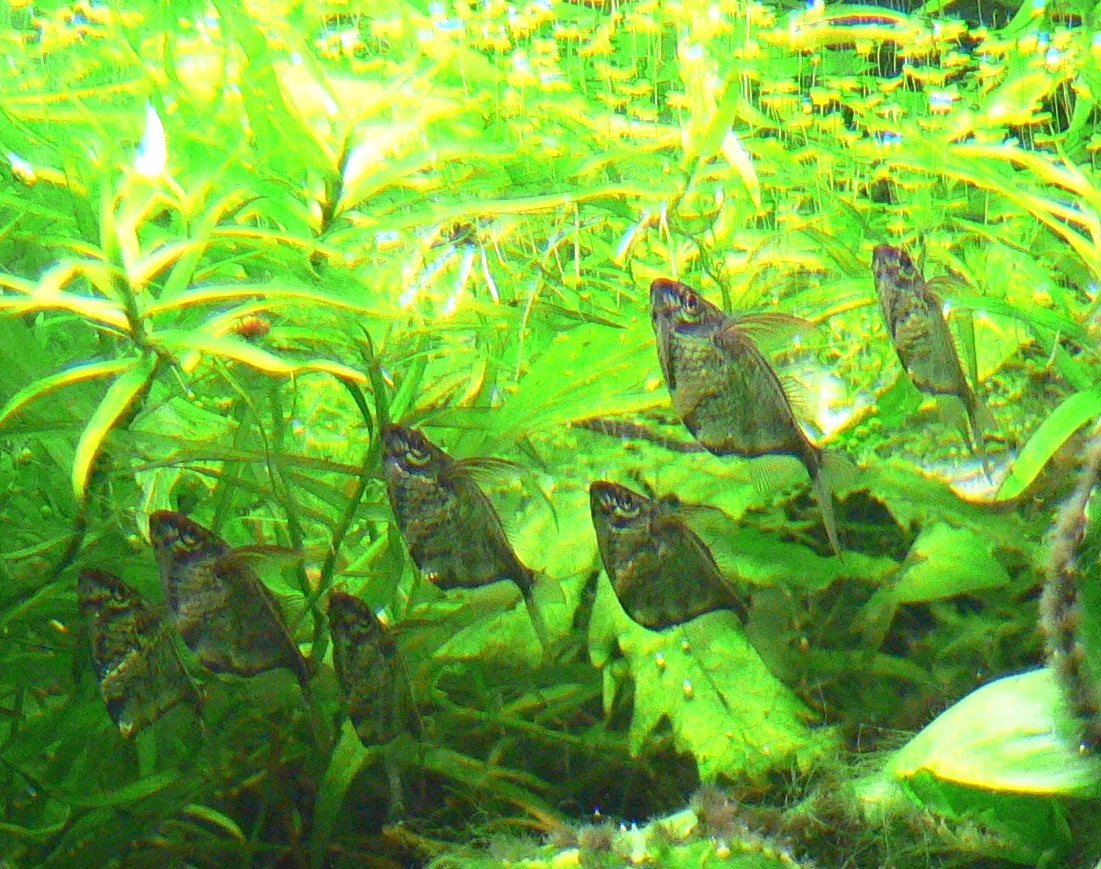
The sexes are easy to tell apart by the adipose fin: it is light blue in males and red in females. The silvery blue of the males develops best in soft water, where the fish feel most comfortable. Subdued light and a dark substrate show the colouring best.
Origin & habitat
This describes the origin, not how to furnish the aquarium.
Collection site
The species is endemic to Brazil and lives in tributaries of the Rio Aripuanã in northern Mato Grosso. It was discovered in sunny, flowing waters of the forested Queimados system, a tributary of the Aripuanã. The water there is very soft and slightly acidic, with pH 6.0 to 6.8. These are measurements in the habitat.
Care
The royal tetra needs similar-sized, not overly aggressive schooling fish as company. Under stress it easily falls ill in captivity.
Diet
It eats what moves and fits the mouth, including the eggs of other species.
In the wild the species feeds mainly on insects that fall onto the water surface.
Behavior
The male holds a small territory and spawns there with ripe females.
In the wild the species is regarded as active and bold. It has been found schooling together with an undescribed characin similar to Hyphessobrycon cachimbensis. It is usually much rarer than that species, at a ratio of about 1 to 200 or less, but quite abundant in some places.
Gallery
More species in this group






Similar water needs
Species with a similar temperature, a similar pH and a comparable adult size. Whether their behaviour fits as well is what the compatibility check is for.