Chocolate gourami
Sphaerichthys osphromenoides
23 views
A quiet labyrinth fish from acidic blackwater. It is not a beginner fish. It is not a cichlid mouthbrooder, but it does carry the eggs in the mouth.
- Temperature
- 26 – 30 °C
- pH
- 4 – 6.5 pH
- General hardness
- 0.5 – 5 °dH
- Maximum size
- 5 cm
- Minimum tank size
- 60 L
4 min read · 587 words
Fresh water
Quick facts
Place in the aquarium
Highlighted are the water layer and the spots where the species usually stays in the tank.
- Middle water Usually stays in the middle of the tank, between bottom and surface.
- Dense plants Looks for dense planting as cover, retreat or grazing ground.
Shrimp in the tank
Shrimplets at risk
- Not shrimp safe
- Dwarf shrimp at risk
- Shrimplets at risk
- Shrimp safe
- Adult dwarf shrimp
- Safe
- Shrimplets
- Get eaten
- Safe from shrimp size
- about 2 cm
Adult dwarf shrimp are usually safe with the chocolate gourami. It grows to 6 cm and eats mainly small insects and spiders that fall onto the surface. In aquaria it prefers live and frozen food. Shrimp from about 2 cm are rarely attacked.
Baby shrimp it finds are eaten, though. Moss and dense plants protect the young. Because the chocolate gourami needs very soft, acidic water, only shrimp that tolerate such water fit. The more fine structure lies on the bottom, the more young grow up, and food given in the evening distracts the fish as well.
Home & range
Overview
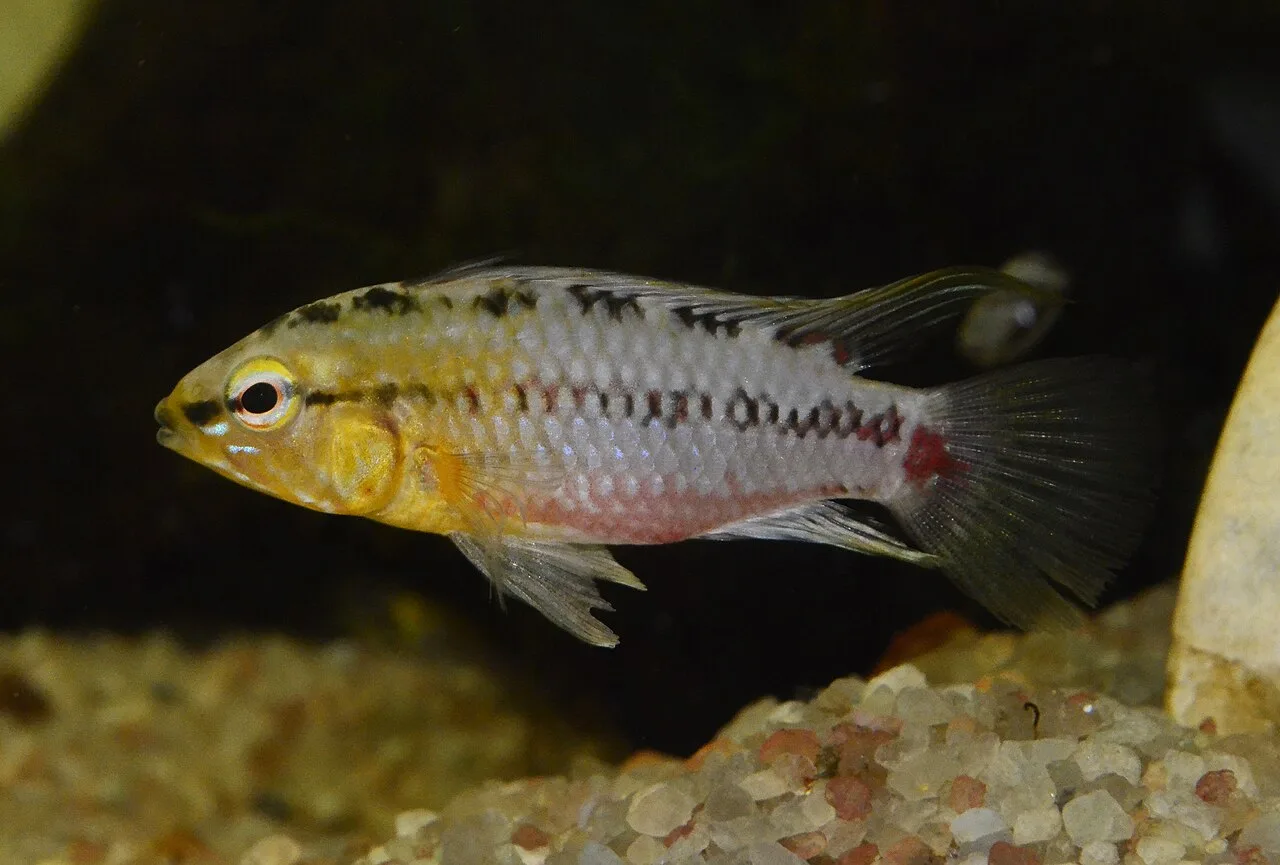
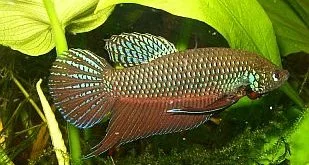
The chocolate gourami reaches about 5 cm. The body is chocolate brown with pale bars that are strong or almost gone depending on mood. The fins are round, not drawn out into long threads. Males have the more pointed dorsal. The species stands quietly among plants and looks pale and ill in a hard, bright tank, even before the water values actually kill it.
It takes air at the surface, but it is sensitive to cold draught and to dirty water. A mature, acidic, very clean tank is the keeping.
Features
The chocolate gourami grows to 6 cm. The body is short, deep and strongly compressed, and the head pointed. The colour is chocolate to reddish brown, sometimes with a green sheen. Juveniles carry a clear longitudinal band, adults several irregular pale yellow to whitish crossbands. The fins are brown with pale edges, and the second pelvic ray is greatly elongated. In females the dorsal fin is less pointed. Canestrini described the species in 1860. Sphaerichthys selatanensis was formerly treated as a subspecies and is now a separate, closely related species. The IUCN lists the chocolate gourami as data deficient.
Origin & habitat
This describes the origin, not how to furnish the aquarium.
Blackwater and peat swamps of the Malay Peninsula, Sumatra and Borneo. Soft, acidic, rich in humic substances, warm, little current. The origin stays coarse. Tap water without adaptation is the most common reason for losses.
The species lives in the southern Malay Peninsula, on Sumatra and Borneo and is tied to peat waters. It inhabits ditches and pools with very mineral-poor water stained coffee-brown by humic acids and keeps to the bank under protective vegetation. Aquatic plants are absent there. About 30 to 32 °C, pH 5.5 to 6.5, 0.5 to 5 °dH and 15 µS/cm were measured.
Care
Water
26 to 30 °C, pH 4 to 6.5, very soft. From about 60 litres for a small group, densely planted, with floating plants, leaf litter and almost no current. The surface stays reachable, the air above it warm. Not a newly set tank.
Company
Best the species alone, or with equally quiet, acid-loving small fish. Lively barbs and tetras stress them and take the food. Two males need visual barriers.
Keeping is regarded as difficult because of its water demands. Without optimal water the species becomes prone to bacterial infections and skin parasites. Recommended are 25 to 27 °C, soft, acidic water, gentle filtration, dense planting and a species tank. It reached Germany in 1905.
Diet
Fine frozen and live food. Brine shrimp, cyclops, mosquito larvae. Dry food is often refused. Feed slowly, in front of the plants, not as one large flake that other fish snatch. Several small feeds.
In the wild it eats mainly small insects and spiders that fall onto the surface. In aquaria it is fussy and prefers live, frozen or freeze-dried food to flakes.
Behavior
Quiet, shy, territorial over a short distance when courting. Pale bars that fade can be mood. Apathy, fish hanging at the surface and refusal of food are illness or the wrong water. The species does not stand in the current and not in the glaring middle.
Reproduction
Mouthbrooder, usually the female. The eggs are taken up and carried until the young swim free. Disturbance and moving make it swallow the clutch. The young are tiny and need infusoria. In a community tank young are not to be expected.
The chocolate gourami builds no bubble nest. The female takes the roughly 80 yellowish eggs into her mouth. Among the other mouthbrooding labyrinth fish mostly the males brood, and only in S. selatanensis the female as well. After eight to twelve days the young leave the mouth.
Gallery
More species in this group
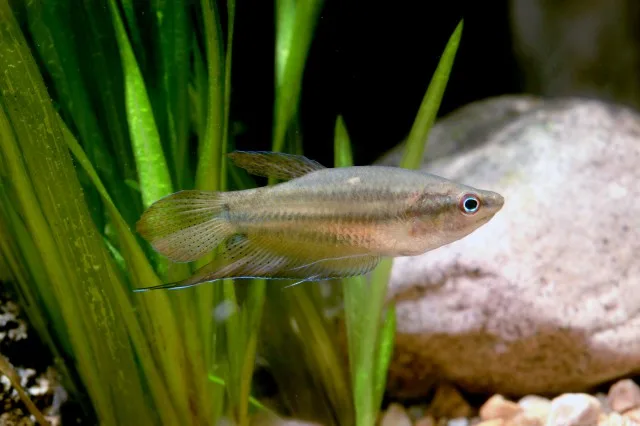
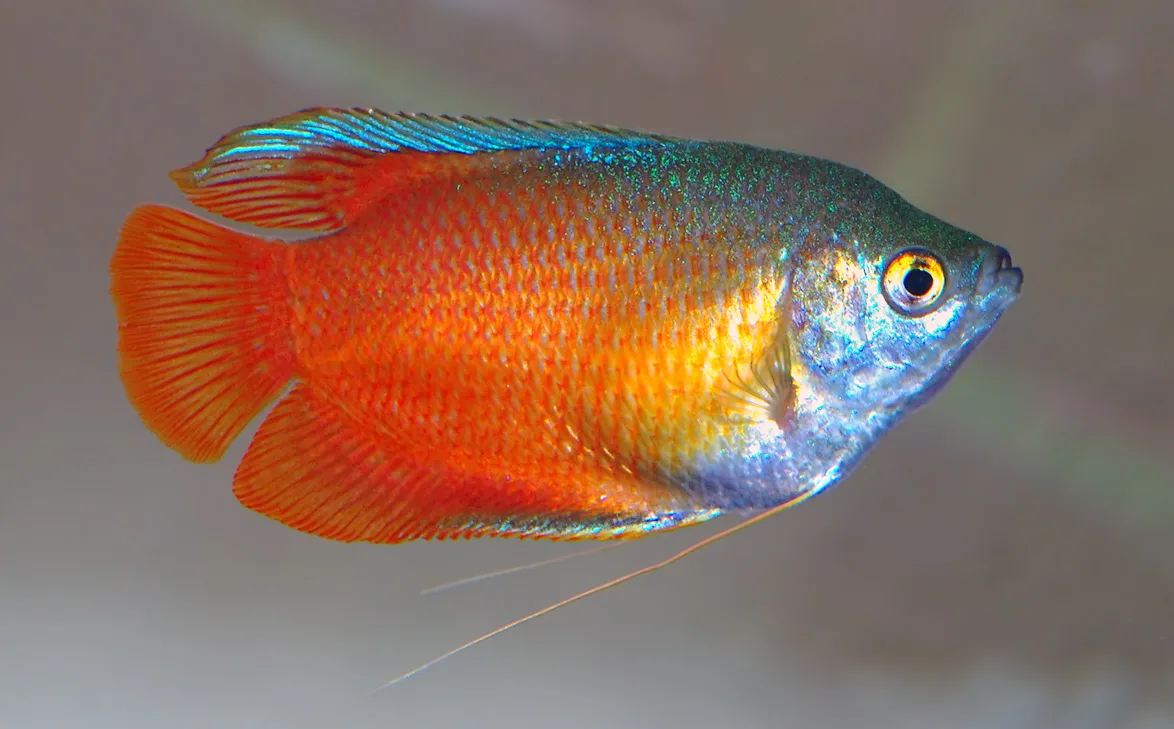

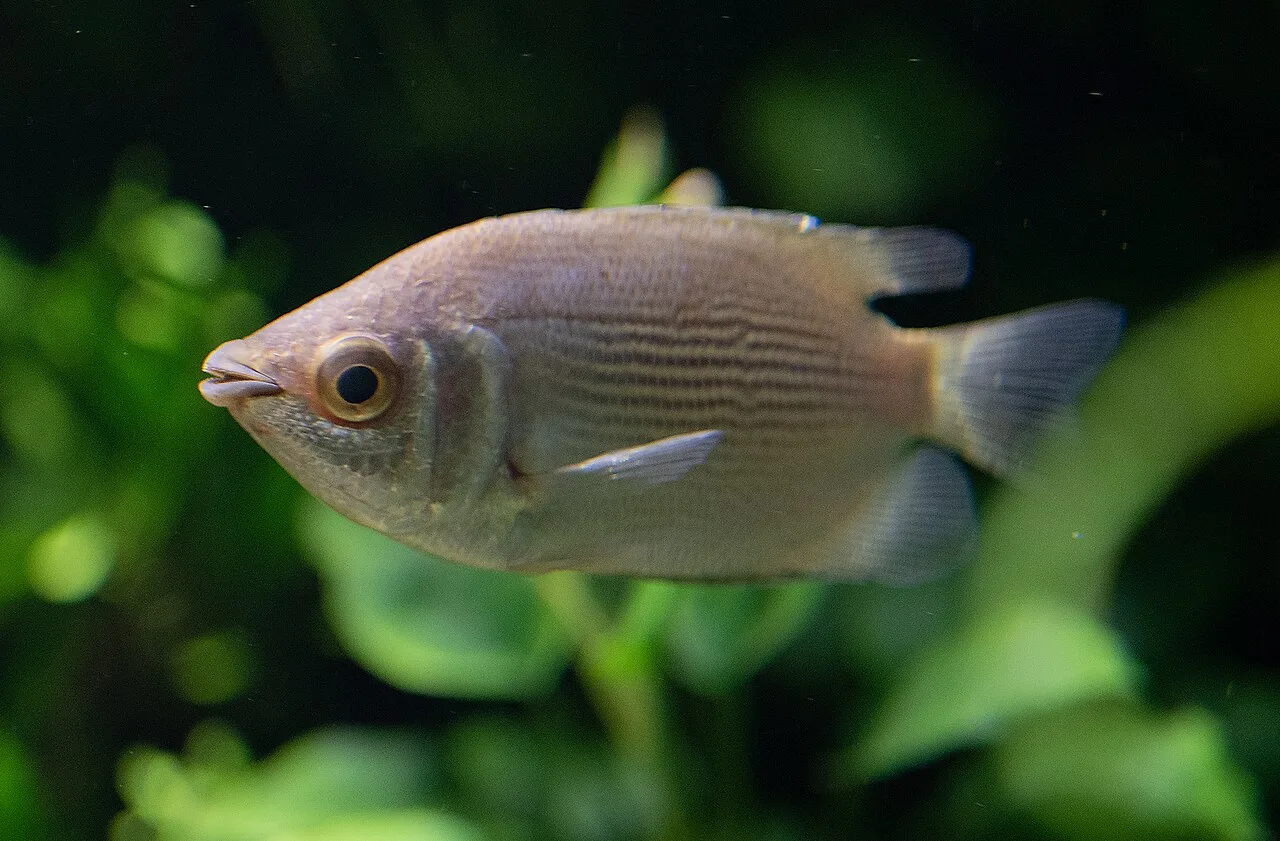
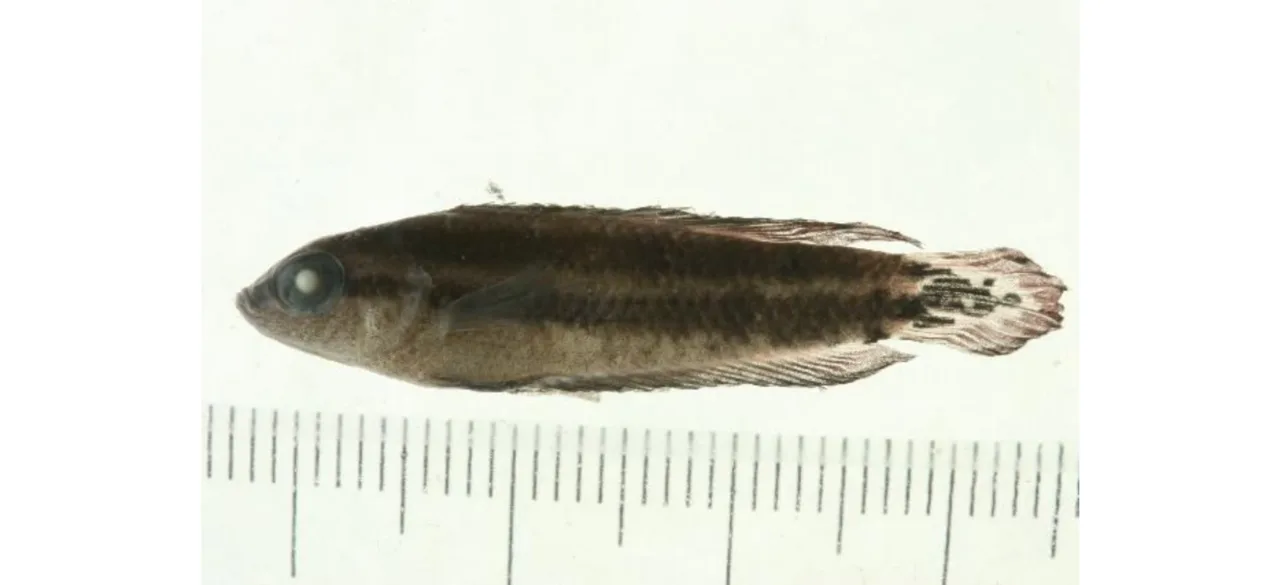
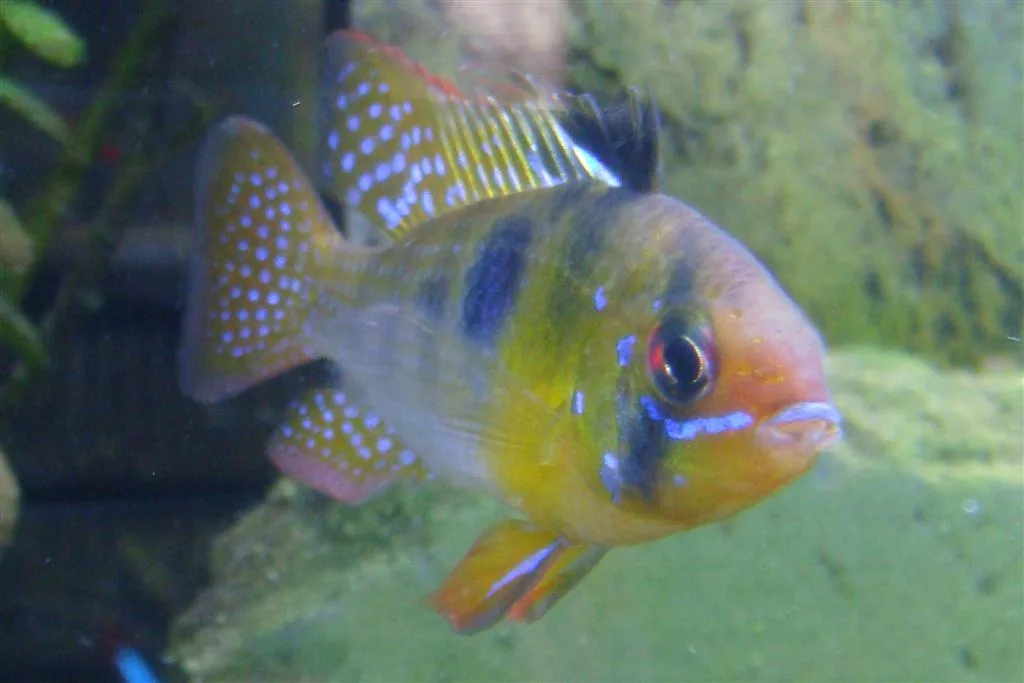
Similar water needs
Species with a similar temperature, a similar pH and a comparable adult size. Whether their behaviour fits as well is what the compatibility check is for.