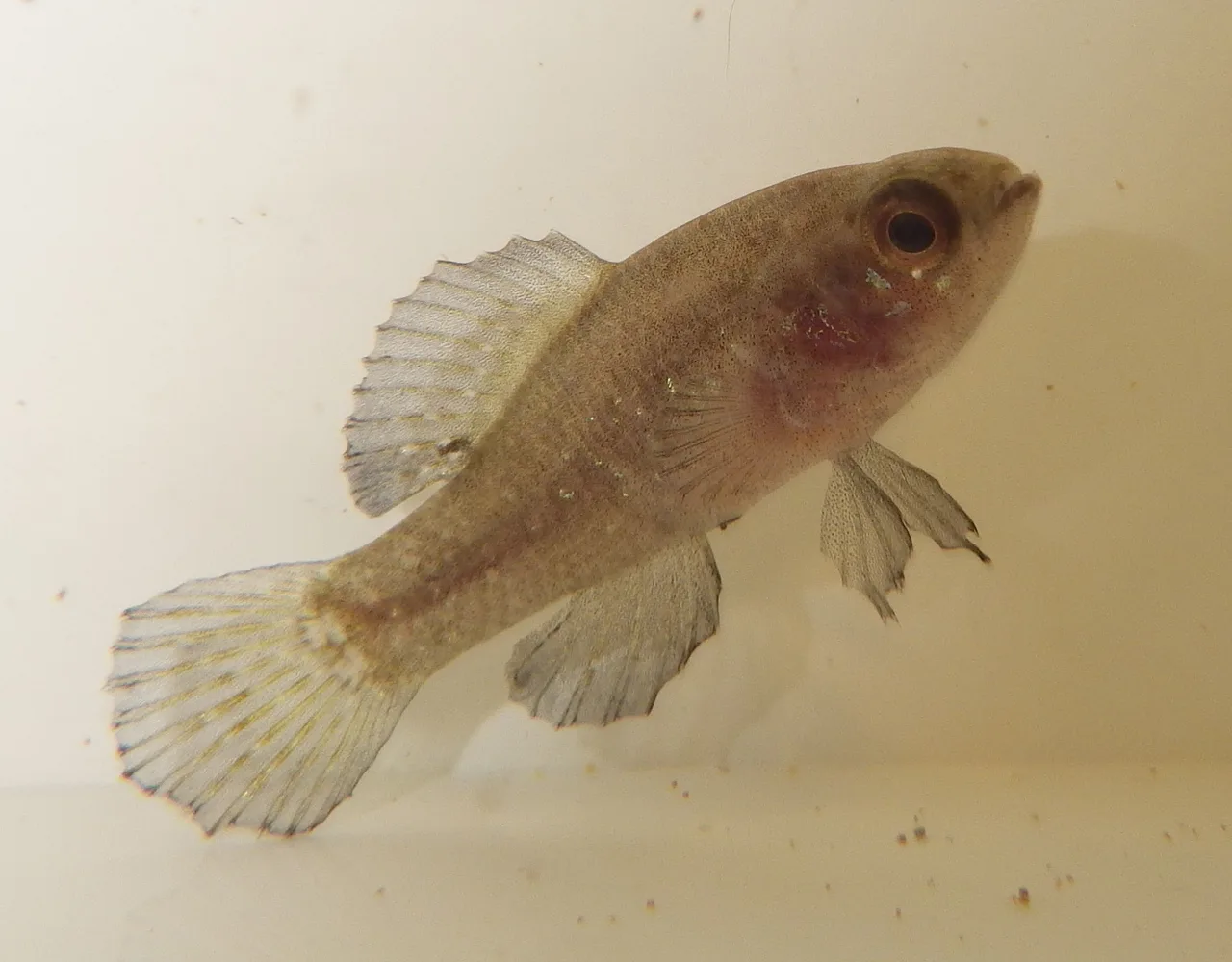
White cloud mountain minnow
Tanichthys albonubes
25 views
A small cyprinid from mountain streams in southern China and northern Vietnam. It is kept cool and in groups of at least ten to twelve fish.
- Temperature
- 16 – 22 °C
- pH
- 6 – 8 pH
- General hardness
- 5 – 19 °dH
- Maximum size
- 3.5 cm
- Minimum group size
- 10
- Minimum tank size
- 60 L
4 min read · 569 words
Fresh water
Quick facts
Place in the aquarium
Highlighted are the water layer and the spots where the species usually stays in the tank.
- Upper water Usually stays in the top third of the tank.
- Middle water Usually stays in the middle of the tank, between bottom and surface.
- Dense plants Looks for dense planting as cover, retreat or grazing ground.
Shrimp in the tank
Shrimplets at risk
- Not shrimp safe
- Dwarf shrimp at risk
- Shrimplets at risk
- Shrimp safe
- Adult dwarf shrimp
- Safe
- Shrimplets
- Get eaten
- Safe from shrimp size
- about 1.5 cm
Adult dwarf shrimp are safe from the White Cloud Mountain minnow. It grows to only 2.5 to 3.5 cm, has a small mouth and eats plankton, tiny organisms and aquatic insect larvae. It cannot eat shrimp from about 1.5 cm. Young shrimp just after hatching, however, are part of its prey. Because White Clouds prefer cool water, they go well with Neocaridina, which are similarly undemanding. Dense planting and moss make sure enough young survive.
Home & range
Hatched countries are where the species occurs. It lives in particular waters there, not across the whole country. The points name known waters for orientation, not collection sites.
- Country of origin
- Water for orientation
Native
- China
- Range: mountain streams north of Guangzhou and the island of Hainan.
- Vietnam
- Range: a coastal river entering Ha Long Bay in Quảng Ninh Province.
Overview
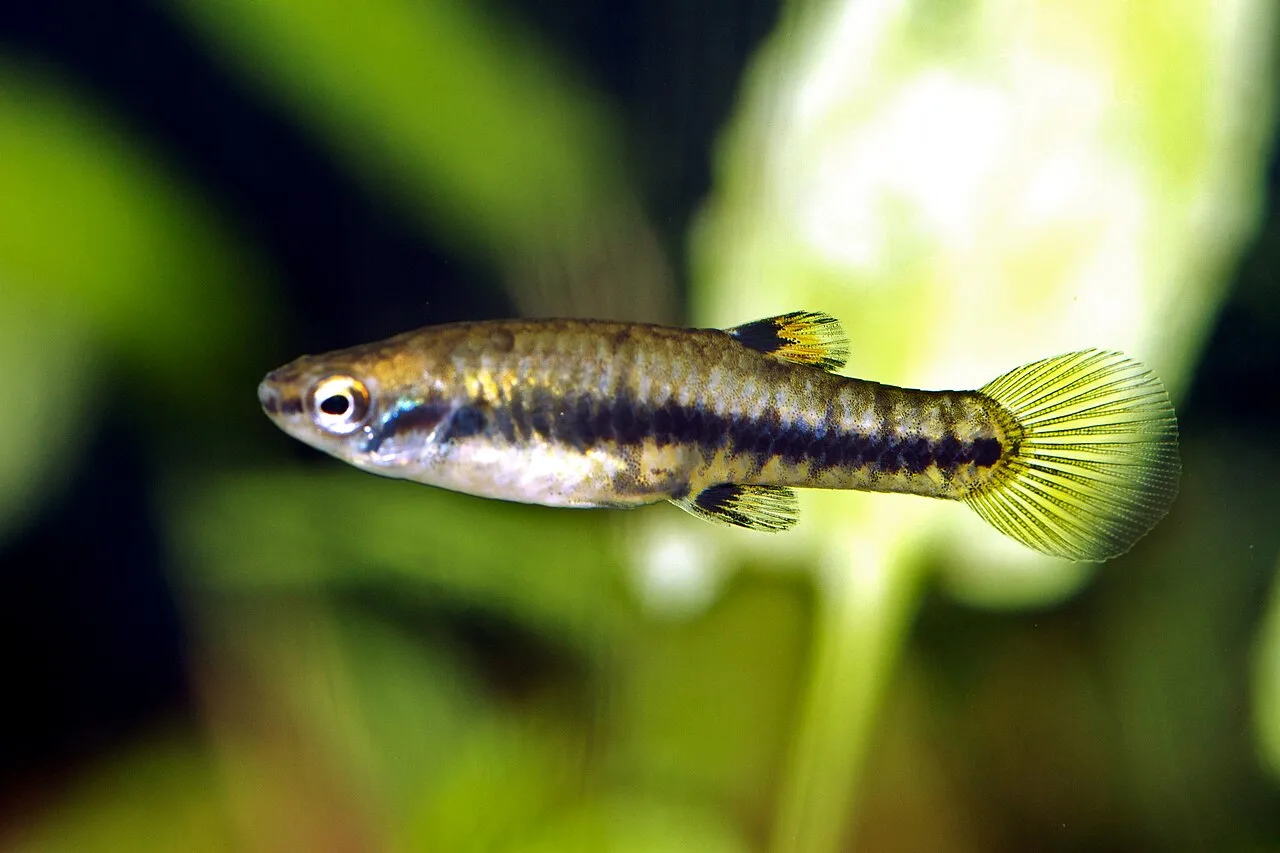
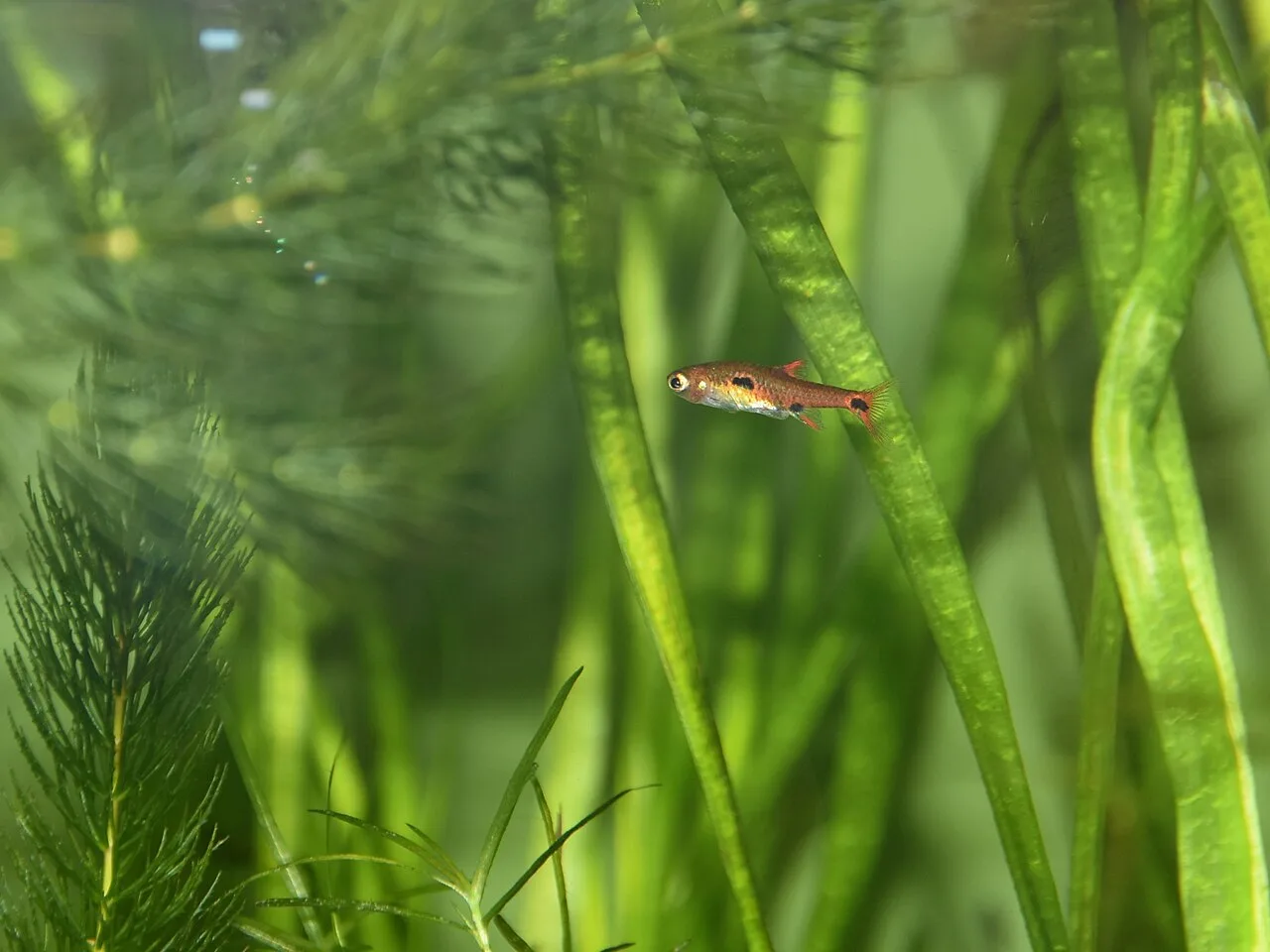
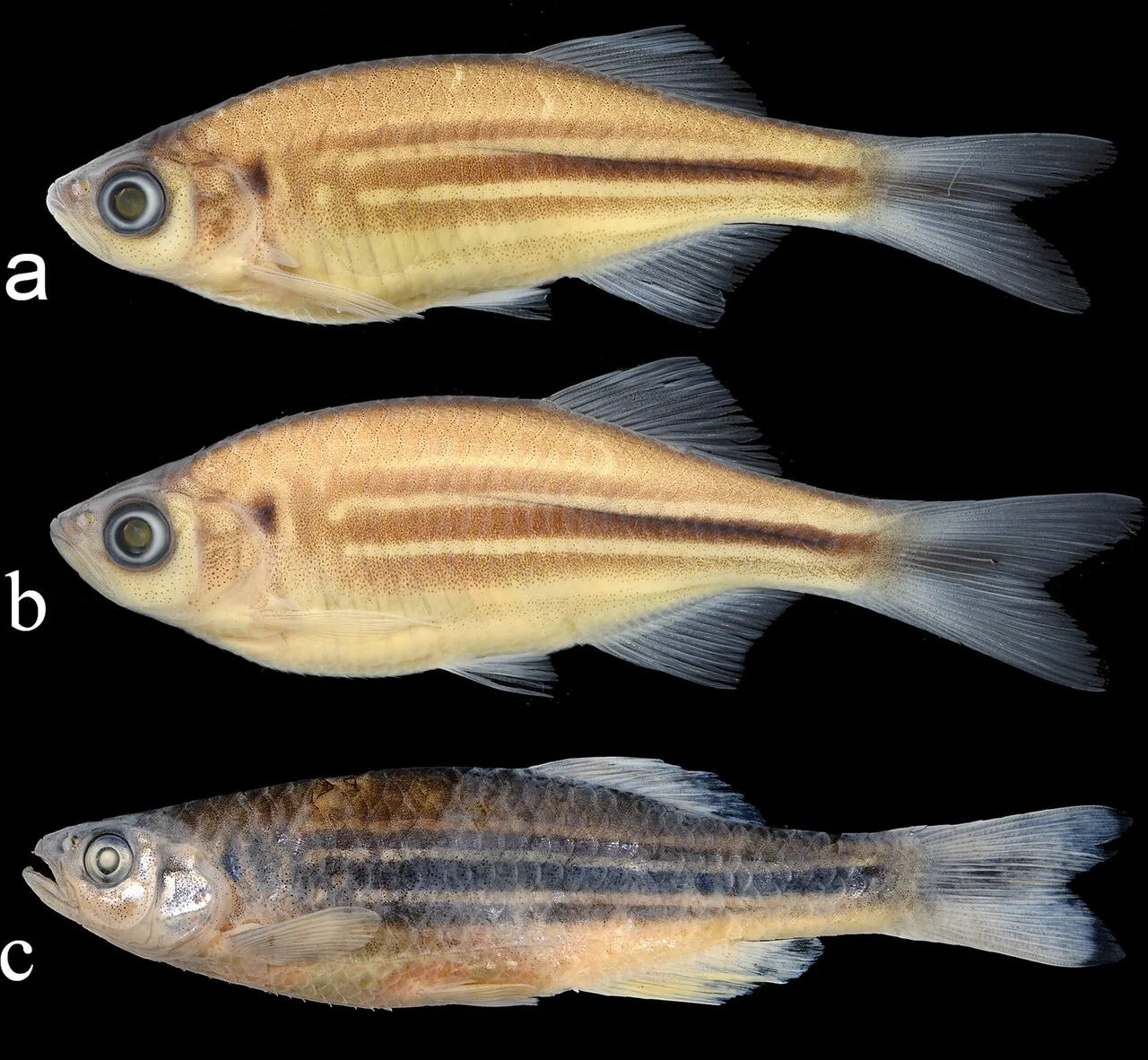
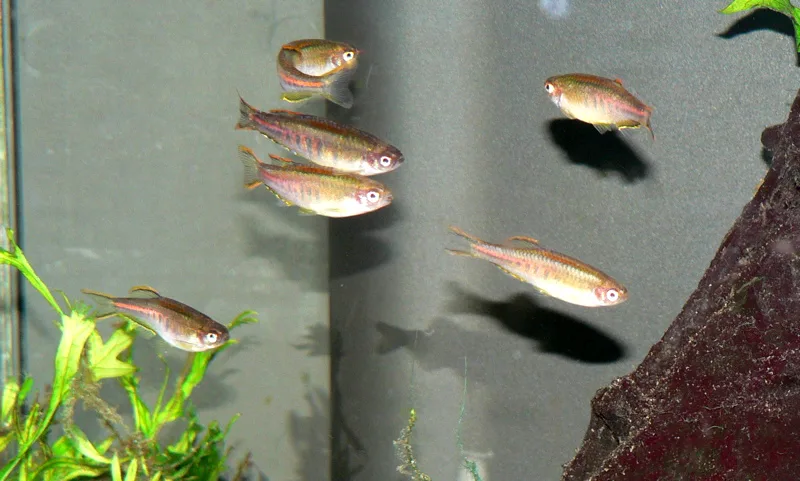
Tanichthys albonubes was described in 1932 by Lin Shuyan and named after Tan Kam Fei, who found the fish. The species name means “white cloud” and refers to Baiyunshan near Guangzhou. The body is brown-green to grey-green, with a paler belly and a noticeable longitudinal band. The fins are greenish or yellowish, with variable red and pale tips. A black spot sits at the base of the caudal fin, which itself can be red. Males are more strongly coloured. Females with eggs look fuller. Length is given as 2.5 to 3.5 cm. The lower jaw projects like a chisel, there are no barbels, and there is no lateral line. A longitudinal scale row is given as 30 to 32 scales. A 2020 genetic study separates eight groups inside fish previously treated under this name and proposes seven species that are hardly distinguishable by eye.
Name and introduction
In German the species is also called Kardinal or Kardinälchen. It first reached Germany in 1938 through the Aquarium Hamburg. Tan Kam Fei, after whom it is named, was a Chinese scout leader. The fin formula is D III/6, A III/7–8, P I/9–11 and V I/6.
Because the fish are undemanding, hardy and cheaply available almost everywhere, they are regarded as a good alternative to the cardinal tetra and the neon tetra when the water is too hard for those characins. This earned them the German nickname workers' neon.
Origin & habitat
This describes the origin, not how to furnish the aquarium.
The main range lies near the Tropic of Cancer, north of Guangzhou: streams on Baiyunshan, the Huaxian area in Guangdong, and a coastal river entering Ha Long Bay in Quảng Ninh, Vietnam. Further reports concern Hainan. After 1980 the species was treated as lost in the wild. In September 2003 a small population was found again north of Guangzhou. Stocks near Hong Kong and Shenzhen may be extinct. The fish live in clear, slow, densely planted streams. Forest loss, erosion of irrigation banks and the diversion of streams for rice fields are named as threats. Reproduction in the wild is described as unproductive.
Care
The minnow prefers cool temperatures up to 20 °C and briefly tolerates even below 5 °C. Suitable are pH 6 to 8 and a hardness below 30. Prolonged keeping above 23 °C is linked with disease. A keeping range of 16 to 22 °C is often recommended. Groups below 10 to 12 fish and tanks shorter than 60 cm are discouraged. Planted zones and open swimming space belong in the tank. Too many males in a small tank leads to rank fights. Only small, peaceful tankmates are suitable. A long-finned veil form exists. With suitable water and varied food the fish live up to nine years.
Diet
In streams the minnow eats plankton, meiobenthos and aquatic insect larvae. In aquaria it takes plant and animal foods, flakes, granules and frozen food that fits the small mouth. Cyclops and small daphnia are named specifically.
Behavior
The minnow is not aggressive toward other species, except toward young fish that it may treat as food. Males can fight over rank when the group is small or the tank is tight.
Reproduction
They are egg scatterers without brood care. A short rise in temperature can trigger spawning. Young hatch after 36 to 72 hours. Infusoria or dust food come first, then newly hatched Artemia after 12 to 14 days. Adults sometimes hunt their own brood even when they are well fed. Healthy groups can spend the summer in garden ponds. In a favourable site overwintering is possible too, but this is not a general recommendation for pond keeping.
Gallery
More species in this group
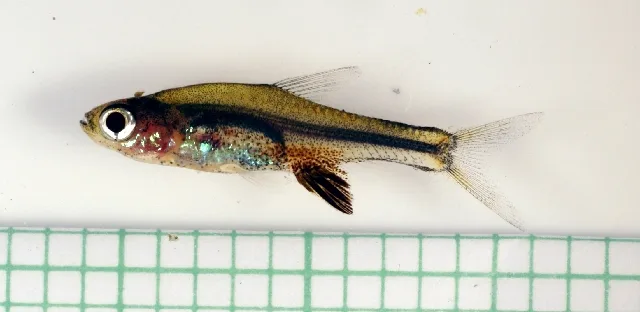
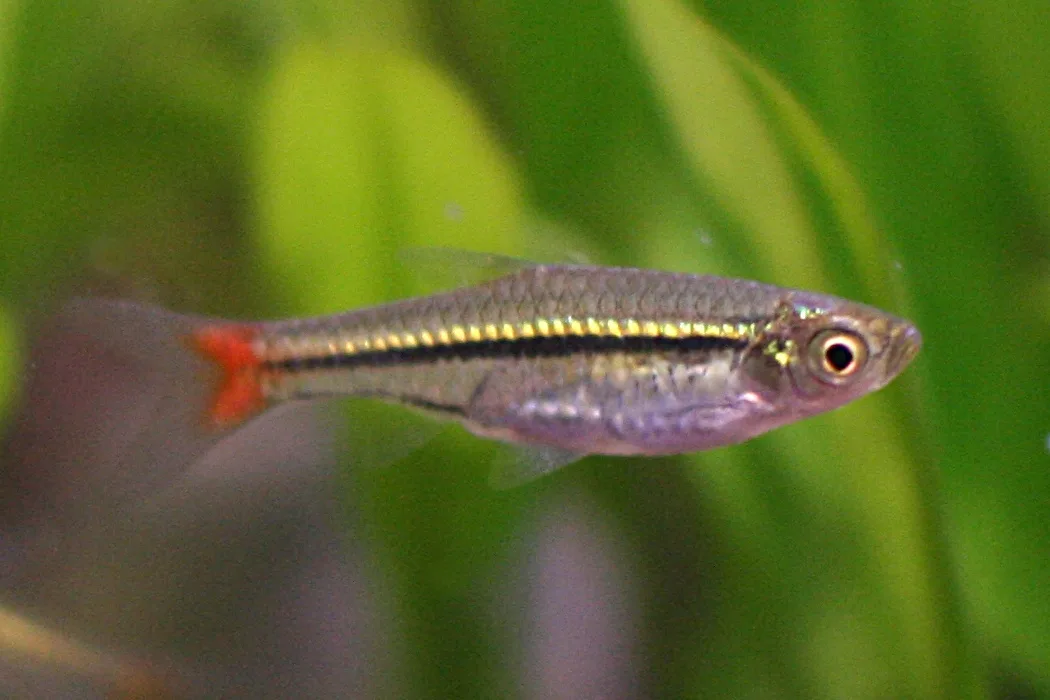
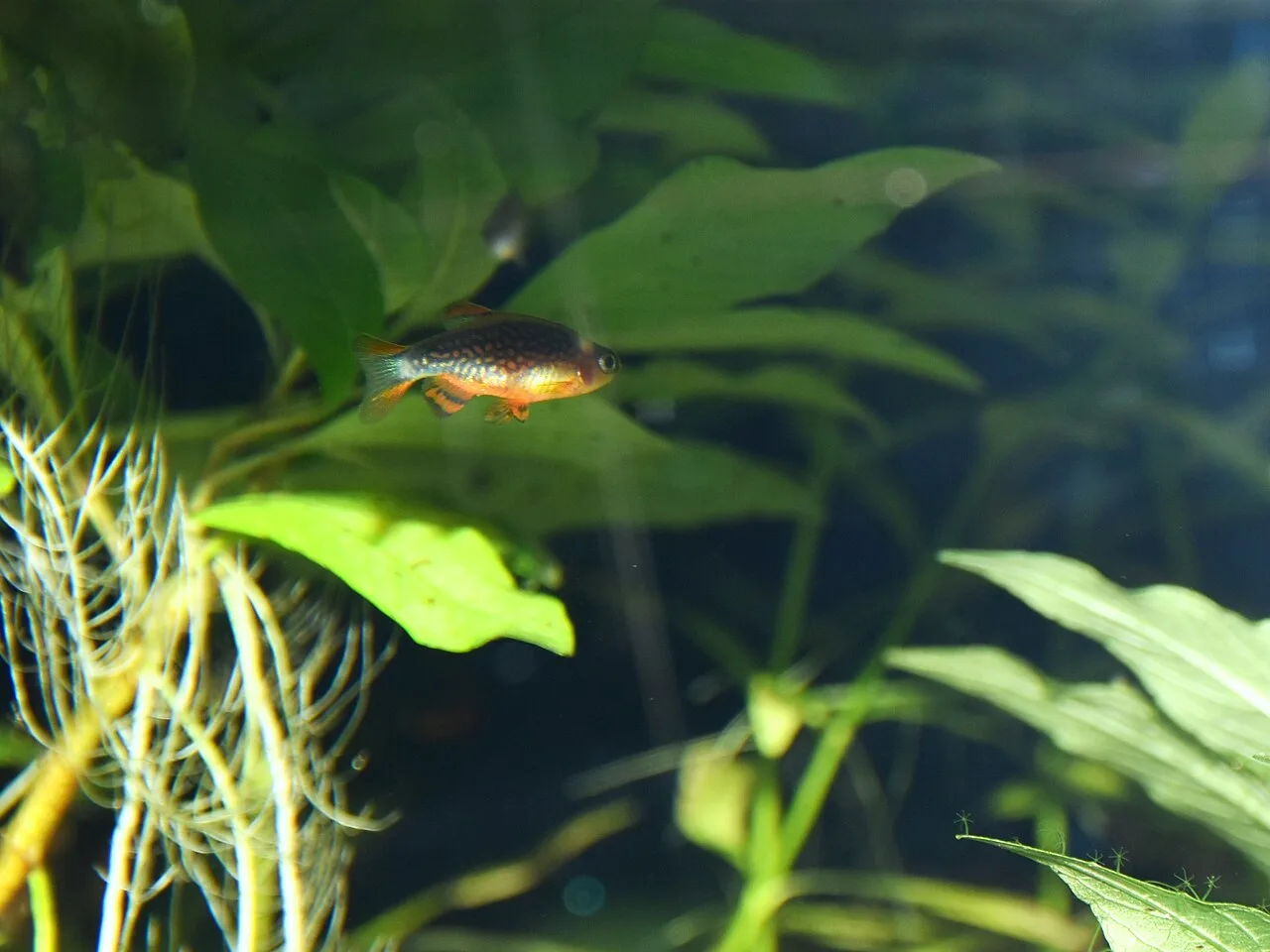
Similar water needs
Species with a similar temperature, a similar pH and a comparable adult size. Whether their behaviour fits as well is what the compatibility check is for.