
Glass catfish
Kryptopterus vitreolus
27 views
Described only in 2013. Older imports were sold as Kryptopterus bicirrhis or Kryptopterus minor.
- Temperature
- 24 – 28 °C
- pH
- 6 – 7.5 pH
- General hardness
- 2 – 12 °dH
- Maximum size
- 6.5 cm
- Minimum group size
- 6
- Minimum tank size
- 120 L
4 min read · 552 words
Fresh water
Quick facts
Place in the aquarium
Highlighted are the water layer and the spots where the species usually stays in the tank.
- Middle water Usually stays in the middle of the tank, between bottom and surface.
- Dense plants Looks for dense planting as cover, retreat or grazing ground.
Shrimp in the tank
Shrimplets at risk
- Not shrimp safe
- Dwarf shrimp at risk
- Shrimplets at risk
- Shrimp safe
- Adult dwarf shrimp
- Safe
- Shrimplets
- Get eaten
- Safe from shrimp size
- about 1.5 cm
Adult dwarf shrimp are safe from the glass catfish. It usually grows to about 6.5 cm and feeds on zooplankton and other small invertebrates caught in open water. Shrimp from about 1.5 cm do not fit its prey range. Young shrimp swimming freely or climbing up plants may be eaten, however. Because the social catfish hang in midwater and hardly search the bottom, enough young usually survive in a densely planted tank with moss.
Home & range
Hatched countries are where the species occurs. It lives in particular waters there, not across the whole country. The points name known waters for orientation, not collection sites.
- Country of origin
- Water for orientation
Native
Overview
5.5 to 6.5 cm, almost completely transparent. The sheen comes from the sarcomeres of the muscles, not from pigment. Anal fin with 48 to 55 rays.
Discovery and name
The glass catfish has been imported for aquariums since 1934, for a long time under the wrong name. Until 1989 it was regarded as Kryptopterus bicirrhis, a larger species rarely kept in aquariums. After that it was sold as Kryptopterus minor, until Maurice Kottelat and Ng Heok Hee recognised in early 2013 that it was an undescribed species. They described it in the journal Zootaxa. The true K. minor lives only on Borneo and has hardly ever been traded. The specific name vitreolus comes from the Latin vitreus for glassy. In English the species is called glass catfish, ghost catfish or phantom catfish.
Why it is transparent
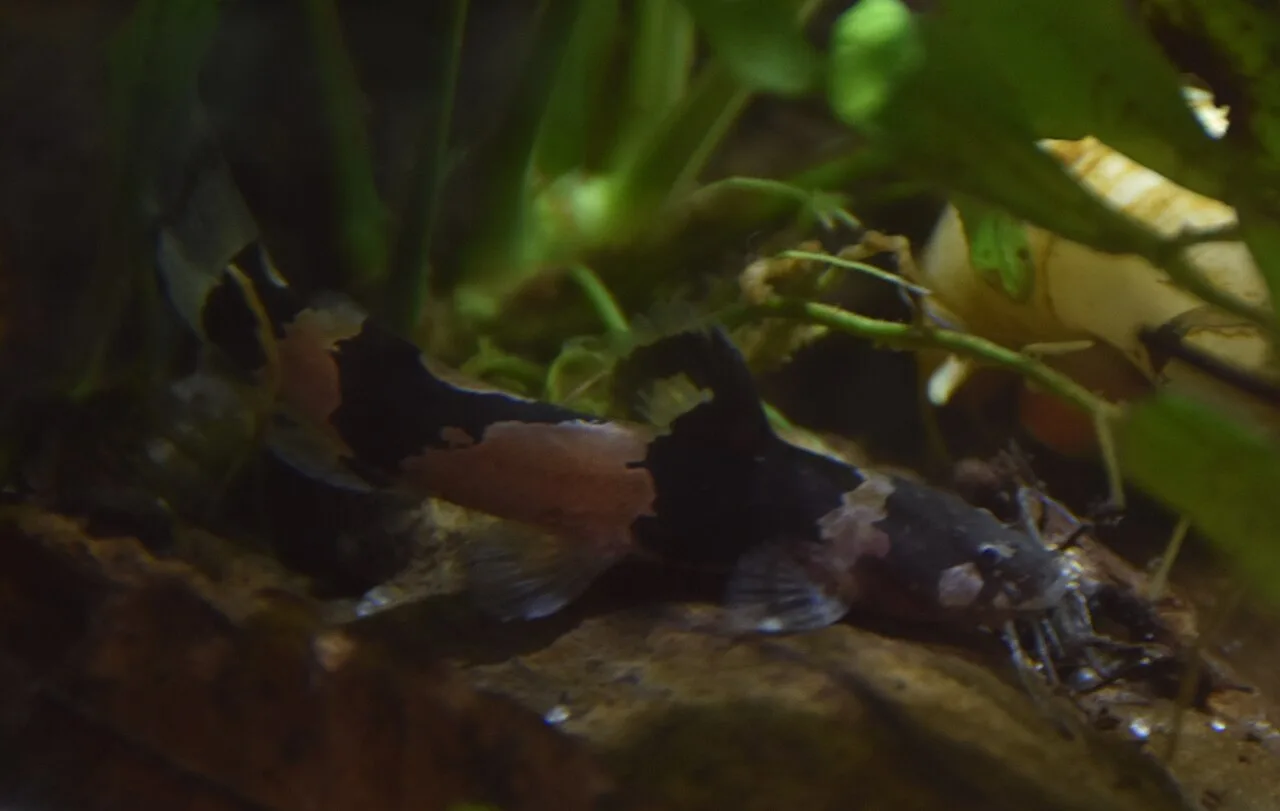
The body is slender and strongly compressed, and the nape is clearly arched. Two long barbels on the upper jaw reach beyond the start of the anal fin. Like all catfish the species has no scales, and Kryptopterus lack body pigment. The skin is made of plywood-like layers of collagen fibres through which light enters the muscles. Most organs sit close to the head, and with a magnifying glass the heart can be seen beating. Standard length reaches up to 8 cm, but usually about 6.5 cm. During acute illness or after death the tissue turns milky white. Among the described Kryptopterus only K. minor and K. piperatus are similarly clear.
Origin & habitat
This describes the origin, not how to furnish the aquarium.
Only southeastern Thailand and the Thai part of the peninsula, rivers entering the Gulf of Thailand. Type locality Trat. Thailand stays coarse. Malaysia is not named.
The species lives in rivers and streams south of the Isthmus of Kra that drain into the Gulf of Thailand, and in river basins in the Cardamom Mountains. There are unconfirmed reports from Penang in Malaysia. One place where the species is collected is the Phru To Daeng peat swamp forest in Narathiwat Province in the deep south of Thailand.
Care
Never bred commercially. The small area and the wild catches may make the species threatened.
Transparent, and in a group
The glass catfish reaches about 6 to 8 cm and is almost transparent. It stands as a group in midwater, not as a single decoration fish in a corner. 24 to 28 °C, pH 6.5 to 7.5, a school from six, tanks from about 100 litres, with plants and little bustle. The species is sensitive to poor water and to rough moving.
It is not a bottom catfish and not a cleaner. Food has to arrive in midwater. Large, aggressive fish stress it until it stops feeding and the transparency becomes illness.
Diet
Zooplankton and other small invertebrates.
Fine frozen food and small granules that sink slowly. Mosquito larvae and brine shrimp. Several small feeds. Bottom tablets miss the species.
Behavior
Do not equate it with the species names used earlier.
Social and with a special sense
The species is a social glass catfish. It reacts to electromagnetic fields through a protein encoded by a gene named the Electromagnetic Perceptive Gene.
According to a Thai legend, the fish comes from King Phra Ruang. He is said to have eaten a fish down to the bones, thrown the remains into the water and wished them new life. Hence the Thai name pla kang phra ruang, Phra Ruang's skeletal fish.
Reproduction
Captive breeding is not the trade route.
Gallery
More species in this group

Similar water needs
Species with a similar temperature, a similar pH and a comparable adult size. Whether their behaviour fits as well is what the compatibility check is for.




