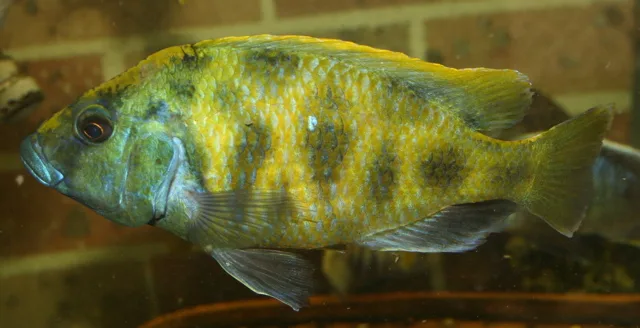
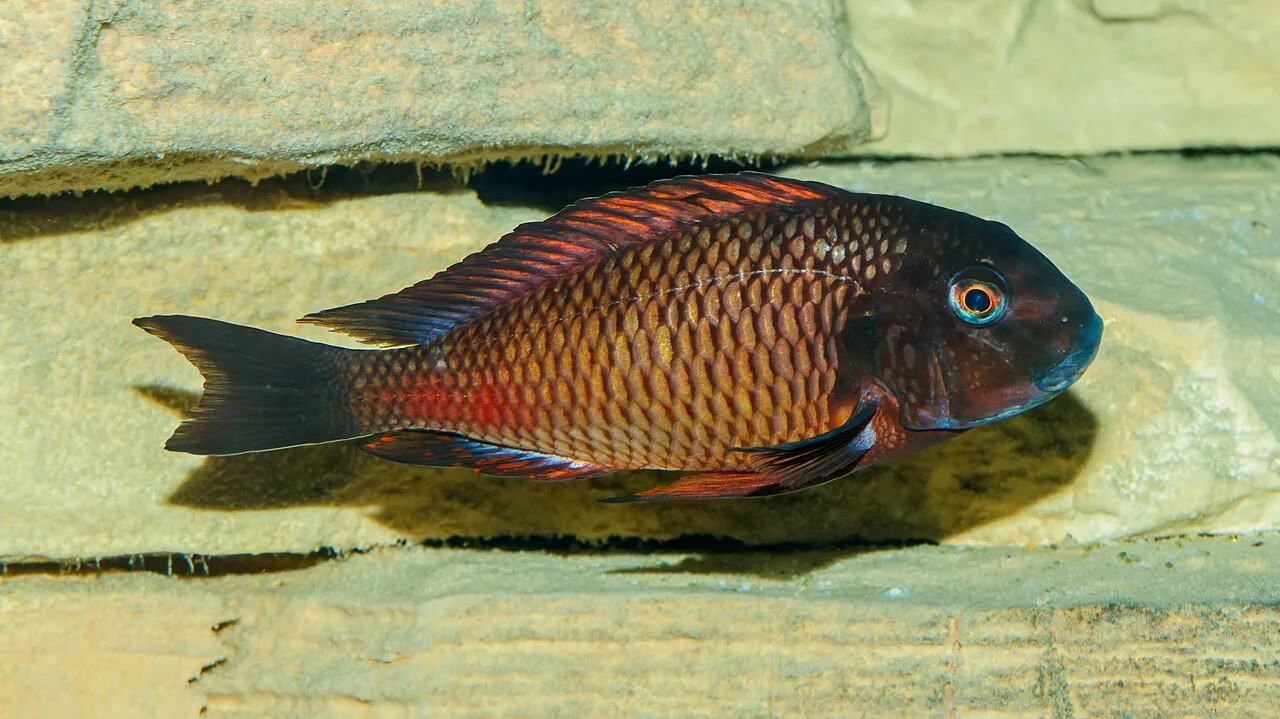
Spotted scat
Scatophagus argus
2 views
A deep-bodied, spotted fish from brackish water that moves into seawater as it ages. It grows large and eats almost anything.
- Temperature
- 24 – 28 °C
- pH
- 7.5 – 8.5 pH
- General hardness
- 15 – 25 °dH
- Maximum size
- 25 cm
- Minimum tank size
- 500 L
1 min read · 136 words
Quick facts
Place in the aquarium
Highlighted are the water layer and the spots where the species usually stays in the tank.
- Middle water Usually stays in the middle of the tank, between bottom and surface.
- Open swimming space Needs an open area without plants or decor to swim at length. Tank length matters more than height.
Shrimp in the tank
Not shrimp safe
- Not shrimp safe
- Dwarf shrimp at risk
- Shrimplets at risk
- Shrimp safe
- Adult dwarf shrimp
- At risk
- Shrimplets
- Get eaten
- Safe from shrimp size
- No size is safe
Shrimp are not safe with the spotted scat. It grows large, eats almost anything and later lives in brackish to marine water. Freshwater shrimp are eaten and do not tolerate the water anyway.
Keeping it together with dwarf shrimp is not possible. Shrimp belong in a freshwater tank of their own.
Home & range
Hatched countries are where the species occurs. It lives in particular waters there, not across the whole country. The points name known waters for orientation, not collection sites.
- Country of origin
- Water for orientation
Native
- India
- Range: coastal and brackish waters as far as this area.
- Thailand
- Range: coastal and brackish waters as far as this area.
- Indonesia
- Range: coastal and brackish waters as far as this area.
- Philippines
- Range: coastal and brackish waters as far as this area.
- Australia
- Range: coastal and brackish waters as far as this area.
Overview
Scatophagus argus reaches about 25 cm in the aquarium, more in the wild. The body is deep and laterally compressed, greenish to brownish with dark spots. Juveniles often show reddish tones. The fin spines can cause painful stings.
It is not a freshwater fish for a community tank. Juveniles tolerate brackish water, while adults need seawater or salinities close to it.
Origin & habitat
This describes the origin, not how to furnish the aquarium.
Coasts, mangroves and estuaries in the Indo-Pacific. The countries stay a coarse origin. Brackish to marine water matches that.
Care
Salt
24 to 28 °C, pH 7.5 to 8.5. A group from three, tanks from about 500 litres. Brackish water for juveniles, rising salinity later. Sturdy decor, strong filtration.
Company
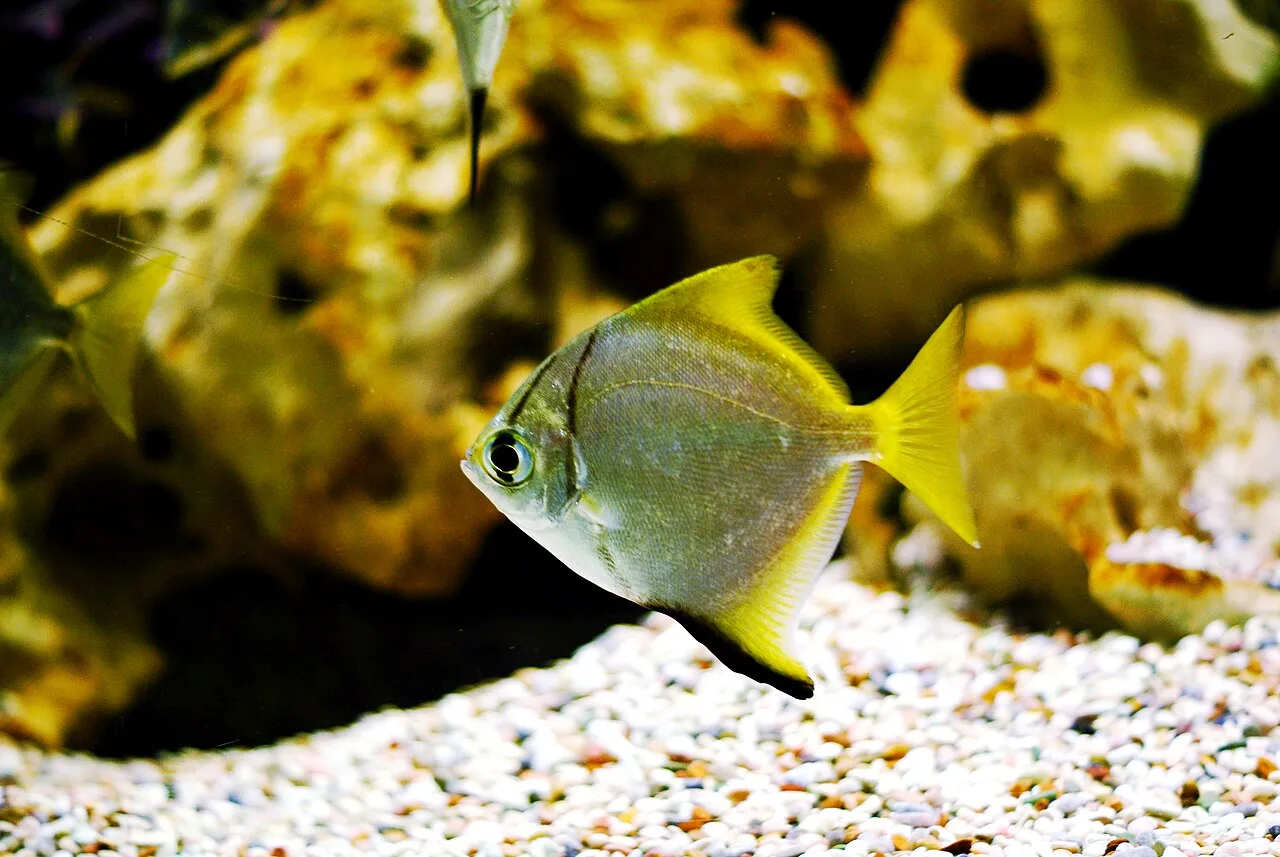
Other large brackish-water fish such as monos. Plants are eaten.
Diet
Omnivore with a large plant share. Vegetables, spirulina, granules, mysis, mosquito larvae.
Behavior
A lively, peaceful group. Single fish turn shy.
Gallery
More species in this group


Similar water needs
Species with a similar temperature, a similar pH and a comparable adult size. Whether their behaviour fits as well is what the compatibility check is for.