Indian glassy fish
Parambassis ranga
2 views
A small, transparent perch from South and Southeast Asia. It lives in groups and feeds mainly on meaty food.
- Temperature
- 20 – 30 °C
- pH
- 7 – 8 pH
- General hardness
- 8 – 20 °dH
- Maximum size
- 8 cm
- Minimum group size
- 6
- Minimum tank size
- 80 L
1 min read · 153 words
Quick facts
Place in the aquarium
Highlighted are the water layer and the spots where the species usually stays in the tank.
- Middle water Usually stays in the middle of the tank, between bottom and surface.
- Dense plants Looks for dense planting as cover, retreat or grazing ground.
Shrimp in the tank
Dwarf shrimp at risk
- Not shrimp safe
- Dwarf shrimp at risk
- Shrimplets at risk
- Shrimp safe
- Adult dwarf shrimp
- At risk
- Shrimplets
- Get eaten
- Safe from shrimp size
- about 2.5 cm
For dwarf shrimp the Indian glassy fish is a risk. It reaches about 8 cm and eats almost only meaty food, including larvae and small crustaceans. Juvenile shrimp and small Neocaridina are eaten. Larger shrimp from about 2.5 cm are usually safe.
In a densely planted tank a few shrimp survive. For breeding a separate tank is better.
Home & range
Hatched countries are where the species occurs. It lives in particular waters there, not across the whole country. The points name known waters for orientation, not collection sites.
- Country of origin
- Water for orientation
Native
Overview
Parambassis ranga reaches about 8 cm. The body is transparent, and the spine and organs are visible. Males carry blue-edged dorsal and anal fins and a yellowish sheen. Females are more silvery.
For a long time the trade offered fish with injected colour. This colouring is artificial and harms the fish. A natural glassfish has no brightly coloured patches.
Origin & habitat
This describes the origin, not how to furnish the aquarium.
Fresh and brackish waters in South and Southeast Asia. The countries stay a coarse origin. Plant-rich, medium-hard water matches that.
Care
Group
20 to 30 °C, pH 7 to 8. A group from six, tanks from about 80 litres. Dense plants, wood, hiding places.
Company
Calm fish of similar size. Hectic tankmates push it away from the food.
Diet
Meaty food. Mosquito larvae, brine shrimp, daphnia, cyclops. Dry food is often taken hesitantly.
Behavior
A calm group. At spawning time males occupy small territories among the plants.
Reproduction
Egg scatterer in fine plants. The larvae are tiny and need powder food.
Gallery
More species in this group
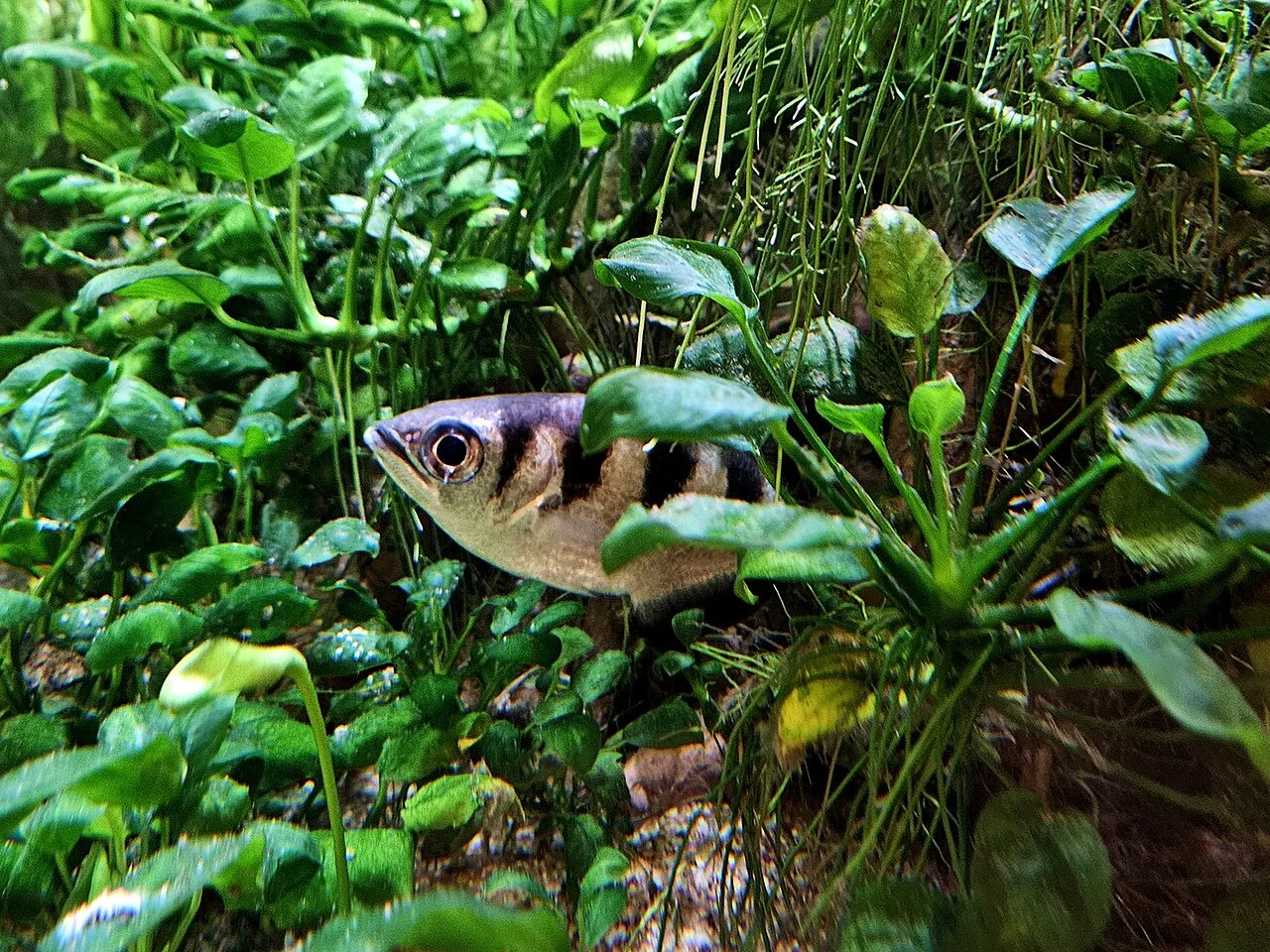


Similar water needs
Species with a similar temperature, a similar pH and a comparable adult size. Whether their behaviour fits as well is what the compatibility check is for.