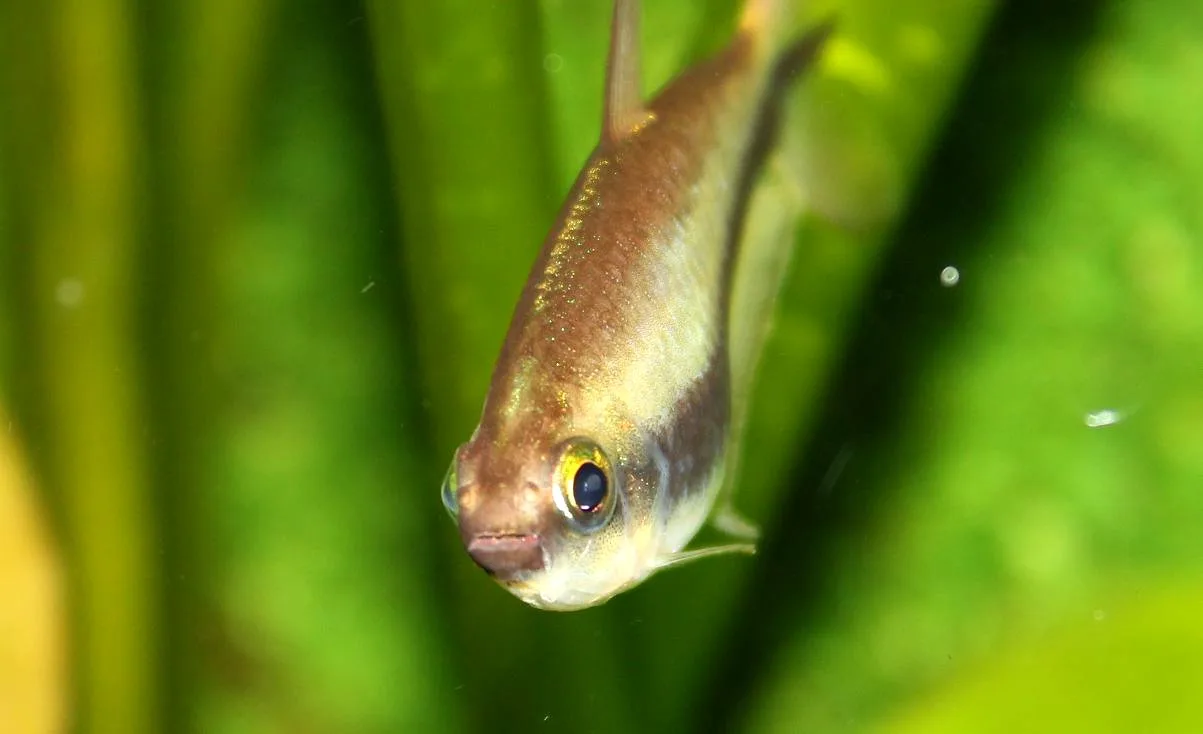
Ancistrus cirrhosus
Ancistrus cirrhosus
27 views
A suckermouth catfish with tentacles on the head. It grazes aufwuchs, needs wood and caves and is not automatically the bushymouth catfish from the shop.
- Temperature
- 22 – 27 °C
- pH
- 6 – 7.5 pH
- General hardness
- 2 – 15 °dH
- Maximum size
- 14 cm
- Minimum tank size
- 100 L
3 min read · 460 words
Fresh water
Quick facts
Place in the aquarium
Highlighted are the water layer and the spots where the species usually stays in the tank.
- Near the bottom Mostly stays just above the bottom. Food has to reach the substrate.
- Wood and roots Uses roots as shelter or grazes biofilm from them.
- Rocks and caves Needs caves, crevices or rockwork as hiding place, territory or spawning site.
Shrimp in the tank
Shrimp safe
- Not shrimp safe
- Dwarf shrimp at risk
- Shrimplets at risk
- Shrimp safe
- Adult dwarf shrimp
- Safe
- Shrimplets
- Mostly safe
- Safe from shrimp size
- Any size
The bristlenose Ancistrus cirrhosus is regarded as shrimp-safe. It grazes films from stones and wood with its sucker mouth and does not hunt moving prey. Adult shrimp and usually their young remain unharmed, even though it occasionally takes animal food.
To keep the catfish from competing for food, it gets its own food such as vegetables or tablets. Wood, stones and caves are used by catfish and shrimp alike. In tanks with plenty of wood, catfish and shrimp make a good pair.
Home & range
Hatched countries are where the species occurs. It lives in particular waters there, not across the whole country. The points name known waters for orientation, not collection sites.
- Country of origin
- Water for orientation
Native
- Brazil
- Range: southern Brazil.
Overview
Ancistrus cirrhosus reaches about 12 to 14 cm. Males carry fleshy tentacles on the head. Females have at most a fringe of smaller ones along the snout. The ground colour is brown with paler spots. Many Ancistrus are sold as one species. This profile means A. cirrhosus and not automatically every brown fish with bristles.
The species eats aufwuchs and plant food. It does not replace a filter and goes hungry when the glass is clean and no vegetables come.
Features
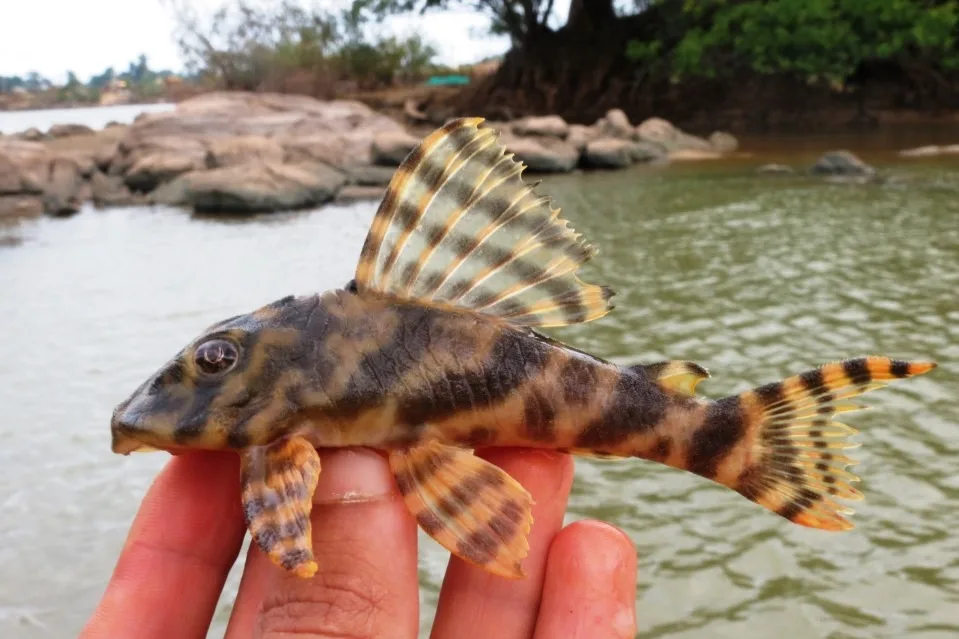
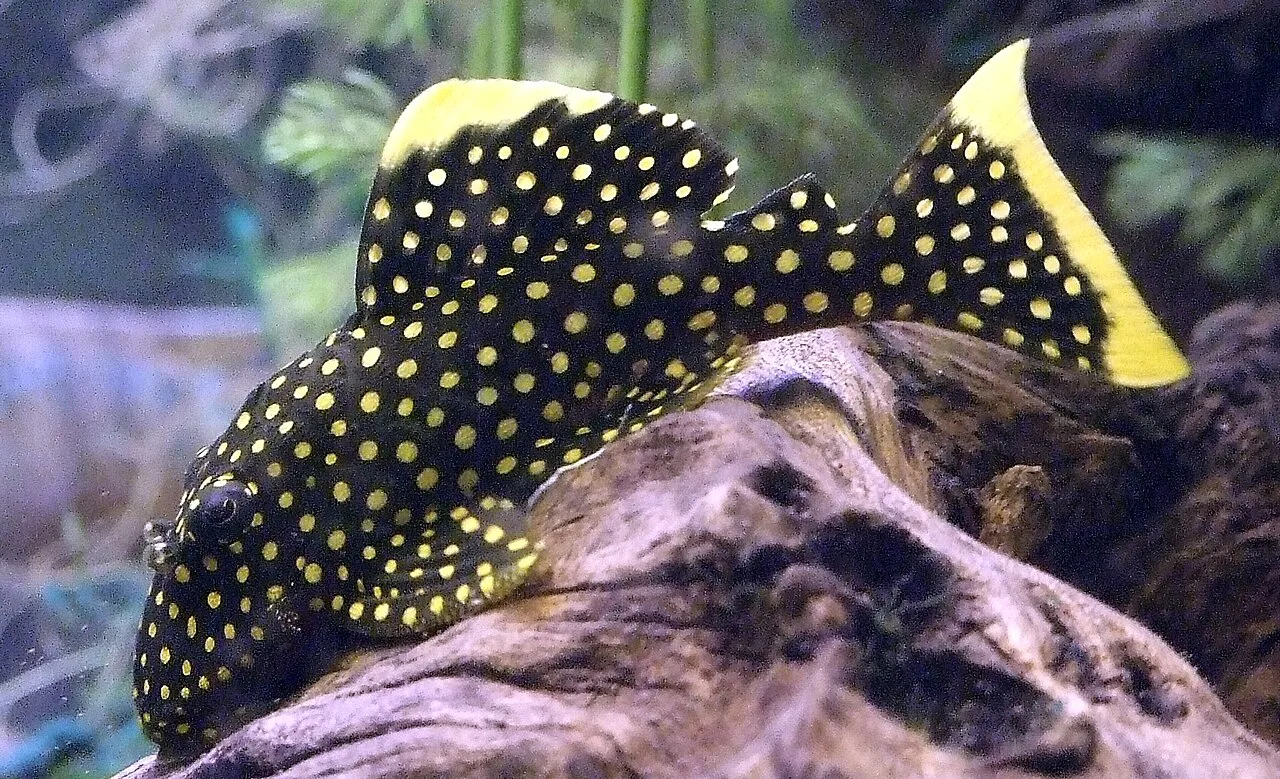
The pattern resembles the bushymouth catfish. The ground colour ranges from dark brown to dark blue to blackish grey, with small white or yellowish dots. The belly is grey with a pink sheen, and the dark fins carry several rows of dark dots. A deep black spot lies at the base of the front of the dorsal fin. Reported sizes range from 9.1 cm standard length to 12 cm.
Name and taxonomy
Achille Valenciennes described the species in 1836 from an illustration in the travel work Voyage dans l'Amérique méridionale, without a type locality. Isaäc Isbrücker tried to designate a lectotype in 1980, but the procedure is now considered invalid. Cirrhosus means curled and refers to the fleshy tentacles on the heads of males and the snouts of females. Hypostomus cirrhosus is a synonym. A 2025 review places the genus in the tribe Ancistrini.
Origin & habitat
This describes the origin, not how to furnish the aquarium.
Rivers and streams of the Paraná and Paraguay systems and neighbouring waters. The origin stays coarse. Wood, current and caves belong to the picture.
The species is widespread in large parts of Argentina and Paraguay, for example in the Rio Paraná and around Buenos Aires, and in southern Brazil and Uruguay in the Paraná, Paraguay and Uruguay basins. Old records from Bolivia and central Brazil are considered unreliable. The species lives in streams with fast current and rocky bottoms, also in calm lakes, in slightly acidic to neutral, soft water. The IUCN lists it as least concern.
Care
Layout
22 to 27 °C, pH 6 to 7.5. From about 100 litres, with roots, one cave per male and some current. Fine gravel or sand. Two males on one tube fight.
Company
Calm fish in the upper water. Further suckermouths only with their own cave and their own feeding surface. The species digs little and usually leaves tough plants standing.
Diet
Aufwuchs, blanched vegetables, spirulina tablets. Wood is a resting place. Whether it is needed as food stays open. Vegetables are not optional. Food has to arrive below.
Behavior
Nocturnal, often visible on the wood by day if it feels safe. The males guard caves. Juveniles stand more in the open. A hollow belly is hunger, not normal hiding.
Reproduction
Cave spawner. The male guards the clutch. The young need fine plant food. In a community tank the brood survives only if the cave is tight and the male is undisturbed.
Gallery
More species in this group


Similar water needs
Species with a similar temperature, a similar pH and a comparable adult size. Whether their behaviour fits as well is what the compatibility check is for.