Glass knifefish
Eigenmannia virescens
1 view
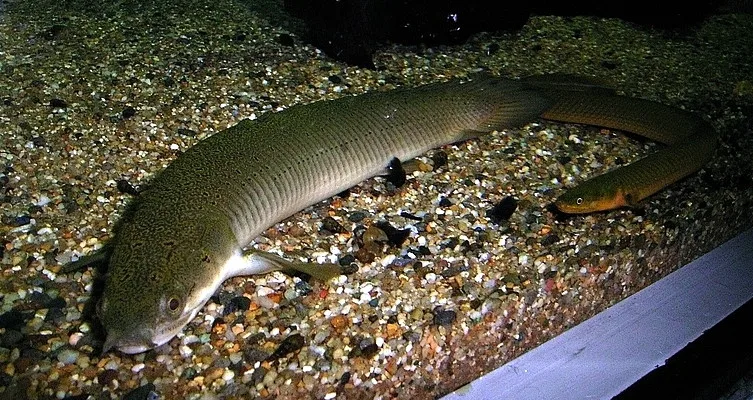
A translucent knifefish from South America that swims forwards and backwards with a long anal fin. It produces weak electric fields.
- Temperature
- 22 – 28 °C
- pH
- 6 – 7.5 pH
- General hardness
- 4 – 15 °dH
- Maximum size
- 35 cm
- Minimum tank size
- 300 L
1 min read · 152 words
Quick facts
Place in the aquarium
Highlighted are the water layer and the spots where the species usually stays in the tank.
- Middle water Usually stays in the middle of the tank, between bottom and surface.
- Dense plants Looks for dense planting as cover, retreat or grazing ground.
Shrimp in the tank
Dwarf shrimp at risk
- Not shrimp safe
- Dwarf shrimp at risk
- Shrimplets at risk
- Shrimp safe
- Adult dwarf shrimp
- At risk
- Shrimplets
- Get eaten
- Safe from shrimp size
- about 3 cm
For dwarf shrimp the glass knifefish is a risk. It grows large, is active at night and eats larvae and small crustaceans. Juvenile shrimp and small Neocaridina are eaten. Larger shrimp from about 3 cm are usually safe.
Since it hunts at night, when shrimp feed in the open, hiding places help little. Dwarf shrimp belong in a tank of their own.
Home & range
Hatched countries are where the species occurs. It lives in particular waters there, not across the whole country. The points name known waters for orientation, not collection sites.
- Country of origin
- Water for orientation
Native
Overview
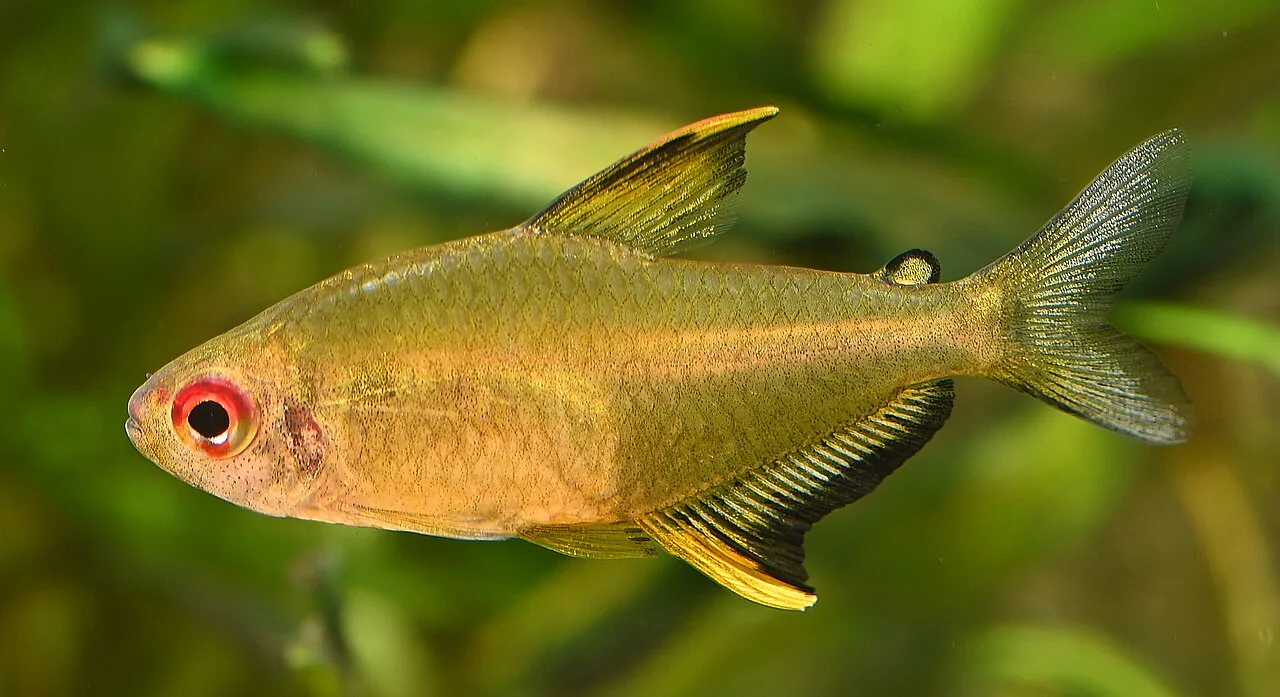
Eigenmannia virescens reaches about 35 cm as a male, while females stay clearly smaller. The body is slim, translucent grey to greenish, and a long anal fin runs along almost the whole underside. The fish orient themselves with a weak electric field.
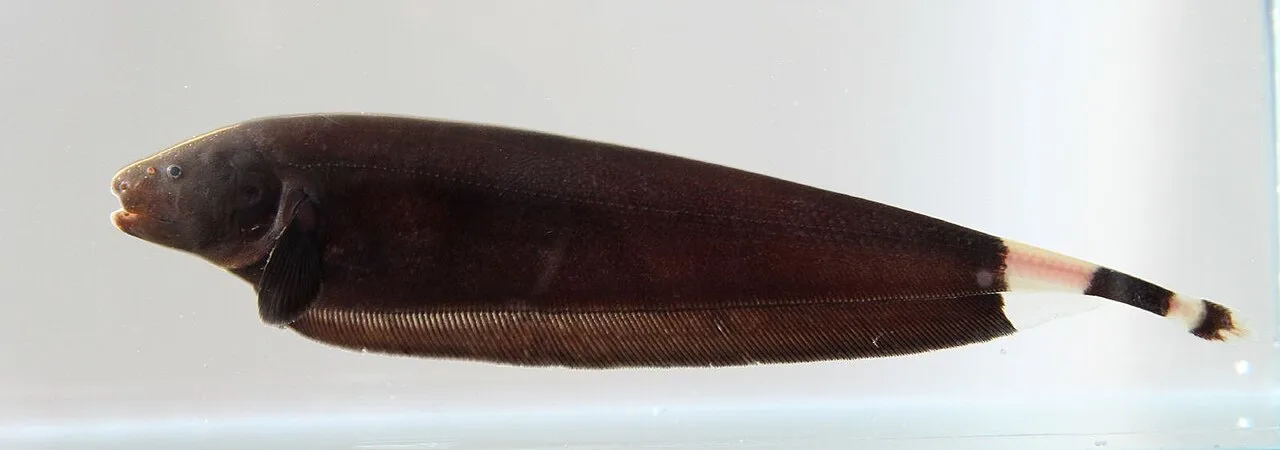
It is not the black ghost knifefish Apteronotus albifrons, which is black with white rings on the tail and also grows large.
Origin & habitat
This describes the origin, not how to furnish the aquarium.
Slow waters across large parts of South America. The countries stay a coarse origin. Warm water with dense bank vegetation matches that.
Care
Group
22 to 28 °C, pH 6 to 7.5. A group from three, tanks from about 300 litres and 150 cm. Tubes, wood, dense plants, subdued light.
Company
Calm fish that do not fit in its mouth. Small fish and shrimp are eaten at night.
Diet
Meaty food. Mosquito larvae, brine shrimp, mysis. Best fed in the evening.
Behavior
A calm group, active at night. By day the fish stand in tubes or among plants.
Gallery
More species in this group
Similar water needs
Species with a similar temperature, a similar pH and a comparable adult size. Whether their behaviour fits as well is what the compatibility check is for.