Brackish glass shrimp
Palaemon varians
8 views
A transparent shrimp of European coasts and brackish zones. It belongs in a covered brackish aquarium with plenty of swimming space.
- Temperature
- 10 – 25 °C
- pH
- 7.5 – 8.5 pH
- General hardness
- 10 – 25 °dH
- Maximum size
- 5 cm
- Social behavior
- Group
- Diet
- Omnivore
3 min read · 453 words
Brackish water
Quick facts
Further published values
- Lifespan
- 1.5 – 2 a
- Minimum tank size
- 30 L
Place in the aquarium
Highlighted are the water layer and the spots where the species usually stays in the tank.
- Middle water Usually stays in the middle of the tank, between bottom and surface.
- Near the bottom Mostly stays just above the bottom. Food has to reach the substrate.
- Dense plants Looks for dense planting as cover, retreat or grazing ground.
Home & range
Hatched countries are where the species occurs. It lives in particular waters there, not across the whole country. The points name known waters for orientation, not collection sites.
- Country of origin
- Water for orientation
Native
Overview
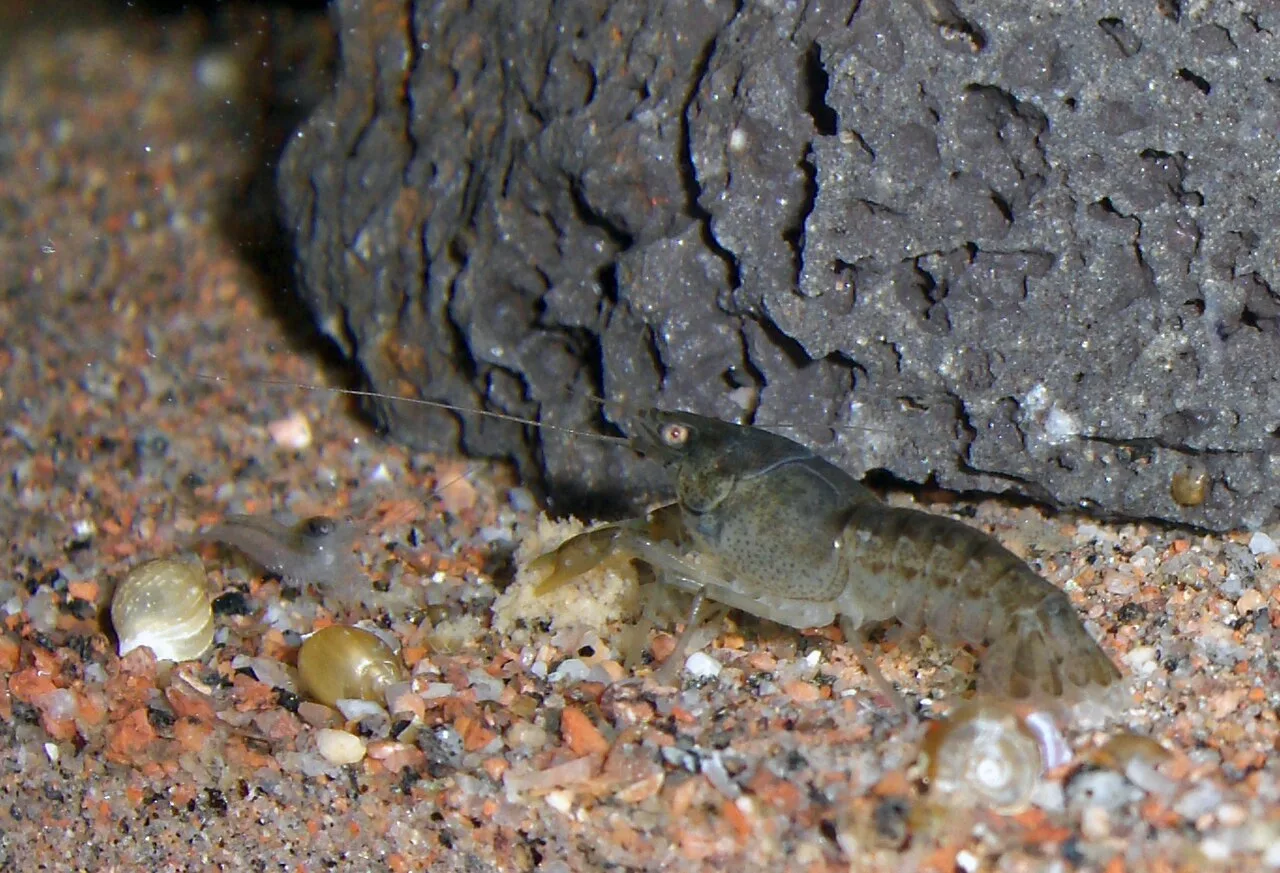
Palaemon varians is known in German as Schwimmgarnele, Brackwassergarnele or Glasgarnele, meaning swimming shrimp, brackish shrimp or glass shrimp. It belongs to the genus Palaemon in the family Palaemonidae. Until a revision in 2013 it was listed as Palaemonetes varians, a name still widely used in the aquarium hobby.
Features
It grows up to 50 millimetres long but often stays at about 40. The body is colourless and translucent, without striking colour or pattern. Two spines sit below the orbital notch of the carapace. The rostrum may be straight or curved and has four to six teeth above and two below. The first antennae have three flagella, and the mandibles have a palp. Animals from the Atlantic, North Sea and Baltic can be identified by these features; for animals from the Mediterranean further features are needed.
Systematics
Formerly the mandibular palp separated Palaemonetes from Palaemon. In 2012 genetic analyses showed that neither is a natural group, and in 2013 the genera were merged. The genus name goes back to the Greek sea god Palaimon, and varians to the Latin word for changing.
Range and habitat
This describes the origin, not how to furnish the aquarium.
The species lives on coasts and in brackish water across Europe, from Norway along the Atlantic coast to Spain, including Great Britain, and in the Mediterranean south to Tunisia and north to the Camargue. In estuaries and Baltic lagoons it is apparently much more common than in the open sea. It is extremely adaptable to salinity and tolerates 4 to 22 °C, and even 1 to 30 °C for prolonged periods. In Sweden it is classed as vulnerable. The map shows the coastal countries; no area is filled because it lives only on the coasts.
Keeping
This shrimp belongs in a brackish aquarium. Tanks from 30 litres are enough, but the animals are very lively and need plenty of swimming space. The tank must be covered because they jump out quickly when startled. A medium salinity of 15 per mille, or 1.5 percent, is well tolerated. The range of 4 to 22 °C describes the natural occurrence. A permanently warm tropical tank does not suit it.
Diet
It eats leftover fish food, bloodworms, algae and plants. In the trade the animals are often also sold as live food.
Behaviour and moulting
With tank mates of similar size it is usually peaceful. The animals are social; even smaller conspecifics are not attacked by adults. They swim a lot, as the German name says. Suitable tank mates are snails and hermit crabs that also cope with lower salinity. The East Asian Palaemon macrodactylus, which also lives in brackish water, has been introduced to England.
Reproduction and larvae
At a salinity of about 15 per mille the females carry eggs, and with good water values the development of the larvae can be watched in the aquarium. Natural life expectancy is one and a half to two years.
Gallery
More species in this group
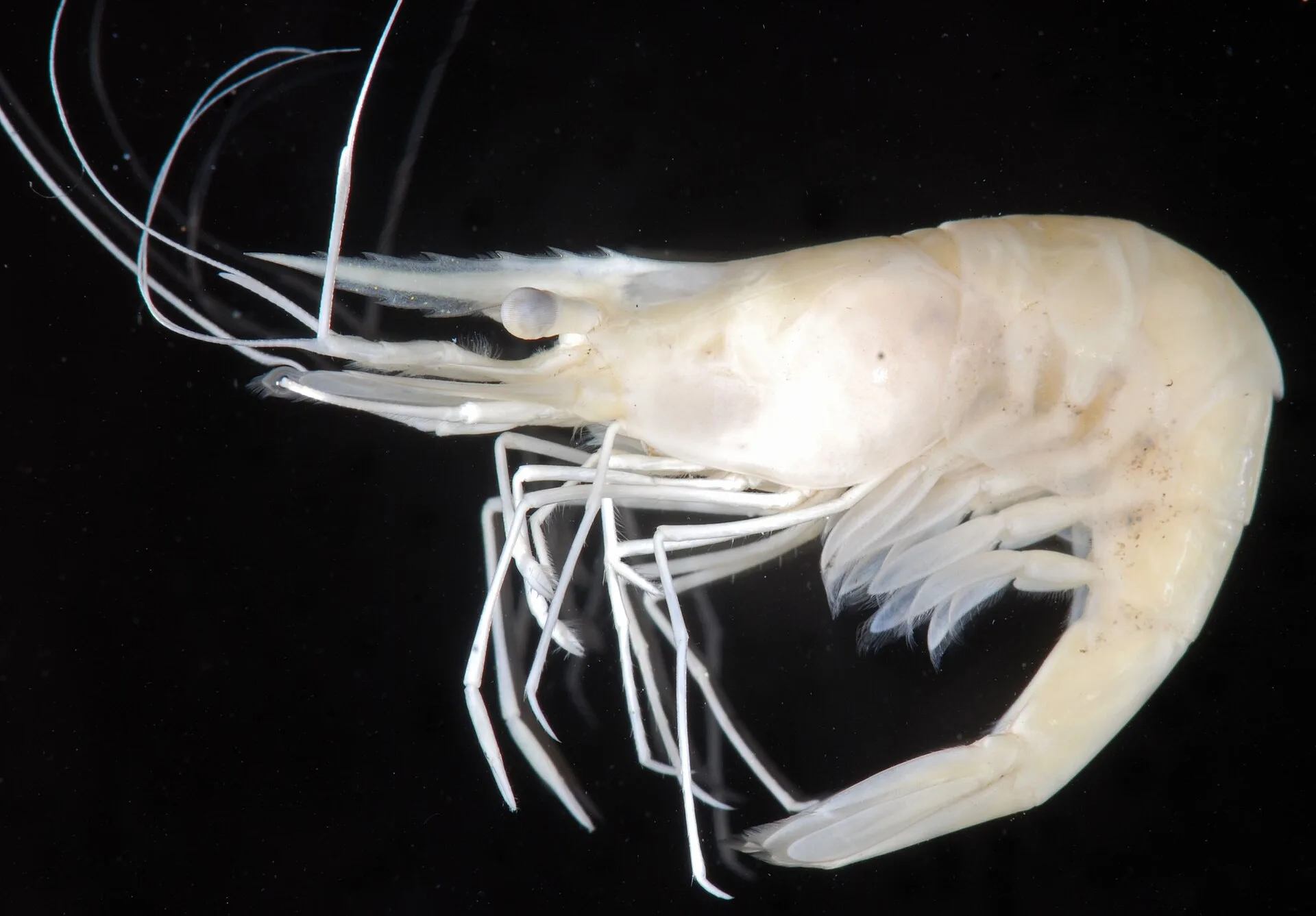
Similar water needs
Species with a similar temperature, a similar pH and a comparable adult size. Whether their behaviour fits as well is what the compatibility check is for.