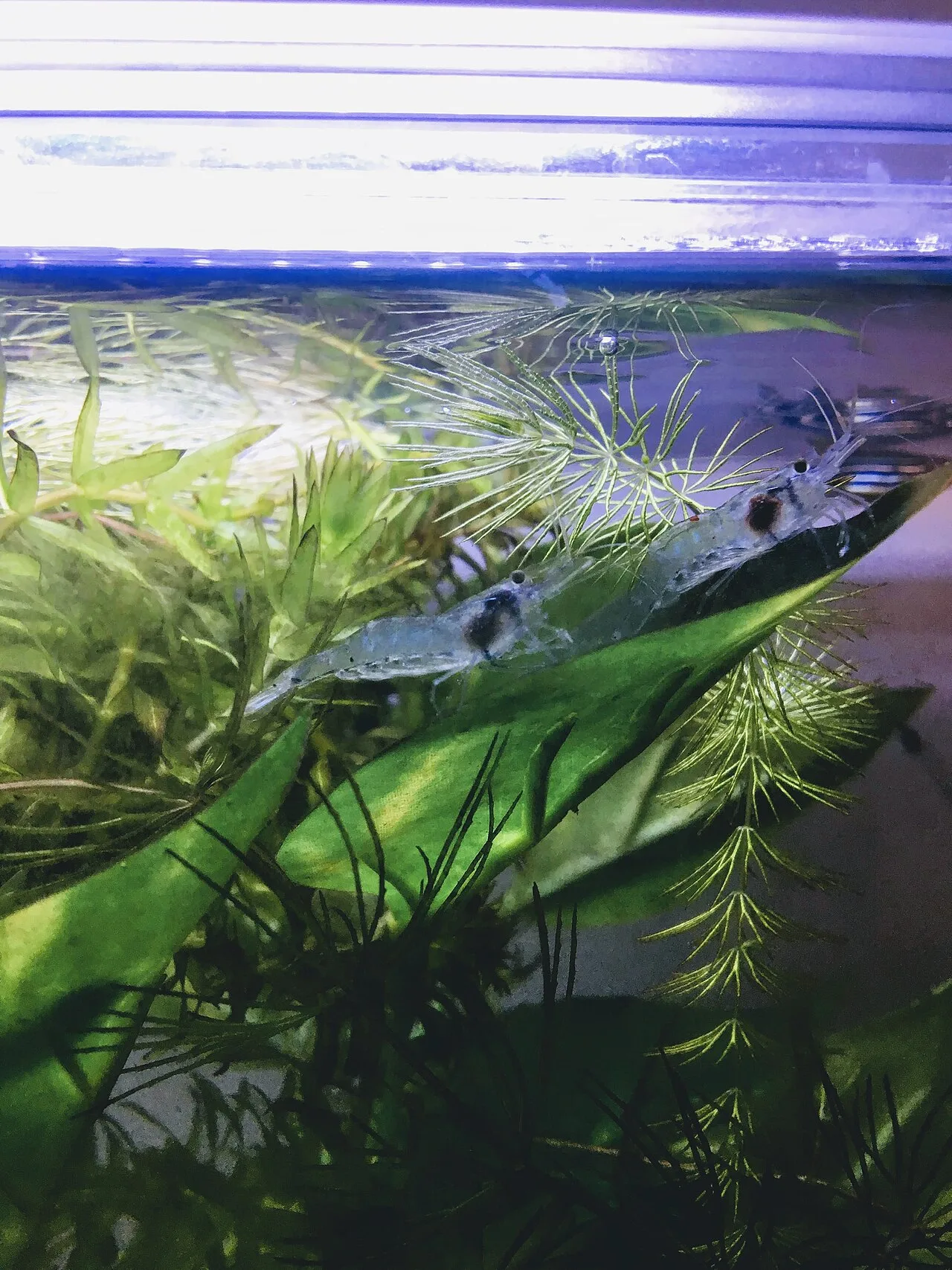
Ghost shrimp
Palaemon paludosus
2 views
A transparent shrimp from the south-eastern United States. Hardy, nocturnal and often mixed with other glass shrimp in the trade.
- Temperature
- 18 – 28 °C
- pH
- 7 – 8 pH
- General hardness
- 5 – 15 °dH
- Maximum size
- 2.5 cm
- Social behavior
- Group
- Diet
- Omnivore
2 min read · 275 words
Fresh water
Quick facts
Further published values
- Lifespan
- 1 a
- Minimum group size
- 5
- Minimum tank size
- 40 L
Place in the aquarium
Highlighted are the water layer and the spots where the species usually stays in the tank.
- Middle water Usually stays in the middle of the tank, between bottom and surface.
- Near the bottom Mostly stays just above the bottom. Food has to reach the substrate.
- Dense plants Looks for dense planting as cover, retreat or grazing ground.
Home & range
Hatched countries are where the species occurs. It lives in particular waters there, not across the whole country. The points name known waters for orientation, not collection sites.
- Country of origin
- Water for orientation
Native
- South-eastern United States
- Southern states east of the Appalachians.
Overview
Palaemon paludosus, formerly Palaemonetes paludosus, reaches about 2.5 cm and is largely transparent. By shifting the pigment granules in its skin it can match its background. It differs from the very similar Palaemon kadiakensis only in the spines of the tail fan.
In the trade
Several species are sold under names such as glass shrimp or ghost shrimp, including young Macrobrachium with long claws that later attack fish. To be sure, look for short claws of equal length on the two front pairs of legs.
Range and habitat
This describes the origin, not how to furnish the aquarium.
Common in the southern United States east of the Appalachians. It also occurs in Louisiana, perhaps not natively. There are scattered records from Texas and California. It lives in lakes with fresh or slightly brackish water, preferably in dense stands of aquatic plants.
Keeping
Tank
From about 40 litres, densely planted, with a cover.
Water
18 to 28 °C, pH 7 to 8, GH 5 to 15 °dH. It also tolerates slightly brackish water.
Companions
With small, peaceful fish. Larger fish eat it, which is why it is also sold as feeder. Usually compatible with dwarf shrimp, though their young are occasionally eaten.
Diet
Omnivore. In the wild mainly algae, diatoms, plankton and aquatic insects. In the tank it eats algae and whatever is fed to the tank mates.
Behaviour and moulting
Nocturnal. By day it hides among plants, at night it searches for food. In groups the animals live peacefully.
Reproduction and larvae
Separate sexes; one male mates with several females. A female carries up to 85 eggs. After the breeding season the adults die; the species usually lives only one year. The larvae are tiny and free-swimming. They develop in fresh water but need the finest food and a tank without fish and adults.
Gallery
More species in this group
Similar water needs
Species with a similar temperature, a similar pH and a comparable adult size. Whether their behaviour fits as well is what the compatibility check is for.