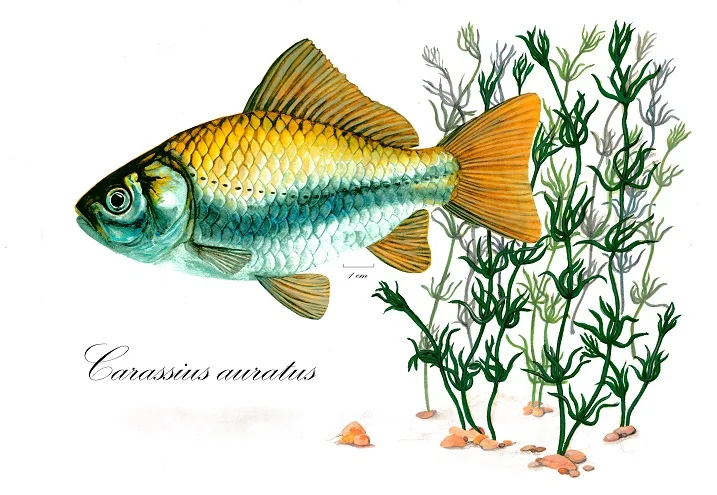
Swan mussel
Anodonta cygnea
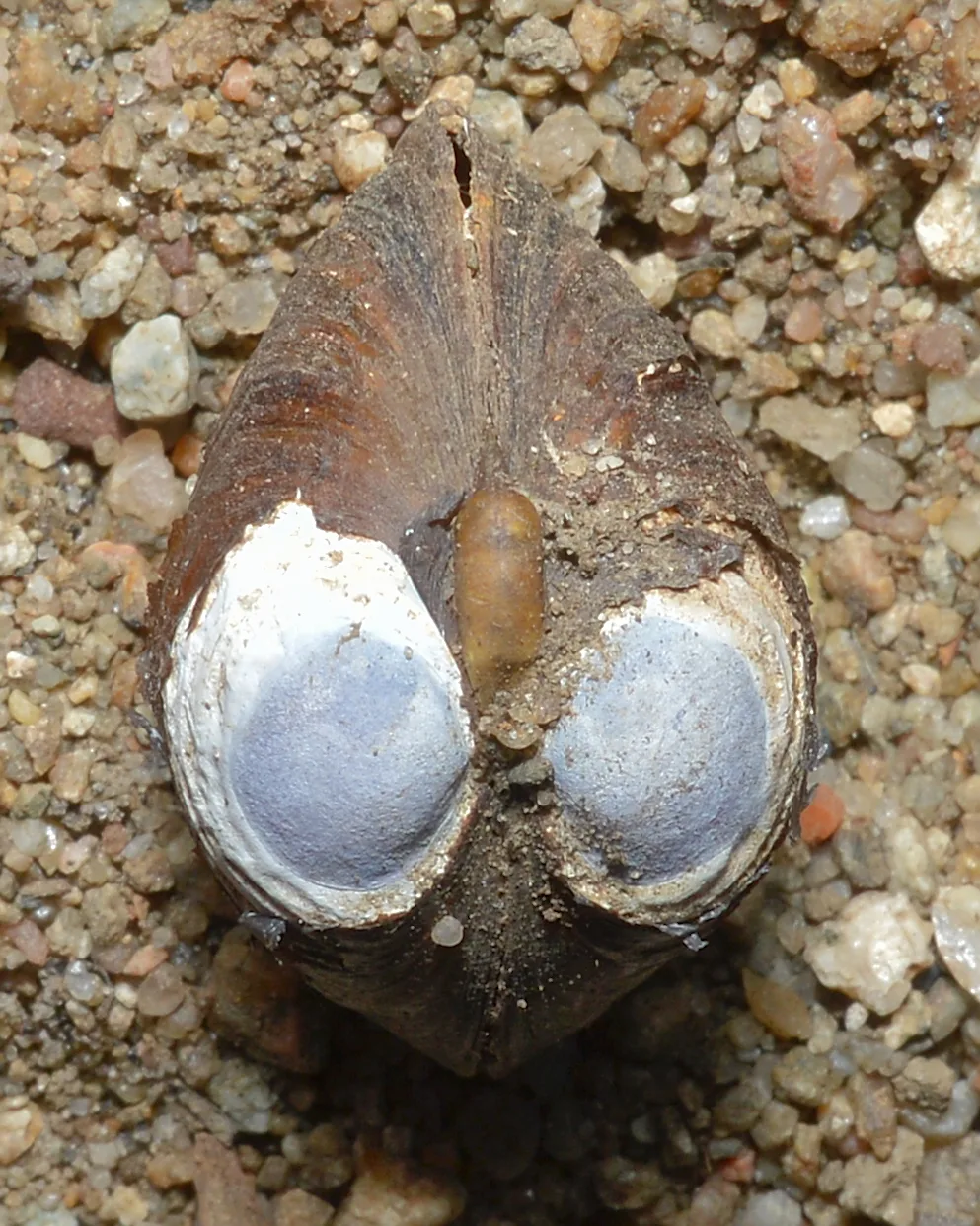
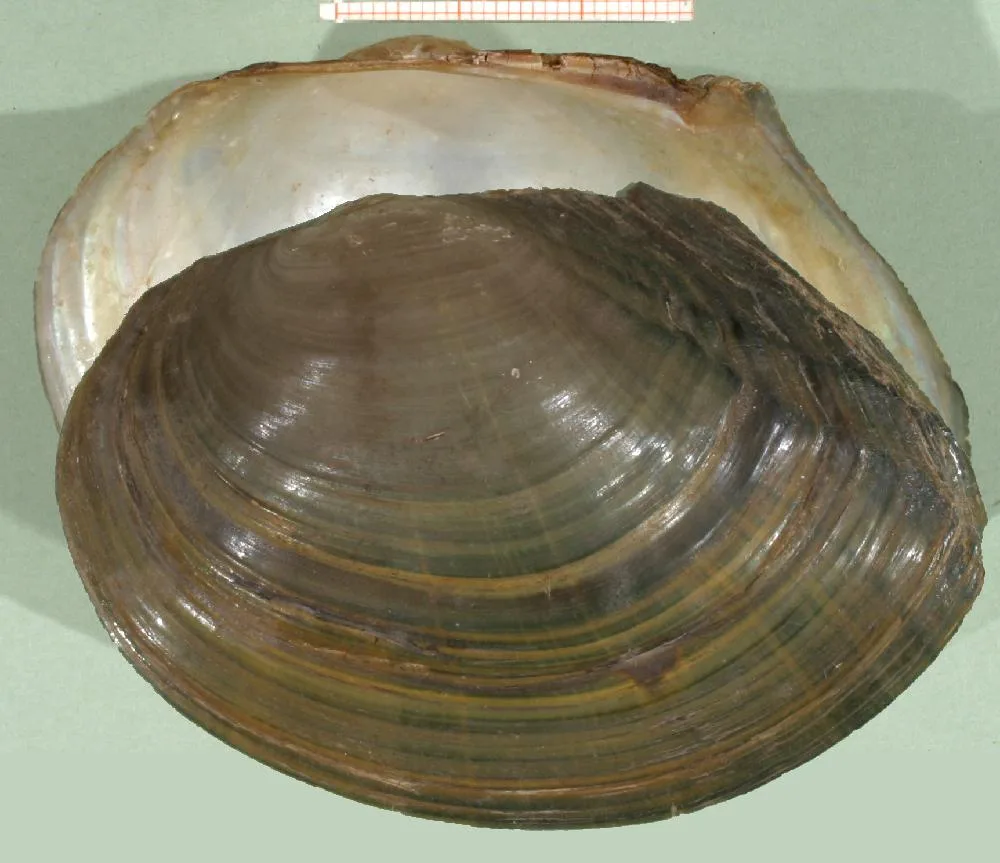
2 views
A large native freshwater mussel of still waters. Protected in Germany and unsuitable for aquariums.
- Temperature
- 10 – 24 °C
- pH
- 6.5 – 8.5 pH
- General hardness
- 6 – 20 °dH
- Maximum size
- 20 cm
- Social behavior
- Peaceful
2 min read · 311 words
Fresh water
Quick facts
Further published values
- Minimum tank size
- 200 L
Place in the aquarium
Highlighted are the water layer and the spots where the species usually stays in the tank.
- Near the bottom Mostly stays just above the bottom. Food has to reach the substrate.
- Substrate Sifts through the substrate or burrows into it. Fine, rounded sand without sharp edges suits it.
Home & range
Overview
The two valves are broadly oval, evenly thin and yellowish to dark brown, with concentric stripes along the growth lines. Inside they shine like mother-of-pearl. The hinge has no teeth, hence the name Anodonta, the toothless one. It reaches up to 20 cm; animals of 26 cm have also been found.
Protection
Like all river and pond mussels it is protected by nature conservation law, and in Germany by species protection law. Wild animals must not be taken. In the trade several species are often sold under the name pond mussel, including the introduced Chinese pond mussel.
Range and habitat
This describes the origin, not how to furnish the aquarium.
Northern and central Europe, in the muddy bottom of still, clean fresh waters. It is threatened by increasing water pollution.
Keeping
Not an aquarium animal
In the aquarium it almost always starves, because there is too little suspended matter and plankton. It then dies unnoticed in the substrate and pollutes the water heavily.
Pond
Only large, near-natural ponds with a muddy bottom, plenty of plankton and native fish come into question. For reproduction it needs fish as hosts.
Diet
Detritus, plankton, diatoms, blue-green algae, green algae and microorganisms. It filters its food almost entirely from the water and occasionally stirs up the bottom.
Behaviour and moulting
A bottom dweller that anchors itself in soft ground with its foot and only rarely moves slowly. When threatened it withdraws its foot and siphons and closes the valves. It hosts the water mite Unionicola ypsilophora. The bitterling lays its eggs in its gill cavity.
Reproduction and larvae
Hermaphrodite with up to 600,000 eggs, which are fertilised and brooded in the gills. The larvae overwinter in the gills and are expelled in spring as slimy clumps. These glochidia are about 0.35 mm, have two small valves with hooks and attach to passing fish. There they live parasitically for a while without doing much harm and then drop off as small mussels. Glochidia without a host die.
Gallery
More species in this group
Similar water needs
Species with a similar temperature, a similar pH and a comparable adult size. Whether their behaviour fits as well is what the compatibility check is for.