Chinese pond mussel
Sinanodonta woodiana
3 views
An East Asian large mussel that is spreading worldwide. Often sold under a false name as a pond filter.
- Temperature
- 10 – 28 °C
- pH
- 6.5 – 8.5 pH
- General hardness
- 6 – 20 °dH
- Maximum size
- 30 cm
- Social behavior
- Peaceful
2 min read · 273 words
Fresh water
Quick facts
Further published values
- Lifespan
- 12 – 14 a
- Minimum tank size
- 200 L
Place in the aquarium
Highlighted are the water layer and the spots where the species usually stays in the tank.
- Near the bottom Mostly stays just above the bottom. Food has to reach the substrate.
- Substrate Sifts through the substrate or burrows into it. Fine, rounded sand without sharp edges suits it.
Home & range
Hatched countries are where the species occurs. It lives in particular waters there, not across the whole country. The points name known waters for orientation, not collection sites.
- Country of origin
- Water for orientation
Native
- China, Amur and Yangtze
- Originally East Asia. The occurrences in Europe, the Americas and Indonesia are introduced.
Overview
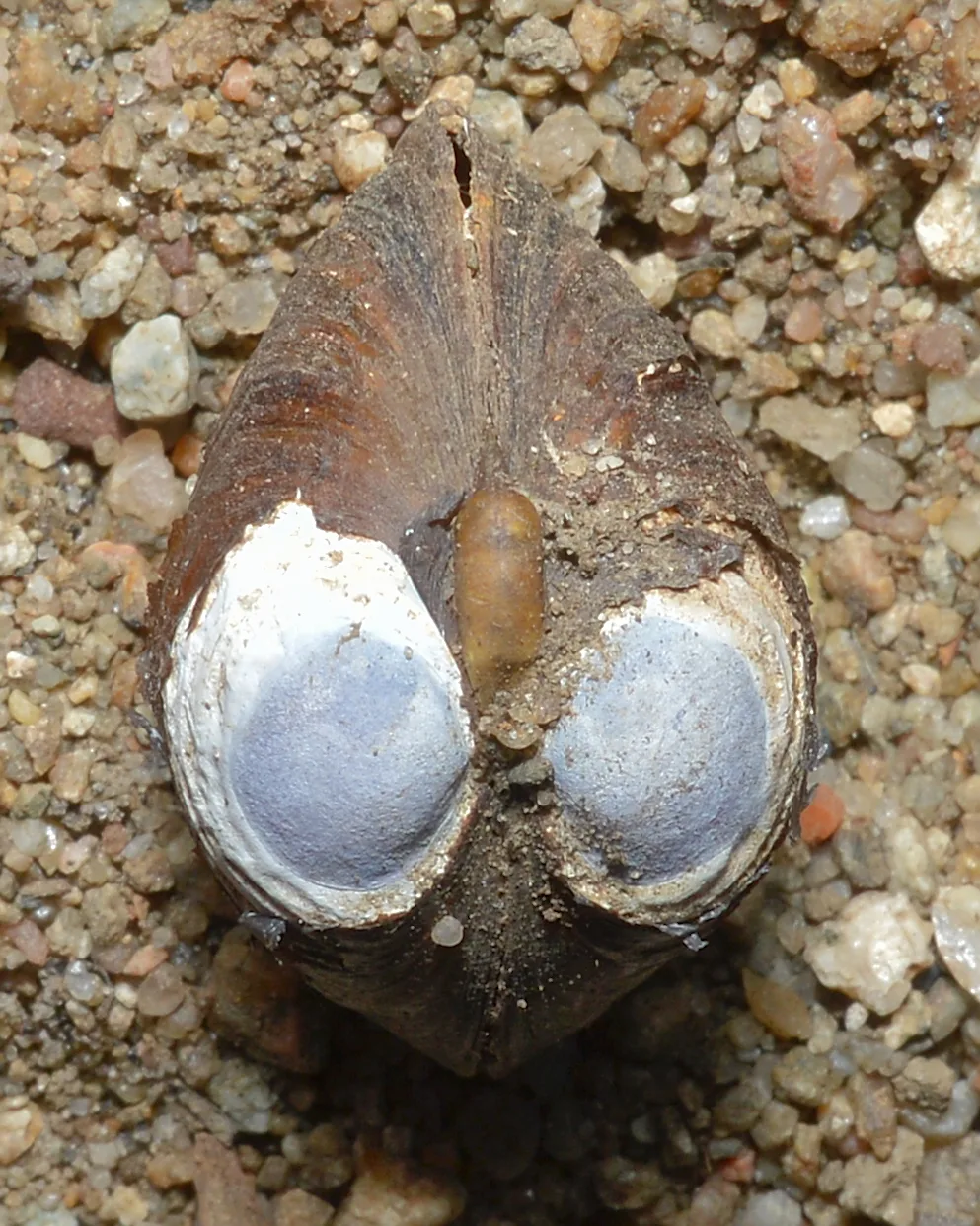
The shell is oval to circular, clearly thicker than in native pond mussels and often reddish brown. Like them it lacks hinge teeth, but the umbo ridges lie further apart and are more pronounced. It reaches more than 25 cm, up to 30 cm, making it the largest mussel in central European inland waters.
Range and habitat
This describes the origin, not how to furnish the aquarium.
Originally East Asia, in the Amur and the Yangtze. There are now self-sustaining populations in many European countries, including Germany, Austria, France, Italy, Poland, Hungary and the Czech Republic, as well as in Costa Rica, the Dominican Republic, the Asian part of Turkey and on some Indonesian islands. It was spread with grass carp and silver carp whose gills carried its larvae, by direct release and through the trade.
Keeping
Do not buy, do not release
DIY stores, garden centres and pet shops sell mussels as a biological pond filter, often several species under one name and explicitly as the native pond mussel. Among them is frequently the Chinese pond mussel. From garden ponds its larvae reach natural waters with fish. Mussels of unclear origin do not belong in ponds that are connected to streams or ditches.
Aquarium
Unsuitable. Like other large mussels it starves in the aquarium.
Diet
Plankton and suspended matter that it filters from the water.
Behaviour and moulting
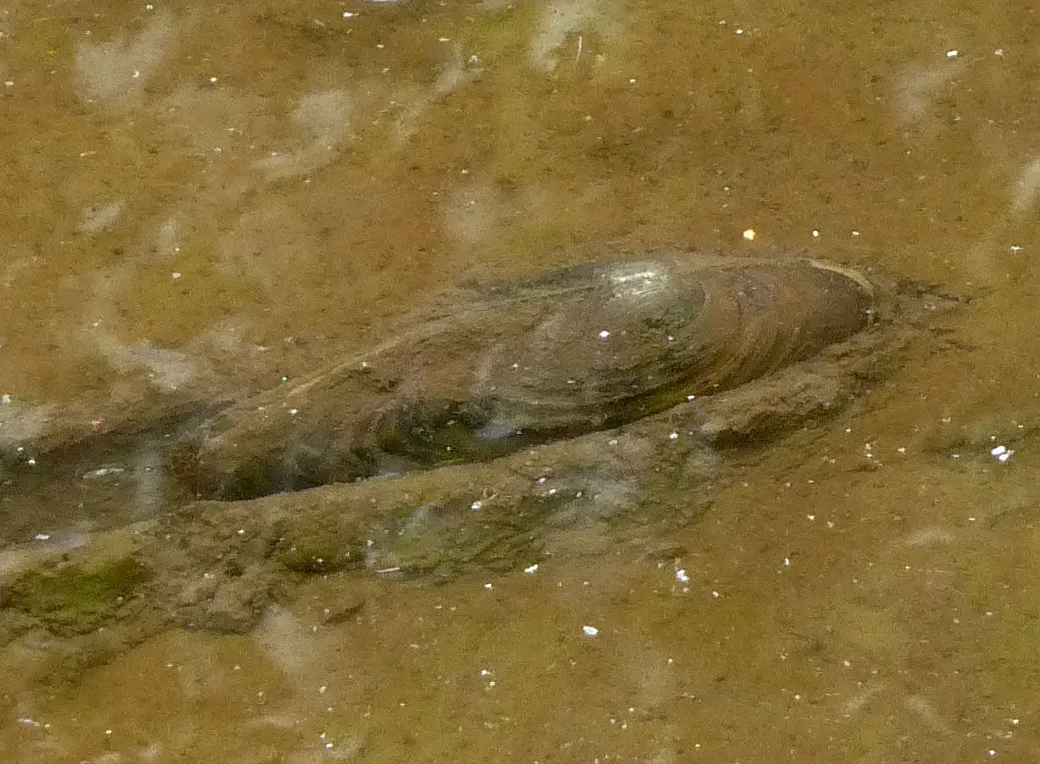
Lives buried in the substrate. It can reach 12 to 14 years.
Reproduction and larvae
It reproduces after just one year at 4 to 5 cm length. Its larvae, the glochidia, attach to the gills, skin or fins of fish. In the native range these are cyprinids such as grass carp and silver carp; in new areas it uses many native fish species as hosts. This makes its spread easier.
Gallery
More species in this group
Similar water needs
Species with a similar temperature, a similar pH and a comparable adult size. Whether their behaviour fits as well is what the compatibility check is for.