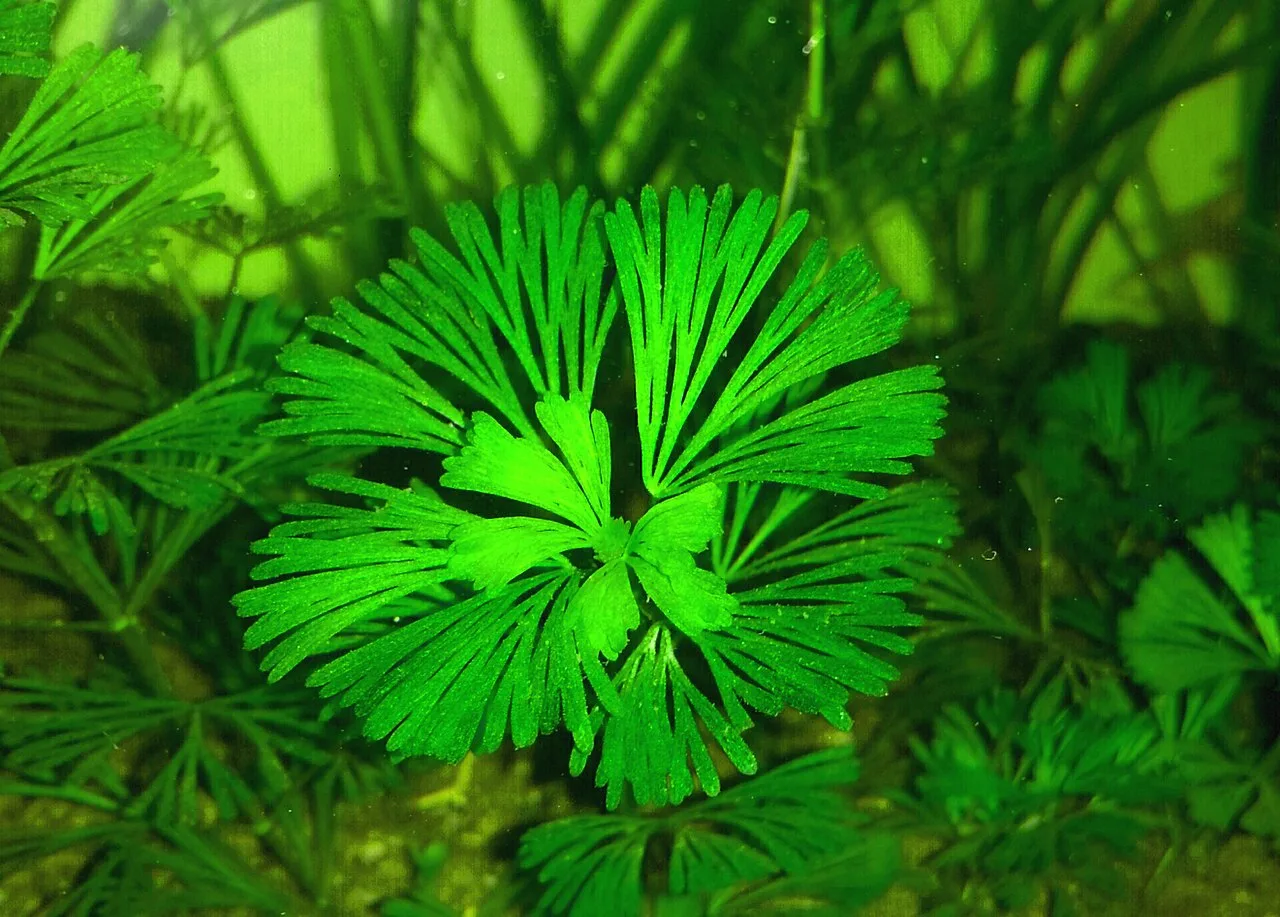
Carolina fanwort
Cabomba caroliniana
31 views
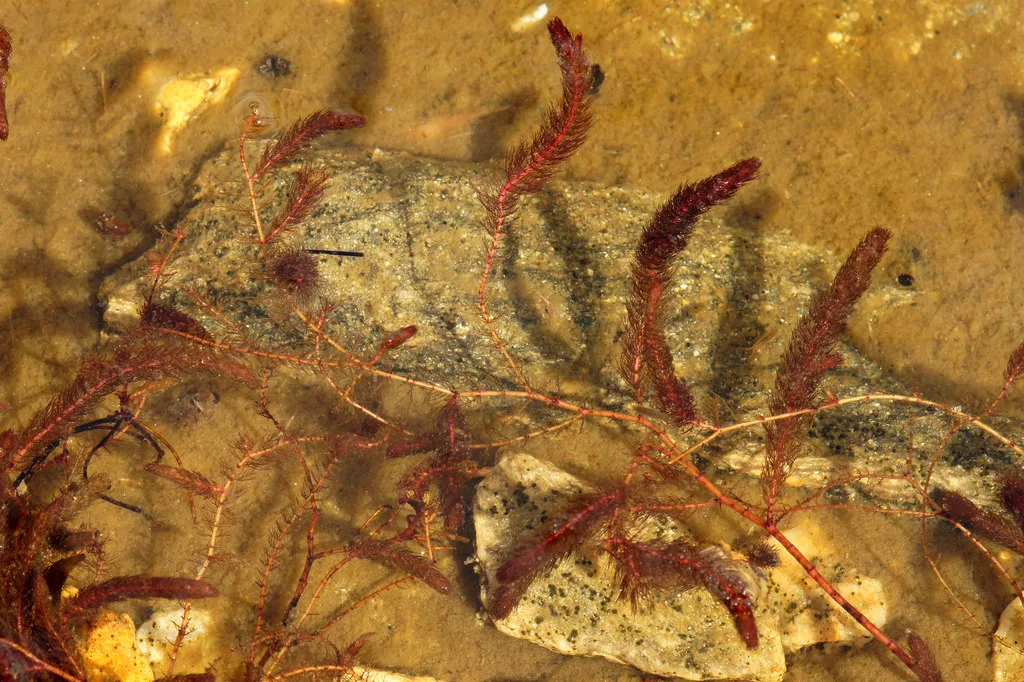
A finely divided stem plant. In the aquarium it grows at 22 to 28 °C, pH 4 to 7 and medium to high light.
- Temperature
- 22 – 28 °C
- pH
- 5.5 – 6.8 pH
- Lighting
- High light
- CO₂
- Medium CO₂
- Growth rate
- Fast
- Placement
- Background
2 min read · 290 words
Care profile
Growth form
Stem plantsPlanting and propagation
- Cuttings Cut off shoot tips and replant them. This keeps the stand dense and propagates it at the same time.
Placement in the aquarium
Highlighted are the areas where the species is typically used.
- Background Along the back wall and the sides. Forms the tall, dense backdrop.
Home & range
Hatched countries are where the species occurs. It lives in particular waters there, not across the whole country. The points name known waters for orientation, not collection sites.
- Country of origin
- Water for orientation
Native
- United States
- Range: the eastern United States and individual states.
- Canada
- Range: southern Ontario.
Botanical overview
Cabomba caroliniana belongs to the fanwort family. Probably only the variety caroliniana is in the trade. It is propagated in Asia and imported from there. The fine leaves collect mulm easily and must not be crushed in handling. It must not be released from the aquarium into natural waters.
Natural origin
This describes the origin, not how to furnish the aquarium.
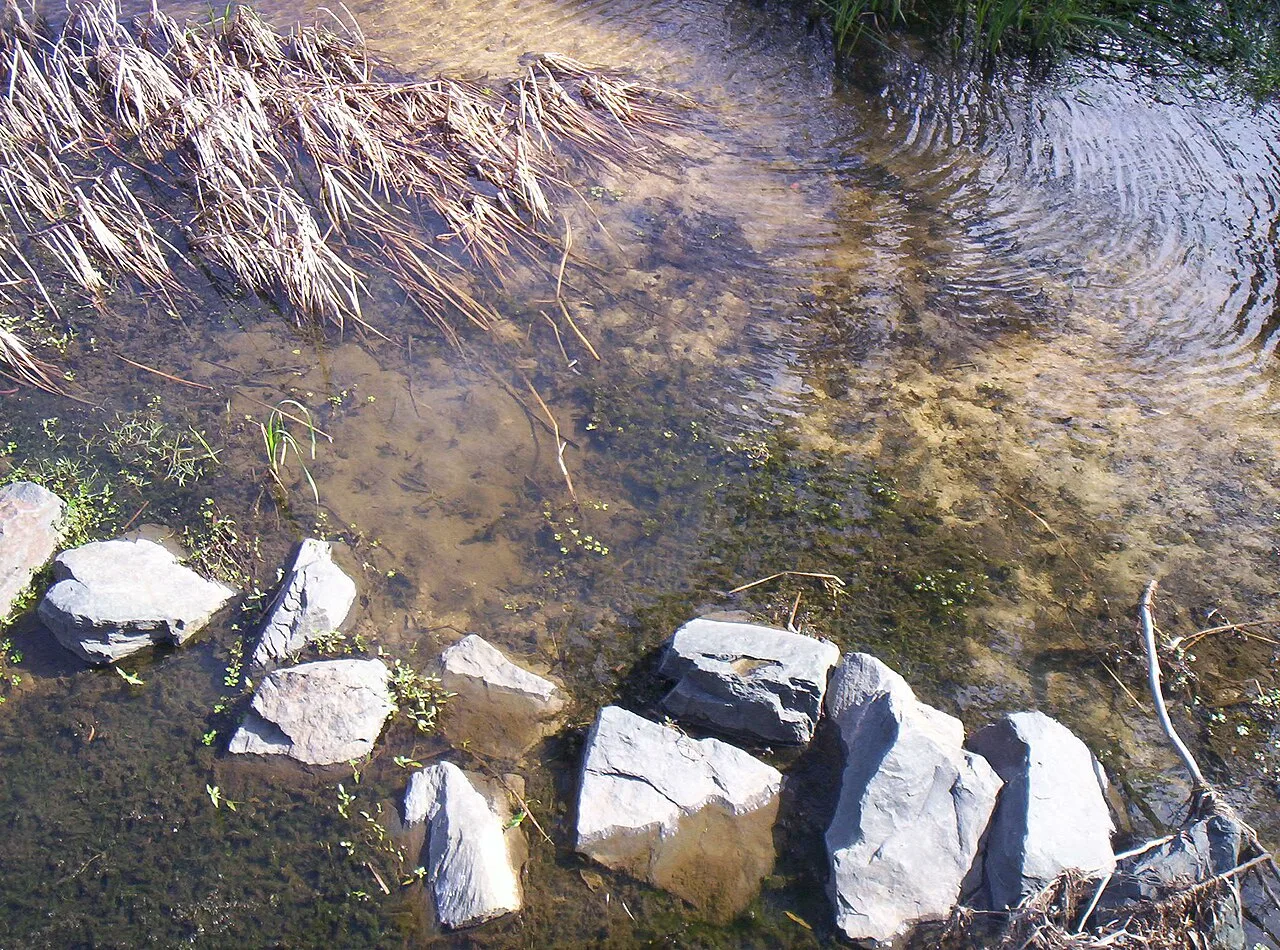
The natural range covers the eastern United States, southern Ontario and southeastern South America with parts of Brazil, Argentina, Paraguay and Uruguay. Beyond that it is introduced in many countries.
Light, CO₂ and position
It is described as demanding. Medium to high light intensity, also given as 0.7 W/L after Brünner, and as high a red share as possible after Barth and Stallknecht. Soft to medium-hard water, pH 4 to 7, hardness up to 12 °dKH. Best with current and at 22 to 28 °C. Permanently high temperatures can worsen growth. 0.7 W/L is not a PAR figure. High light and medium CO₂ work well.
Fine and bright
Carolina fanwort falls apart in low light into long, bare stems with a tuft. It needs high light, clean water and, if possible, CO₂. Mulm settles in the finely divided leaves and suffocates them. Large digging fish, and a strong current that breaks the leaf, do not fit.
In Europe the species is invasive and must not be released. Cuttings stay in the waste.
Growth and trimming
Propagation by side shoots, that is cuttings. A trimming height is missing.
Shorten carefully
The tips are taken with sharp scissors and replanted without crushing the leaf. A stem that is crushed while planting rots at the crushed point. Lower, silted parts are pulled, not rinsed in the hope that they will recover.
Further care
Confusion with Limnophila comes from the pinnate leaves. Limnophila carries whorls, which separates the genera.
Propagation
Side shoots. The aquarium section does not describe sowing.